The narrow band of yellow-green that safety clothing settled on, and the oranges and reds that were tried first. The one colour in dress chosen by measurement rather than taste.
Almost every garment in this archive was designed by somebody with an eye. High-visibility clothing was not. Its colour was arrived at by measuring which wavelengths the human eye detects fastest in poor light, and it is now the only working garment whose appearance is set by an international standard rather than by taste.
Which makes it the easiest uniform here to describe exactly, and the hardest to describe interestingly.
The Garment Carries Its Own Specification
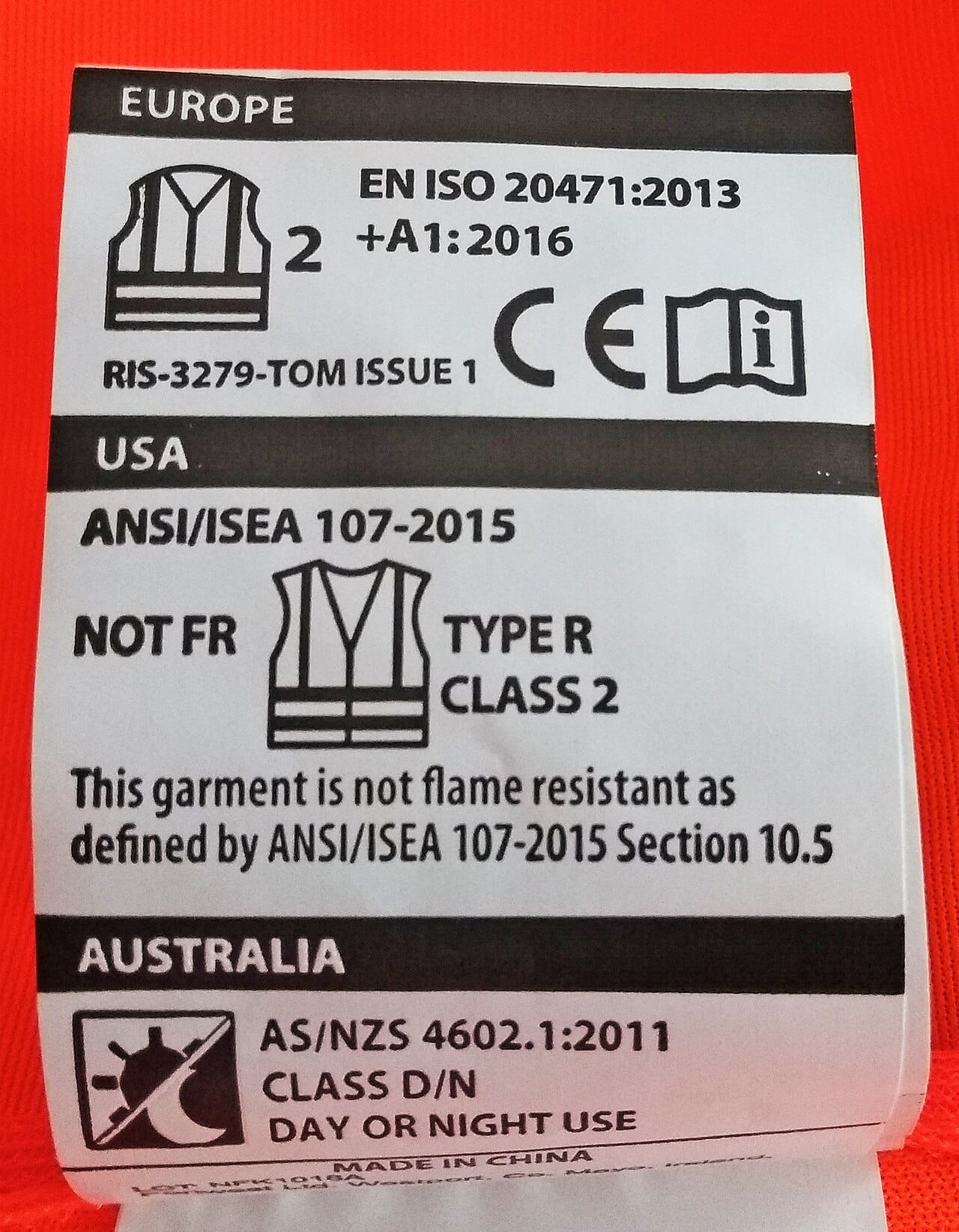
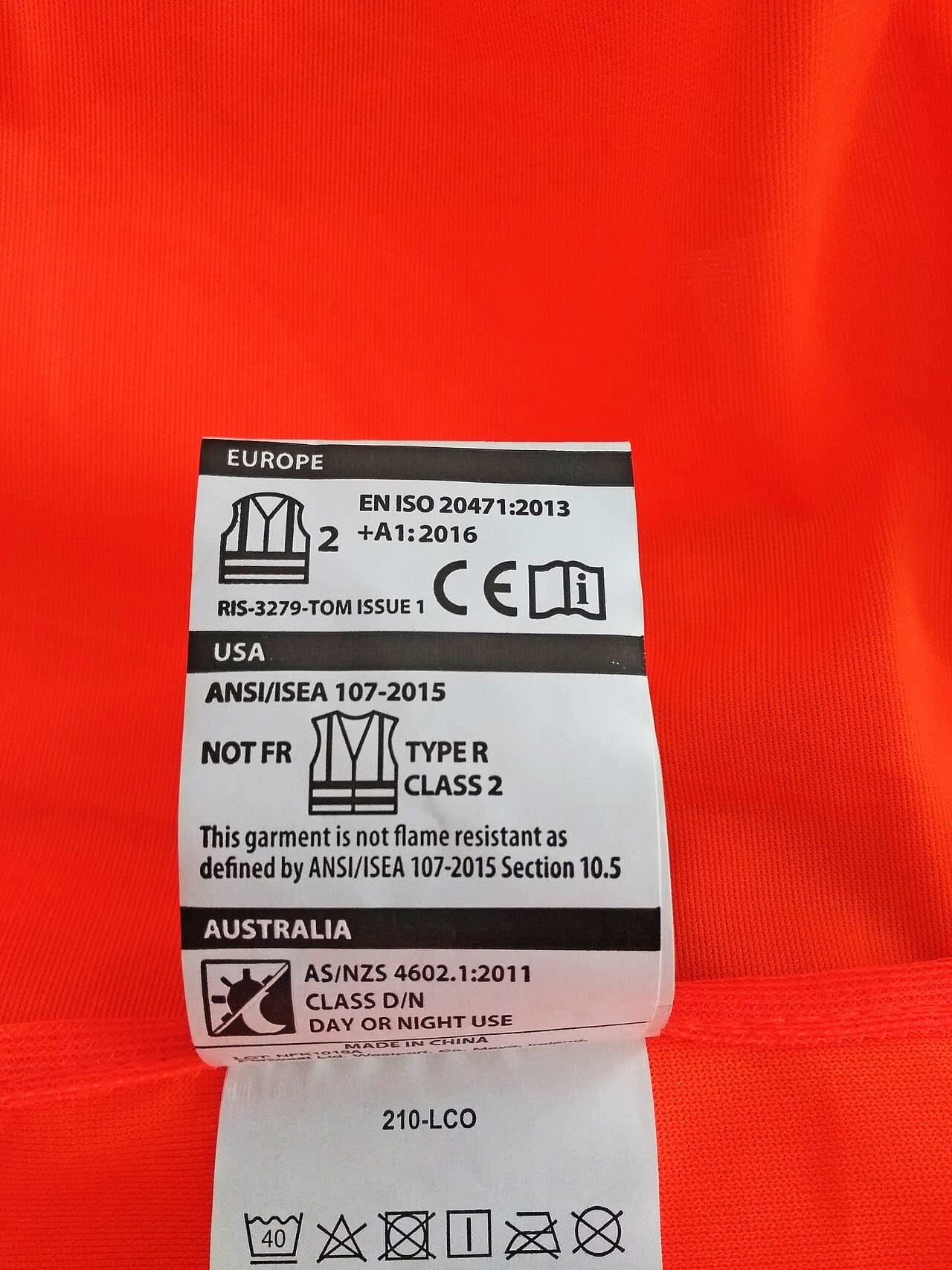
Look inside one and there is a label listing three standards at once — European, American and Australasian — with a class number, a pictogram and a line stating what the garment is not.
No other uniform in this archive does this. A police tunic does not carry the regulation that describes it.
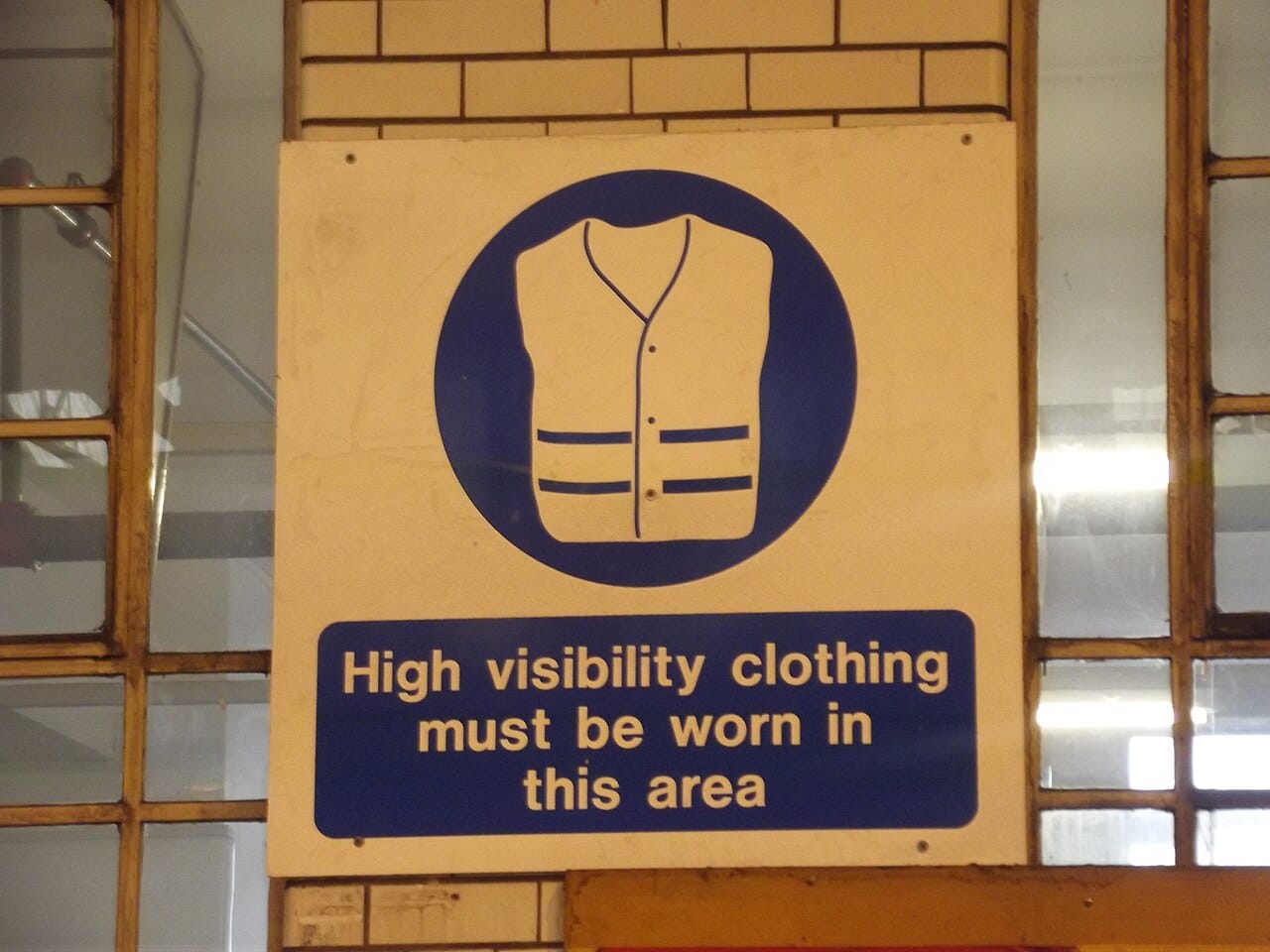
The sewn-in label of a high-visibility vest, listing EN ISO 20471, ANSI/ISEA 107 and AS/NZS 4602.1. Three continents' rules on one strip of tape, and a Class 2 marking that tells you how much fluorescent area the garment has.Wikimedia Commons · 136995167 · 2019-05-24 14:12:56 · Francis Flinch · CC BY-SA 4.0The same markings photographed against the orange of the garment itself. The line that matters most is the disclaimer: this is not flame-resistant. Visibility and fire are different problems and the label refuses to be mistaken for the other one.Wikimedia Commons · 79182314 · 2019-05-24 14:12:56 · Francis Flinch · CC BY-SA 4.0Depot signage: high-visibility clothing must be worn in this area. The enforcement, photographed. The sign is doing what a sergeant does in a barracks, and it is the reason the garment spread as fast as it did.Yardley Wood Bus Garage - Open Day - signs - High visibility clothing · 42370305 · 2013-10-05 13:27 · Elliott Brown from Birmingham, United Kingdom · CC BY-SA 2.0
It Started on the Track
The first users were railway workers, for the obvious reason: a man on a line has seconds, and the driver has fewer. From there it moved to roads, then to anyone working near a moving vehicle, and then — this is the part worth noticing — to people who are not near vehicles at all.
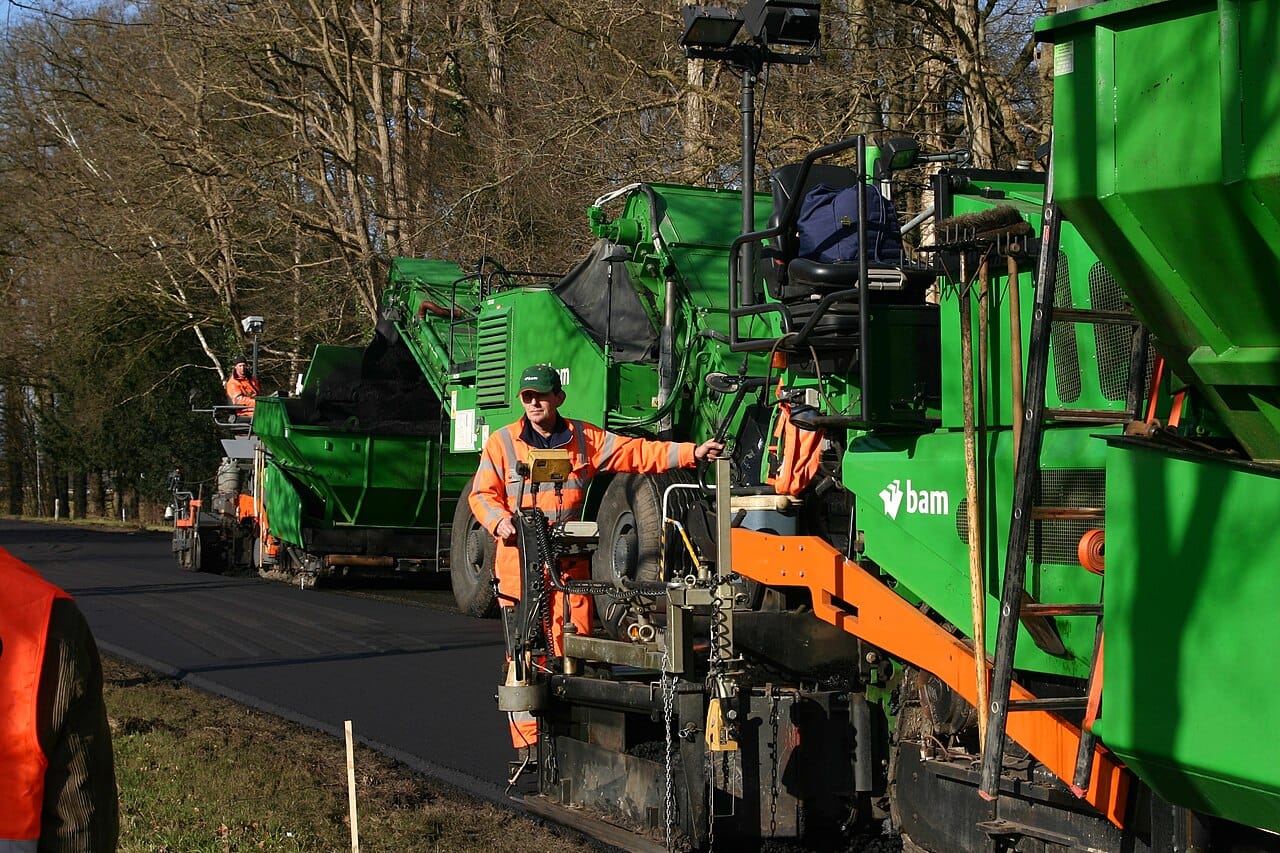
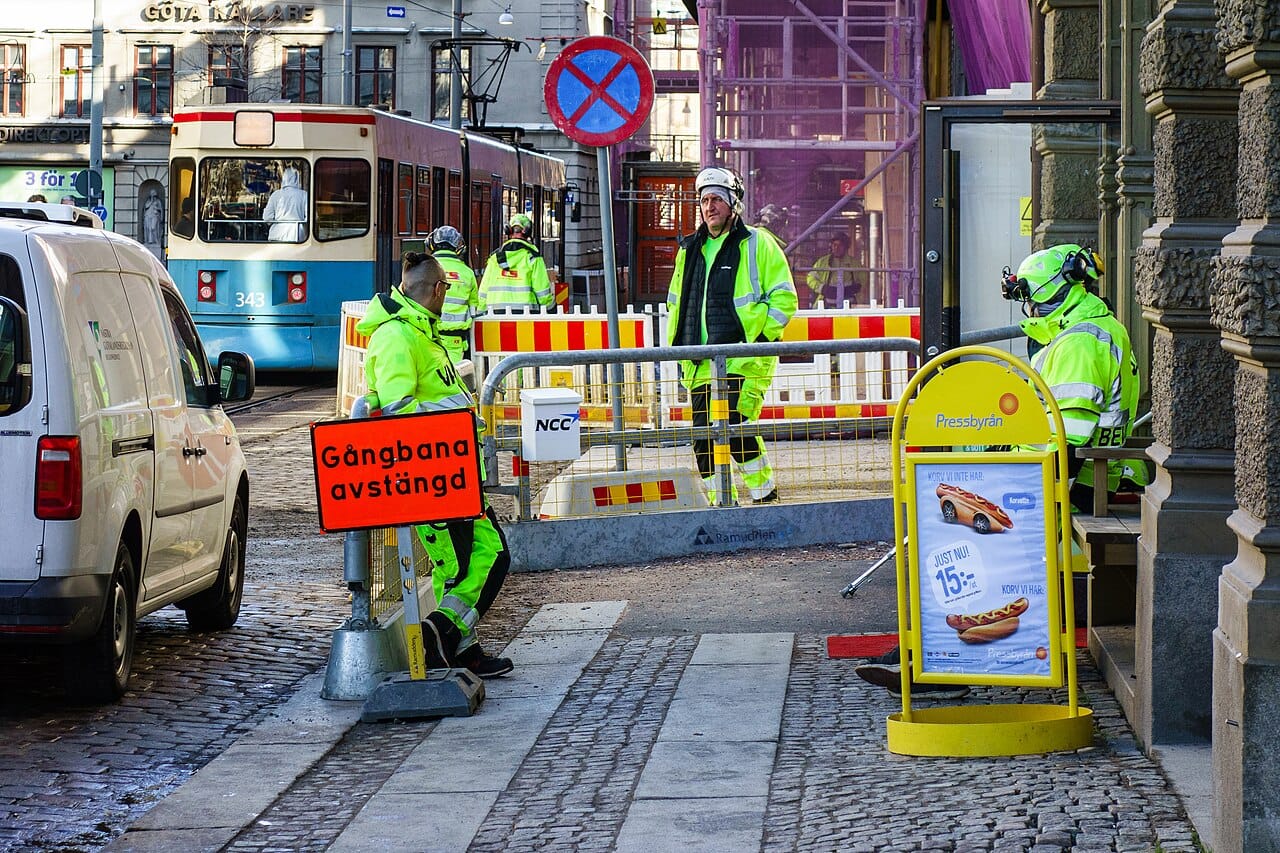
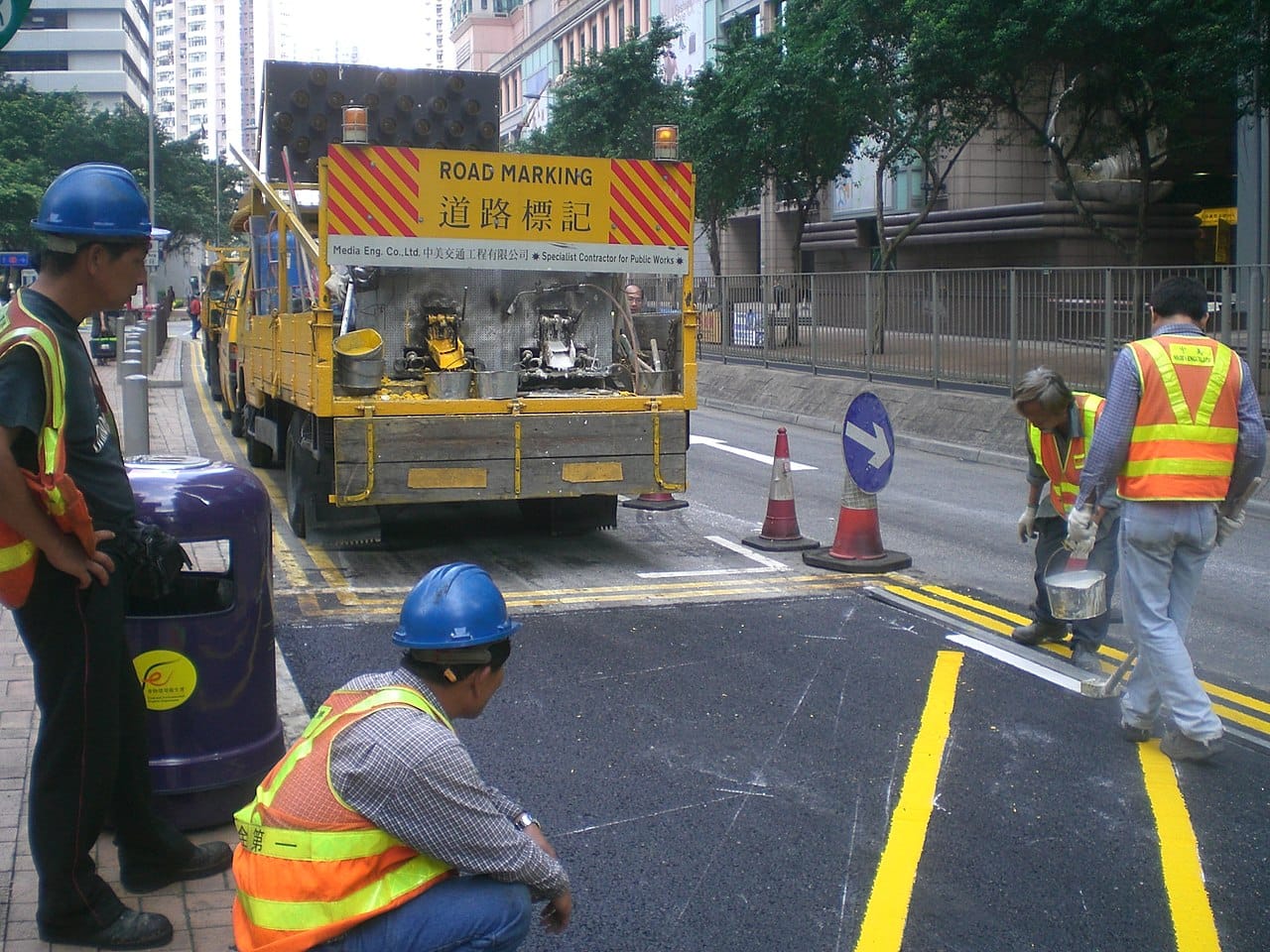
A road crew laying asphalt, in orange. Orange rather than yellow, which is a choice about background: yellow disappears against summer vegetation and orange does not.Wikimedia Commons · 5986787 · 2009-02-12 · Qqdld2 · Public domainTram-track works on a city street, the crew in yellow-green. The whole crew, not the exposed ones. Once the rule is a site rule rather than a task rule, everybody inside the fence wears it.Wikimedia Commons · 129293163 · 2023-02-27 14:08:55 · W.carter · CC BY-SA 4.0Road marking in Hong Kong, vests over ordinary clothes. Worn as a layer rather than as a uniform — the garment is the whole issue and what is under it is the wearer's own.Wikimedia Commons · 6573628 · 2009-04-17 15:53:19 · Hungmiauzhe · CC BY-SA 3.0
Its colour was not chosen by anybody's eye. It is the output of research into what the human retina detects fastest in poor light, and it is the same colour everywhere on earth for that reason.
Then It Went Everywhere
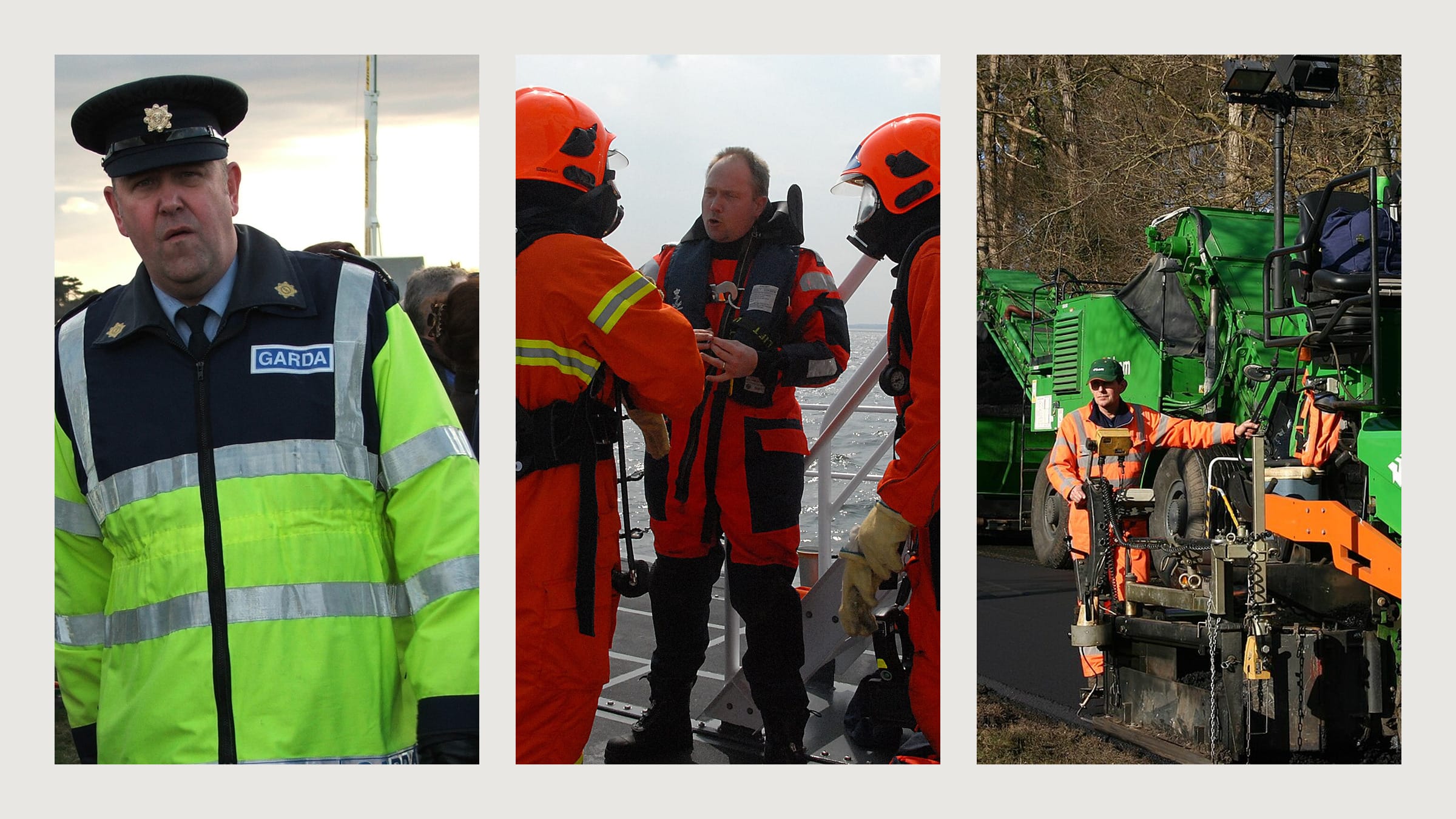
High-visibility is now worn by police, by lifeboat crews, by mountain rescue, by stewards at football grounds and by children walking to school. Some of that is genuinely about being seen. Some of it is about being identifiable as a person with a function — which is what every other uniform in this archive is for, arrived at from the opposite direction.
A garment specified against a measurable hazard has ended up doing the oldest job in the taxonomy.
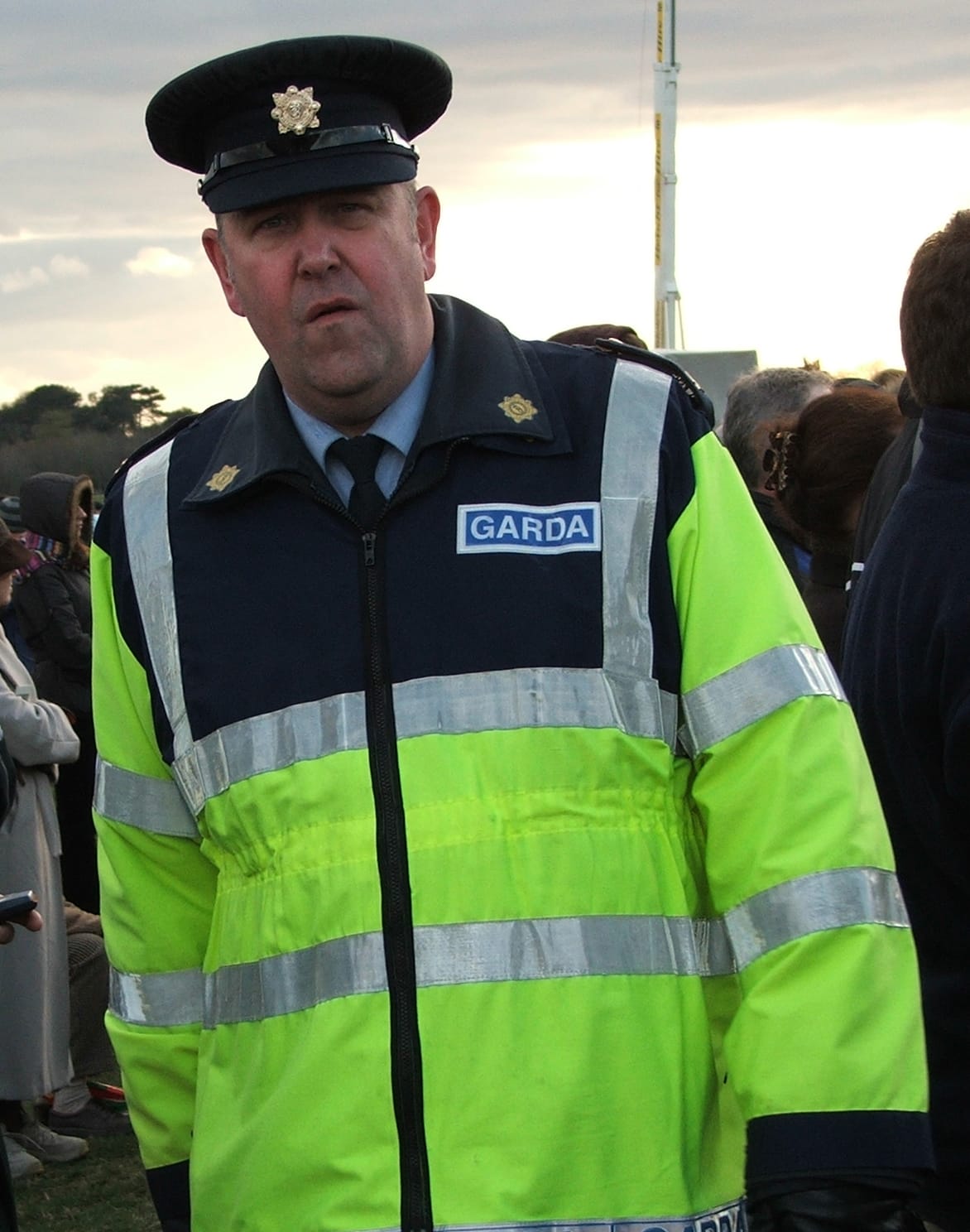
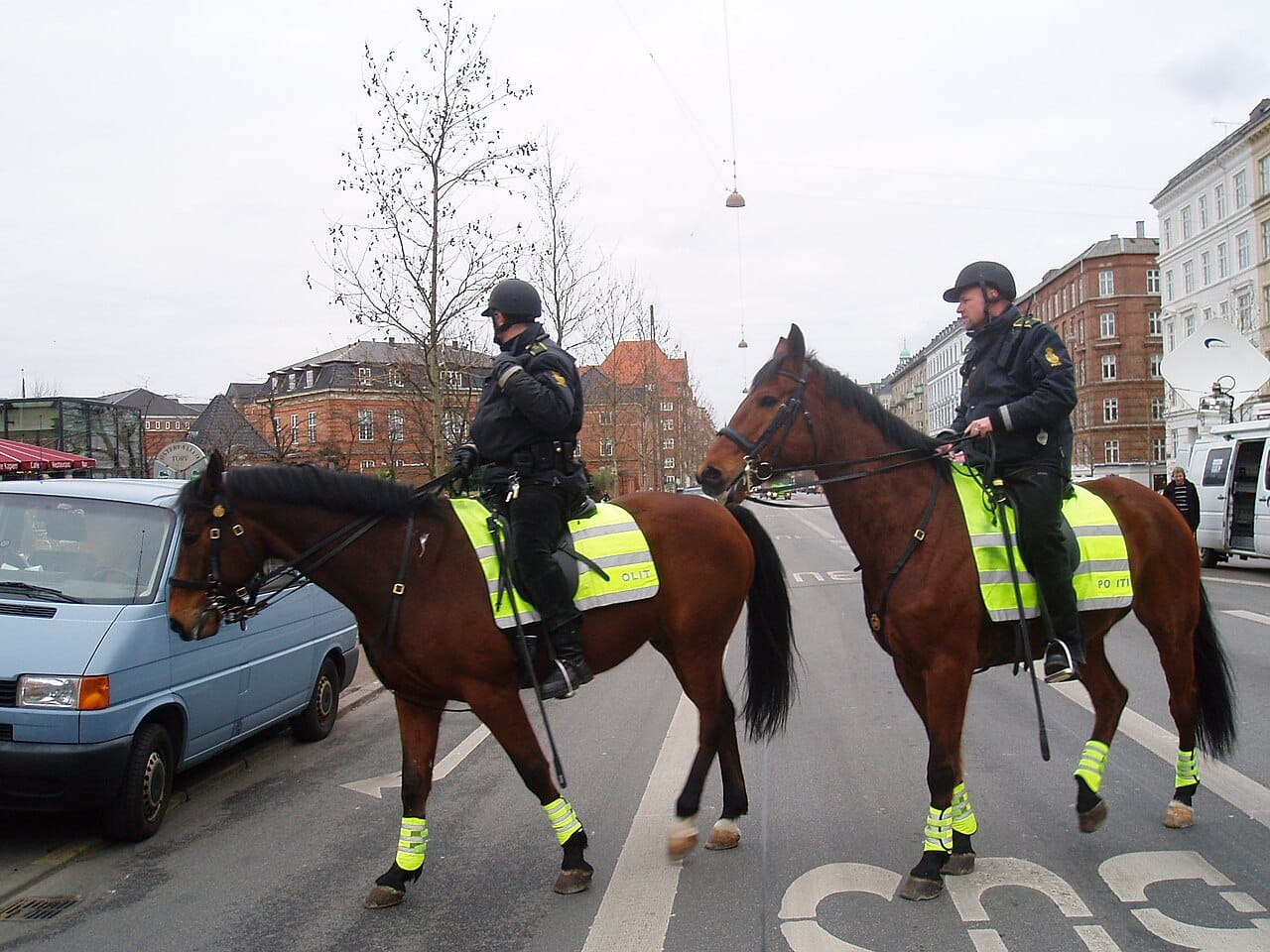
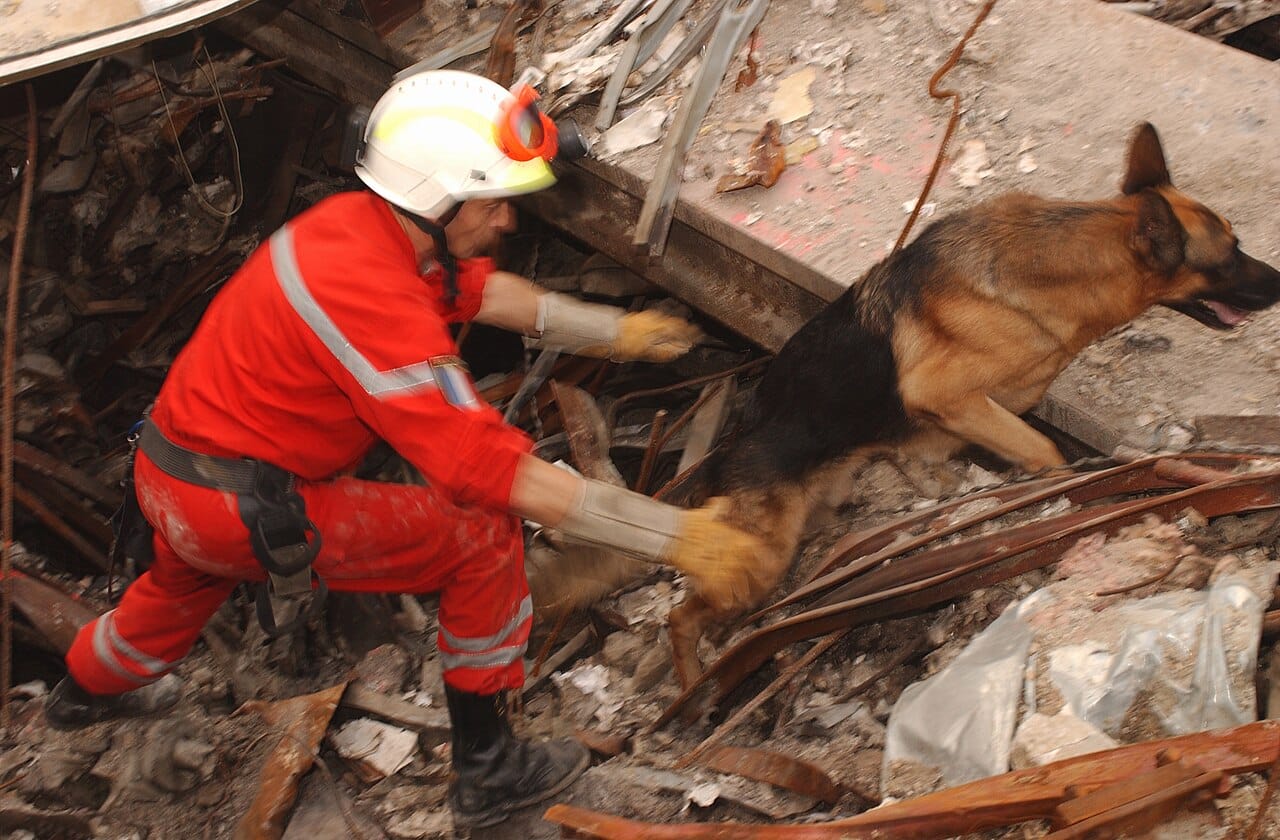
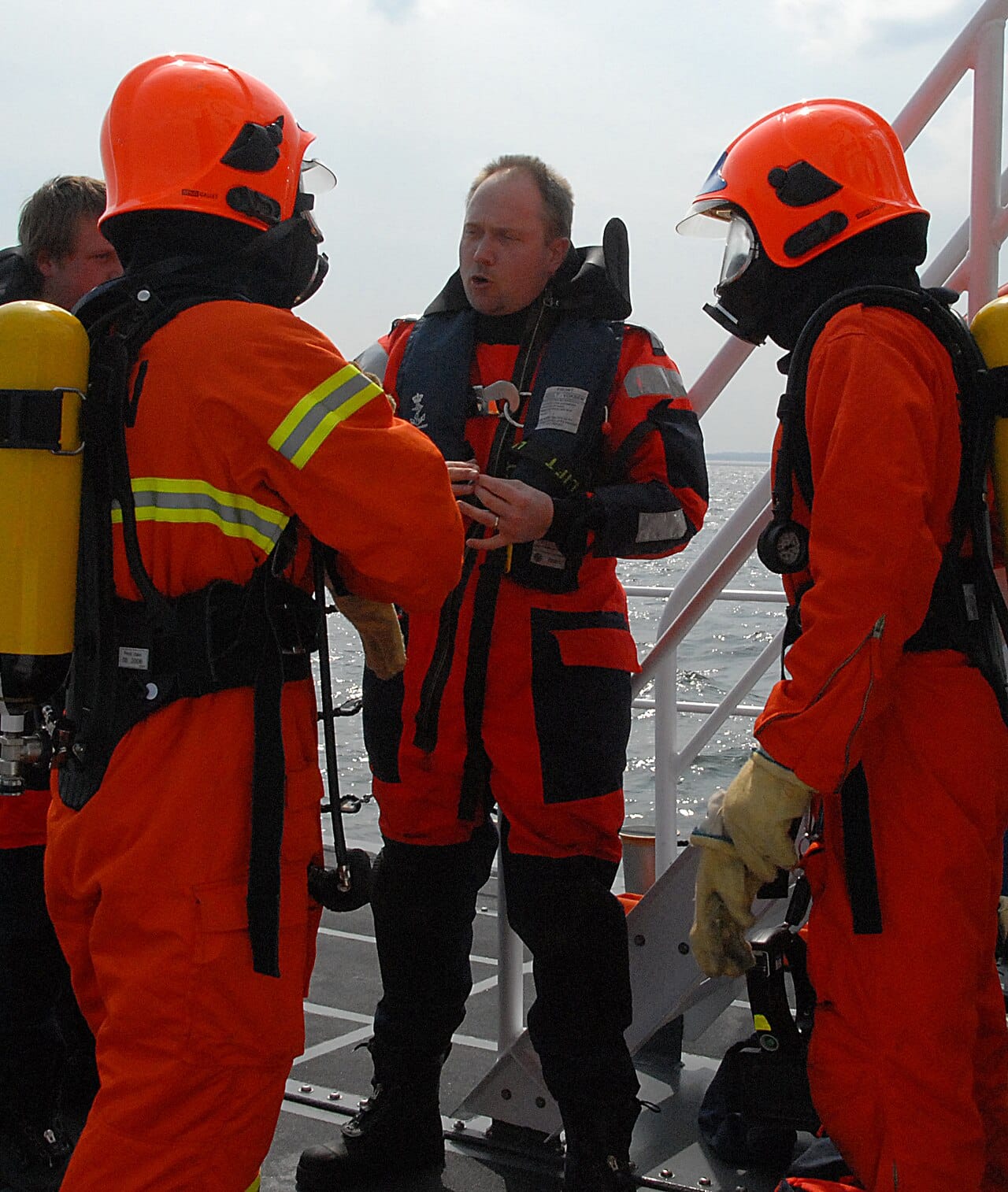
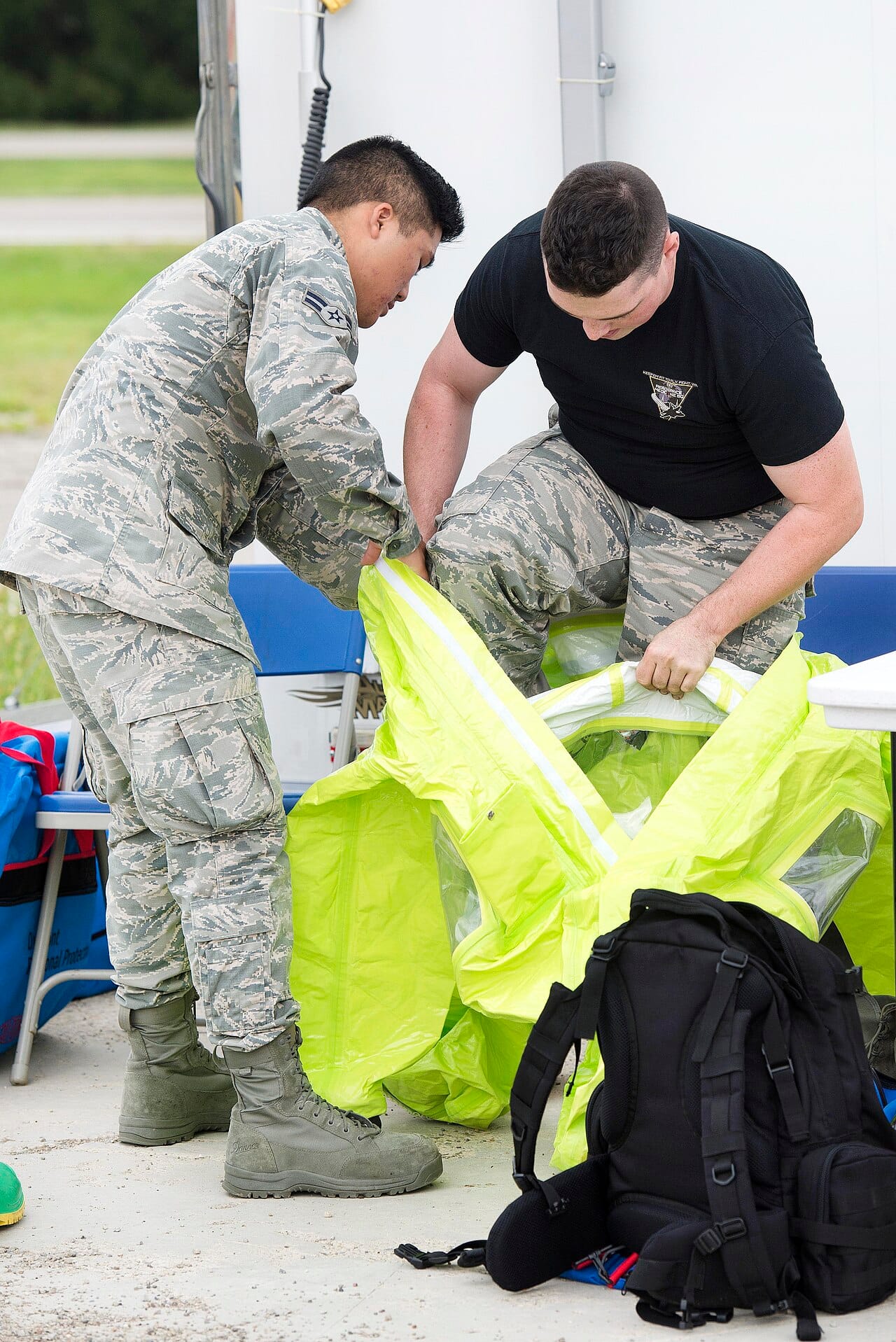
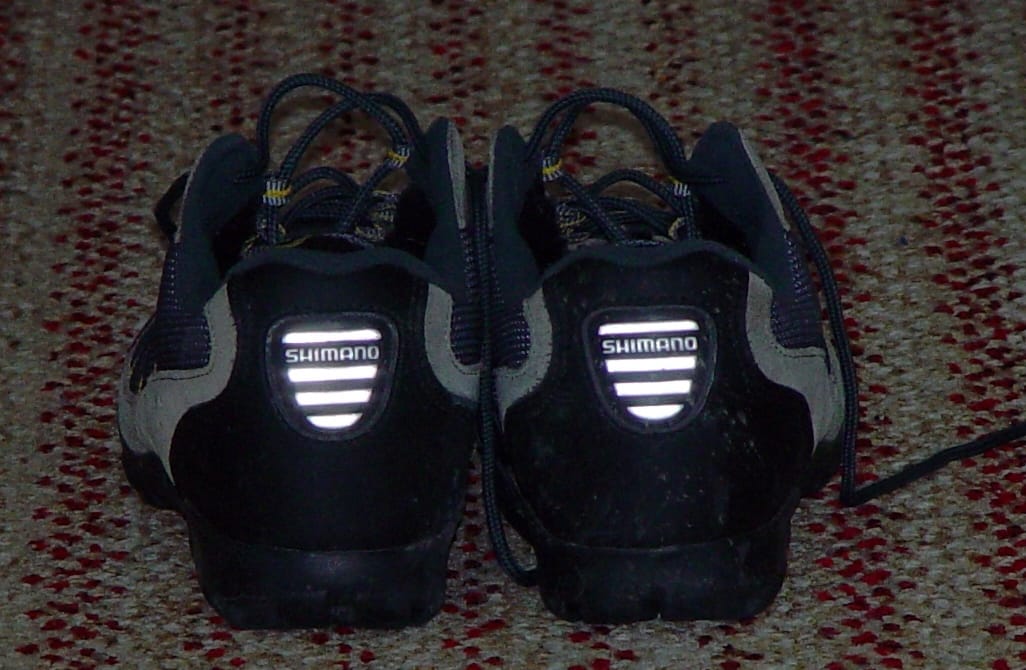
An Irish police officer in a high-visibility jacket, the force's name across the chest. The jacket has become the uniform. Rank, force and authority are now carried on a garment that exists to be seen by a driver.Flickr · 639435 · 2005-04-08 18:14:56 · jaqian from Dublin, Ireland · CC BY 2.0Mounted police, riders and horses both in high-visibility. The animal is wearing it too, which is the clearest evidence that the rule now attaches to presence rather than to task.Wikimedia Commons · 3588424 · 2008-02-20 · User:EPO · AttributionA French urban search and rescue team in red-orange coveralls. Here the colour is doing team identification as much as visibility — one shade for one unit, in a place where several are working.Wikimedia Commons · 4622483 · 2001-09-24 · Andrea Booher/ FEMA News Photo · Public domainA Danish naval distress team in orange immersion suits. Orange because the background is the sea. The same reasoning as the road crew, run against a different colour of everything else.Wikimedia Commons · 4895087 · 2008-03-26 · US Coast Guard PA3 Connie Terrell · Public domainAn airman pulling on a protective suit. Worth including for the action rather than the garment: high-visibility is put on over what you are already wearing, which is why it spread so easily.Wikimedia Commons · 61661764 · 2017-08-04 · Wesley Farnsworth · Public domainRetroreflective panels on the heels of a pair of cycling shoes. The end of the argument. The principle has left the workplace entirely and is now sold to individuals, on footwear, with no employer and no rule behind it.Wikimedia Commons · 474599 · 23 December 2005 (according to Exif data) · No machine-readable author provided. Kristian Ovaska assumed (based on copyright claims). · CC BY-SA 2.5
Hedda Maartens — MA in fashion design, then eleven years in the industry designing for people who had no say in what they wore. Now writes about prescribed dress: how a garment was made to work, and what it was made to make a person into.
Member discussion
Back
Nametape
Free
$0
Every Research post and every Essay, free to read.
All Research posts — one uniform at a time, in archive photographs


.jpg?ref=blog.neutrino.website)










Member discussion