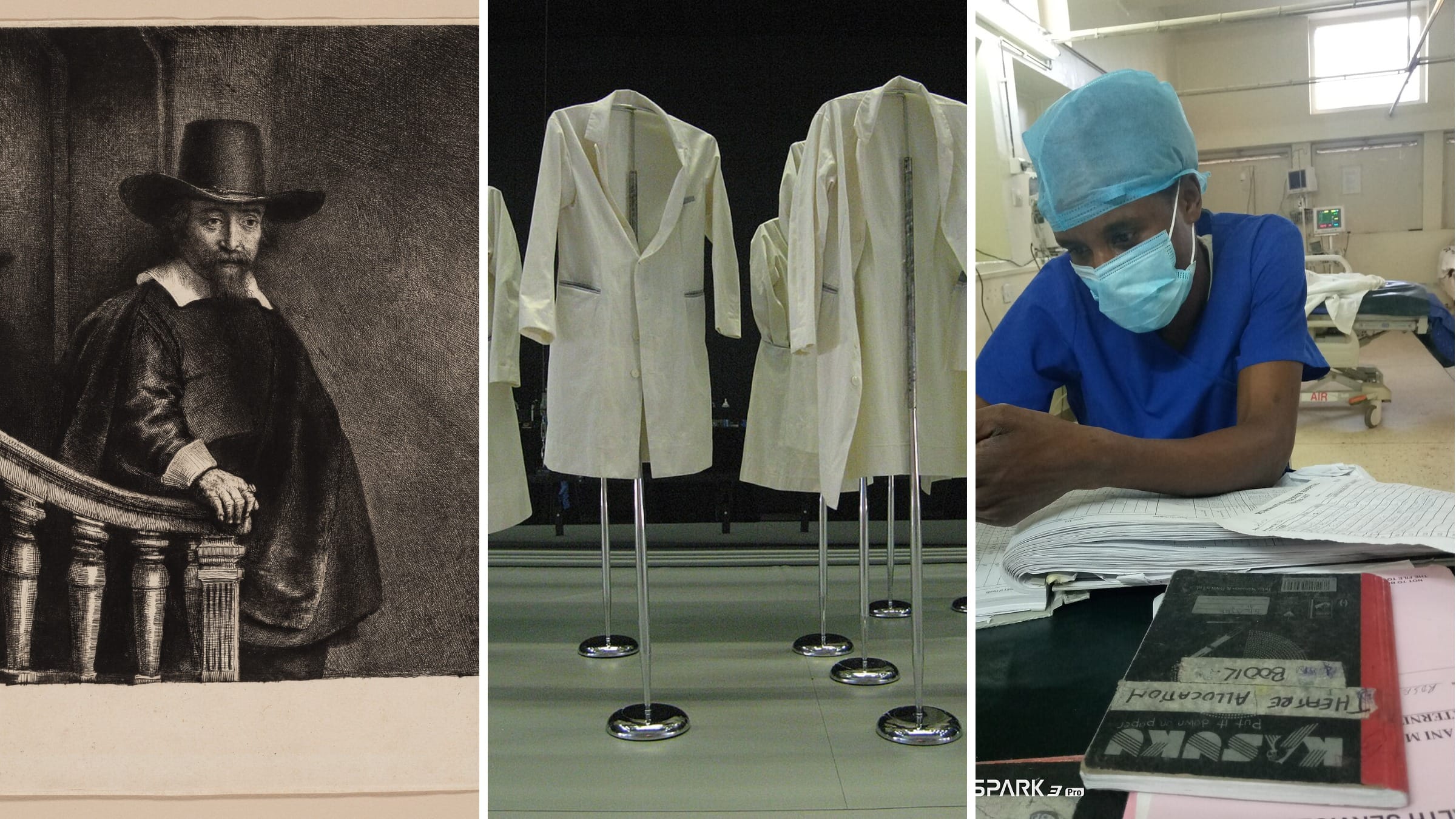
The white coat is the most borrowed garment in this archive — doctors took it from chemists, and everyone else took it from doctors. It is also the only professional uniform here that was never re-cut for women.
Institutional clothing is sized rather than tailored, and that is a design decision rather than a budget one. A uniform that fitted each wearer perfectly would individuate them.
Medicine spent most of the nineteenth century in black frock coats and changed to white in about a generation. The switch was not about hygiene. It was a claim to be a science.
Back
Nametape
Free
$0
Every Research post and every Essay, free to read.
All Research posts — one uniform at a time, in archive photographs