A vestigial garment that stopped being clothing and became a code. The hood carries faculty, degree and institution in a system almost nobody inside it can fully read.
Academic dress is the only prescribed dress in this archive that almost nobody wears to work. It is put on once or twice a year, for an hour, by people who are otherwise dressed like anyone else — and it is specified in more detail than most of the uniforms in this publication that are worn every day.
The centre of that specification is the hood. It is the part that carries the information, and it is the part that has stopped being clothing.
A garment that stopped working
The hood began as a hood: a functional head covering attached to a cloak, in an era when lectures happened in cold stone rooms and the clergy who gave them wore what everyone else wore. Everything about the modern object is descended from that and none of it functions.
The shape flattened as it stopped being worn up. The lining, originally the inside of a garment, became a display surface and moved to the outside. What remains is a piece of cloth hung down the back, shaped like something it no longer is, and readable only because the shape was preserved after the function was lost.
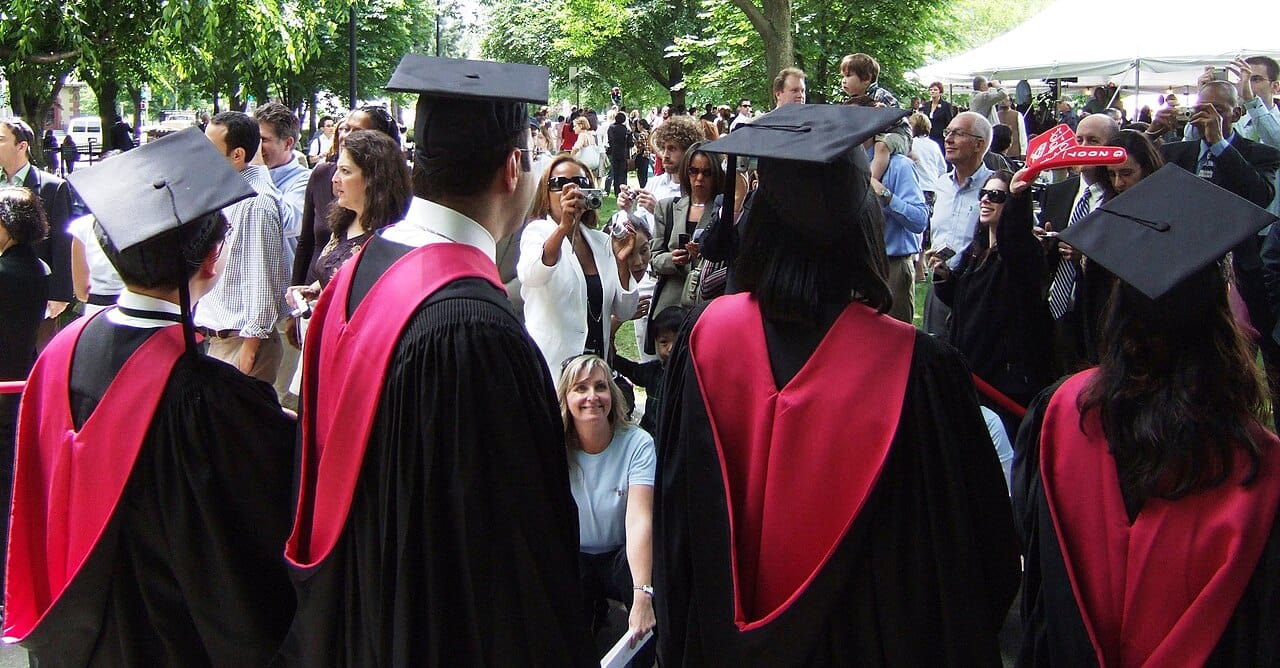
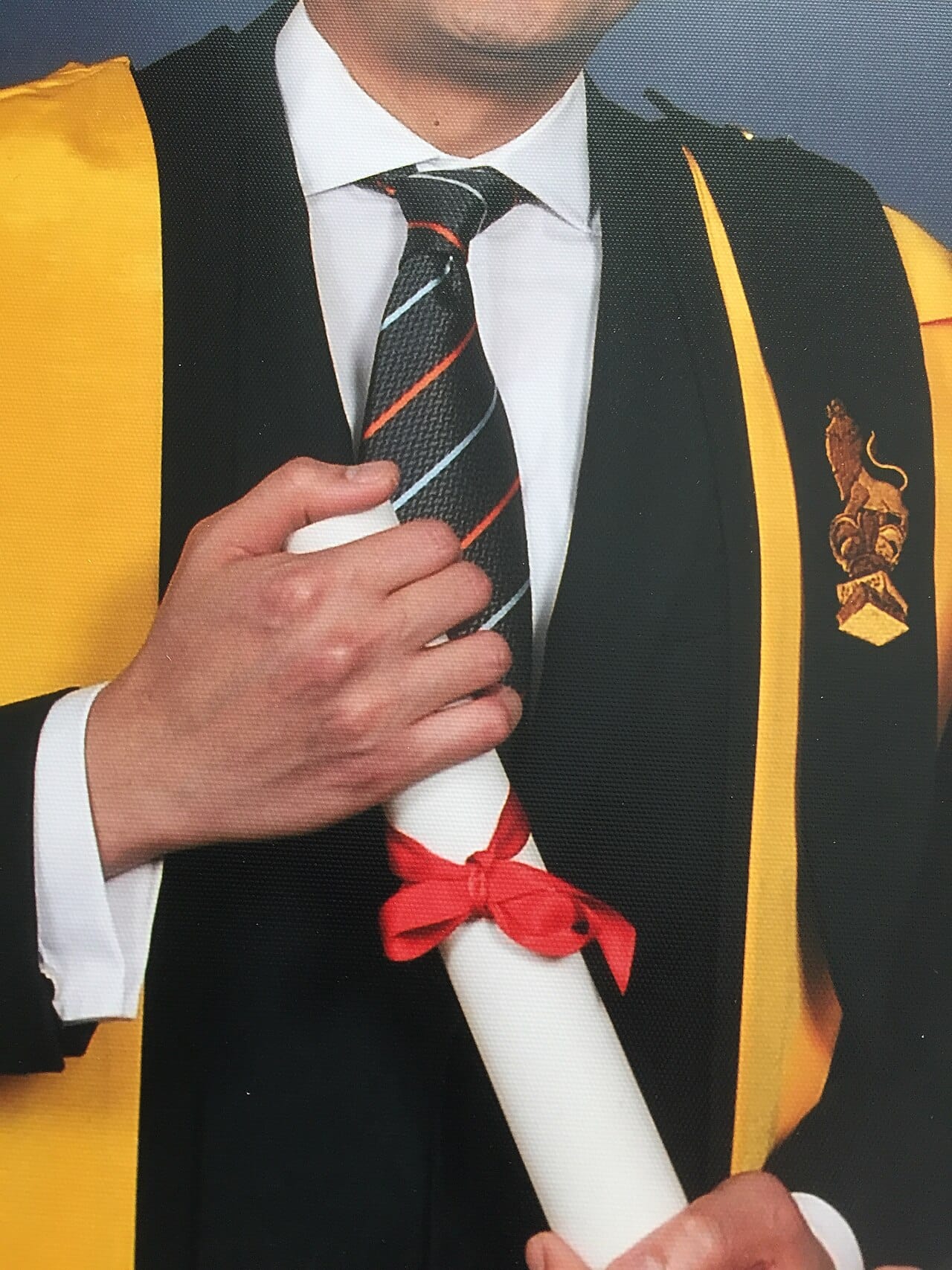
A run of Harvard academic hoods hung side by side, linings outward. Hung together the family resemblance and the differences arrive at once — same construction, different linings, and the lining is doing all of the work.Wikimedia Commons · 14974069 · 2007-06-07 · Joe Hall · CC BY 2.0Academic dress at King's College London: gown, hood, and the coloured facing at the neck. The hood is worn flat against the back and cannot be raised. It is now a place to put a colour, and the colour is the message.Wikimedia Commons · 41172056 · 2015-06-24 18:01:05 · Fil Brit · CC BY-SA 4.0A KCL hood with the epitoge of the Associateship of King's College. A second device on the same garment for a second qualification. The system grows by addition, which is why it becomes unreadable long before it becomes ambiguous.Wikimedia Commons · 51672705 · 2016-09-23 16:55:13 · KiloCharlieLima · CC BY-SA 4.0An academic stole, worn over the shoulders in place of a hood. Where the hood has been abandoned entirely and replaced with a band of colour. The information survives; the garment it was attached to does not.This file was derived from: Valedictorian Joint-Chiefs-of-Staff.jpg: · 20548944 · 2012-08-06 01:45 · Valedictorian_Joint-Chiefs-of-Staff.jpg: Chairman of the Joint Chiefs of Staff derivative work: Themightyquill · CC BY 2.0
Faculty, degree and institution are all encoded in the shape, lining and trim — a system of real precision that almost nobody inside it can fully read, including most of the people wearing one.
Precise and incompatible
Each institution's scheme is internally exact. A specific silk, a specific fur or trim, a specific shape of cape, mapped to a specific degree. Within one university the code is unambiguous, and the registrar can tell you what every combination means.
Across institutions it collapses. The same colour means different faculties in different places; the same degree takes different shapes; a shape that indicates a doctorate in one country indicates a bachelor's in another. There is no central authority, because there was never a moment when one could have been imposed.
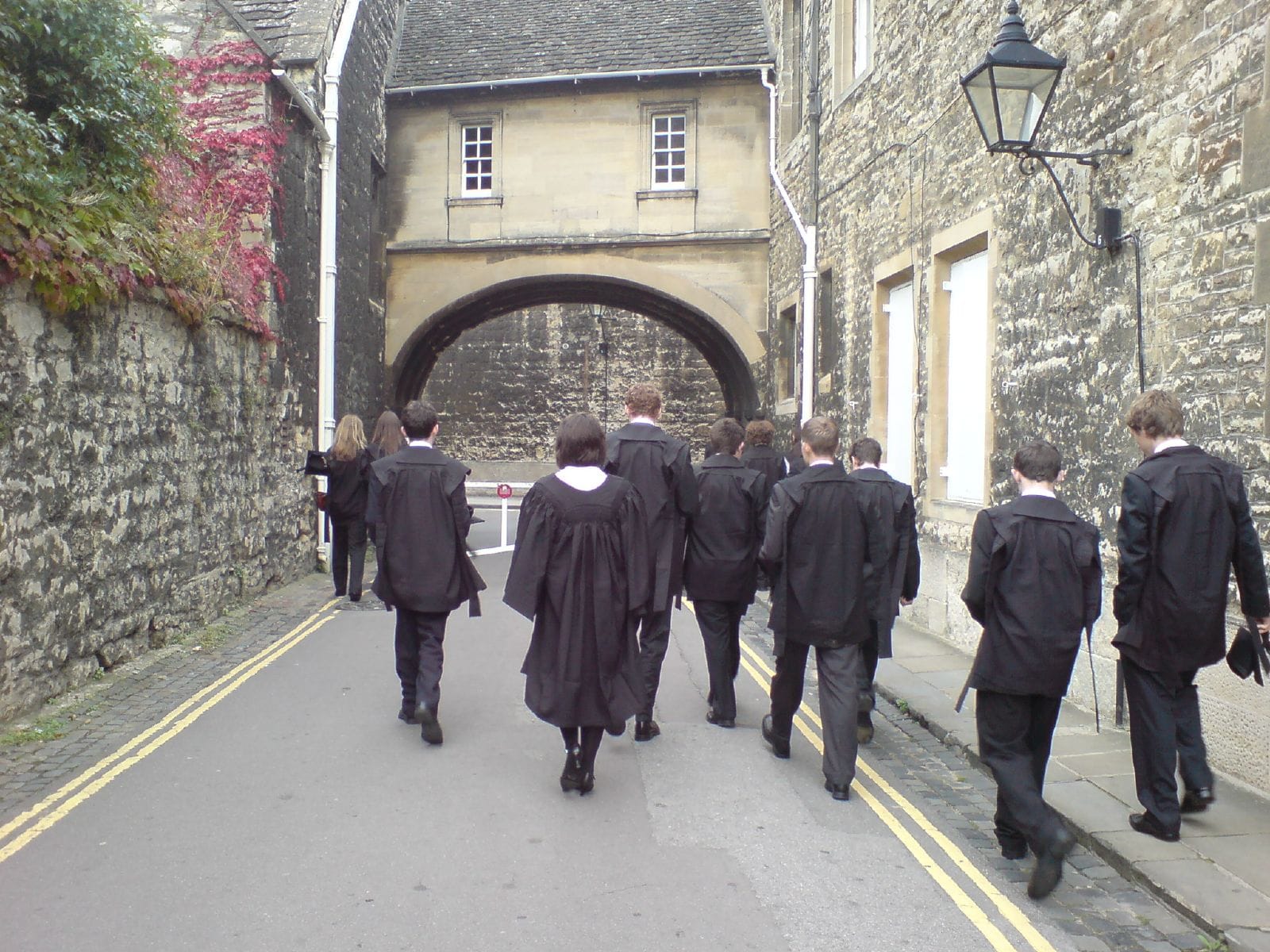
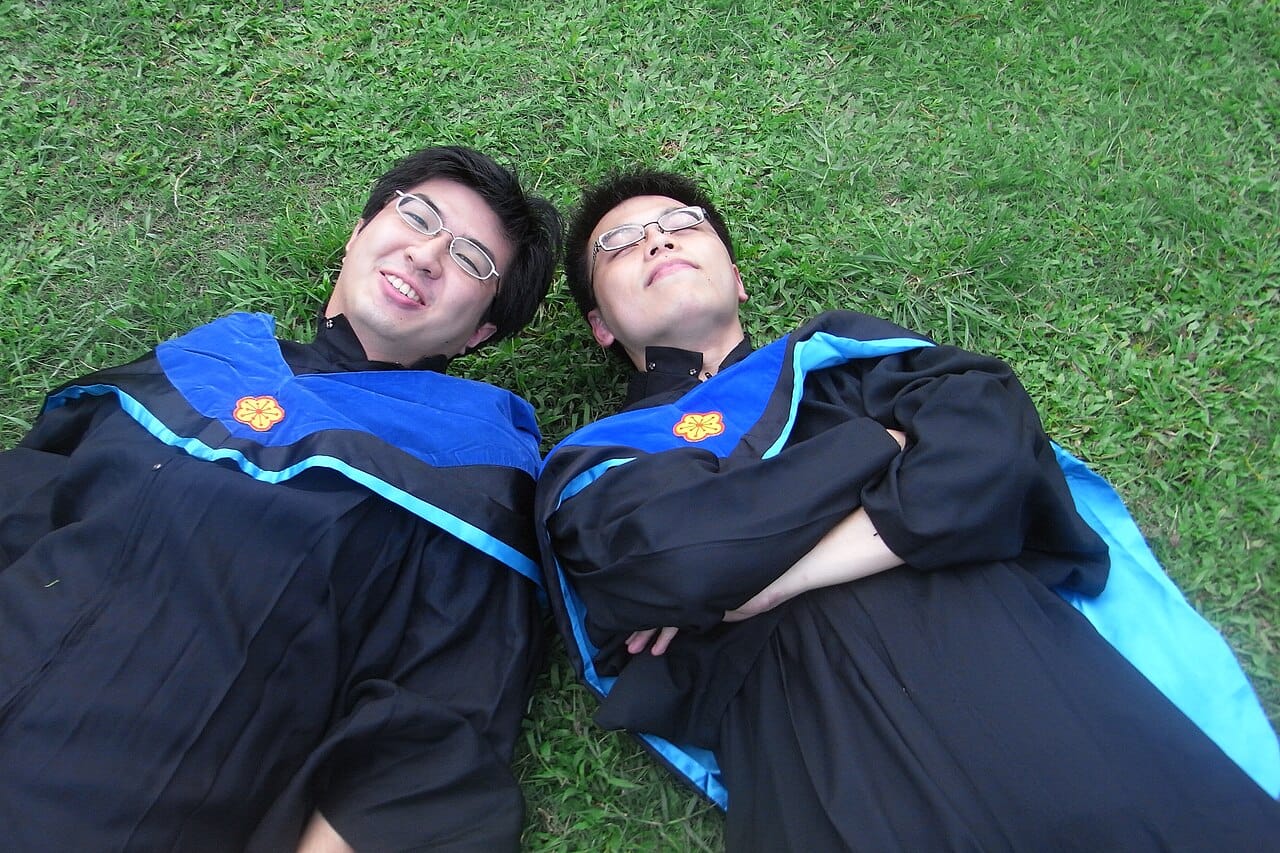
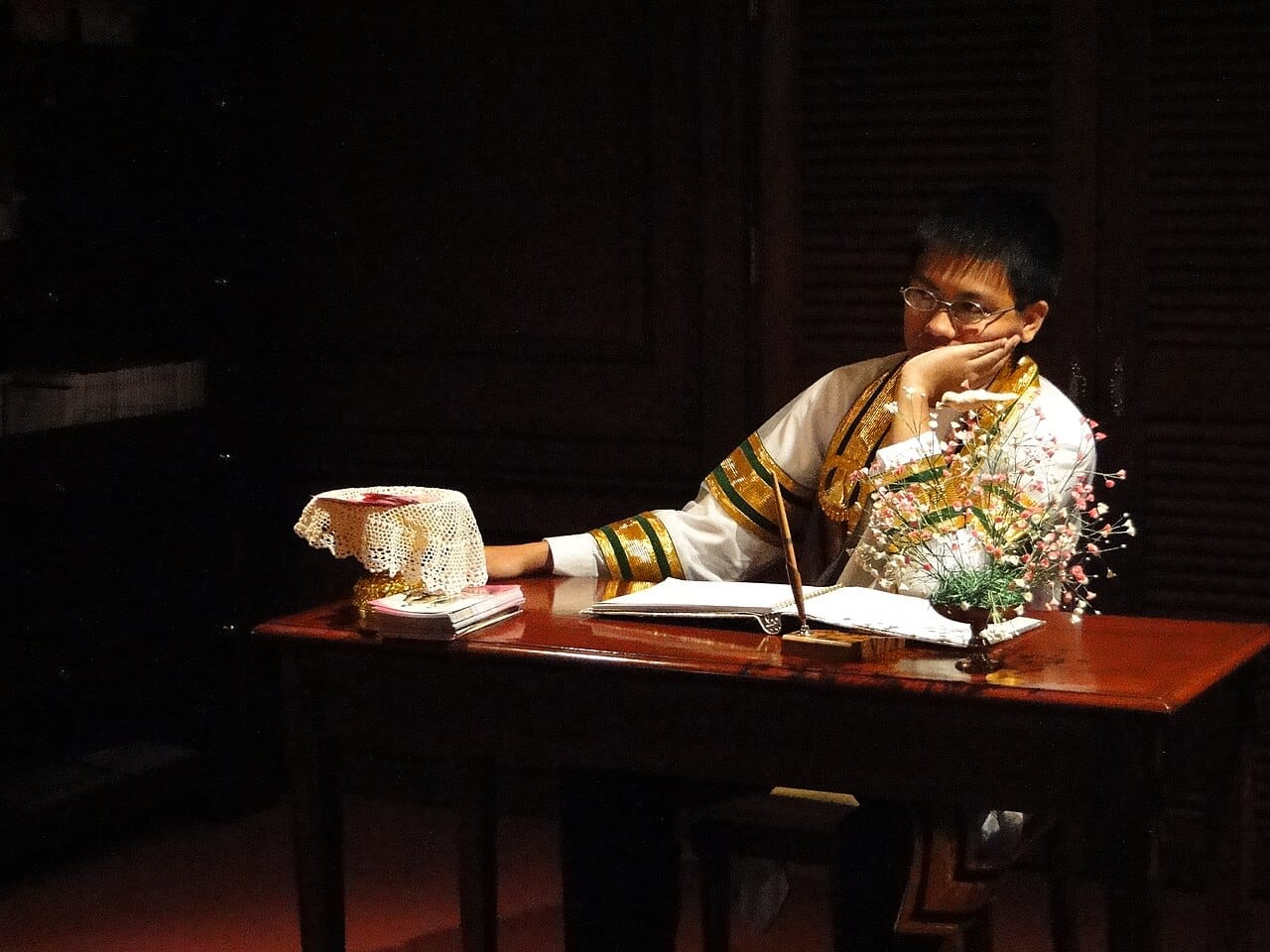
Oxford students in academic dress, gowns short and hoods small. Undergraduate dress in a system where the gown itself carries status — length and sleeve, before any hood is added.Flickr · 2510596 · 2006-10-14 10:28:00 · James · CC BY 2.0Students of National Taiwan University in academic dress. The apparatus transplanted whole into a university with no medieval clerical past. It arrived as a package, complete with a hood nobody had ever worn as a hood.Wikimedia Commons · 103587333 · 2010-07-29 16:19:31 · ddio · CC BY-SA 2.0Academic dress of Sukhothai Thammathirat Open University. Locally designed rather than copied, and still unmistakably in the same tradition. The form outlasted both its function and its origin.Captured by uploader. · 9018148 · 2010 · ผู้สร้างสรรค์ผลงาน/ส่งข้อมูลเก็บในคลังข้อมูลเสรีวิกิมีเดียคอมมอนส์ - เทวประภาส มากคล้าย · CC BY 3.0Academic regalia laid out ready to be worn. Off a body it reads as three unrelated pieces of cloth, which is a fair description of what it is.Wikimedia Commons · 135155323 · 2023-07-28 · IAmBecomeDeath · CC BY-SA 4.0
Who it is for
The honest answer is that it is not primarily for the wearer or for other academics. Colleagues know each other's qualifications; nobody reads a hood to find out. It is for the occasion — a ceremony that needs to look like a ceremony, in front of families who are not expected to decode anything.
Which makes academic dress the clearest case in this publication of prescribed dress whose signalling function has been fully replaced by an atmospheric one, without any of the specification being dropped along the way. The code is still exact. Nothing depends on it any more.
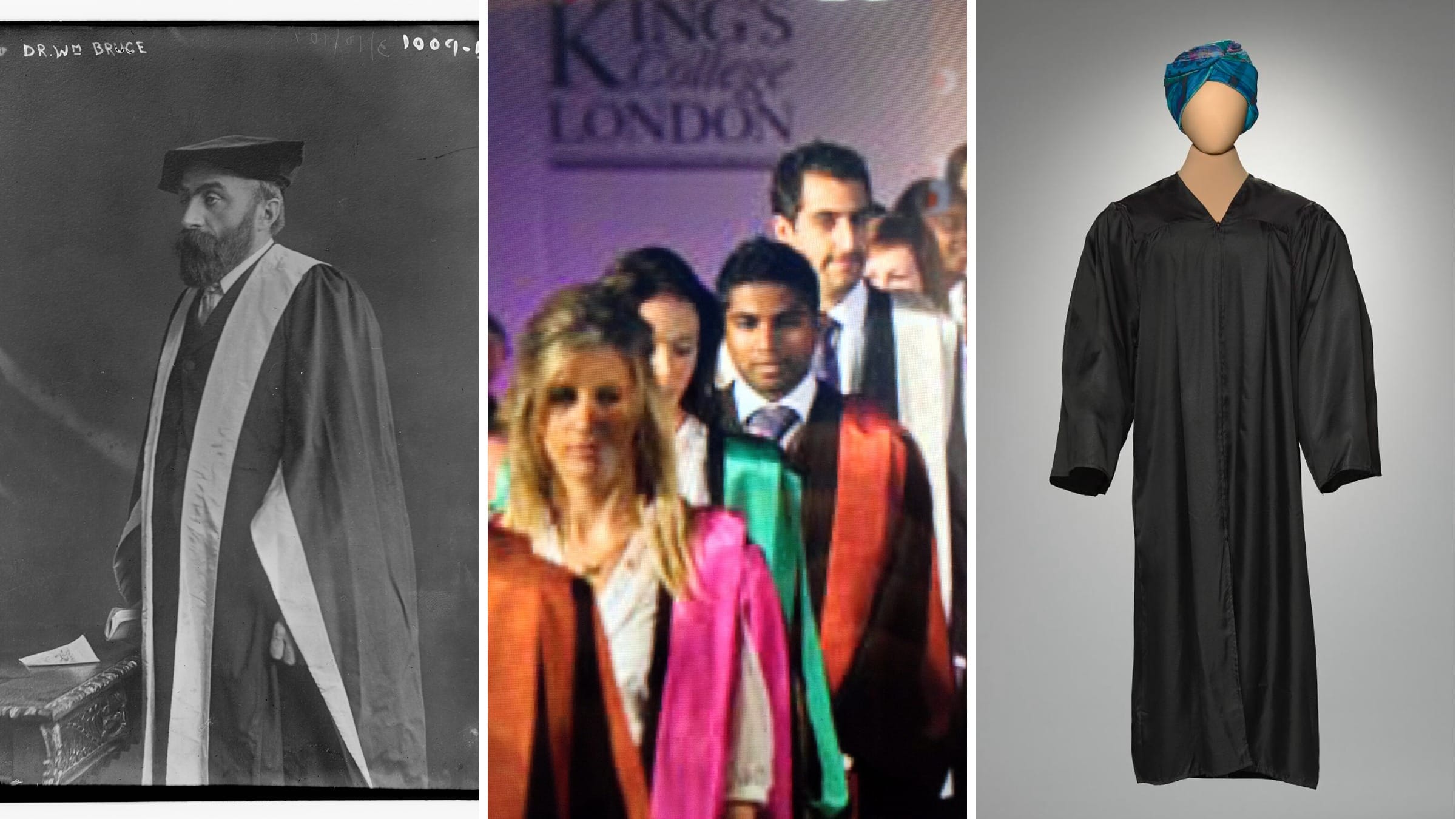
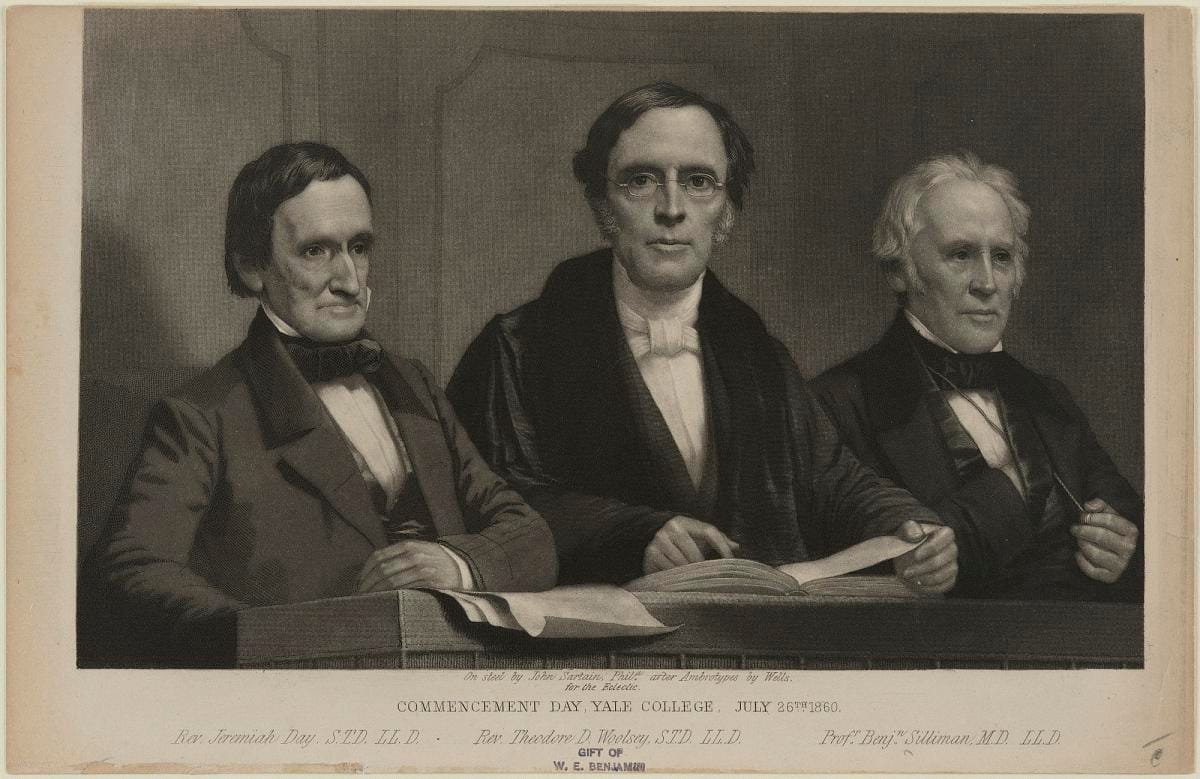
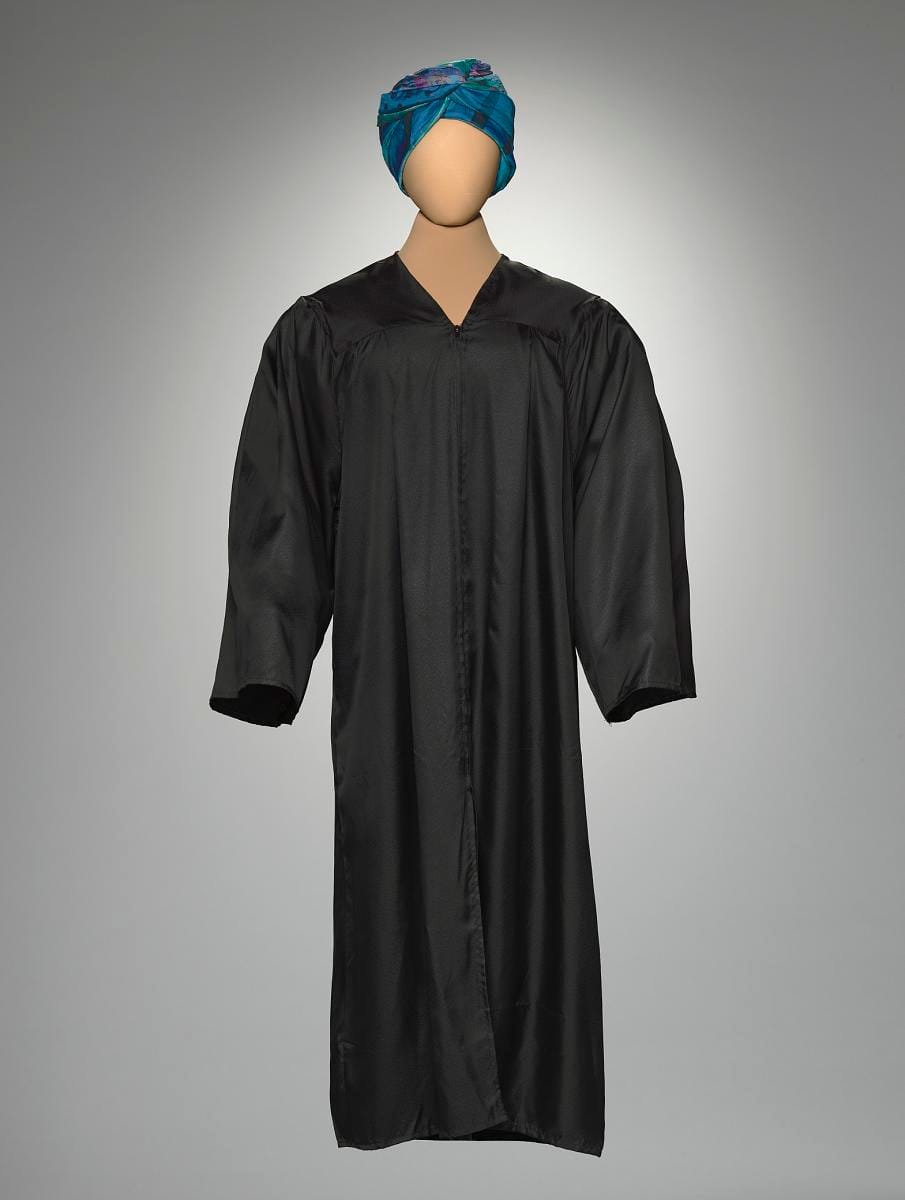
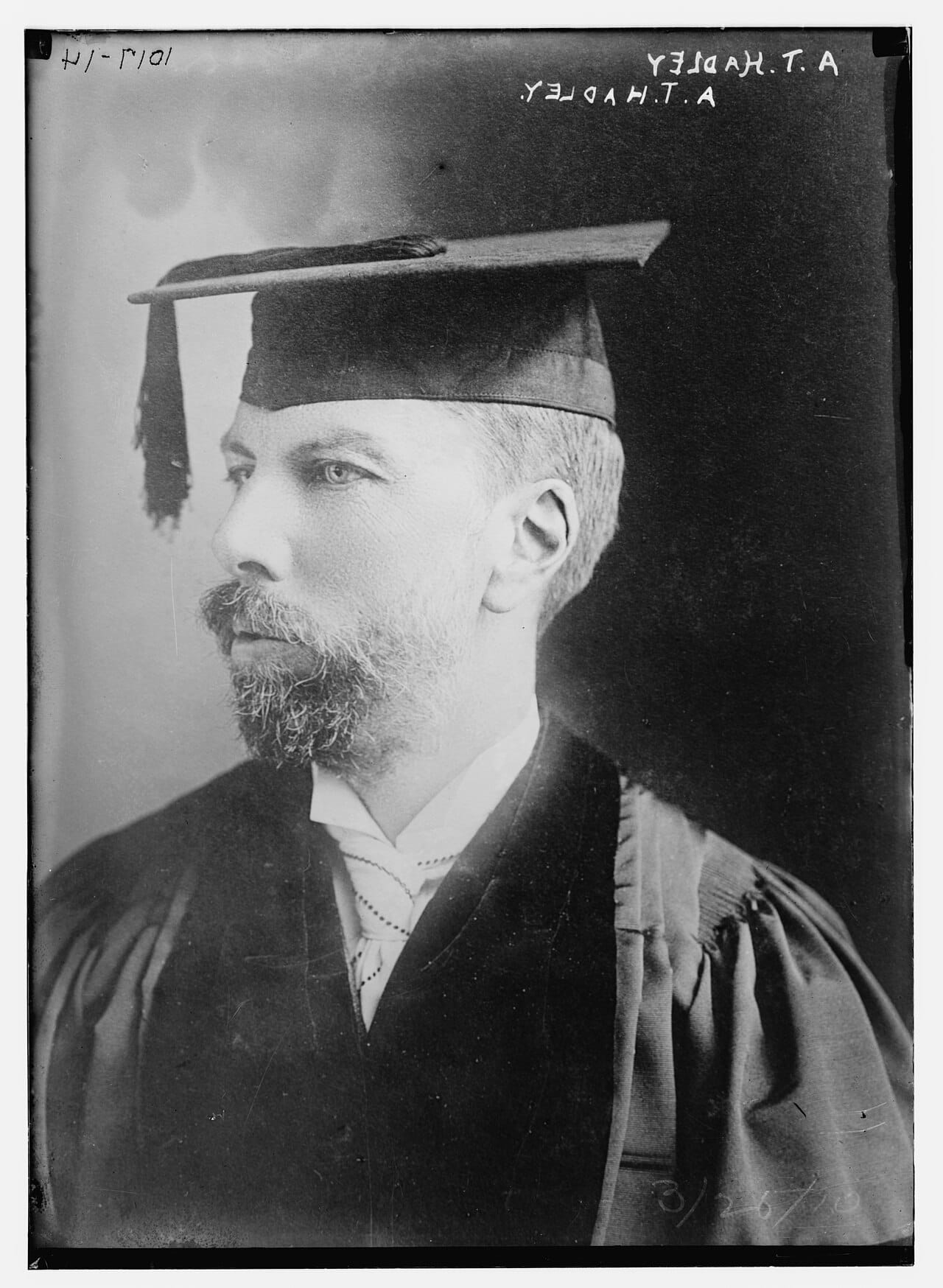
Commencement Day at Yale College, a crowd in academic dress. At this distance no individual code is legible and the effect is entirely collective, which is what the occasion actually requires of the clothing.National Portrait Gallery · NPG-8600082B_1 · 1860 · John Sartain, 24 Oct 1808 - 25 Oct 1897, J. Horace & Henry M. Wells (Photographer), Jeremiah Day, 1773 - 1867, Theodore Dwight Woolsey, 1801 - 1889, Benjamin Silliman, 8 Aug 1779 - 24 Nov 1864 · CC0A robe worn at a Georgetown University ceremony, held in a museum collection. The one surviving garment among these photographs, and it reached a museum because of who wore it and why — not because anyone collects academic dress.National Museum of African American History and Culture · NMAAHC-2021_10_1-2_001 · 2017 · Jostens, American, founded 1897, Mélisande Short-Colomb, Georgetown University, founded 1789 · CC0A university president photographed in full academic dress, early twentieth century. Sat for deliberately, in the most elaborate version available. The garment is the reason for the photograph rather than an incidental fact about it.Wikimedia Commons · 66874622 · 2018-03-30 17:59:33 · Bain News Service, publisher · Public domain
Hedda Maartens — MA in fashion design, then eleven years in the industry designing for people who had no say in what they wore. Now writes about prescribed dress: how a garment was made to work, and what it was made to make a person into.
Member discussion
Back
Nametape
Free
$0
Every Research post and every Essay, free to read.
All Research posts — one uniform at a time, in archive photographs













Member discussion