Wool, leather and a brass helmet. Firefighting dress before flame-resistant fibre was a bet that wool chars rather than melts, and that the helmet would take the rest.
Before flame-resistant fibre existed, firefighting dress was a bet about materials. Wool for the body, leather for the head, brass for the fittings — and behind each choice a specific claim about what fire does and what a person can survive.
The claims were not unreasonable. Wool chars rather than melts, which is the property that matters most when the alternative is a synthetic fusing to skin. Leather, boiled and layered, holds a shape under heat and sheds water. Brass does not spark. Read as an engineering answer to the materials actually available, the outfit is coherent. It looks reckless only from the far side of an invention nobody had yet made.
The helmet did most of the work
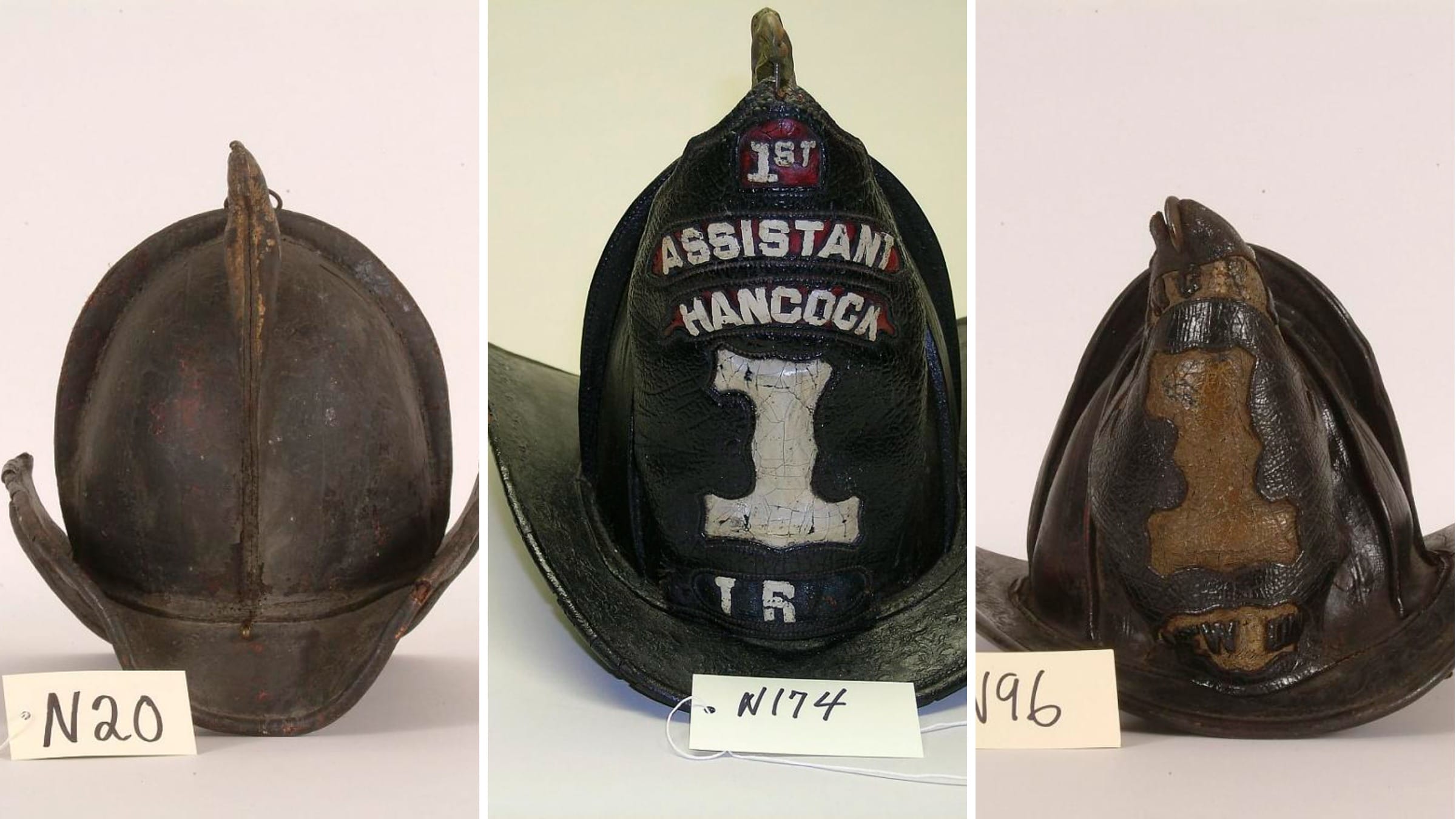
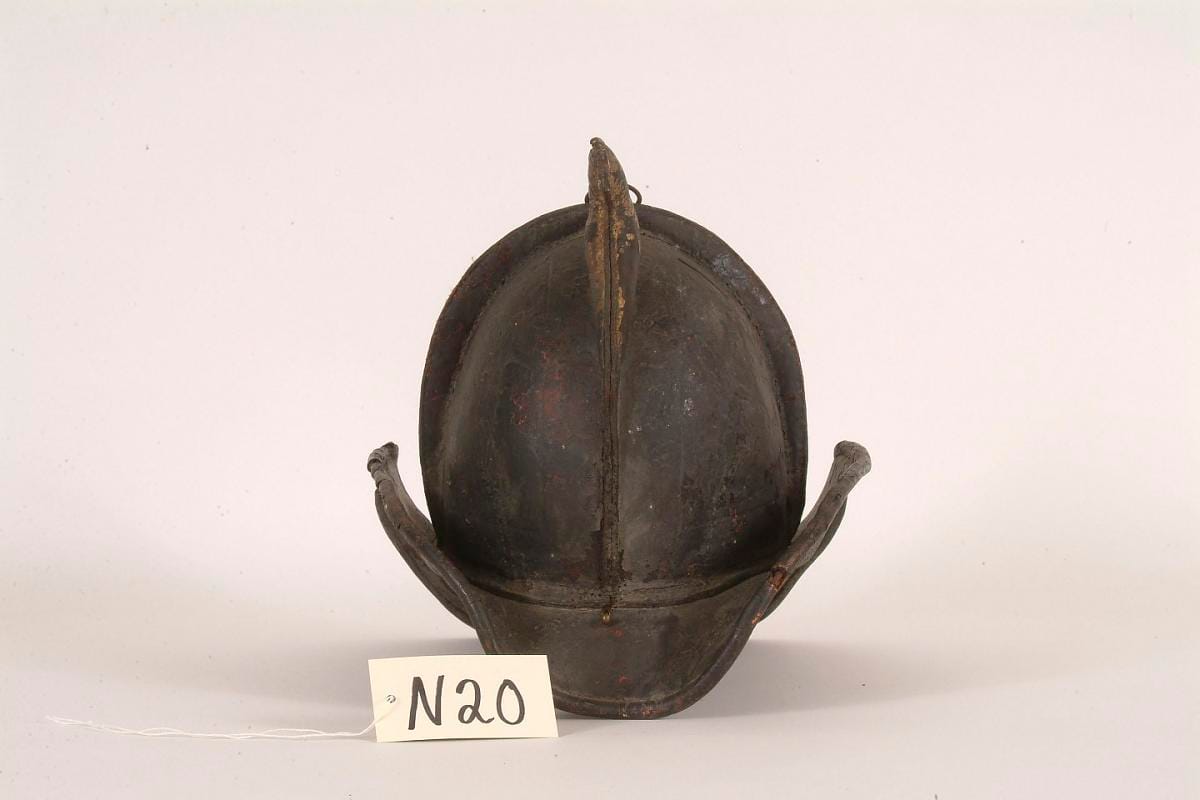
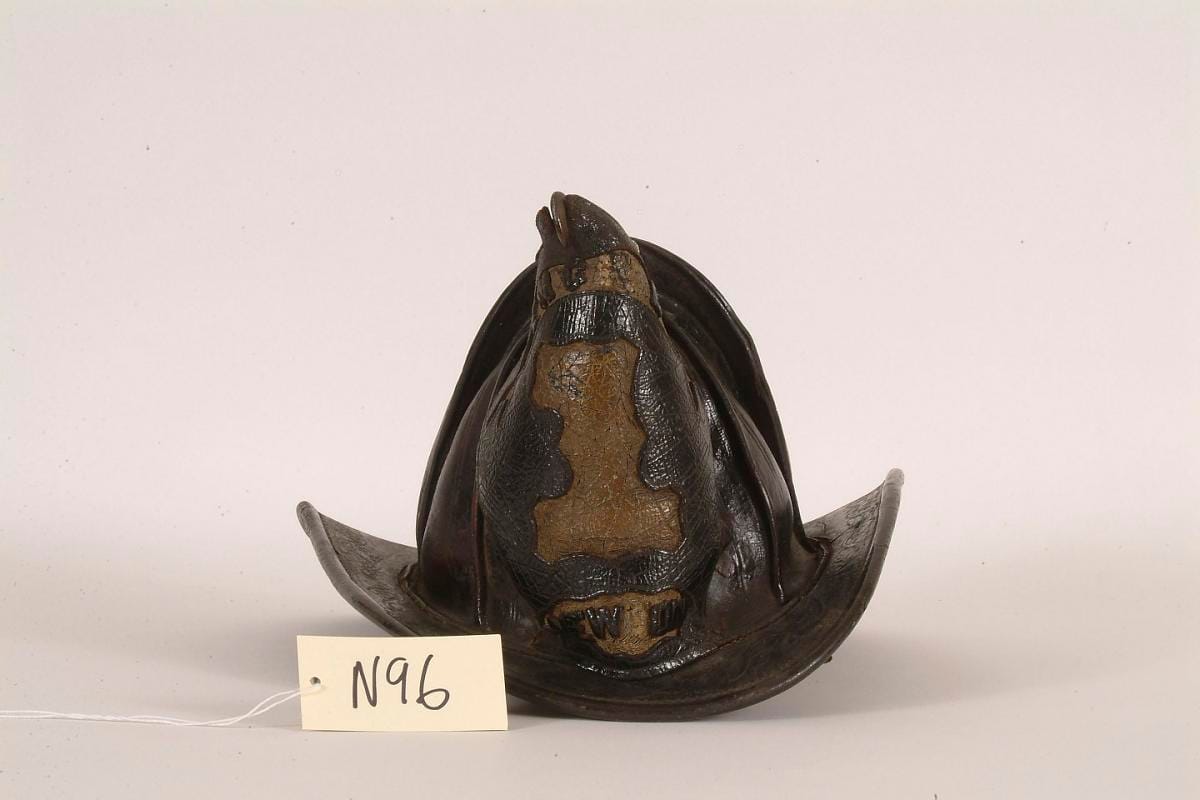
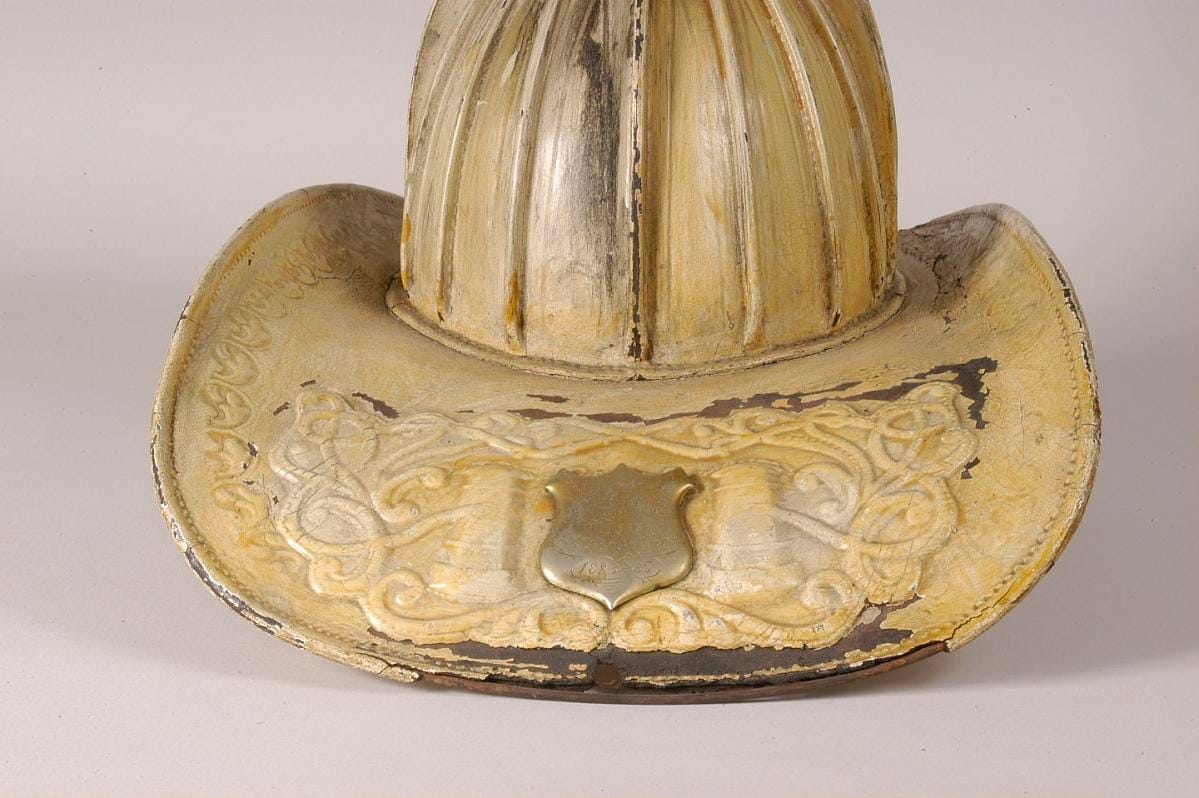
The distinctive shape is not decoration. The long rear brim carries water and debris away from the collar; the front comb stiffens the crown against falling masonry; the raised ridge running fore and aft is a structural rib. Everything about the silhouette is answering a load case.
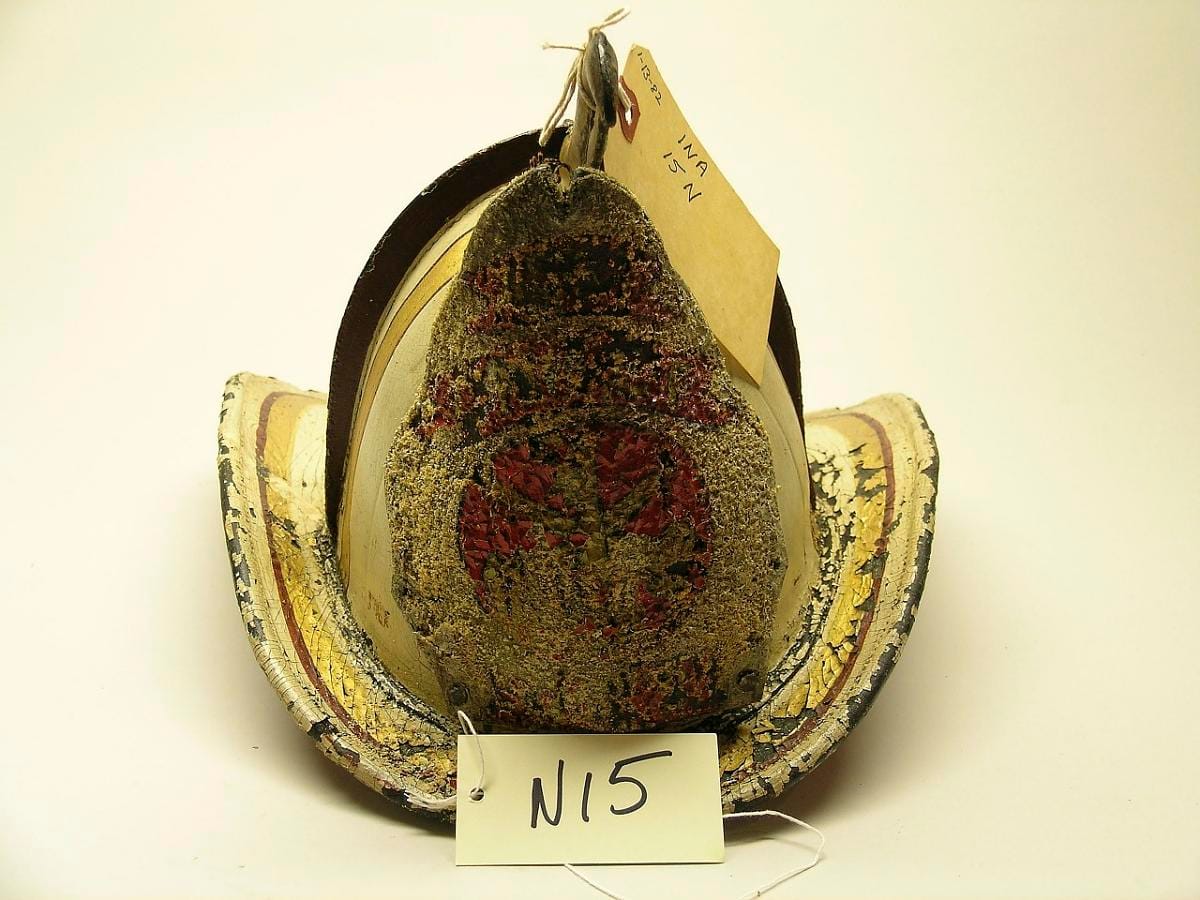
What it is made of matters as much. These are leather — many layers, stitched and pressed, hardened until the whole shell behaves as one piece. A metal helmet conducts heat to the head and a fabric one gives way; layered leather does neither, and it can be repaired by a saddler in a town that has no armourer.
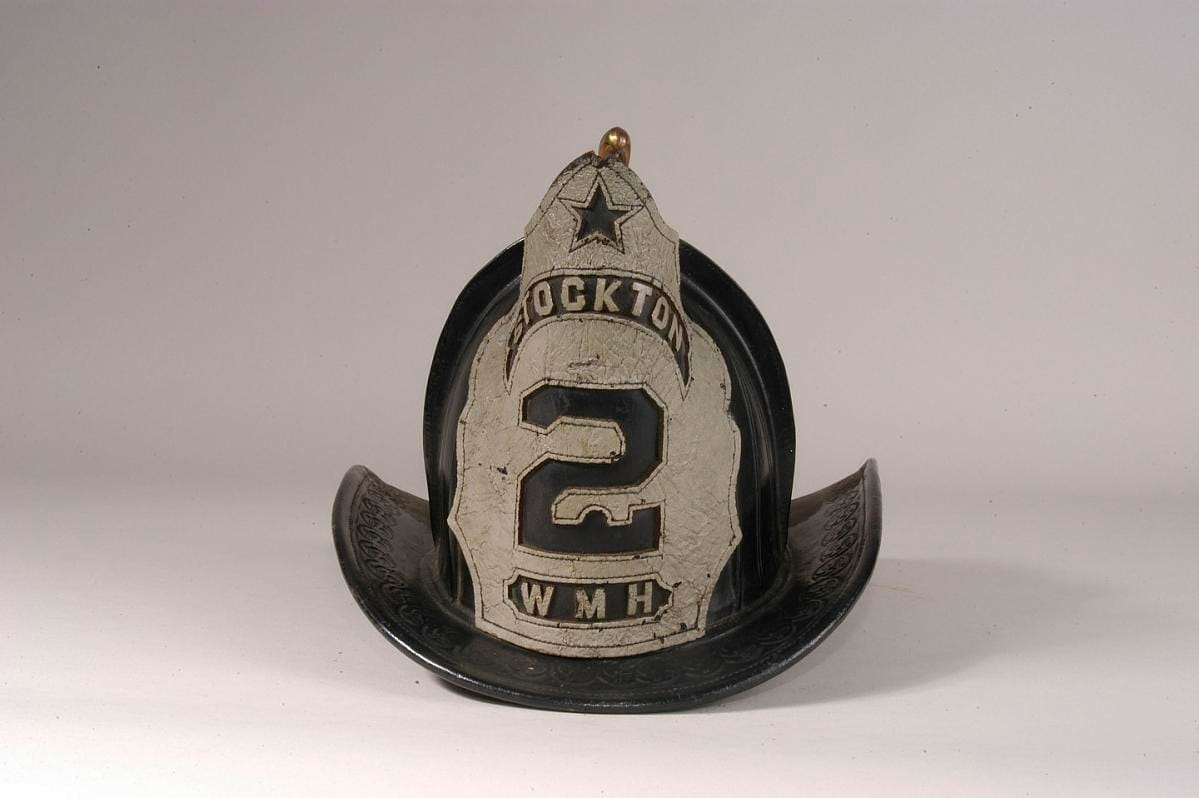
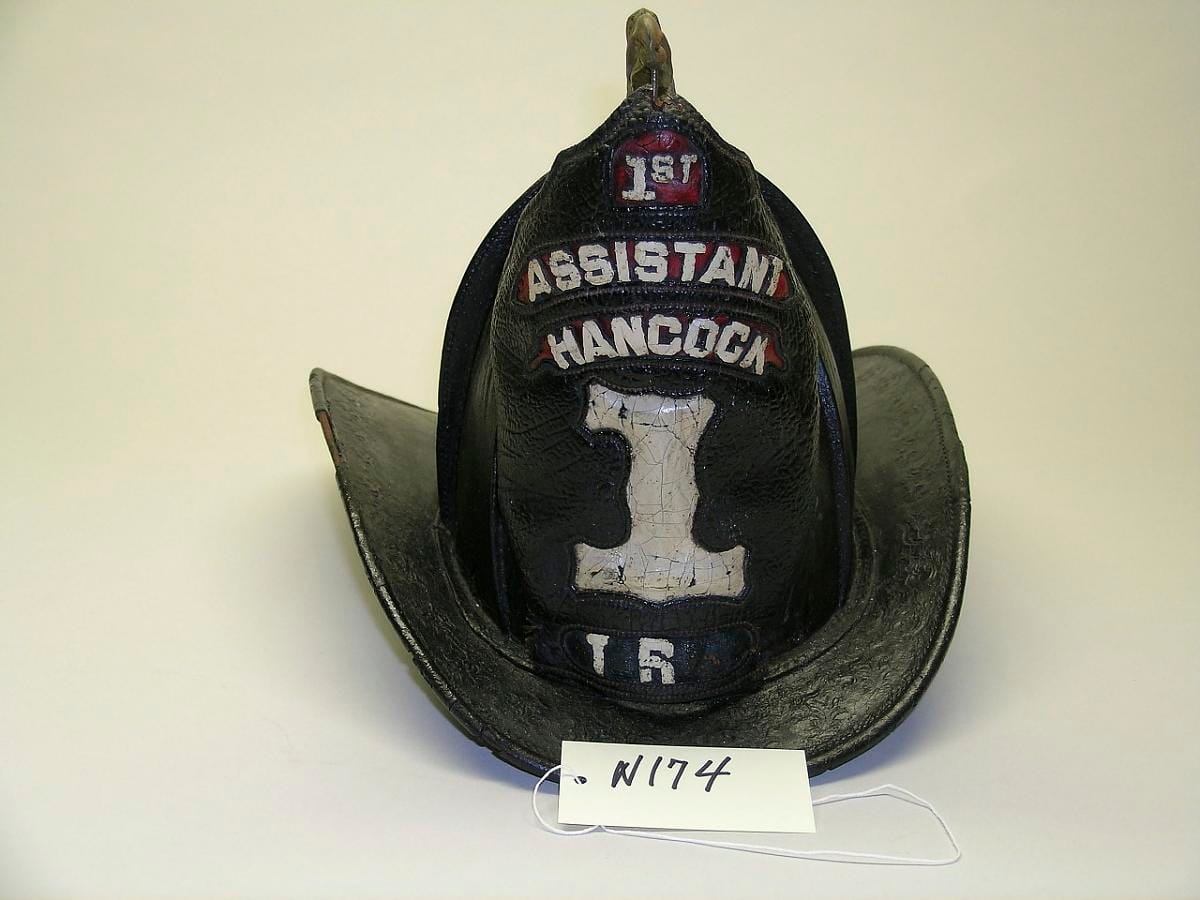
A leather fire helmet lettered "Cataract Hose 1", the rear brim extending well past the crown. The proportion is the design. That brim is long enough to look ungainly on a shelf and exactly long enough to keep water out of a collar when the wearer is looking up.National Museum of American History · NMAH-AHB2008q05049 · 1838 · creator not recorded · CC0A helmet marked "Stockton 2", seen from the side. From this angle the fore-and-aft rib is obvious. It is doing what a beam does, and it is the reason a leather shell can take a blow at all.National Museum of American History · NMAH-AHB2008q05286 · 1855 · creator not recorded · CC0A helmet lettered "Hancock", the leather crazed and darkened across the crown. This is what heat does to leather over years rather than in one fire: it stiffens, cracks along the flex lines, and goes from supple to brittle. The damage is a service record.National Museum of American History · NMAH-AHB2008q05389 · 19th century · Anderson & Jones · CC0A helmet carrying the word "Engineer" above a company name. Role and company on the same object. There was no other place to put either — a wool coat in a smoke-filled street tells nobody anything, and the head is the part that stays visible.National Museum of American History · NMAH-AHB2008q05442 · 19th century · creator not recorded · CC0
Every one of these helmets is lettered, and the lettering faces forward. The one part of the outfit that could be seen across a burning street was the one part carrying the wearer's company, and it was designed to be read at exactly that distance.
The frontpiece is the badge
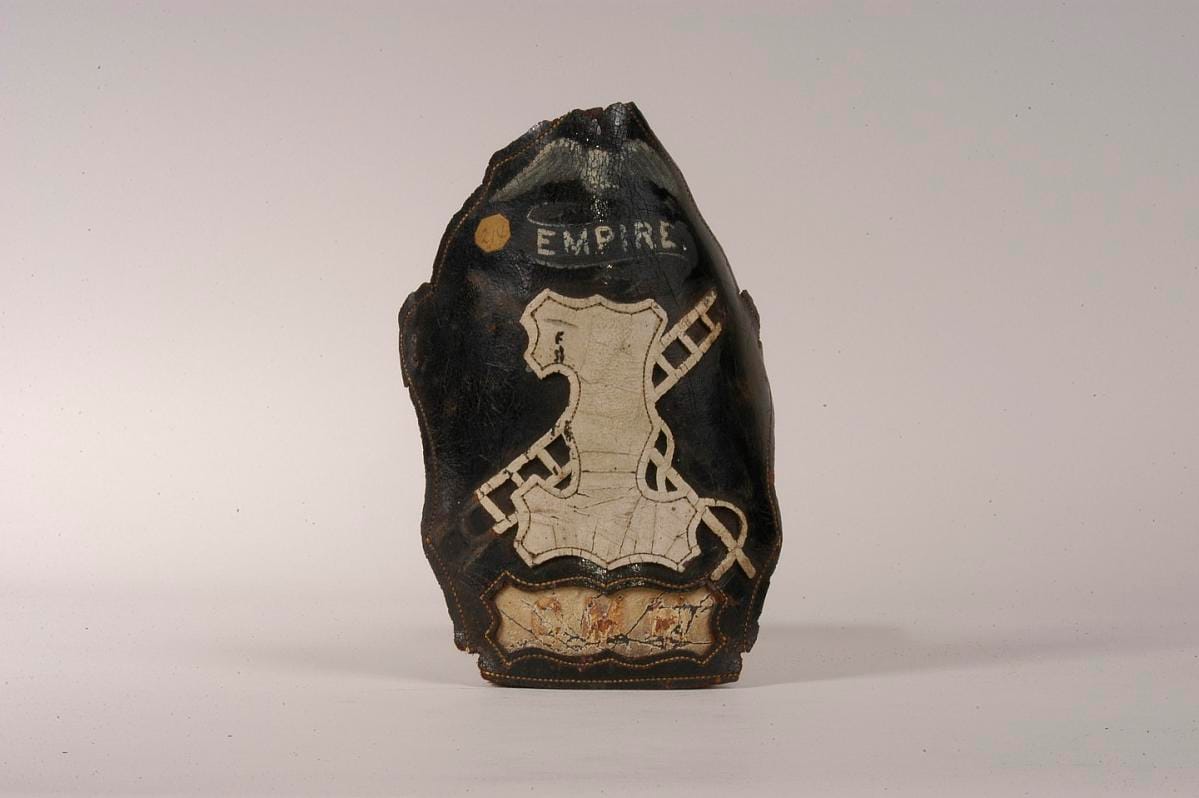
The shield on the front is a separate object, made separately and fixed on: leather or metal, painted or gilded, carrying a company name and often a number. It could be replaced when a man changed company without replacing the helmet, and it is where the money went.
Nineteenth-century American fire companies were volunteer, competitive and fiercely local. The frontpiece is where that shows — the helmets themselves vary far less than the shields do, because the shell was solving a problem and the shield was making a claim.
A helmet frontpiece alone, lettered "Empire 1", detached from any helmet. Held on its own it is unmistakably a badge rather than a component — closer to a shop sign than to safety equipment, and made to a completely different standard from the shell it was screwed to.National Museum of American History · NMAH-AHB2012q00625 · ca 1875 · Anderson & Jones · CC0A helmet whose frontpiece reads "Assistant Chief" rather than naming a company. Rank displacing affiliation. Once a fire service is paid and municipal rather than volunteer and competitive, the interesting fact about a person stops being which company they belong to.National Museum of American History · NMAH-AHB2008q05477 · 19th century · Wilson, William H. · CC0A helmet of markedly plainer construction, its shield small and unlettered. What the same object looks like when nobody is competing. The engineering is unchanged and everything else has gone.National Museum of American History · NMAH-AHB2008q05032 · 1883-1885 · Zeluff, Peter, Cairns & Brother · CC0
What replaced it
The wool-and-leather answer held for the better part of a century and then went in a generation, once fibres arrived that resist ignition instead of merely surviving it. What replaced it is lighter, hotter to wear, far better at its job, and anonymous.
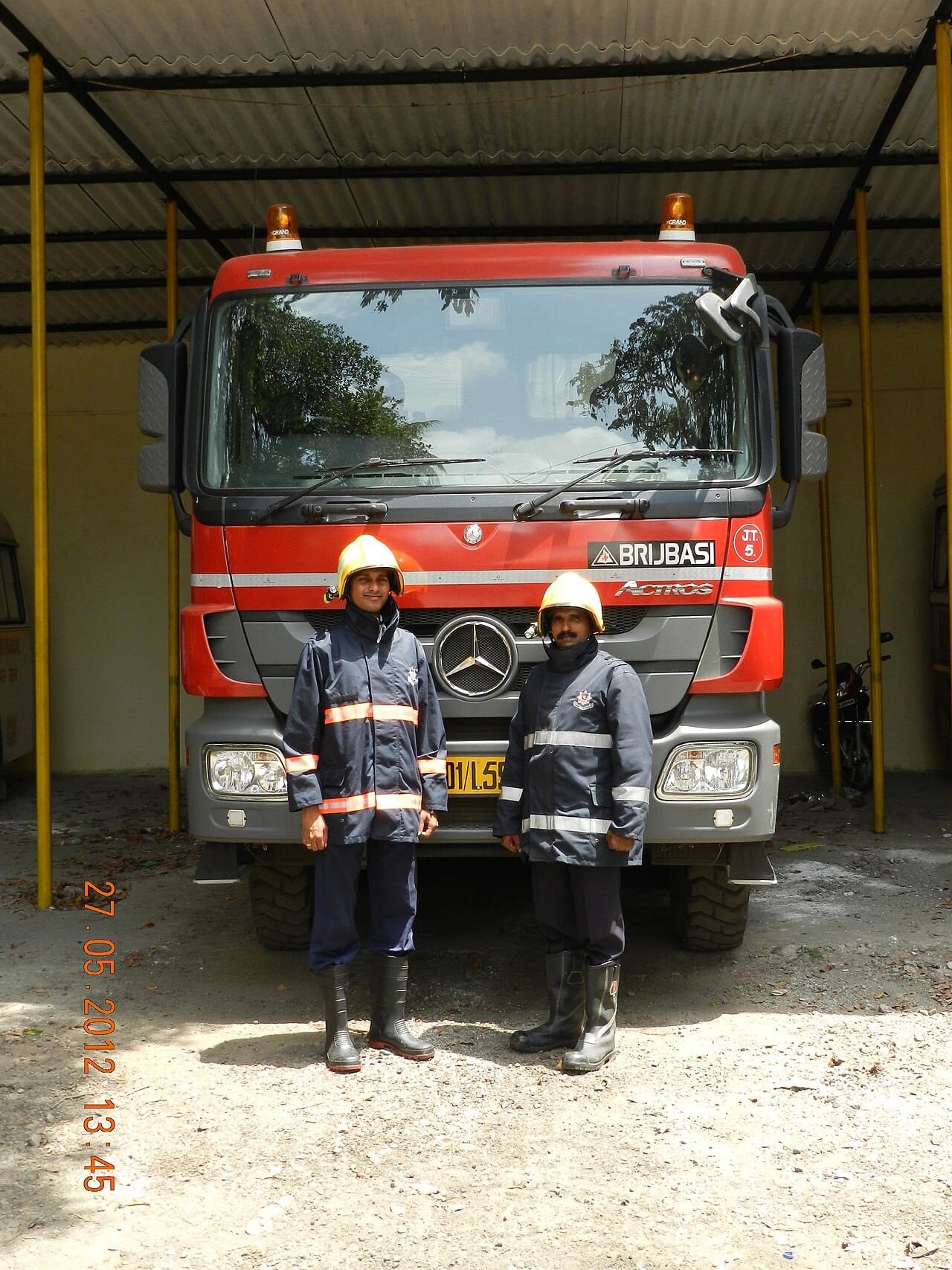
The modern outfit is a system rather than a set of garments: shell, moisture barrier, thermal liner, all certified together and none of it meaningful on its own. It is a better answer to the same question, and it has no room in it for a painted shield.
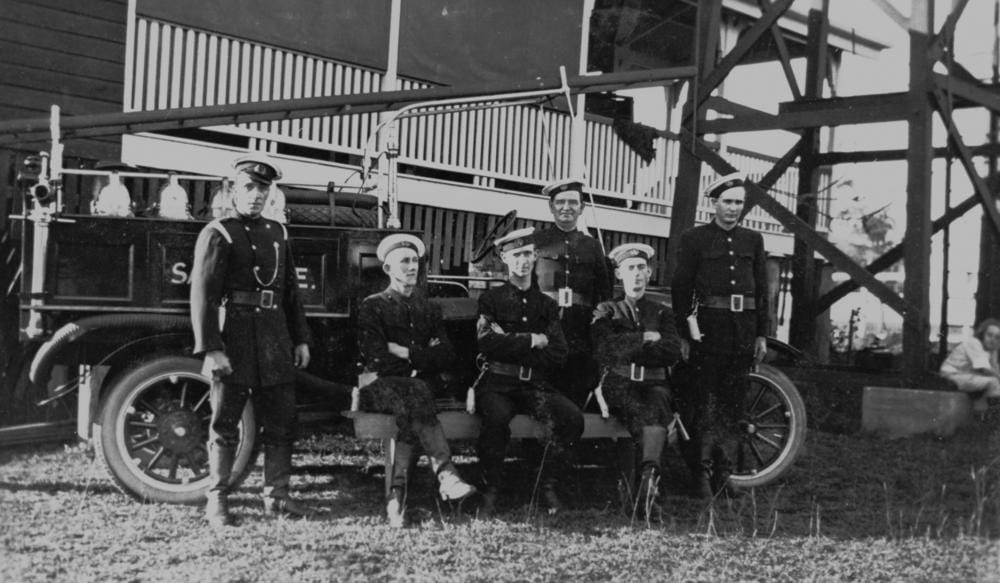
Modern firefighting protective equipment issued to a municipal brigade. Nothing here identifies a company, and nothing here is repairable by a saddler. Both facts follow from the same change in materials.Clicked during MFB's First Responders Training Program · 19625905 · 2012-05-27 · Suyogaerospace · CC BY-SA 3.0A fire brigade photographed with its appliance, late nineteenth century. The helmets are the only part of the group that reads at this distance — which is what they were for, and the clearest evidence that the shape was chosen to be seen as well as to protect.Item is held by John Oxley Library, State Library of Queensland. · 12389055 · 1923-12-01 · creator not recorded · Public domain
Hedda Maartens — MA in fashion design, then eleven years in the industry designing for people who had no say in what they wore. Now writes about prescribed dress: how a garment was made to work, and what it was made to make a person into.
Member discussion
Back
Nametape
Free
$0
Every Research post and every Essay, free to read.
All Research posts — one uniform at a time, in archive photographs



Member discussion