The years when airlines hired fashion designers and the uniform stopped being a uniform. Also the years it became the most openly commercial garment in this entire subject.
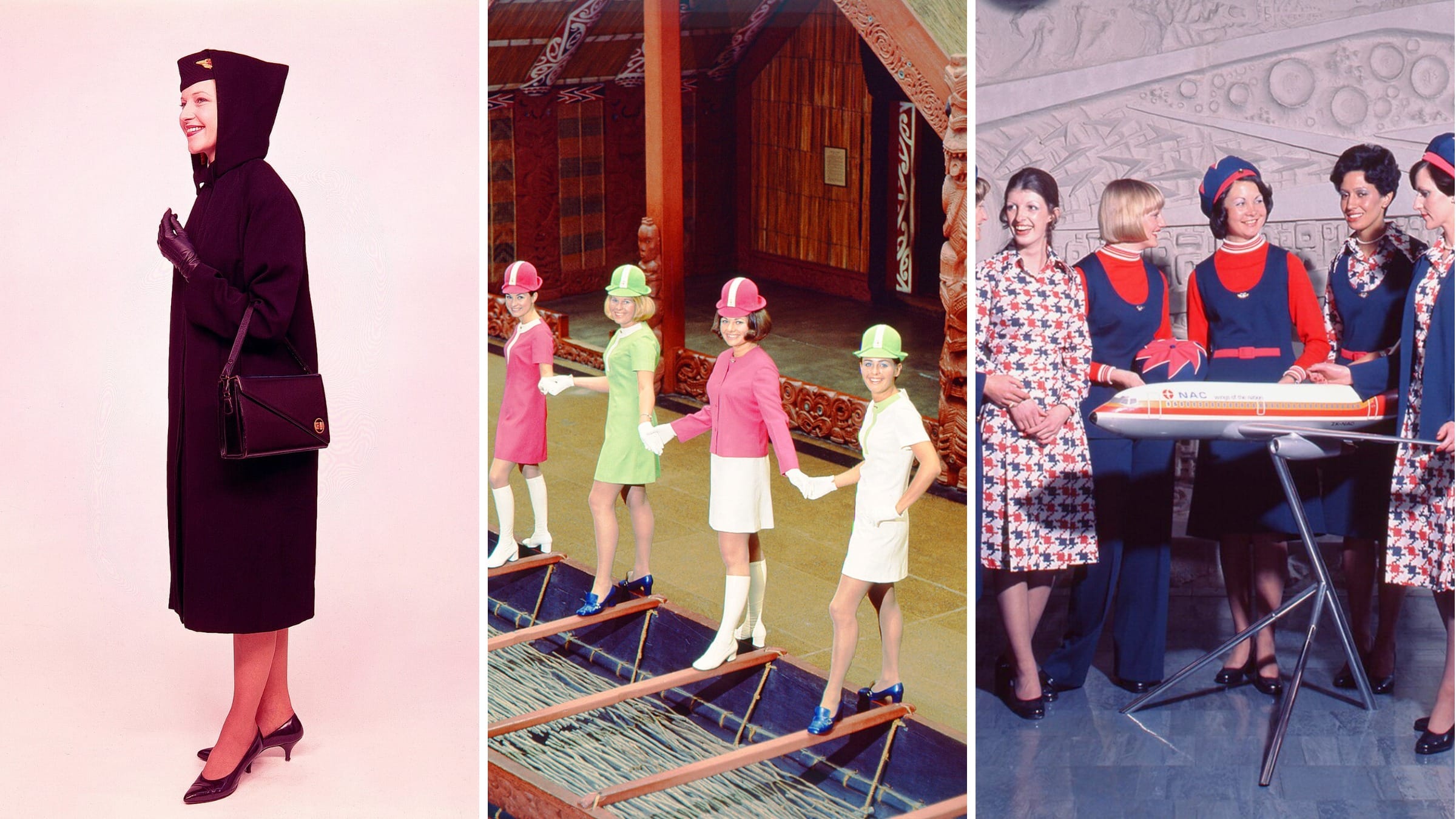
For about seven years in the middle of the twentieth century, airlines stopped ordering uniforms and started commissioning them. Couturiers were engaged, collections were launched with press events, and the results were reported as fashion rather than as procurement.
It is the strangest episode in this whole subject, because it is the clearest case of a uniform designed for somebody other than the person wearing it. Everything else in this archive was specified by an institution for the institution's own purposes — legibility, protection, discipline. This was specified to be looked at by passengers.
Before
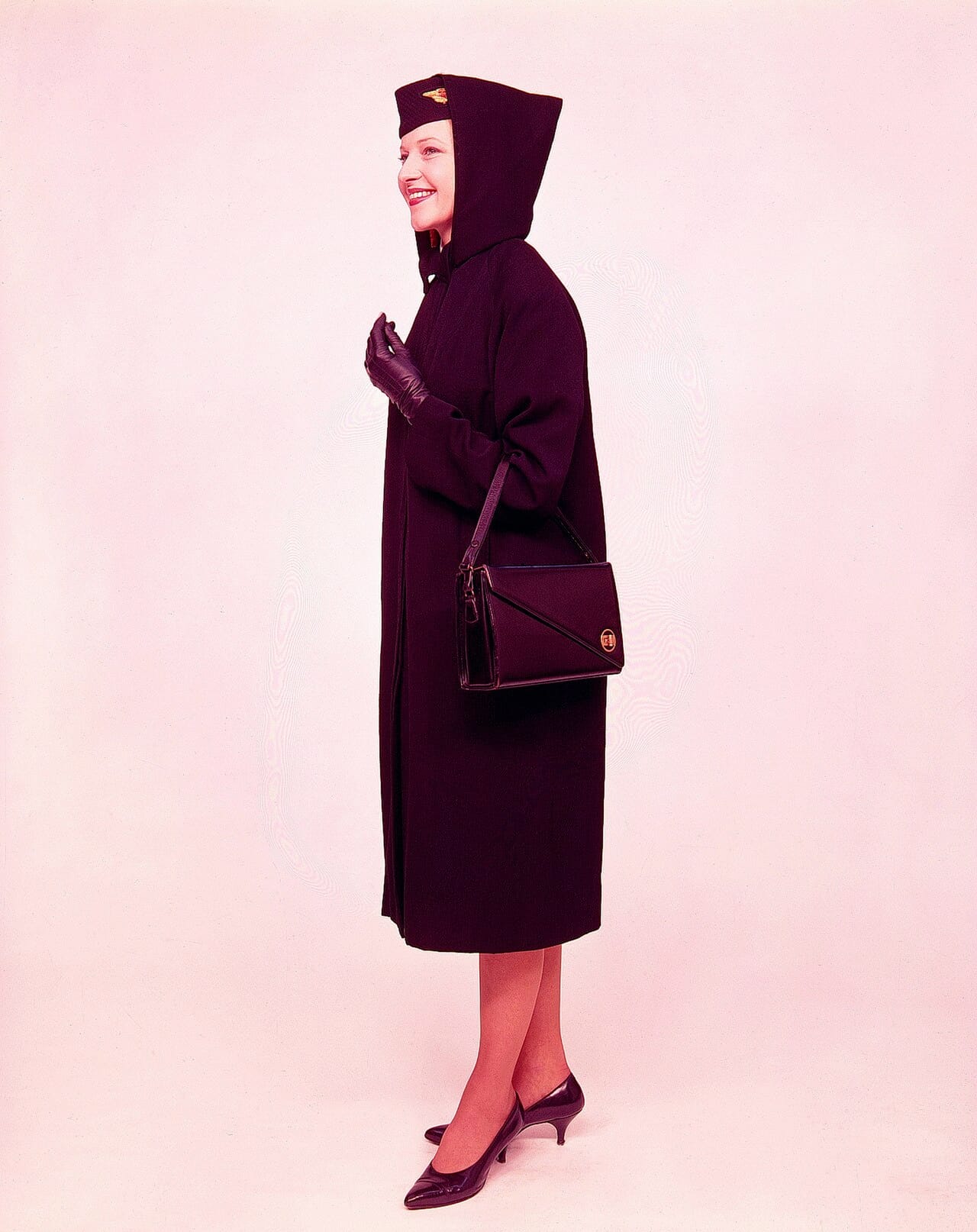
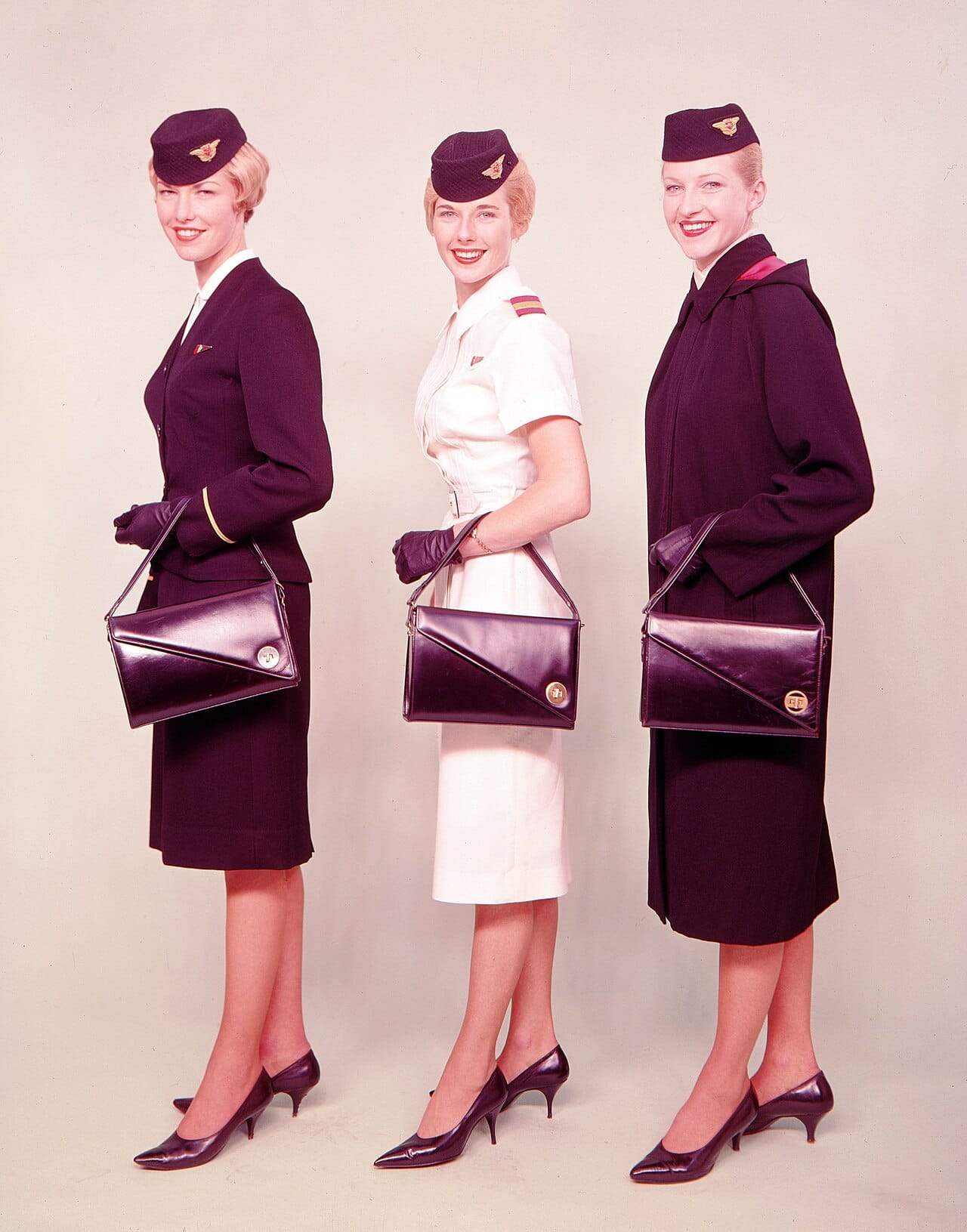
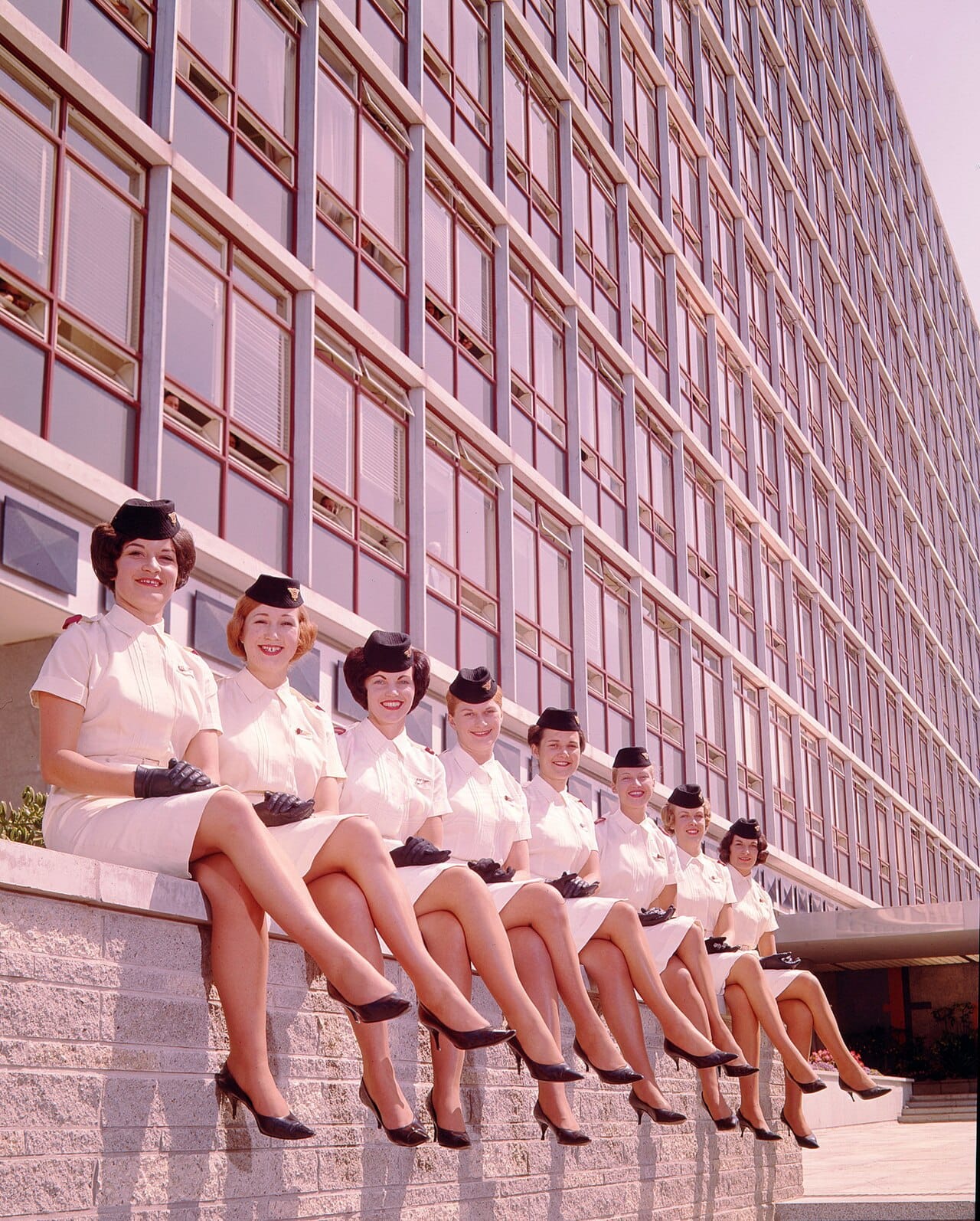
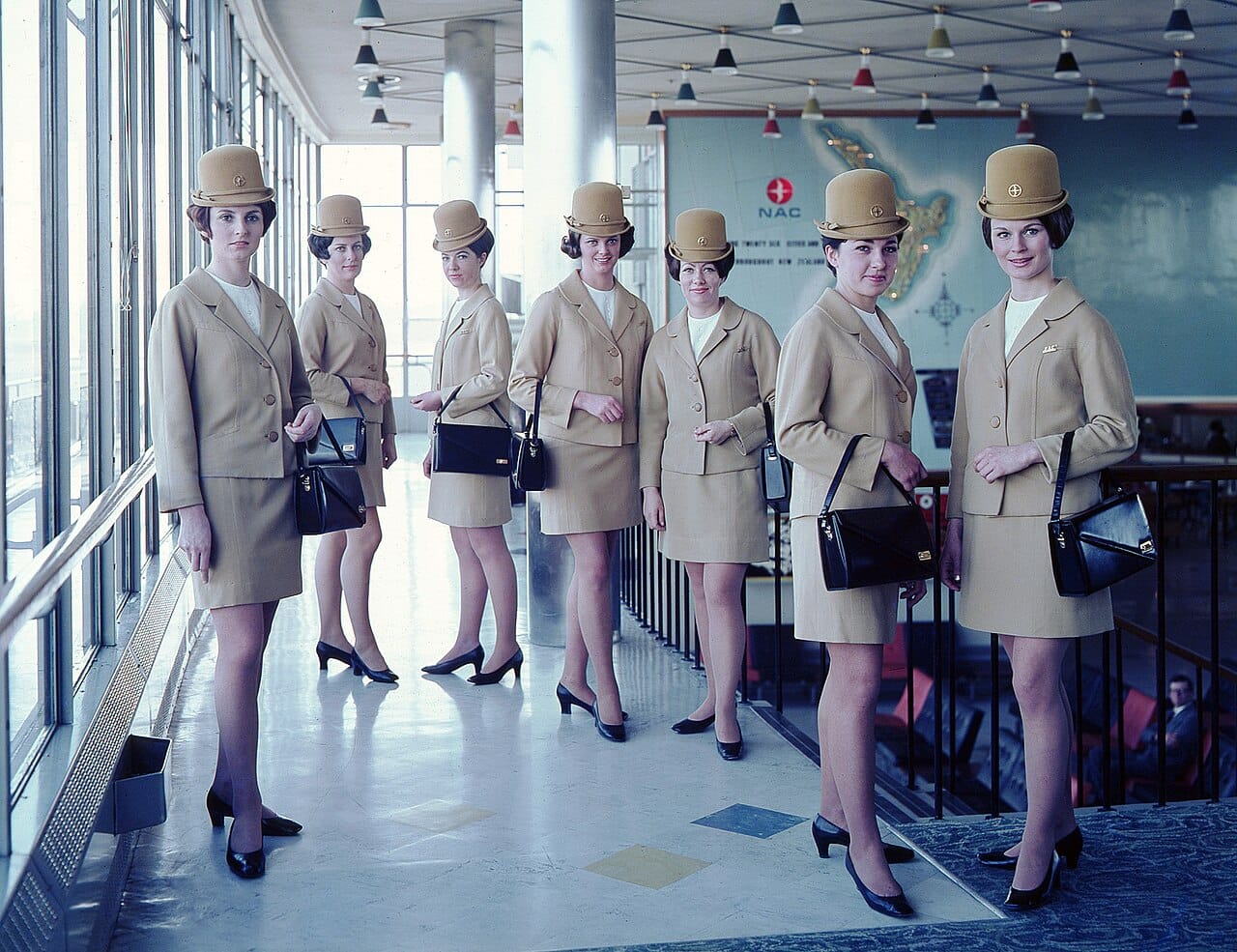
The starting point was a suit. Cabin crew of the 1950s wore tailored jackets and skirts derived directly from military and nursing dress, in navy or grey, with a cap and often gloves. The lineage was deliberate: early cabin crew were frequently required to hold nursing qualifications, and the uniform said so.
It is conservative clothing, and it is competently made. Note the weight of the cloth and the depth of the hem — this is a garment expected to be worn daily for years and altered rather than replaced.
A winter cabin crew uniform of 1959: tailored jacket, matching skirt, cap. Read the shoulders and the lapel and this could be a nurse's outdoor dress or a junior officer's service jacket. That is not coincidence; it is where the garment came from.Air Hostess Uniform 1959 Winter 003 · 47037398 · 2013-08-30 12:18 · Archives New Zealand from New Zealand · CC BY-SA 2.0Summer and winter uniforms of the same year, shown together. Two weights of the same design rather than two designs. A uniform issued as a system changes cloth with the season and keeps its cut, which is exactly what stops happening next.Air Hostess Uniform 1959 Summer and Winter 001 · 47037429 · 2013-08-30 12:21 · Archives New Zealand from New Zealand · CC BY-SA 2.0A summer uniform of 1959, lighter in colour and cloth. Still a suit. Everything about it assumes the wearer is a professional in a serious role, and nothing about it is trying to be memorable.Air Hostess Uniform 1959 Summer 006 · 47037410 · 2013-08-30 12:20 · Archives New Zealand from New Zealand · CC BY-SA 2.0
The commissioning years
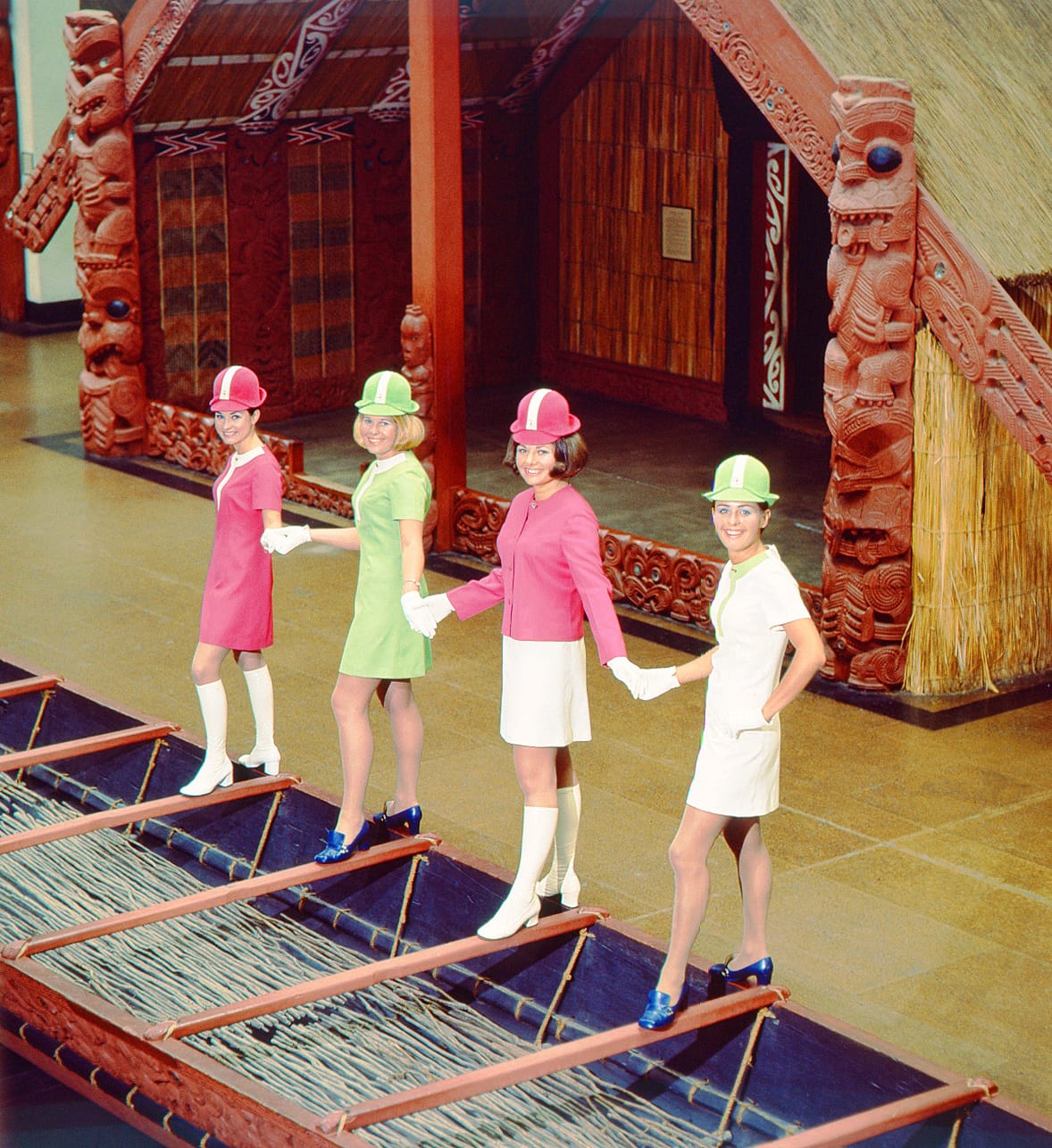
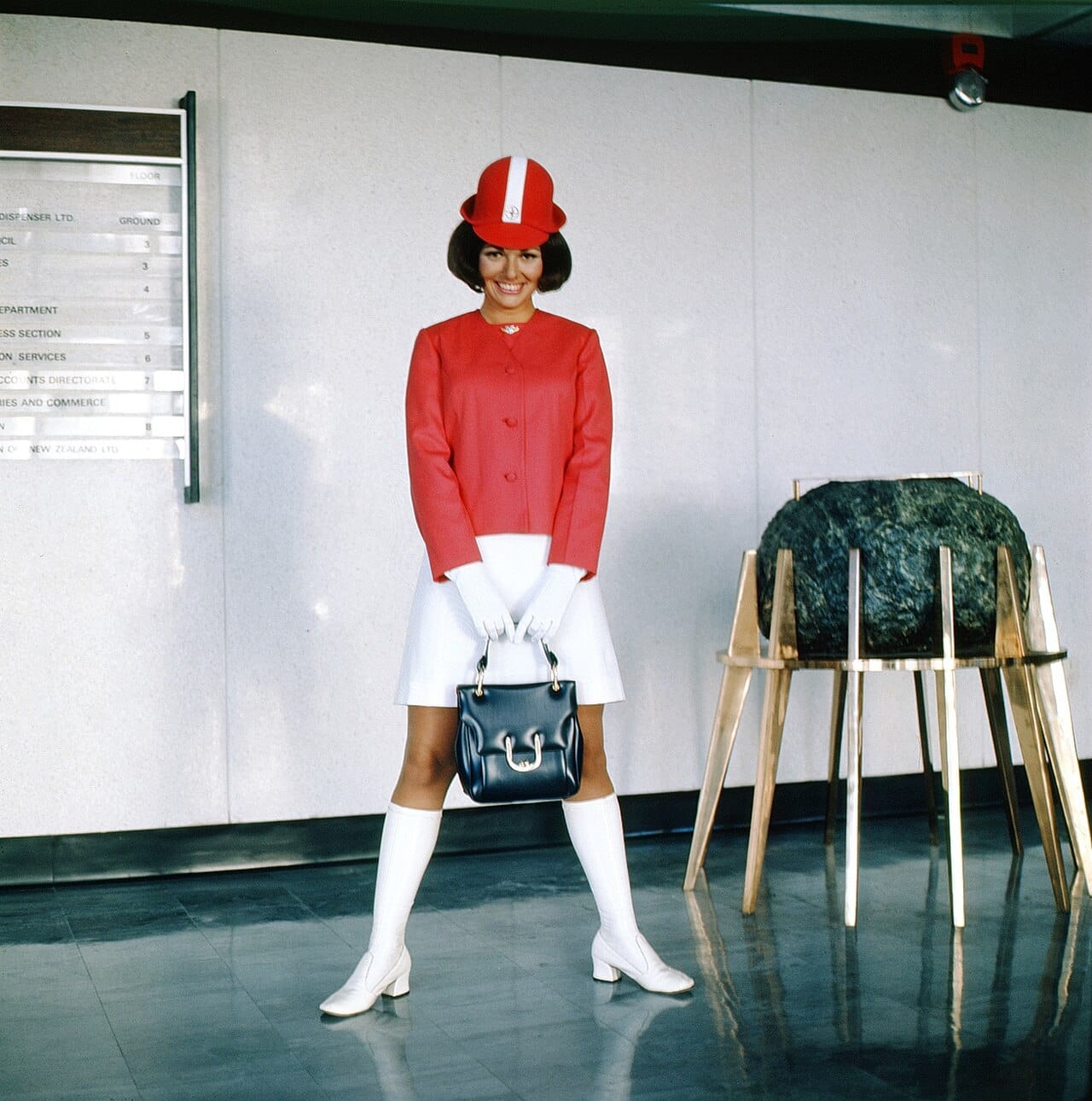
Then, quickly, colour. The mid-sixties uniforms abandon tailoring for shape, the cap for a hat that is a shape rather than a rank marker, and neutral cloth for saturated single colours. The names attached to these designs in the archives — Gold, Lollipop — are the names of collections, not of specifications.
The commercial logic was sound. An airline that flew the same aircraft to the same places at the same fares as its competitors had few ways to be distinguishable, and its cabin crew were the only part of the operation a passenger spent hours looking at. The uniform became the most-seen surface the company owned.
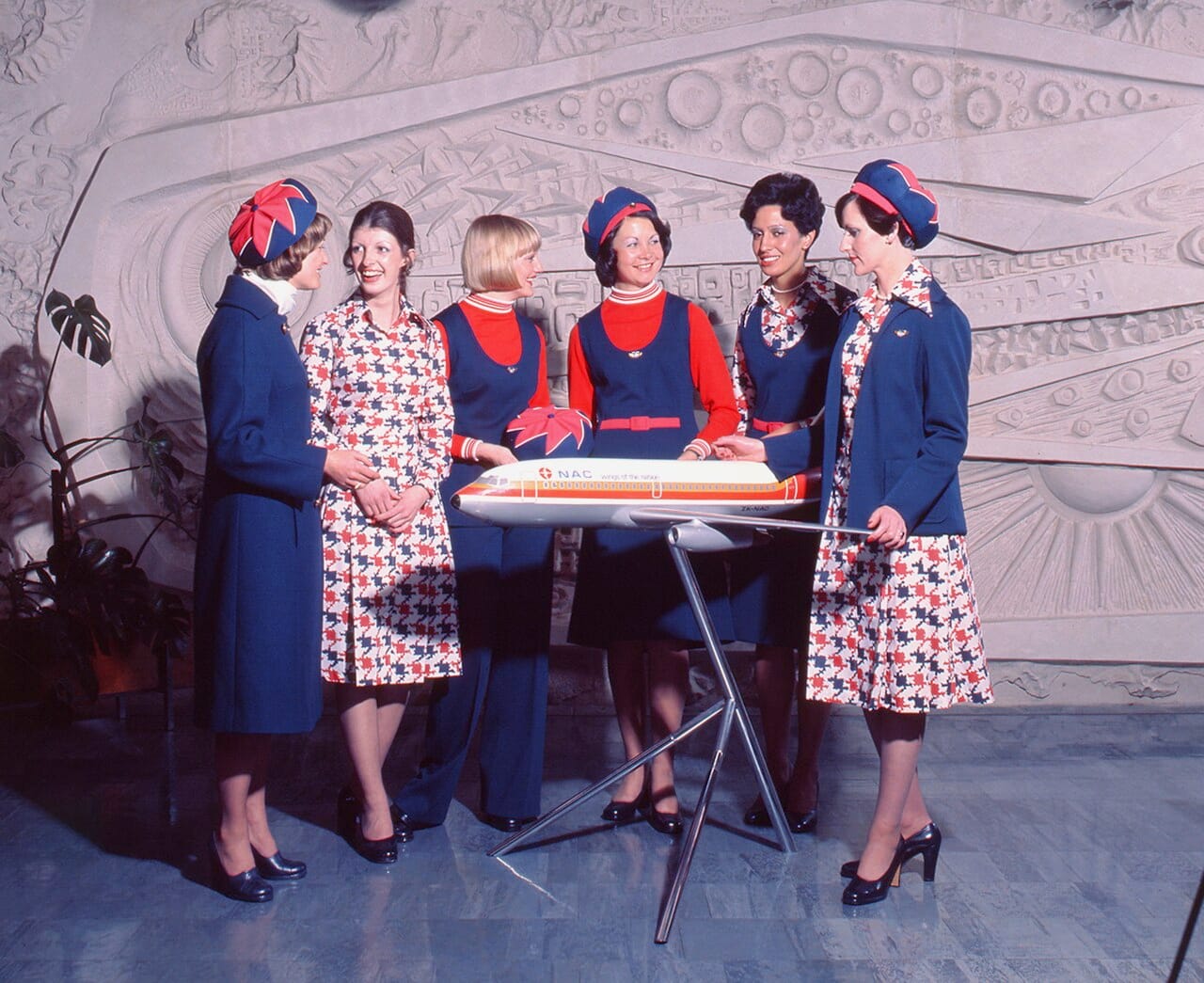
A 1965 uniform in a single saturated colour, the silhouette simplified and the waist raised. The tailoring has gone. This is cut as a dress rather than assembled as a suit, which halves the fitting work and removes almost all of the alteration allowance.Air Hostess Uniform 1965 Gold 003 · 47037411 · 2013-08-30 12:18 · Archives New Zealand from New Zealand · CC BY-SA 2.0A 1970 uniform, brighter still, with a matching hat. By now the garment is doing brand work that nothing else in the cabin can do. It reads at the far end of an aisle and it photographs well, and both of those were requirements.Air Hostess Uniform 1970 Lollipop 001 · 47037380 · 1970 · Archives New Zealand from New Zealand · CC BY-SA 2.0Another 1970 variant from the same collection. Variants within one launch, which is a fashion practice rather than a uniform practice. An institution issuing dress does not usually offer options.Air Hostess Uniform 1970 Lollipop 002 · 47037384 · 2013-07-17 18:42 · Archives New Zealand from New Zealand · CC BY-SA 2.0A 1975 uniform in two strong colours. The end of the sequence and the point where the idea starts to date. A garment designed to be current is a garment that can stop being current, which a suit could not.Air Hostess Uniform 1975 Red and Blue 001 · 47037391 · 2013-07-17 18:27 · Archives New Zealand from New Zealand · CC BY-SA 2.0
Every other garment in this archive was specified for the institution that issued it. This one was specified for the passenger, and the person wearing it was the medium rather than the client.
What it cost the wearer
The designed uniform is worse at the job. A raised waist and a fitted dress restrict reaching into overhead lockers; light saturated cloth shows every mark in a working shift; a hat that is a shape rather than a cap has to be secured and cannot be pocketed. None of these are oversights — they are the predictable cost of a brief that put appearance first.
The wearer also absorbed something less measurable. Clothing designed to be looked at invites being looked at, and cabin crew of this period were marketed as part of the product with a directness that reads badly now and read badly to plenty of people at the time.
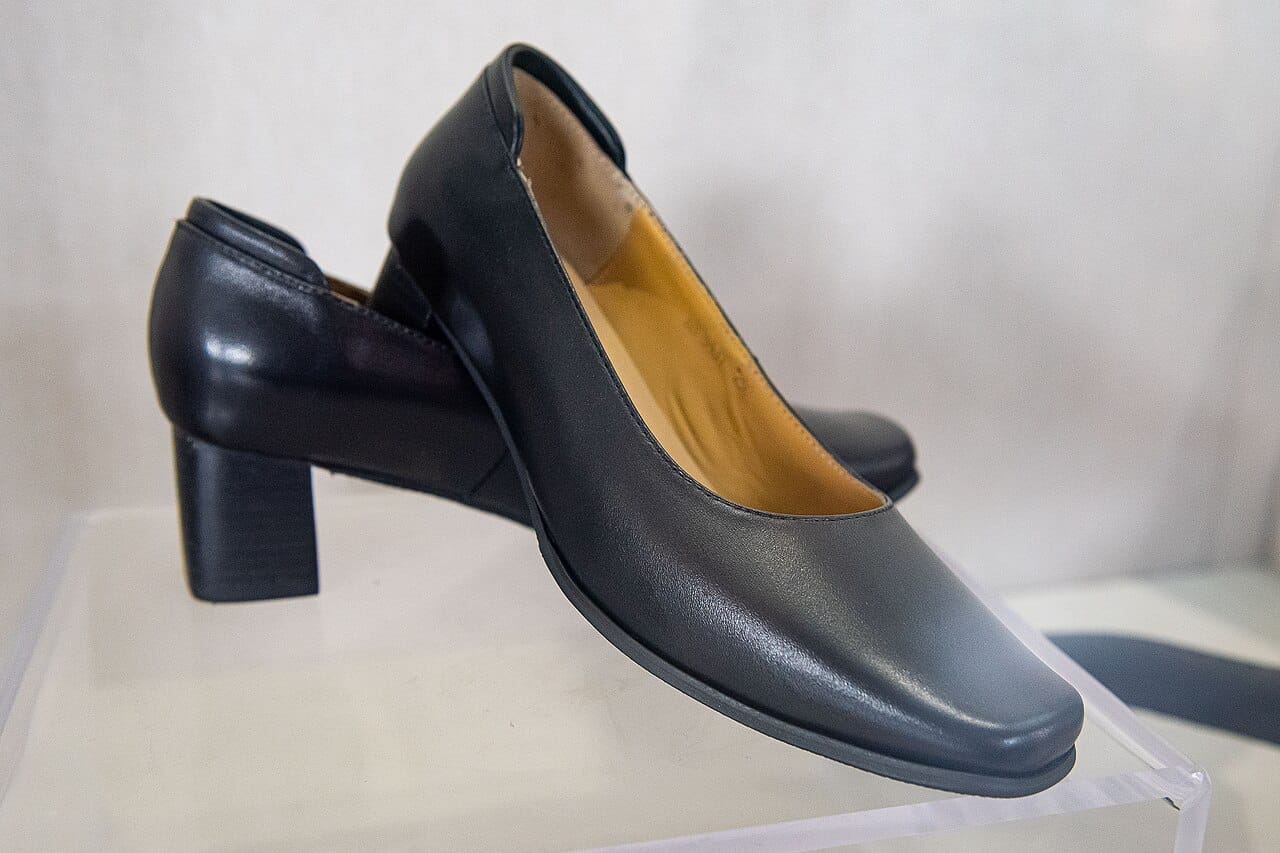
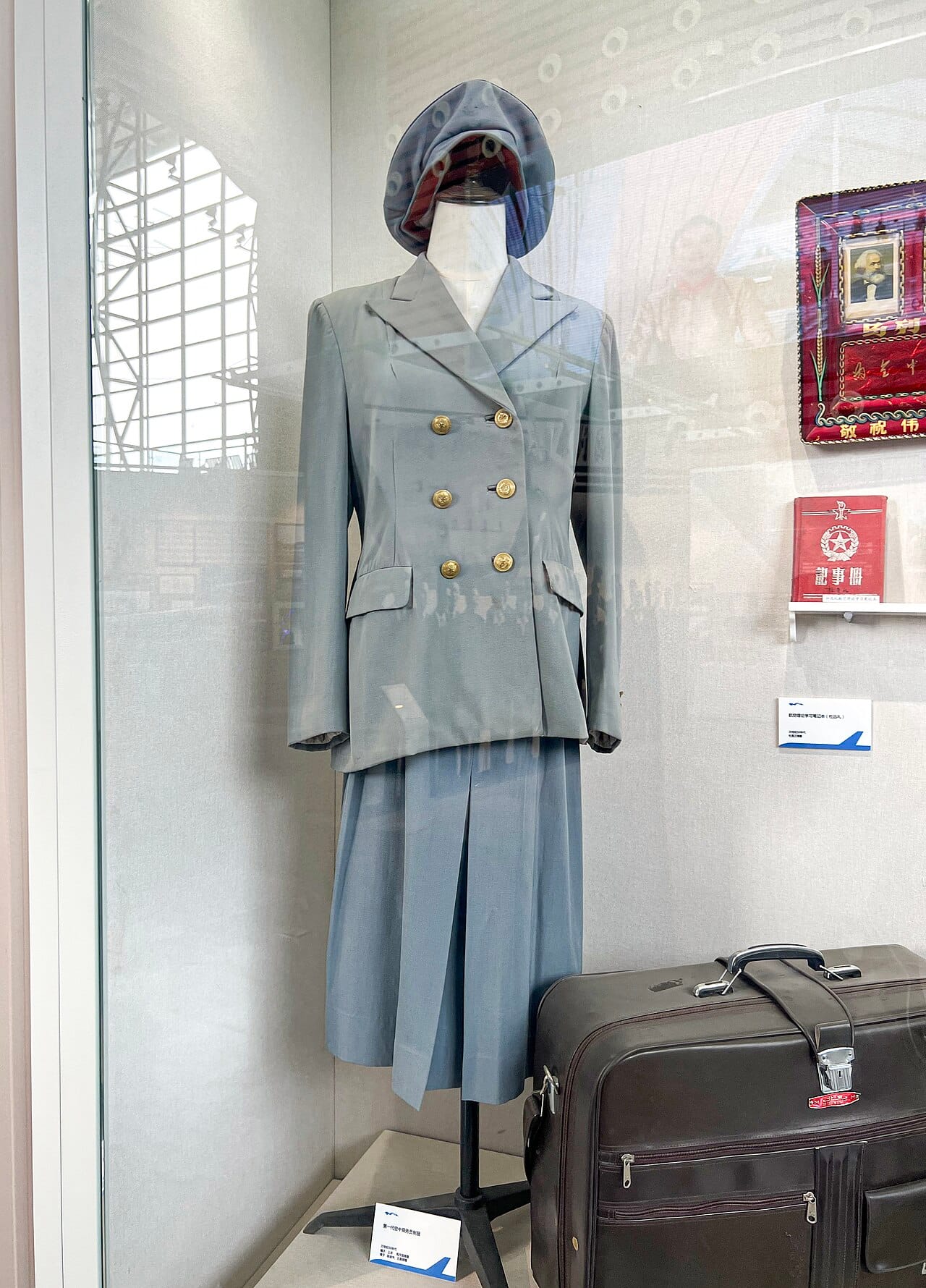
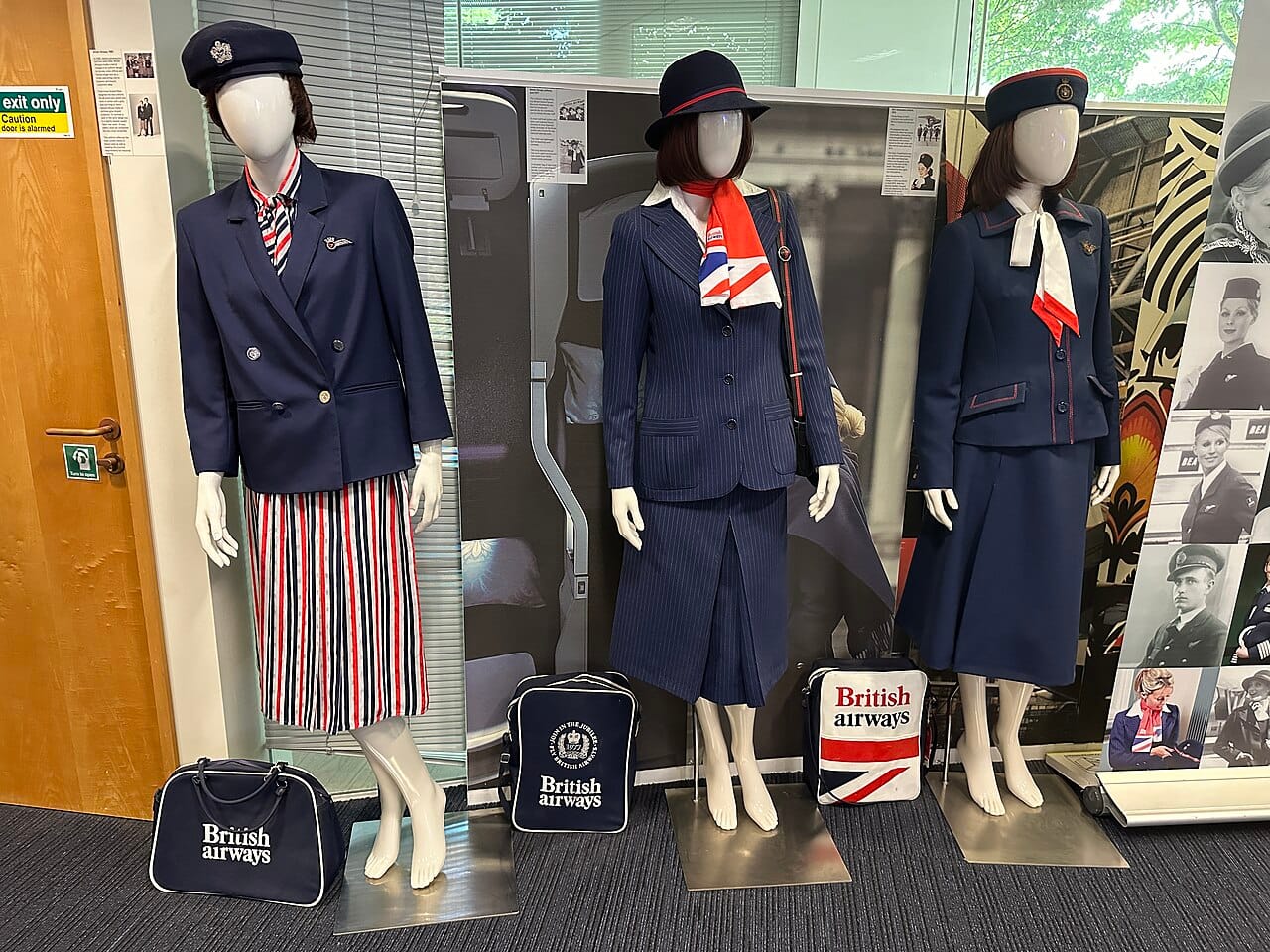
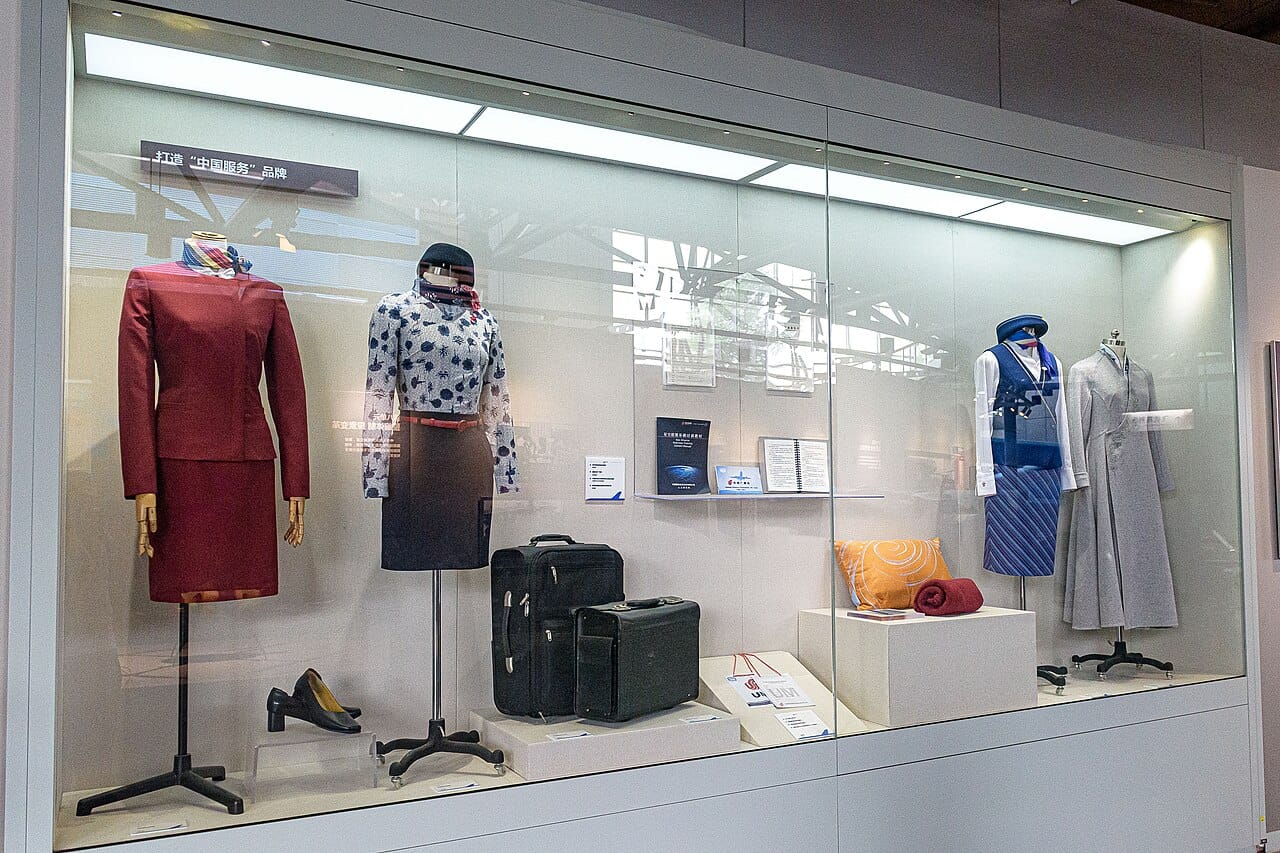
Issued shoes for cabin crew: black, heeled, unremarkable. The heel is the tell. Everything above the ankle was reconsidered every few years; the requirement to work a ten-hour shift in these was not.Wikimedia Commons · 148478376 · 2024-05-18 15:09:08 · N509FZ · CC BY-SA 4.0A first-generation national carrier cabin crew uniform, plainly cut. What the garment looks like where the commissioning era did not happen. The work is identical and the clothing is a working uniform, which makes the comparison useful rather than merely different.Wikimedia Commons · 148503015 · 2024-05-18 14:55:56 · N509FZ · CC BY-SA 4.0A run of cabin crew uniforms from one airline's own heritage collection. Kept, catalogued and displayed by the company that issued them — which tells you the uniforms were understood as brand assets, and are still understood that way.Wikimedia Commons · 149643300 · 2024-06-20 15:43:23 · Matt Brown · CC BY 2.0Contemporary uniforms of four carriers shown side by side in a museum. The convergence is the epilogue. After the commissioning years the industry settled back into dark suiting with a scarf, and the differences between carriers are now a colour and a knot.Wikimedia Commons · 148481133 · 2024-05-18 15:08:41 · N509FZ · CC BY-SA 4.0
Hedda Maartens — MA in fashion design, then eleven years in the industry designing for people who had no say in what they wore. Now writes about prescribed dress: how a garment was made to work, and what it was made to make a person into.
Member discussion
Back
Nametape
Free
$0
Every Research post and every Essay, free to read.
All Research posts — one uniform at a time, in archive photographs
.jpg?ref=blog.neutrino.website)
.jpg?ref=blog.neutrino.website)
.jpg?ref=blog.neutrino.website)
.jpg?ref=blog.neutrino.website)
.jpg?ref=blog.neutrino.website)
.jpg?ref=blog.neutrino.website)
.jpg?ref=blog.neutrino.website)
.jpg?ref=blog.neutrino.website)
.jpg?ref=blog.neutrino.website)

.jpg?ref=blog.neutrino.website)

Member discussion