The name badge is a small object with a large asymmetry in it: the wearer’s first name is legible to a stranger who gives nothing back.
Somewhere in the 1980s a great many people were issued a small plastic rectangle carrying their first name and nothing else, and told to wear it where a stranger could read it.
It is the smallest thing in this archive and one of the strangest. Every other uniform here tells you what somebody does. This one tells you what to call them.
What the Badge Actually Says
A name badge does two jobs at once and they pull in opposite directions.
The first is accountability, and it is real: a customer with a complaint can name the person. The second is friendliness, and it is asymmetric. The customer learns a name and gives none. The person behind the counter is on first-name terms with several hundred strangers a day, none of whom is on first-name terms with them.
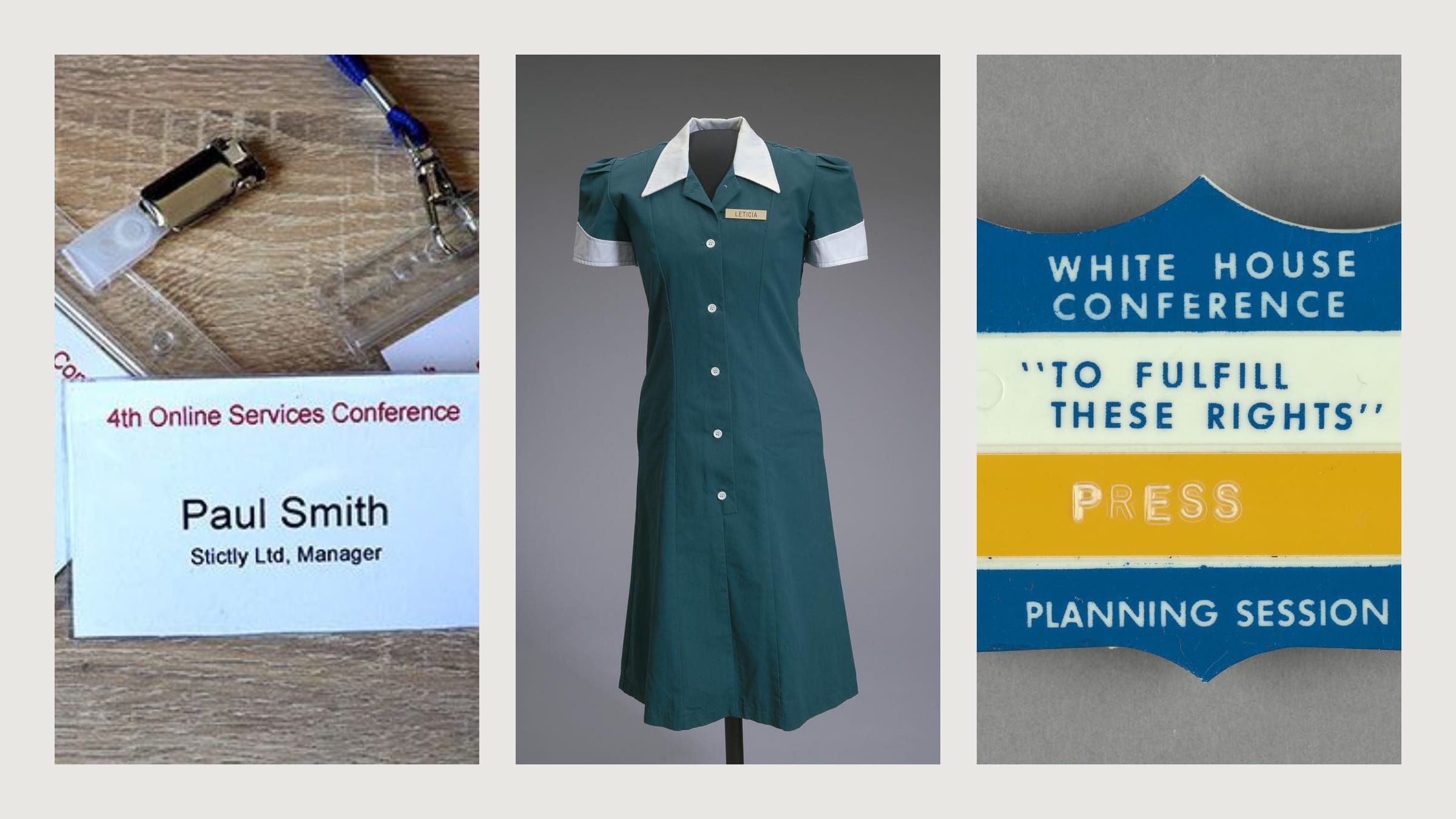
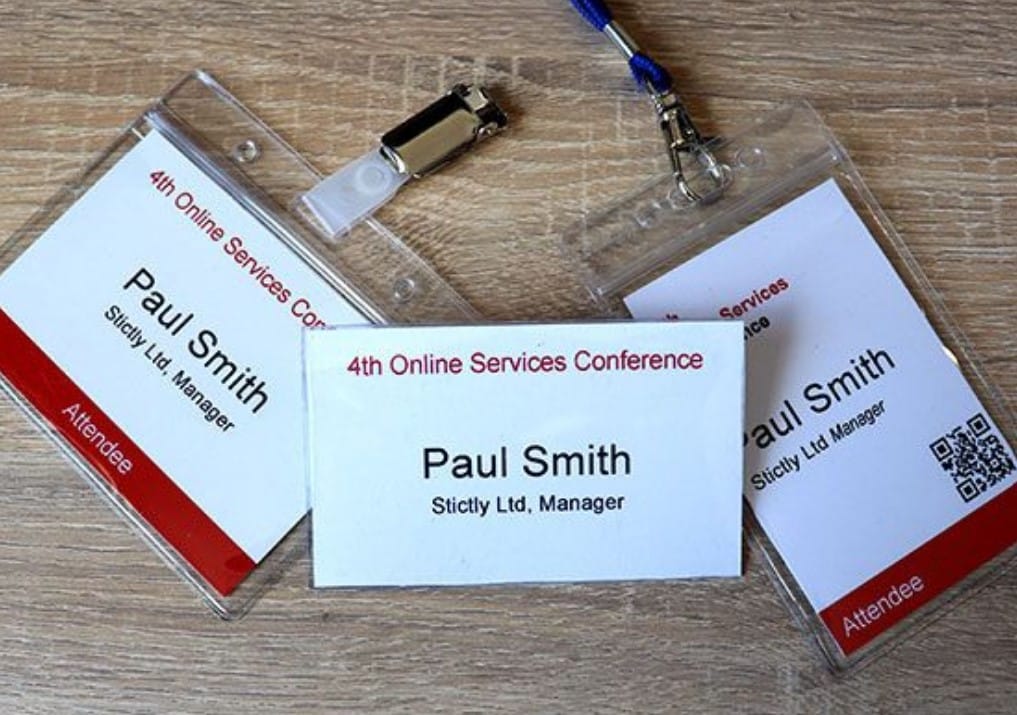
A modern employee name badge: a first name, a surname, a company and a job title. Four pieces of information about a person, worn on the chest, at a size chosen so a stranger can read it without appearing to look.Wikimedia Commons · 124263347 · 2022-10-16 · Batidei · CC BY-SA 4.0A teal waitress uniform, with the badge pinned above the pocket. The badge's position is not arbitrary. High on the left, above any pocket, at the height a person's eye goes when they are avoiding eye contact.National Museum of African American History and Culture · NMAAHC-5099E50CFFF22_5001 · 2001 · Executive Apparel, American, founded 1934, Halle Berry, American, born 1966 · CC0
The Object Is Older Than the Practice
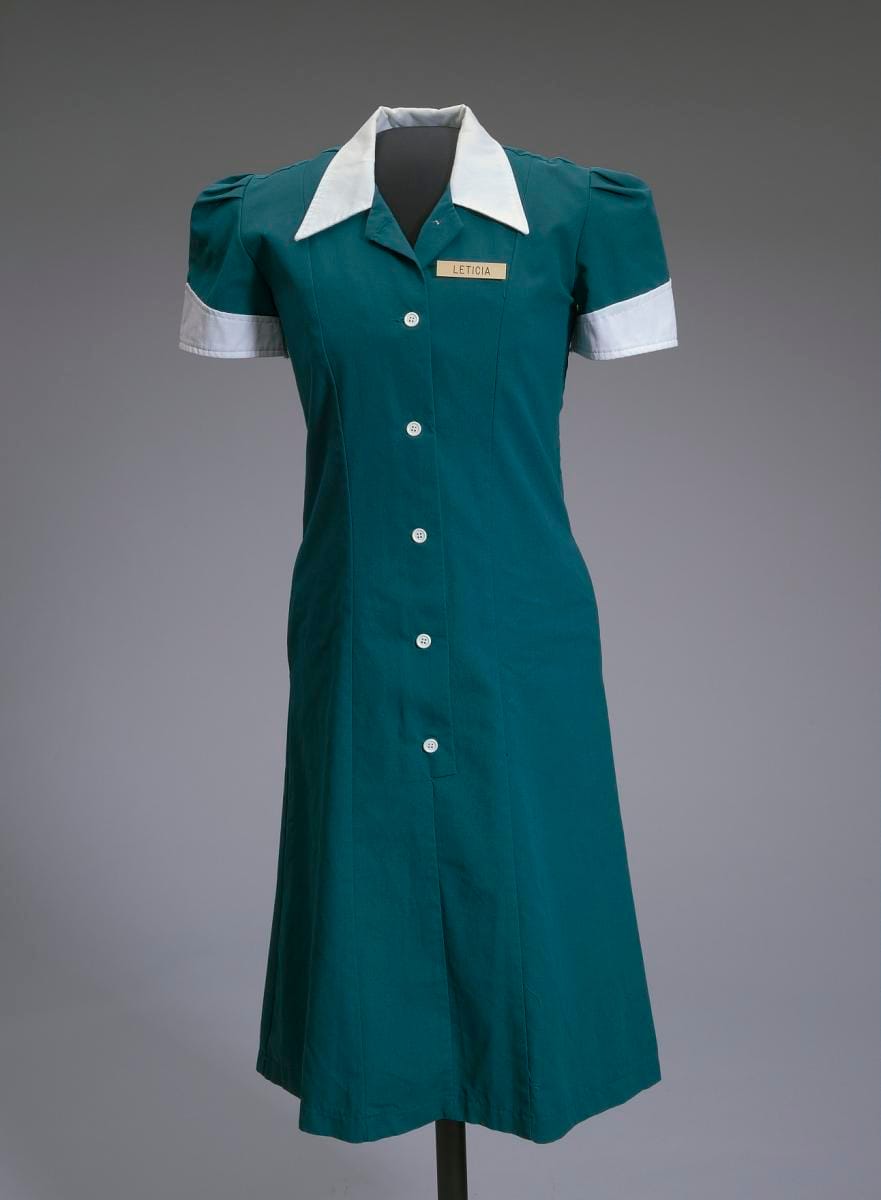
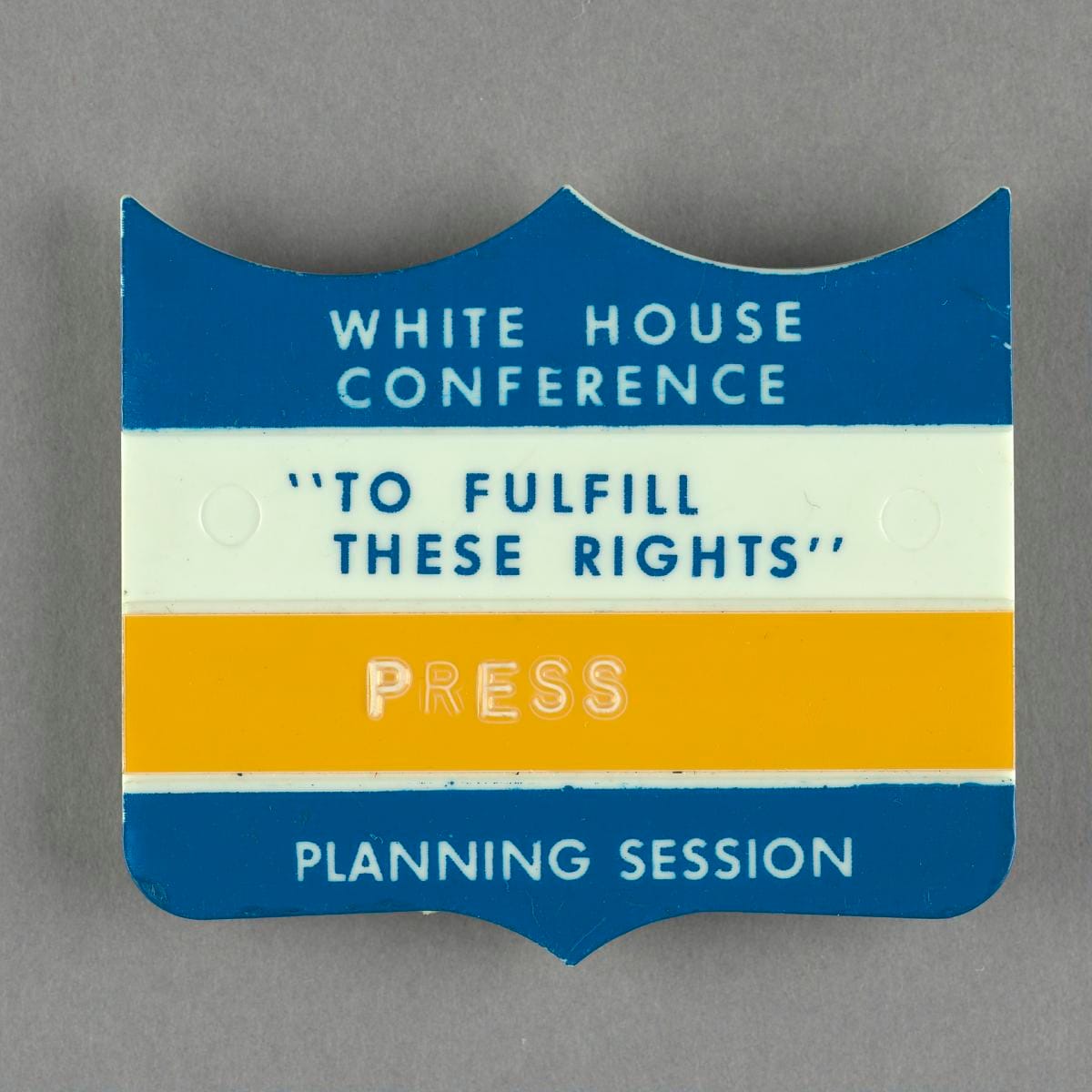
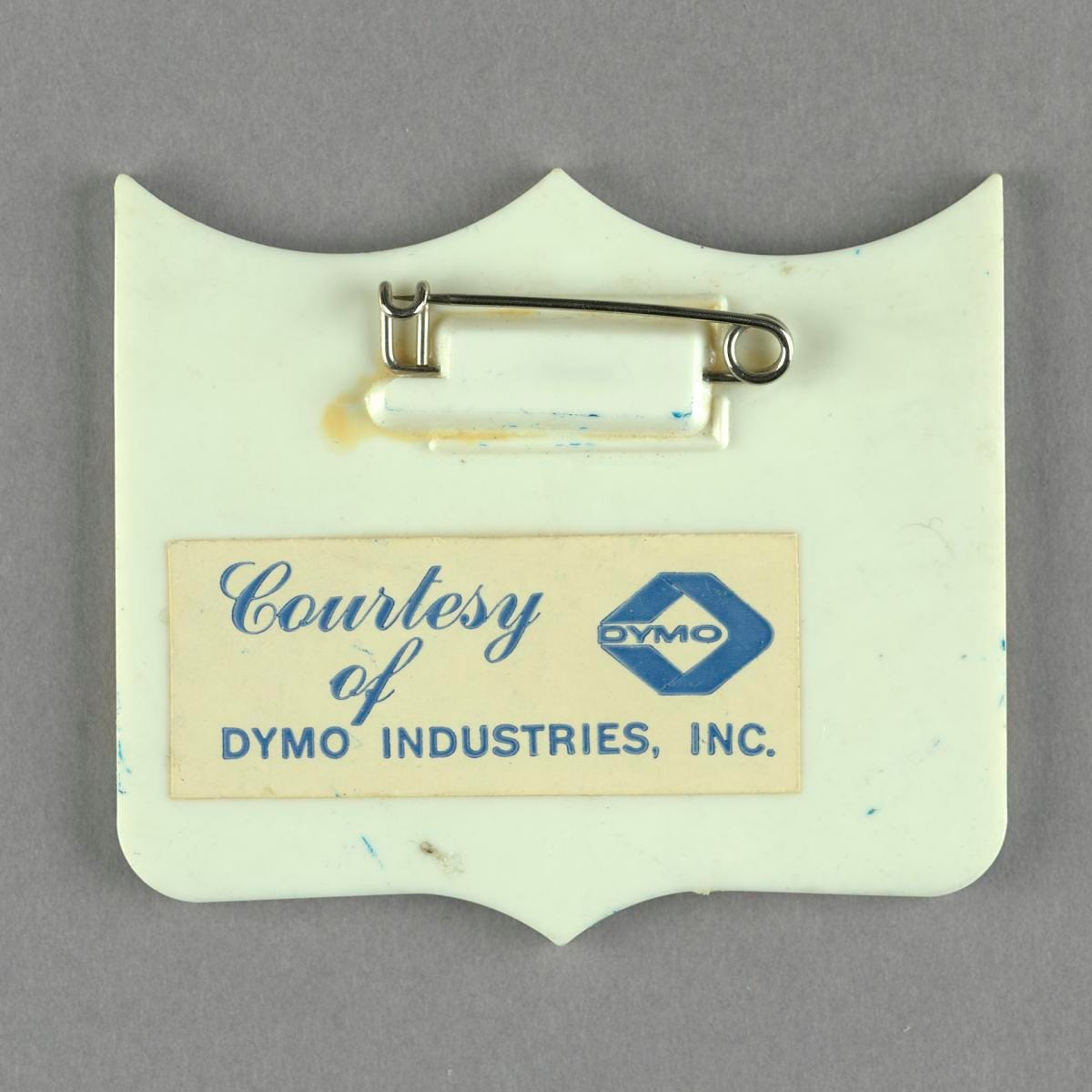
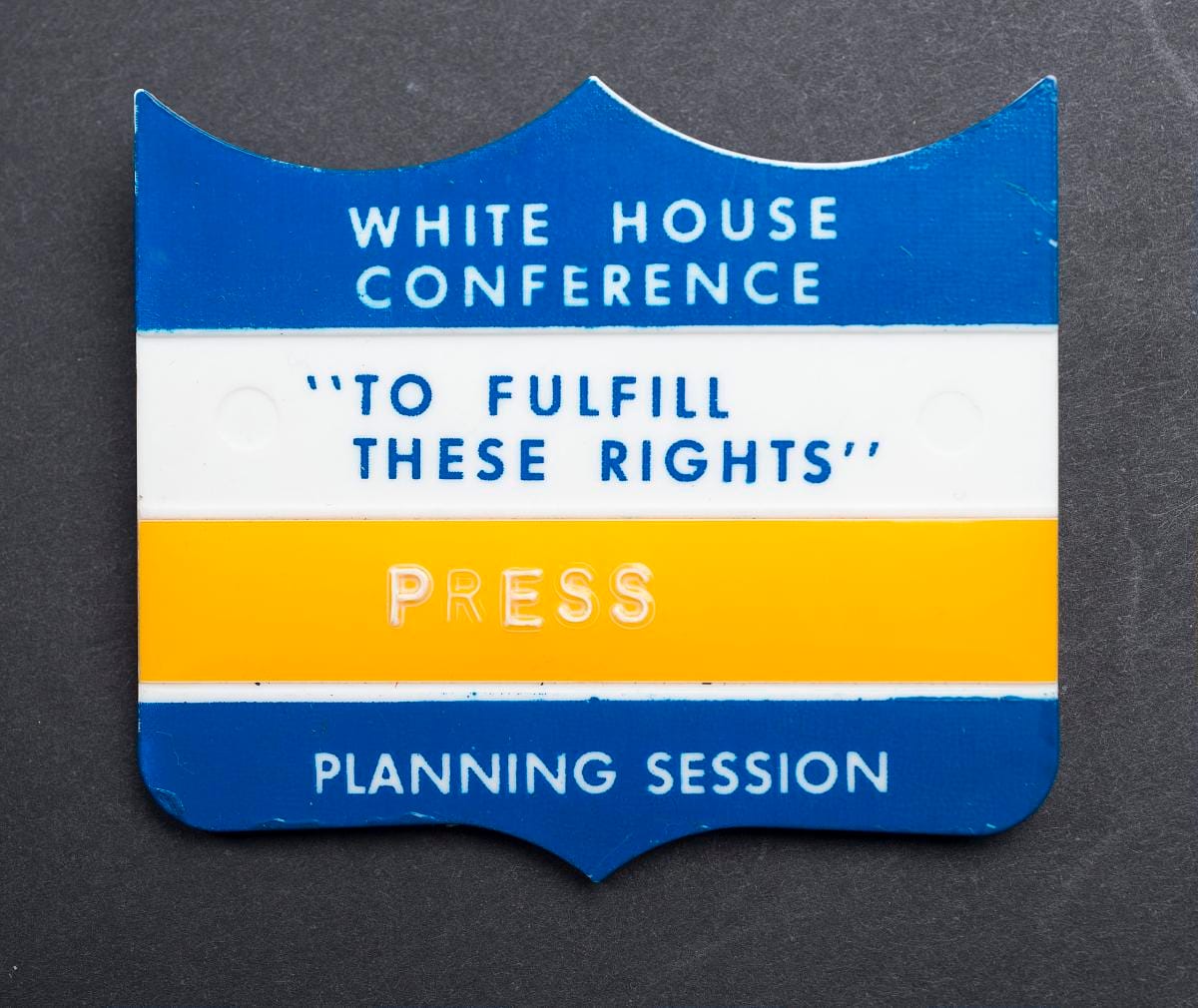
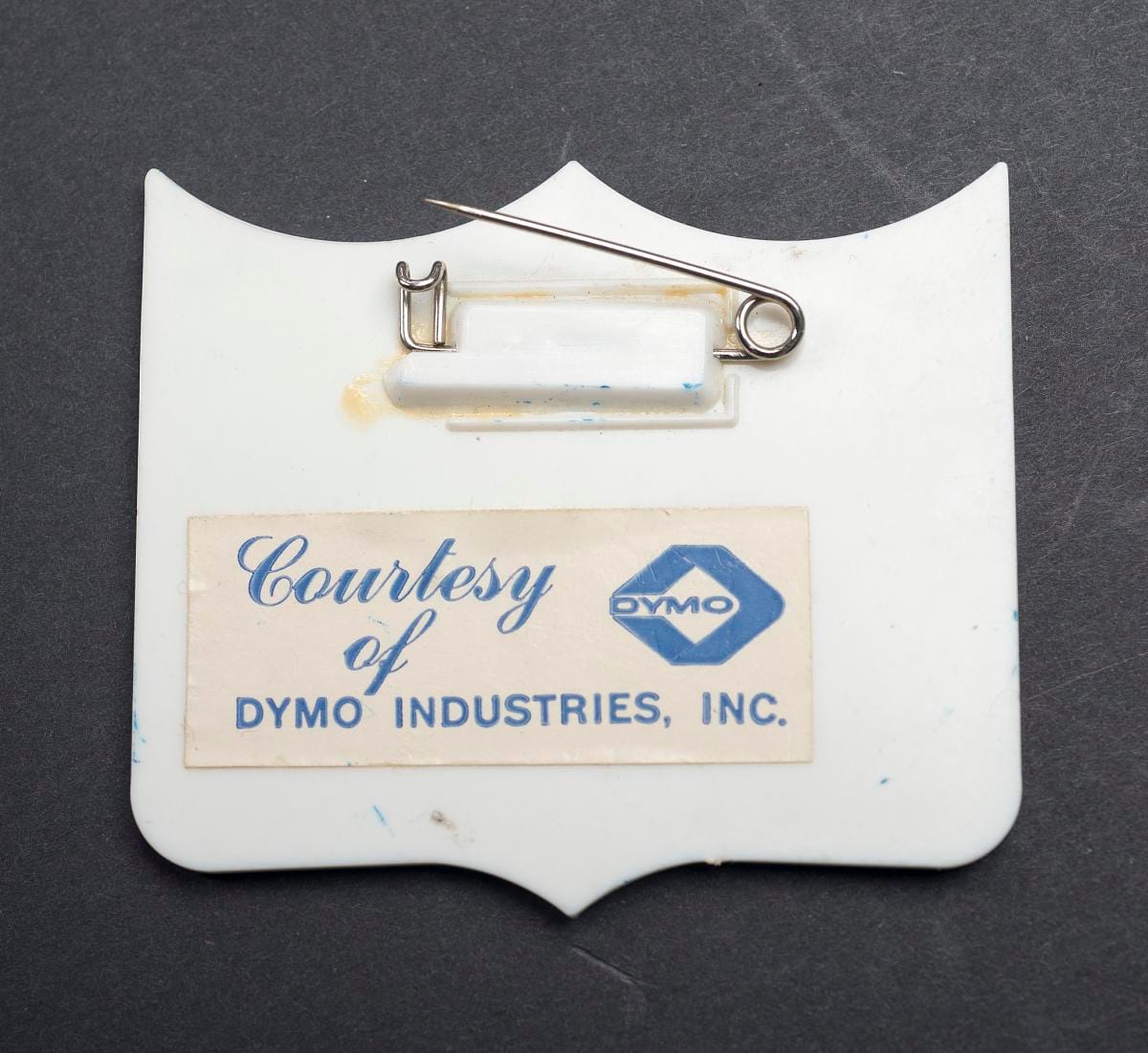
The badge as a manufactured thing arrives before the shop-floor habit does. This one was worn at a 1965 White House conference by the journalist Ethel Payne, and everything about how it works is already settled: a printed card, a die-cut shield, a pin on the back, and a maker's name on the mount.
That maker is the point. Cheap personal labelling had become an industry, and an industry with capacity looks for customers.
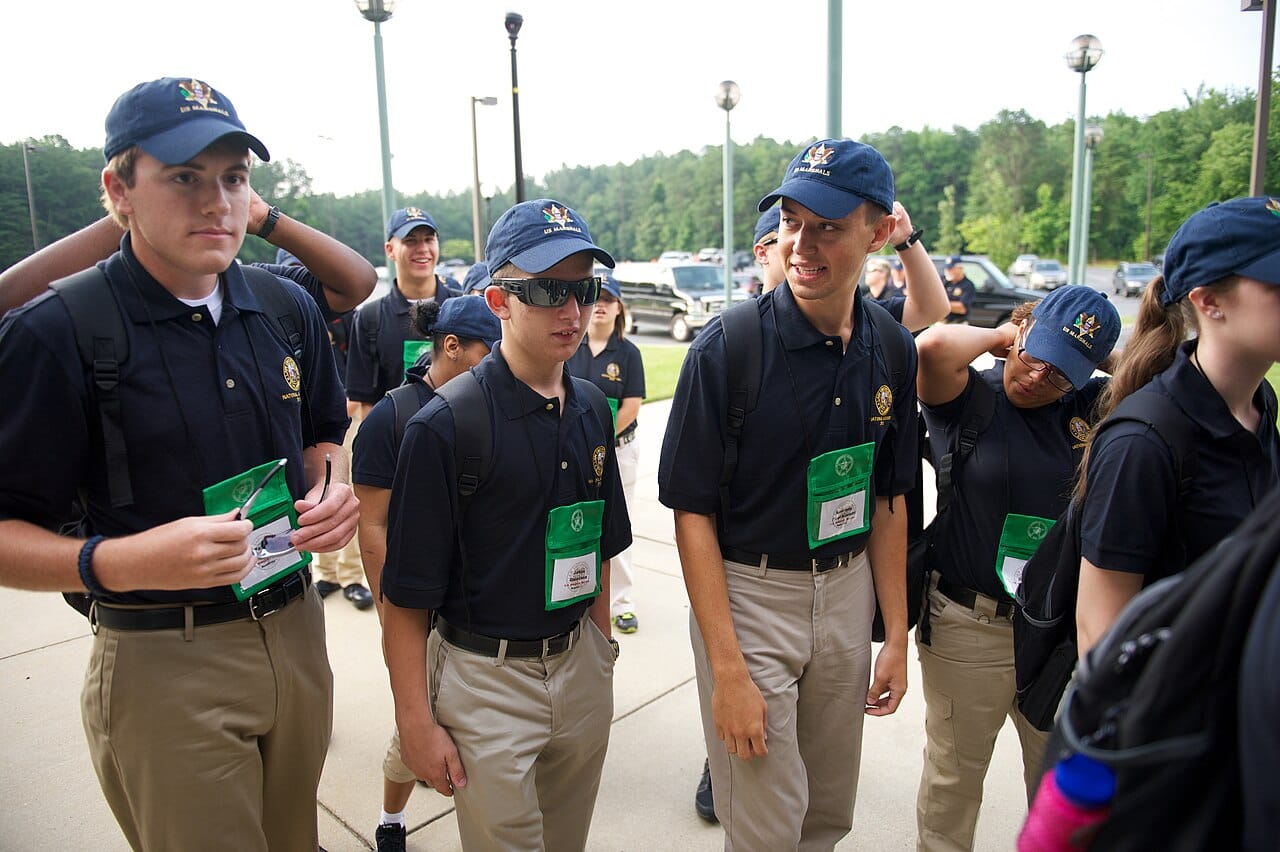
The badge front: a die-cut shield in blue and gold, reading PRESS. A role, not a name. In 1965 the badge said what you were allowed to do; the name came later and displaced the function.Anacostia Community Museum · ACM-1991_0076_0114-r1 · 1965 · creator not recorded · CC0The reverse, with the pin and the mount card. “Courtesy of DYMO Industries” — a label-making company paying for the badge in exchange for its own name on the back of it.Anacostia Community Museum · ACM-1991_0076_0114-r2 · 1965 · creator not recorded · CC0The same badge, photographed square on. Shield-shaped, which is a borrowed form: the outline of a police badge, on a piece of printed card.Anacostia Community Museum · ACM-acmobj-199100760114-r1 · 1965 · creator not recorded · CC0The reverse again, showing the pin's spring bar. The fastening is the whole engineering problem. A badge has to go on and come off a hundred times and leave the garment underneath it unmarked.Anacostia Community Museum · ACM-acmobj-199100760114-r2 · 1965 · creator not recorded · CC0Trainee law-enforcement volunteers wearing name tags on lanyards. The descendant. The lanyard replaced the pin because it does not need a garment, and a name that hangs at the waist has stopped being part of the uniform at all.U.S. Marshals Office of Public Affairs · 46707224 · 2013-07-10 06:32:57 · Shane T. McCoy · Public domain
The customer learns a name and gives none. The person behind the counter is on first-name terms with several hundred strangers a day, none of whom is on first-name terms with them.
Why It Stayed
The badge survived every other change in retail dress. Tunics went, aprons went, house colours went; the rectangle stayed, migrated onto a lanyard, and then onto a screen, where a delivery app shows you a first name and a photograph before the person arrives.
It stayed because it is the cheapest possible uniform. It needs no cloth, no fitting and no laundry, and it does the one thing an employer most wants a uniform to do: it makes the person identifiable to a customer, and identifiable to the employer, in the same gesture.
Hedda Maartens — MA in fashion design, then eleven years in the industry designing for people who had no say in what they wore. Now writes about prescribed dress: how a garment was made to work, and what it was made to make a person into.
Member discussion
Back
Nametape
Free
$0
Every Research post and every Essay, free to read.
All Research posts — one uniform at a time, in archive photographs


Member discussion