Institutional clothing is sized rather than tailored, and that is a design decision rather than a budget one. A uniform that fitted each wearer perfectly would individuate them.
Institutional clothing fits badly. Everyone who has worn any knows it, and the usual explanation is money: the institution bought cheaply, so the clothes are cheap, so they do not fit.
The arithmetic does not support that. Grading a garment into more sizes costs almost nothing per unit at volume — the pattern work is one-time, the cutting is the same, and the marginal cost of holding eight sizes instead of four is stockroom space. Schools that would not spend on cloth spent freely on badges and caps. The bad fit is a choice, and it is worth asking what it buys.
Sized, not tailored
There is a real distinction here that gets lost. A tailored garment is made to one body. A sized garment is made to a distribution of bodies and then allocated to whoever is nearest. Almost all clothing is sized; what is unusual about institutional dress is that the wearer cannot then adjust it.
Ordinary sized clothing assumes alteration: hems come down, waists come in, and a garment meets a body halfway over its life. Issued clothing frequently forbids exactly that. Alteration is what turns a size into a fit, and removing it is the specific decision this piece is about.
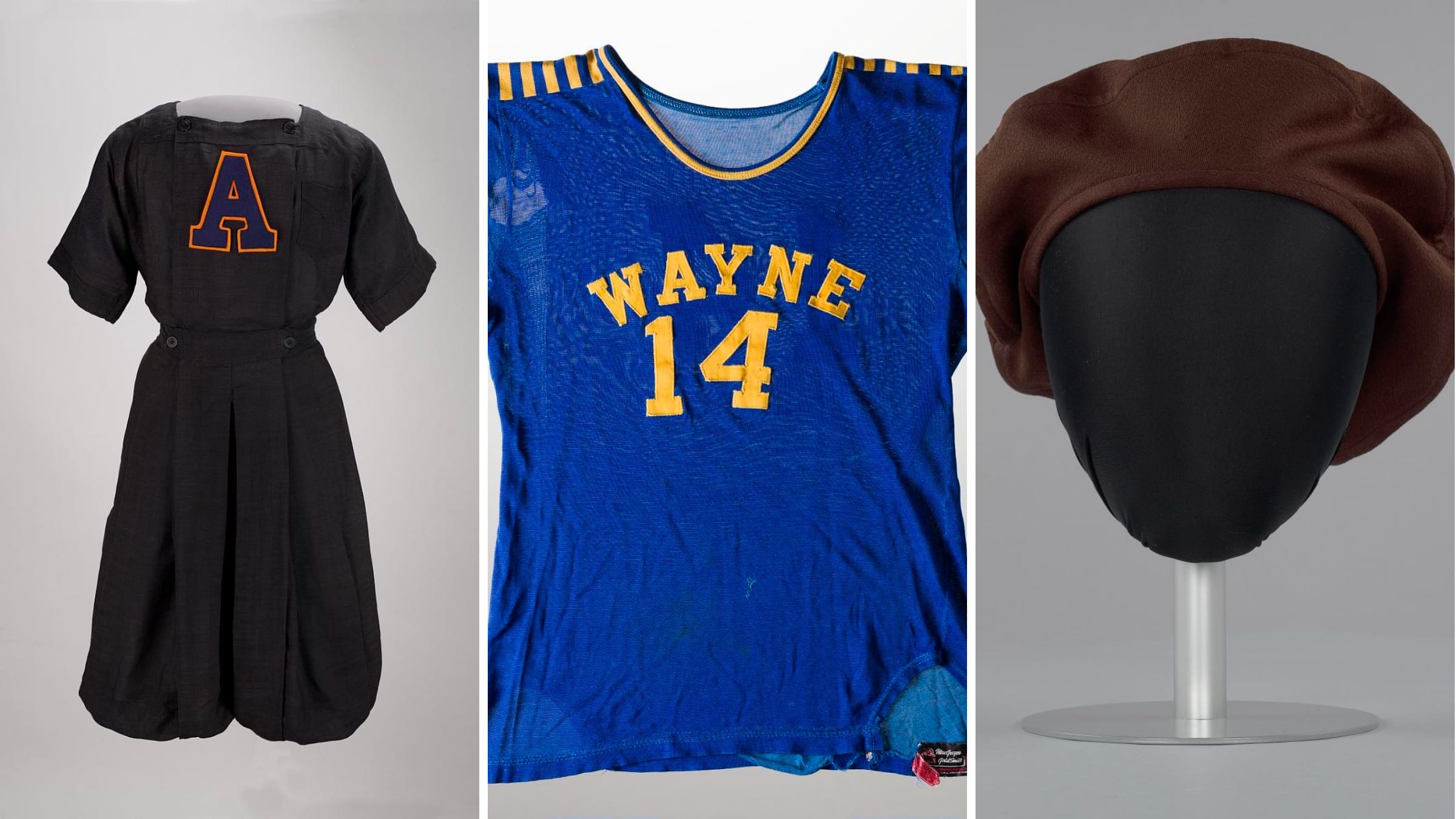
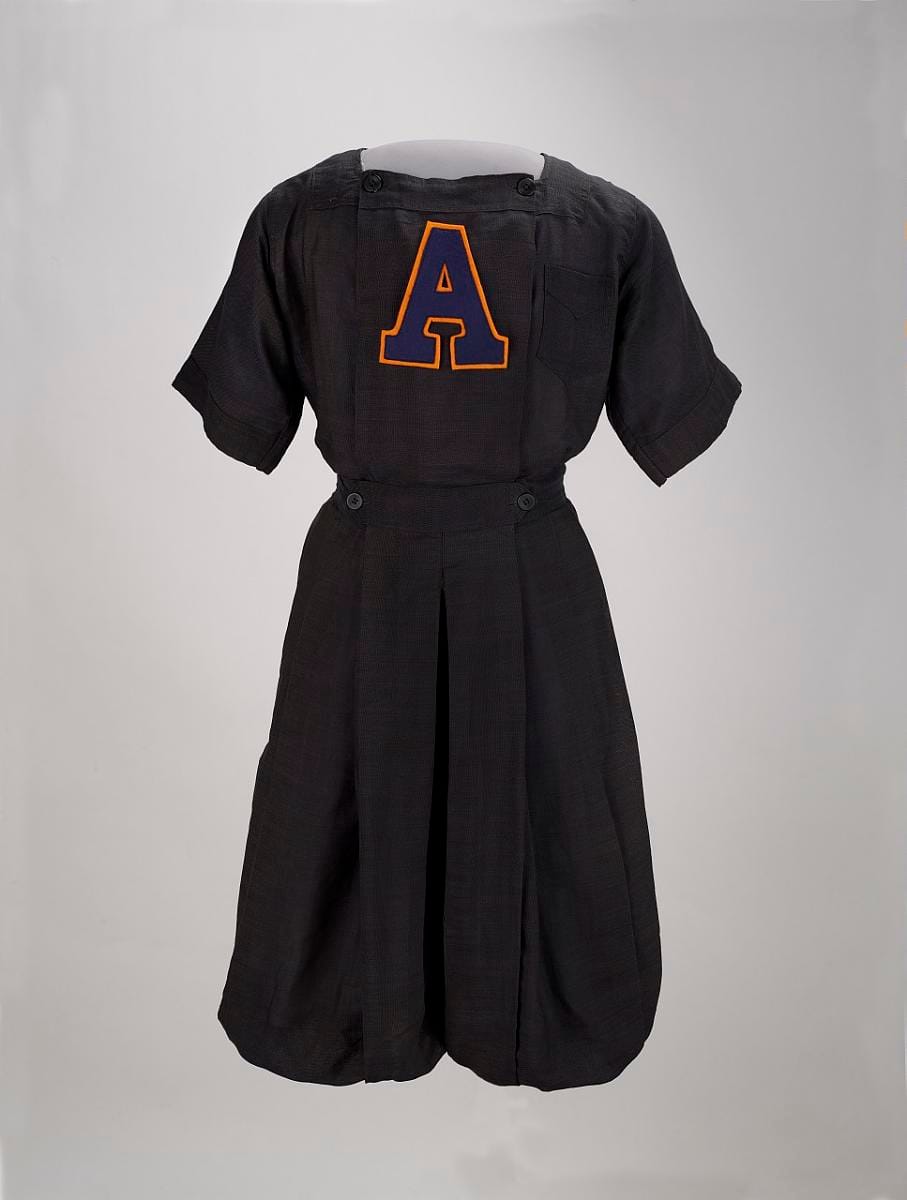
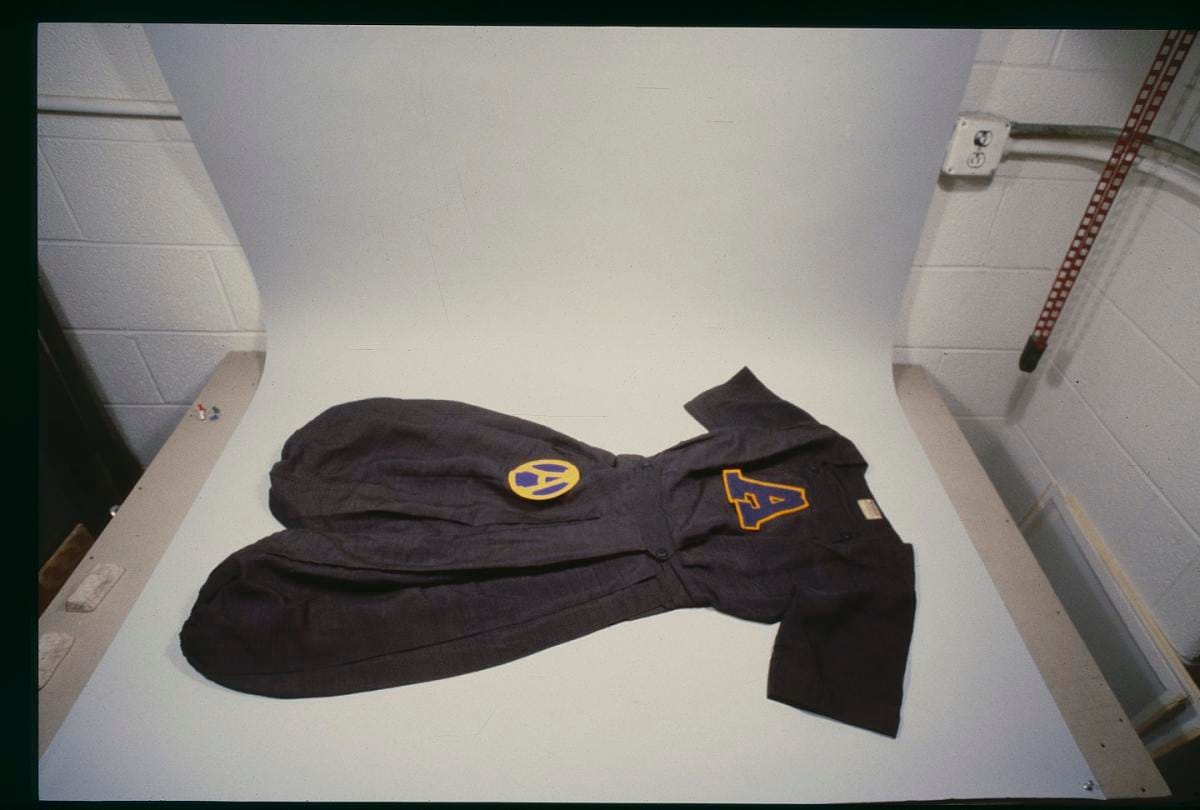
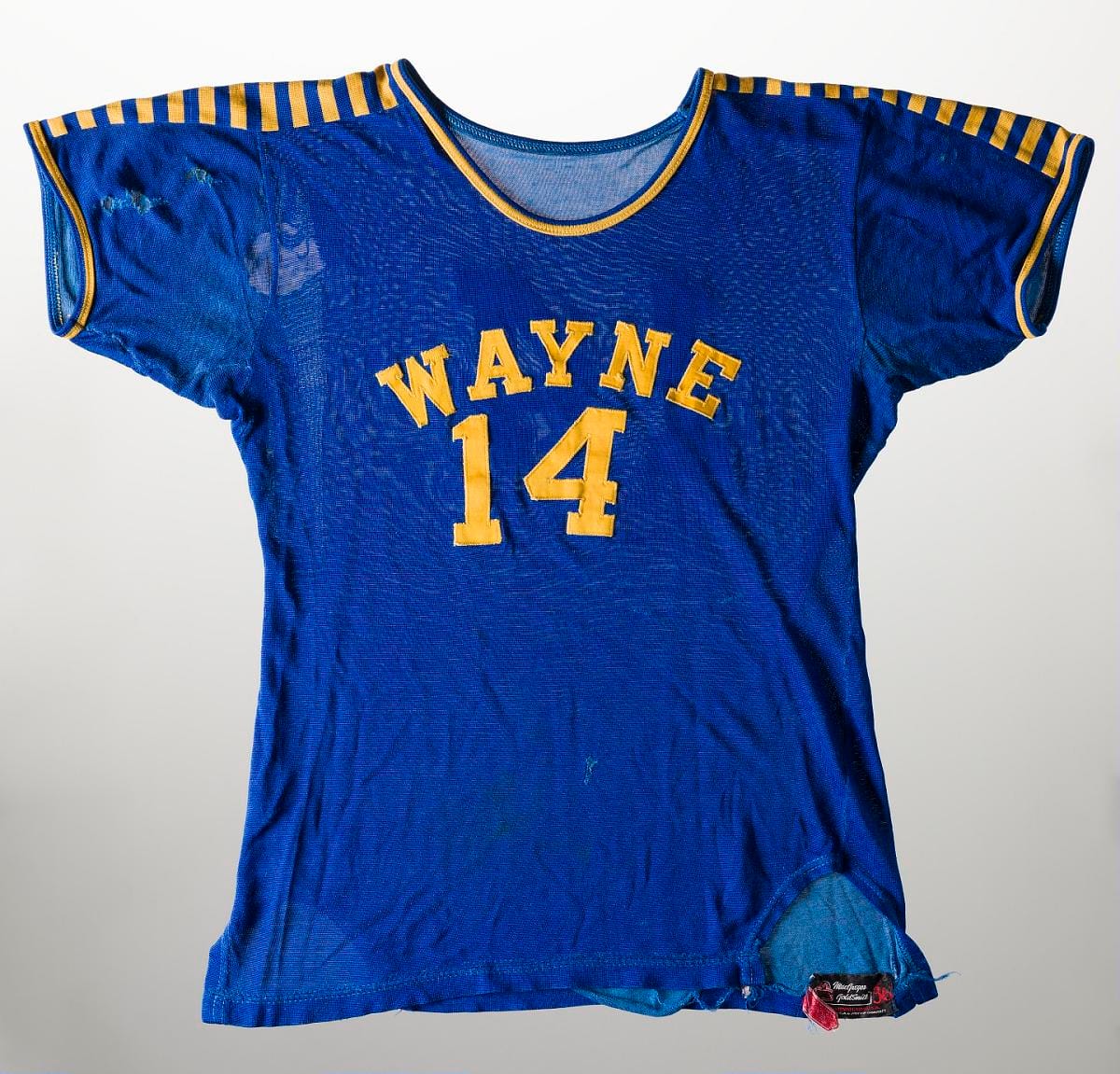
A school gym suit: a one-piece garment with elasticated legs and a front closure. Nothing on this garment can be adjusted. No hem, no waistband to take in, no seam allowance worth the name. It is the clearest object on this site for the argument, because it makes fit structurally impossible rather than merely unlikely.National Museum of American History · NMAH-RWS2021-00072 · 1918 · Goldthwaite, Deborah A. · CC0The same gym suit seen flat, the name of the school marked on it. Marked with the institution rather than the wearer. A garment that circulates between pupils cannot carry a name, and a garment that cannot carry a name cannot be altered for anyone.National Museum of American History · NMAH-AHB2012r02669-000001 · 1918 · Goldthwaite, Deborah A. · CC0A high school basketball jersey. Sports kit is where a school's sizing is most visible, because performance would justify a better fit and it still does not get one.National Museum of African American History and Culture · NMAAHC-2016_140_1_1_001 · 1950s · P. GoldSmith & Sons, American, 1875 - 1987, Lockland Wayne High School, American · CC0
A garment that fitted each wearer perfectly would individuate them, which is the opposite of what the issuing body wants. The badly-fitting blazer is working exactly as specified.
What the poor fit is for
Start from what fit actually does. A garment cut to one body describes that body: it says this person is this shape, and it says somebody took the trouble. Both of those are forms of individual recognition, delivered without anybody having to say anything.
An institution issuing dress to a hundred or a thousand people is generally trying to reduce exactly that. The point of the uniform is that the wearers read as a set. A garment that fits each of them well would work against the purpose of issuing it — not fatally, but measurably, and at a cost the institution has no reason to pay.
This is not a conspiracy and it does not need to be conscious. It only needs the decision about sizing to be made by someone whose interest is the group rather than the individual, which is who makes it. Every incentive points the same way: fewer sizes is cheaper, simpler to stock, faster to issue, and produces a more uniform-looking cohort. Nothing in the process advocates for the wearer.
The result is a garment that is slightly wrong for almost everyone, and slightly wrong in a way that is visible. A sleeve an inch too long, a waist that sits wrong, a collar that gapes. Not wrong enough to complain about; wrong enough to notice on yourself and on everyone around you.
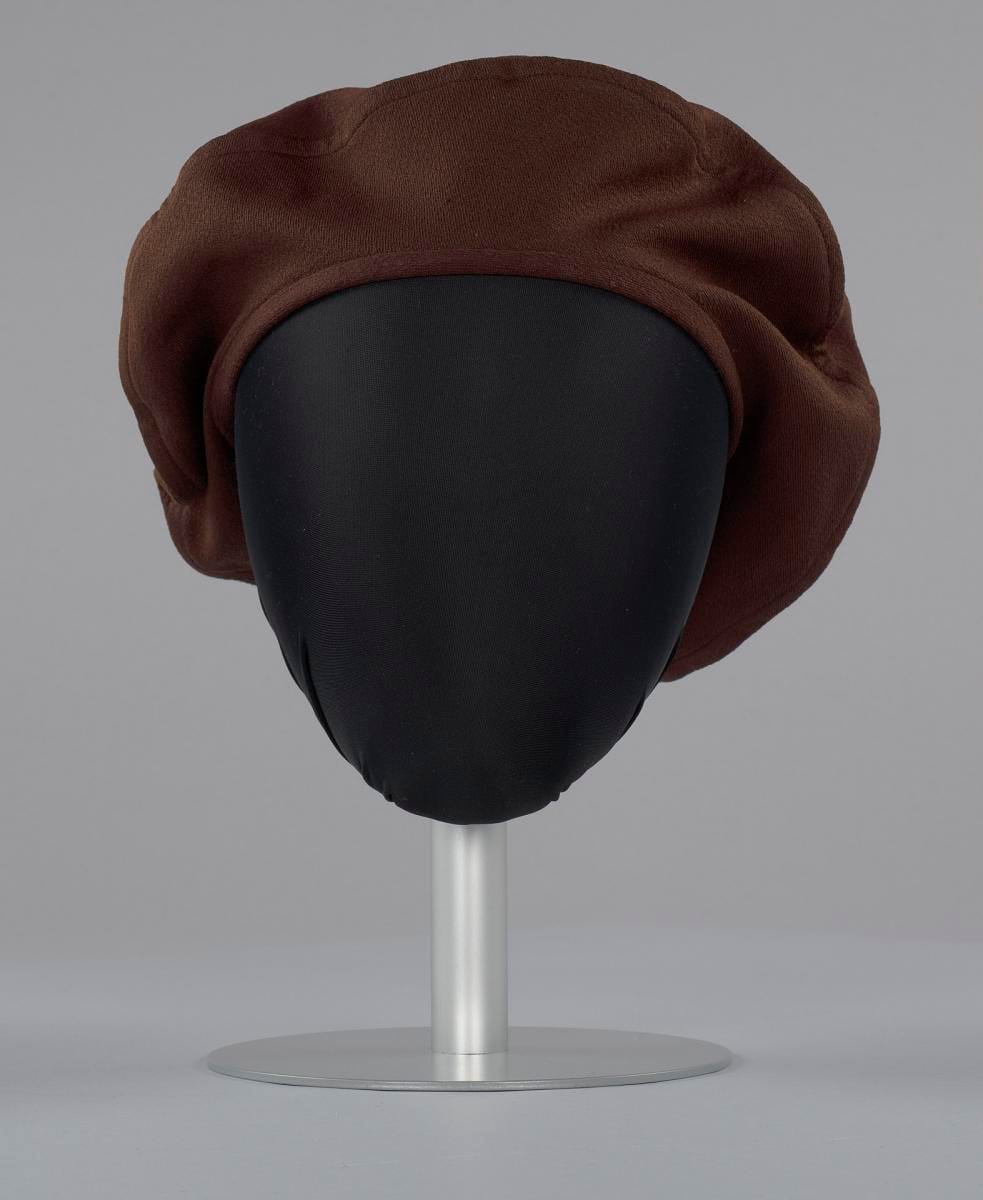
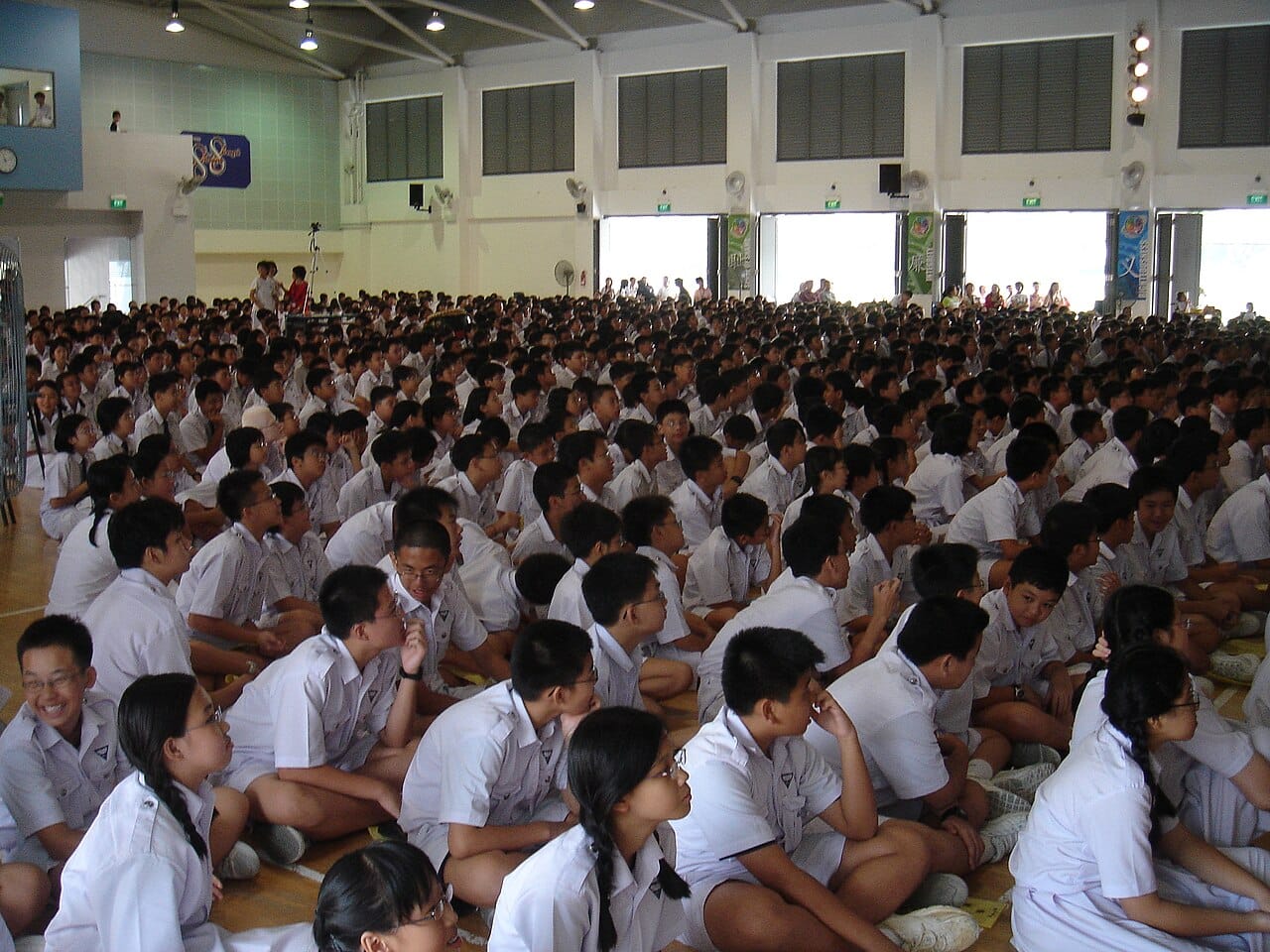
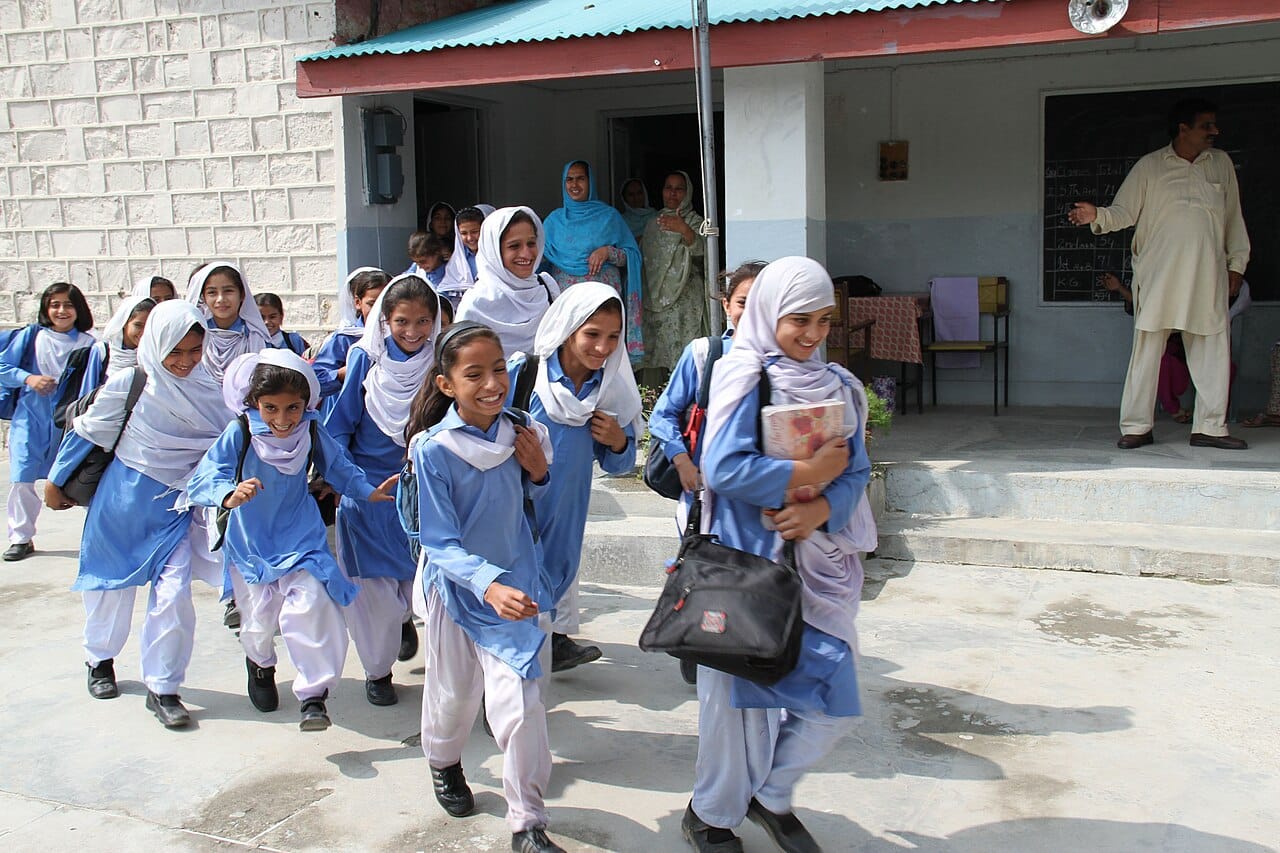
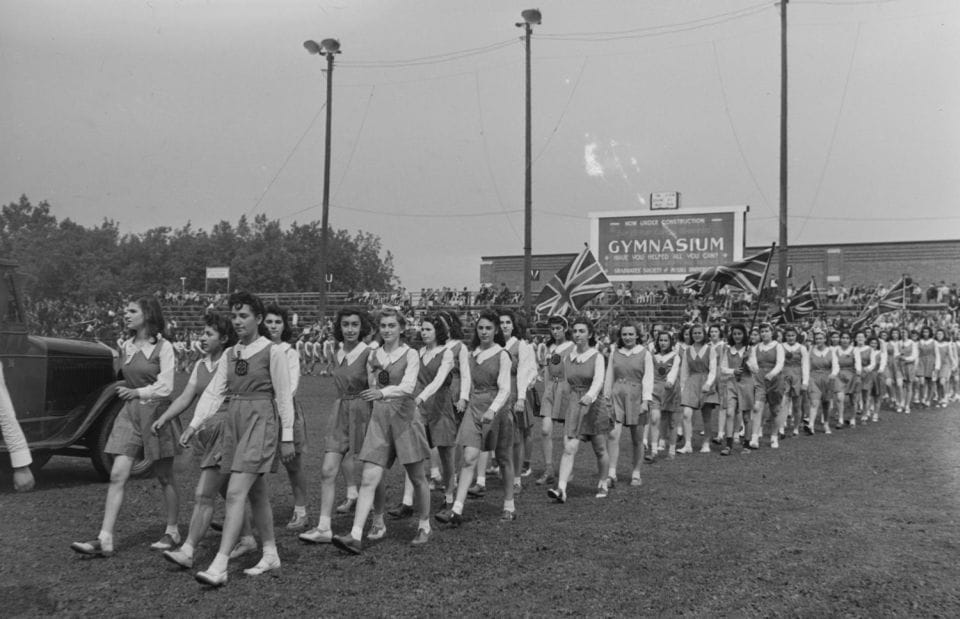
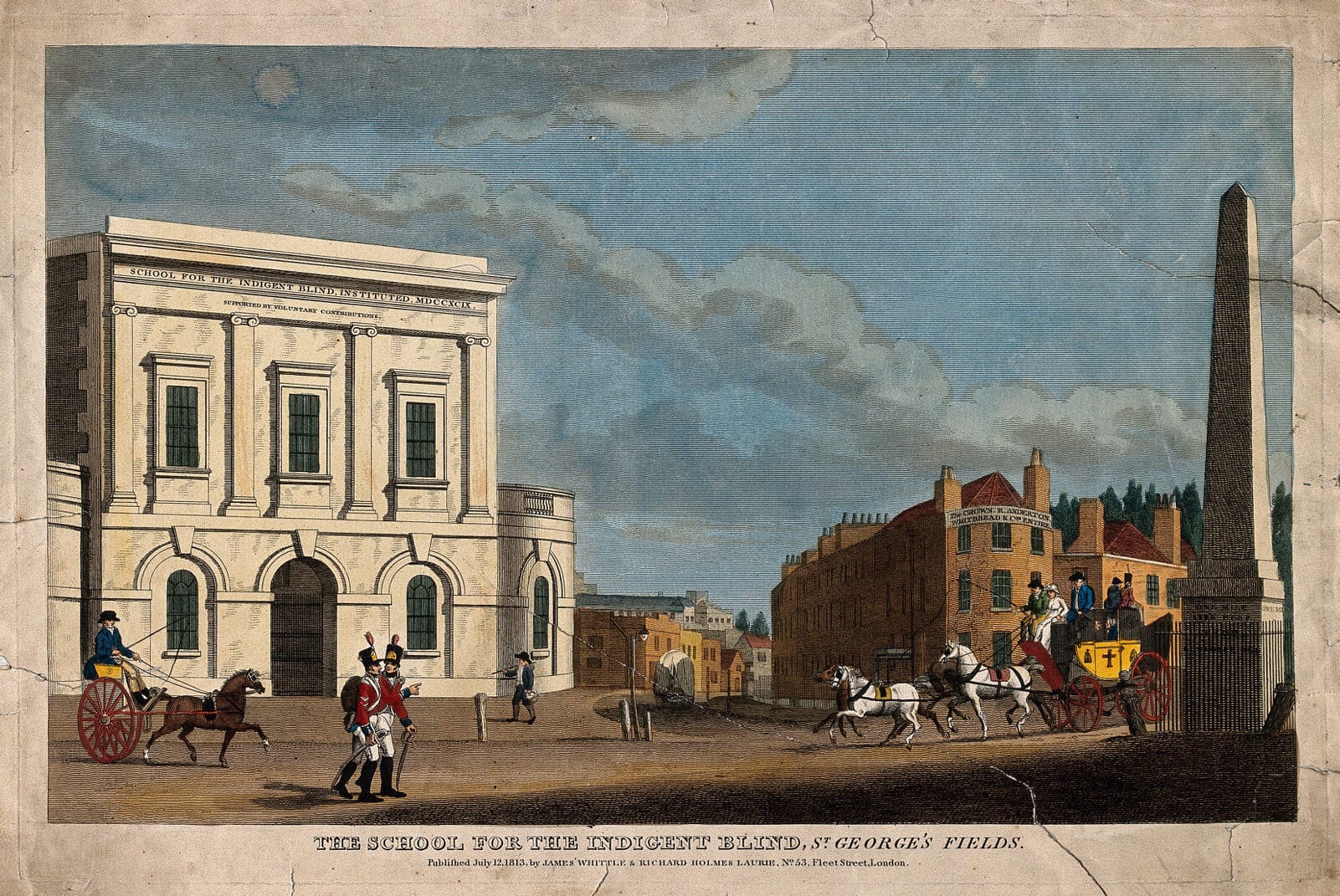
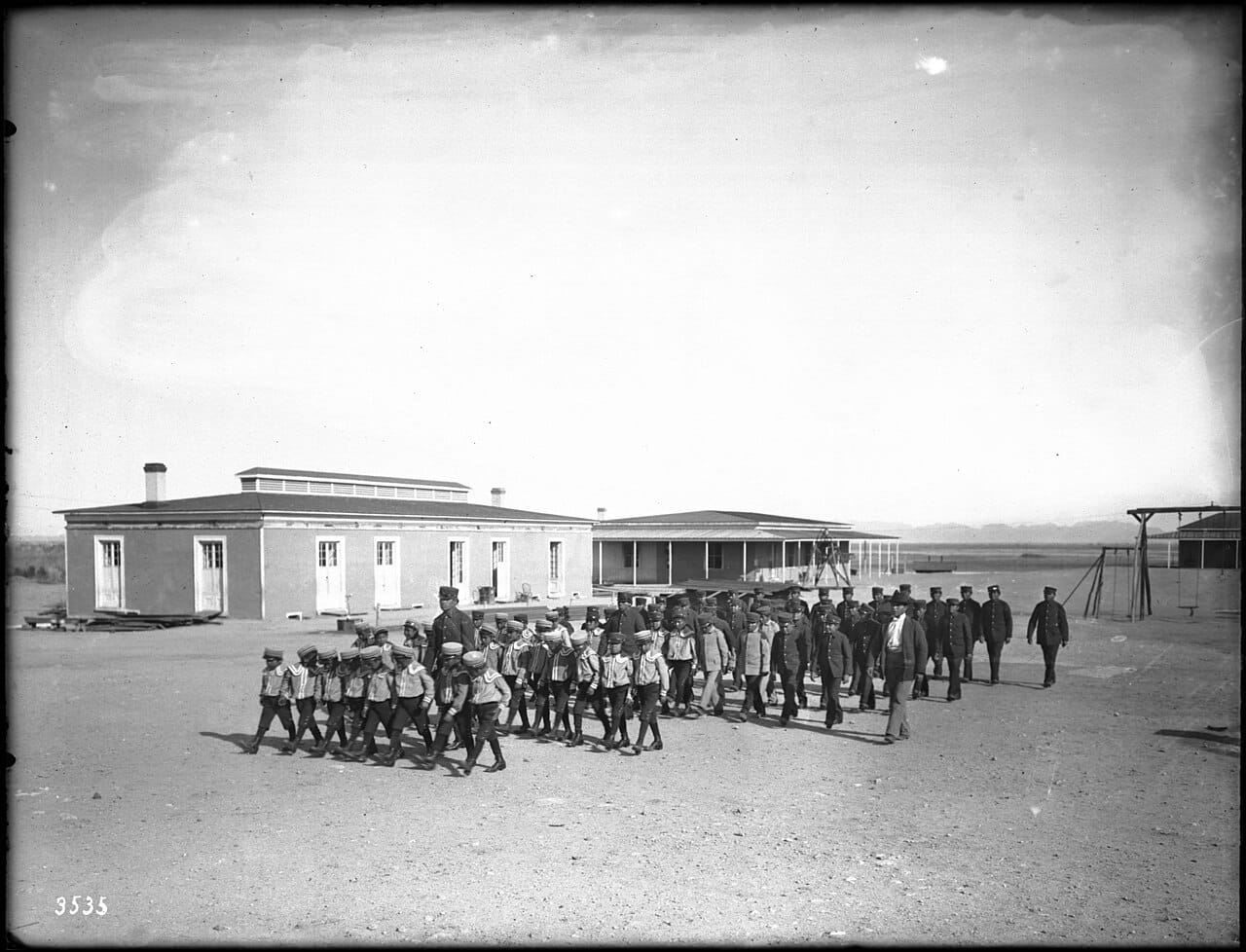
A school uniform from the Sister Clara Muhammad schools. An institution that chose its own dress rather than inheriting one, and arrived at the same structure. The specification is not a hangover from anywhere; it is what happens when a school decides what its pupils will look like.National Museum of African American History and Culture · NMAAHC-B2763DED6EA42_4002 · 1978-1979 · Unidentified, Sister Clara Muhammad Schools, renamed 1975, Medina Rowell, American, Nation of Islam, American, founded 1930 · CC0Students of a Singapore high school assembled in a hall. The effect the sizing produces. At this distance the fit of any individual garment is invisible and the set reads as one thing, which is precisely the outcome the sizing decision buys.Wikimedia Commons · 537419 · 2006-01-27 11:14 · mailer_diablo. · CC BY-SA 3.0Schoolgirls in shalwar kameez, Abbottabad. A different garment tradition and an identical logic. The uniform is a local form, sized rather than tailored, and it produces the same visual result.Wikimedia Commons · 27655411 · 2013-08-10 17:38:38 · Vicki Francis/Department for International Development, United Kingdom · CC BY 2.0School children marching in a parade. Where the group reading is the entire purpose. Nothing about this occasion would be improved by every child's clothes fitting.Wikimedia Commons · 34396213 · 6 June 1941date QS:P571,+1941-06-06T00:00:00Z/11 · Conrad Poirier · Public domainThe blind school at Southwark, coloured engraving of 1813. Two centuries earlier and already the same. Charity schools dressed their children identically for the benefit of subscribers, and the clothing was designed to be seen by people other than the wearer.Wellcome Collection · c7pwzcyu · date not recorded · Tappen, George, approximately 1771-1830 · Public Domain MarkBoys marching in formation outside an Indian boarding school. The extreme case, and it should be named as one. Where the institution's purpose was to erase a background rather than to organise a school day, identical clothing was among the first instruments used.Wikimedia Commons · 30841562 · circa 1900date QS:P,+1900-00-00T00:00:00Z/9,P1480,Q5727902 (date created) · C. C. Pierce · Public domain
The one that fits
There is an exception, and it proves the rule cleanly. Where an institution wants an individual to be seen as an individual — an officer, a senior pupil, a head of house — the clothing is suddenly tailored, or at least altered, and it is understood by everyone that this is what has happened.
The same institution that could not find a blazer to fit a fourteen-year-old will fit one exactly to a prefect. Nothing changed about the cost of tailoring in between. What changed is whether being distinguishable was the point.
Hedda Maartens — MA in fashion design, then eleven years in the industry designing for people who had no say in what they wore. Now writes about prescribed dress: how a garment was made to work, and what it was made to make a person into.
Member discussion
Back
Nametape
Free
$0
Every Research post and every Essay, free to read.
All Research posts — one uniform at a time, in archive photographs



.jpg?ref=blog.neutrino.website)

Member discussion