A servant in livery wore their employer’s colours, cut from the employer’s cloth, on the employer’s account. The garment said whose you were before it said what you did.
Livery is the clearest case in this archive of a uniform that belongs to somebody other than the person wearing it. It was cut from cloth the employer bought, in colours the employer chose, on an account the employer settled — and it went back when the post ended.
That is not a metaphor. It is the accounting. A footman's coat appears in a household's ledgers next to the candles.
It Was Sold by the Yard
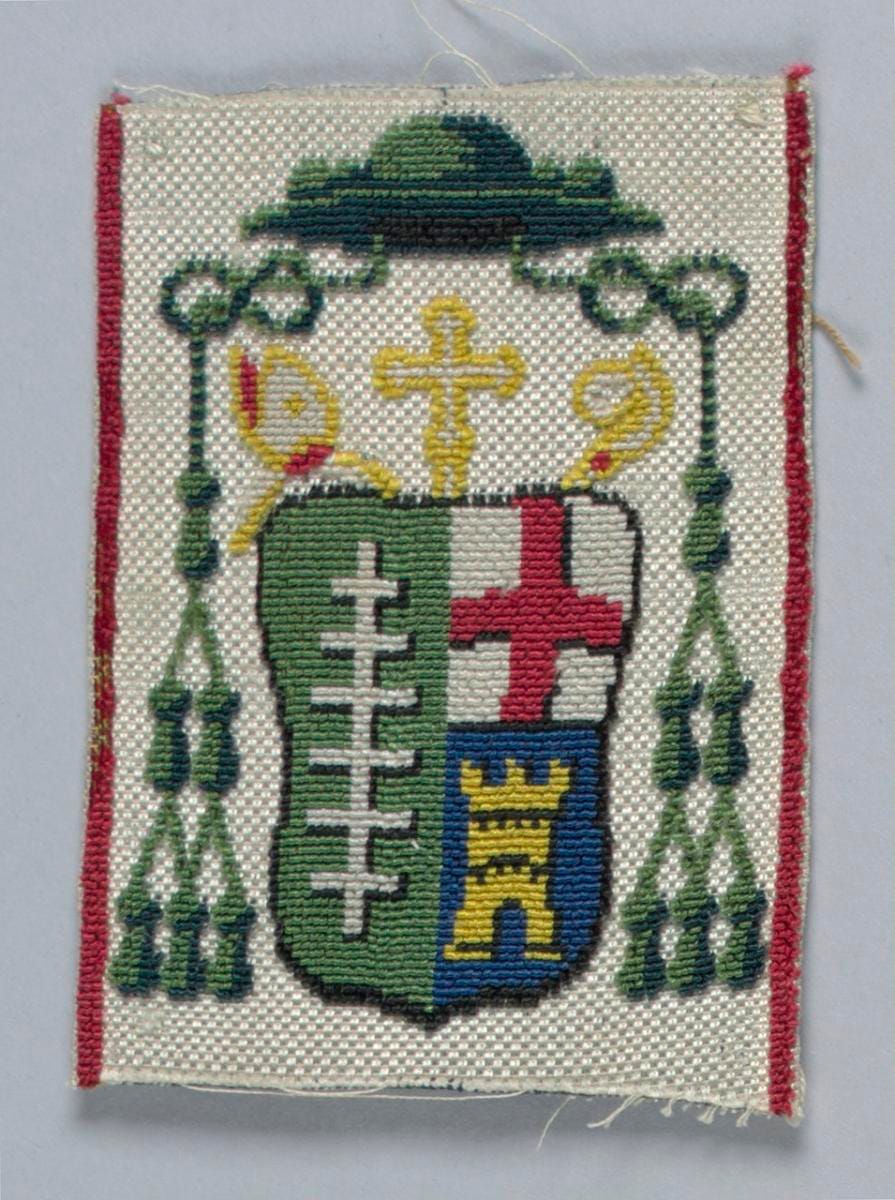
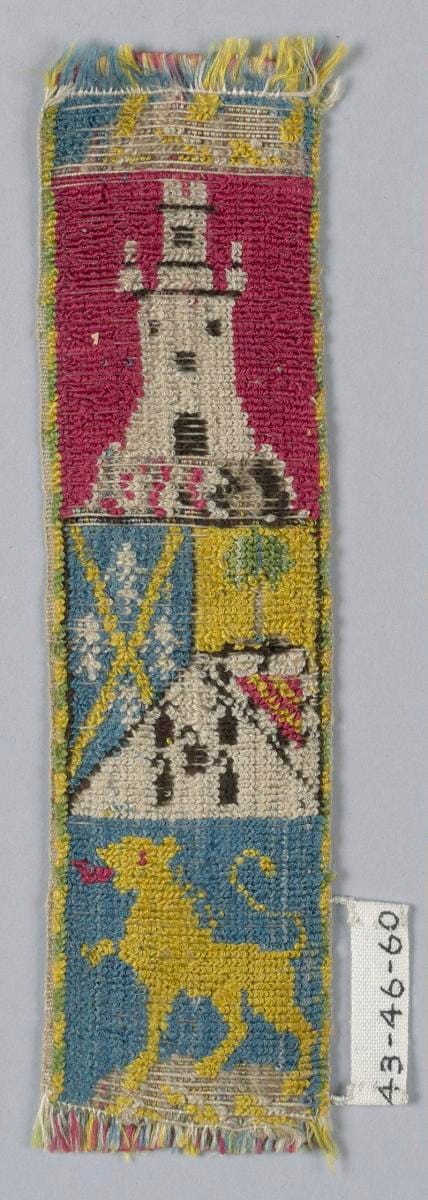
The part of livery that carried the meaning was not the coat. It was the braid on it — woven in a house's colours, ordered by the yard from a specialist trimming maker, and applied to whatever the tailor happened to be making that year.
Which is why these four survive in a design museum's textile collection rather than in a costume one. They are catalogued as trimming. Nobody kept the coats.
A length of woven livery trimming, eighteenth century. The pattern repeats along its length because it was made to be bought by the yard and cut to fit whoever was being dressed this season.Cooper Hewitt, Smithsonian Design Museum · CHSDM-31DC5F18F8AD2-000001 · 18th century · creator not recorded · CC0Livery trimming in a second colourway. A different house, or the same house on a different footing. The colours are the identifier and the weave is standard.Cooper Hewitt, Smithsonian Design Museum · CHSDM-471FD2CEBC662-000001 · 18th century · creator not recorded · CC0A third trimming, more heavily figured. Cost is legible here in a way it is not in a photograph: more silk, more passes, a more expensive household.Cooper Hewitt, Smithsonian Design Museum · CHSDM-C805BE723E232-000001 · 18th century · creator not recorded · CC0A livery band, early nineteenth century. Wider than the trimmings and meant for a hat or a cuff — the point on a servant that a visitor's eye reaches first.Cooper Hewitt, Smithsonian Design Museum · CHSDM-8F3496919F842-000001 · early 19th century · creator not recorded · CC0
Worn by People, Photographed as Staff
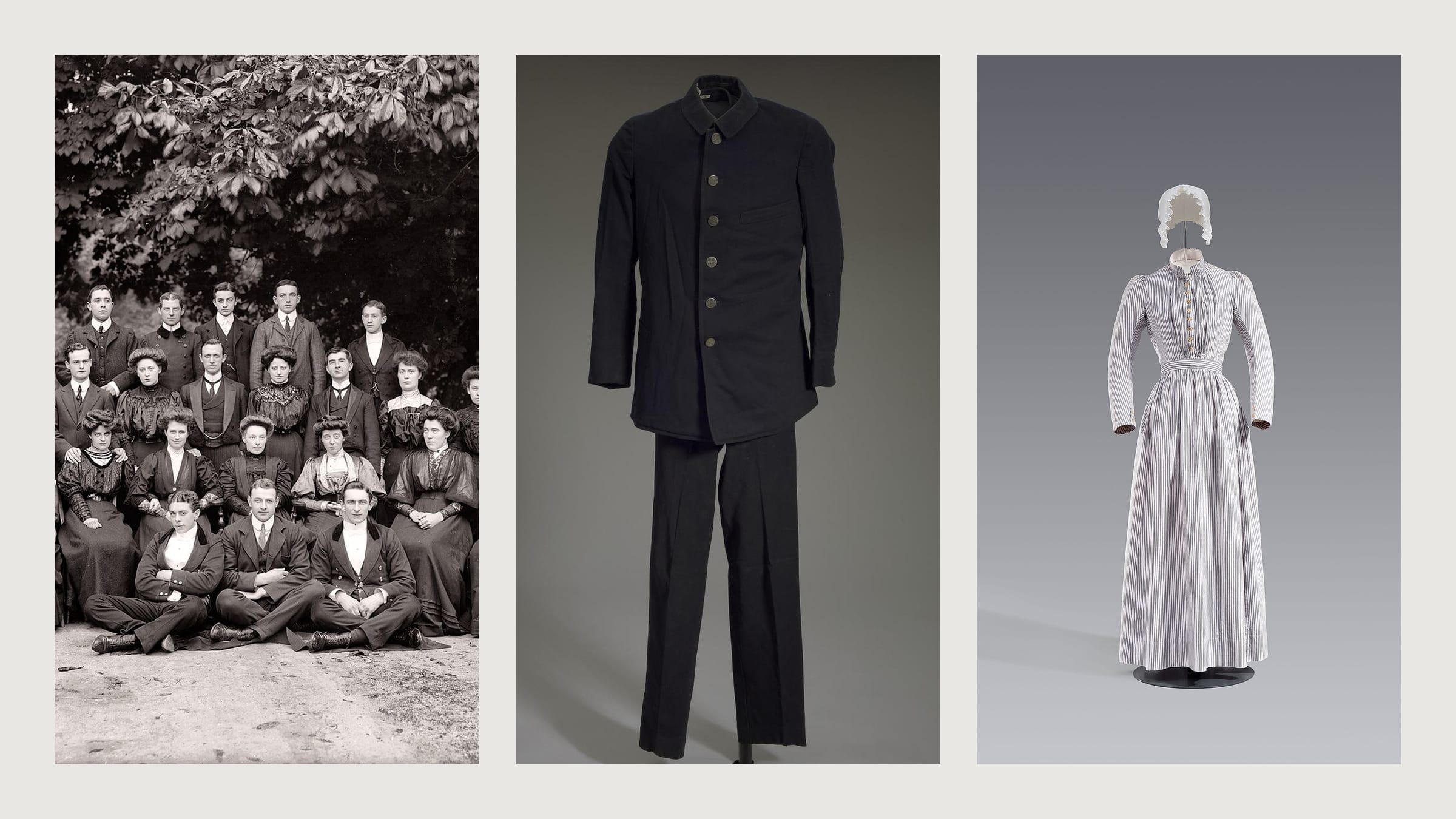
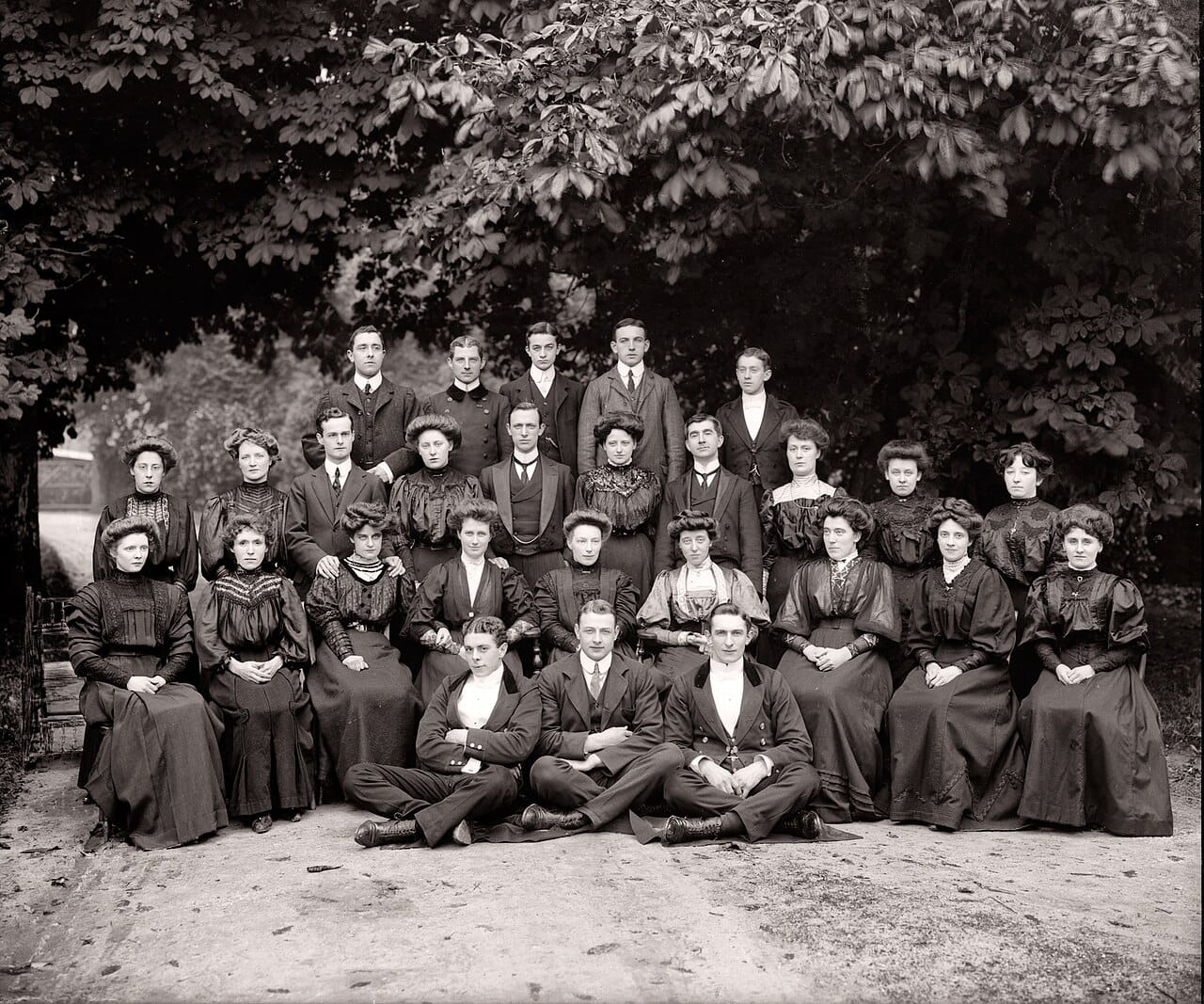
The household photograph is its own genre, and it is arranged the way the house was: seniority in the seating, function in the dress, everybody in it at once. The garment does the sorting.
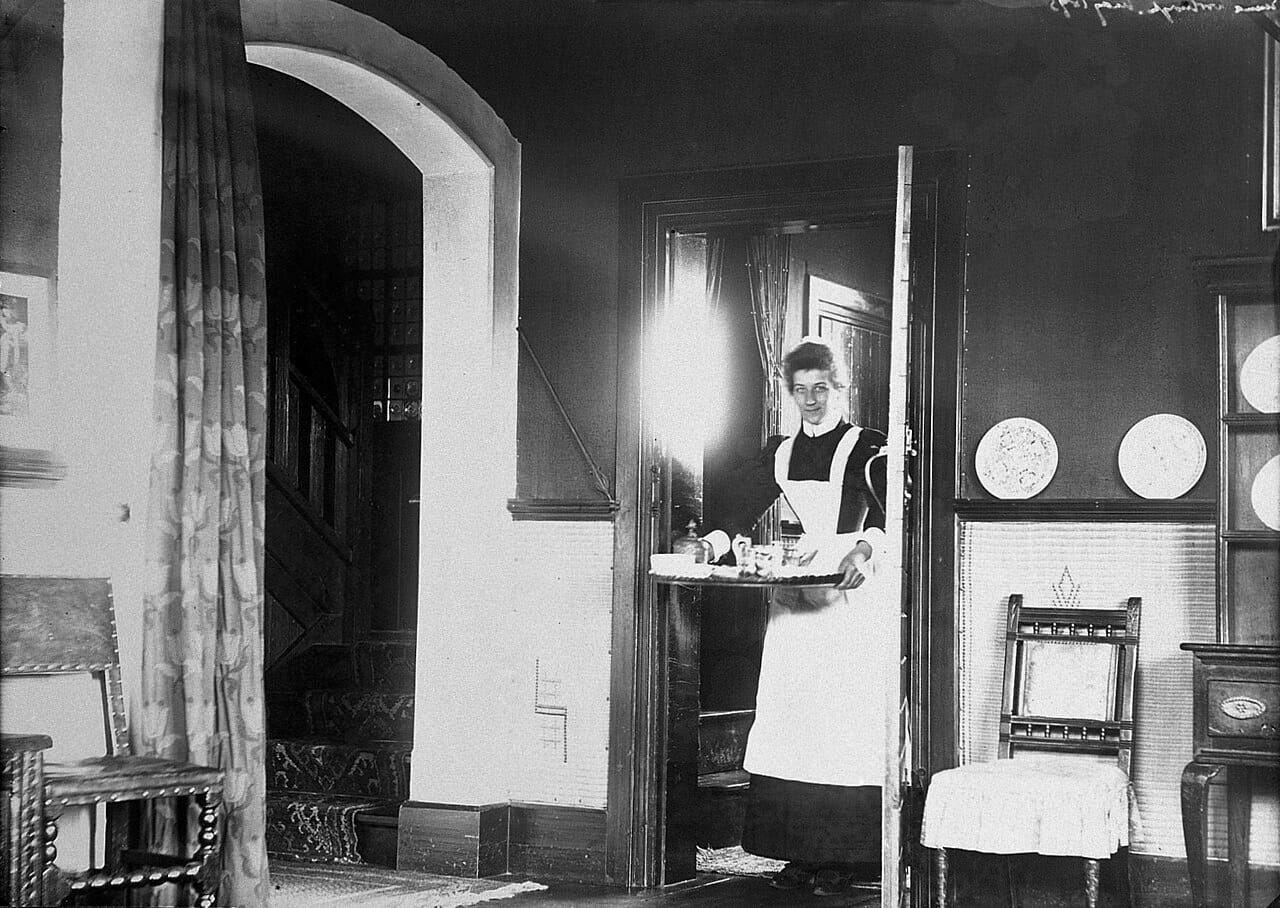
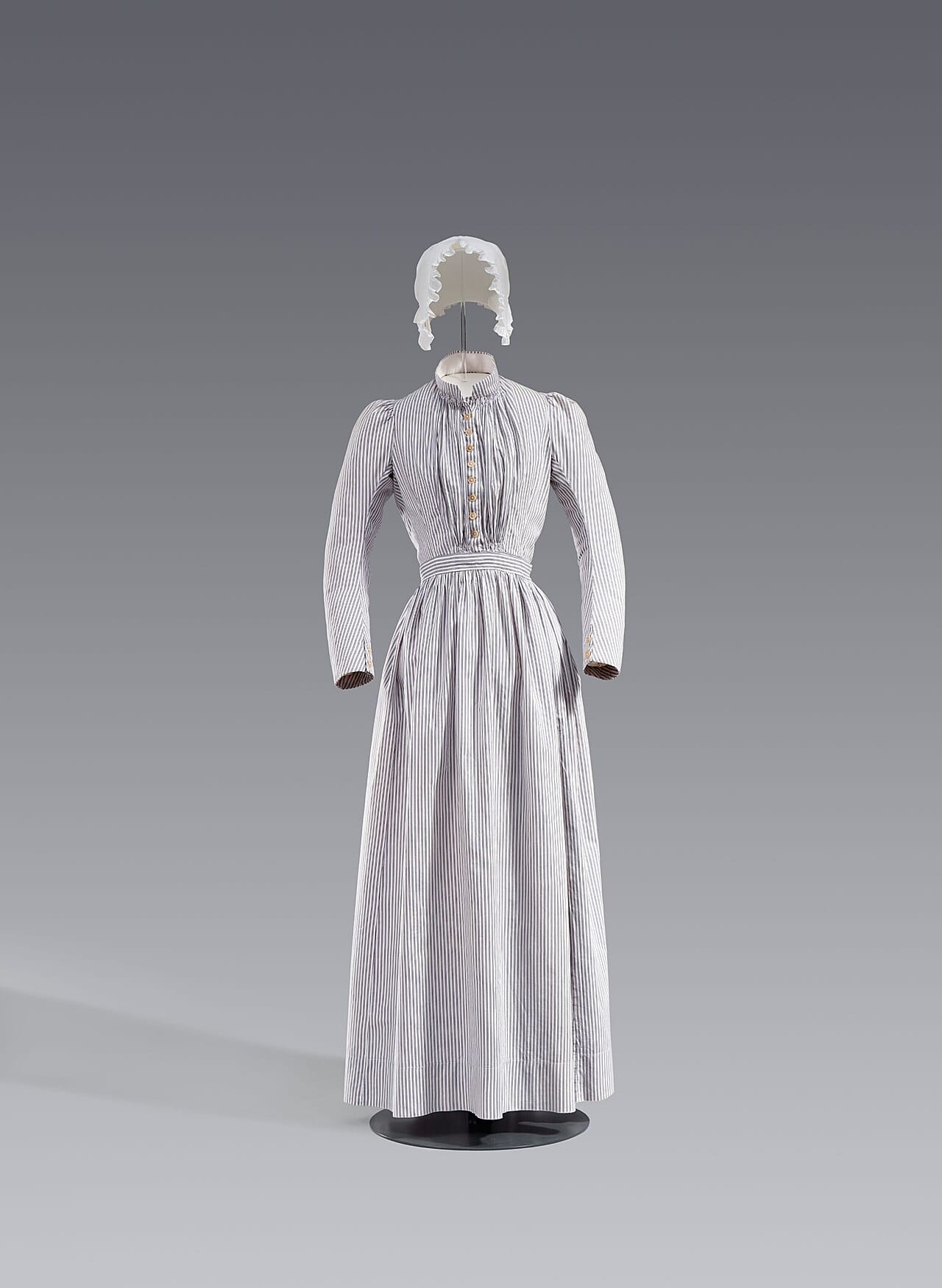
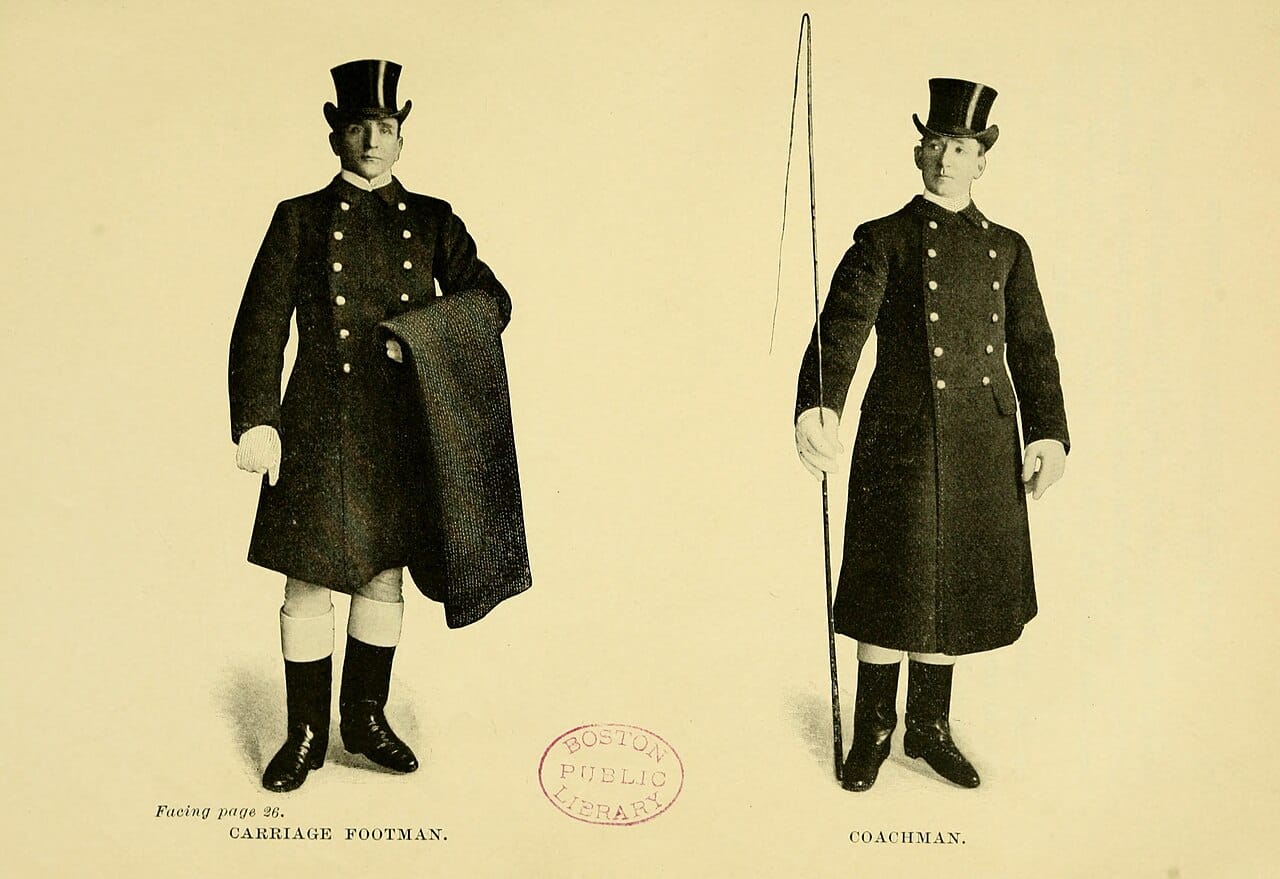
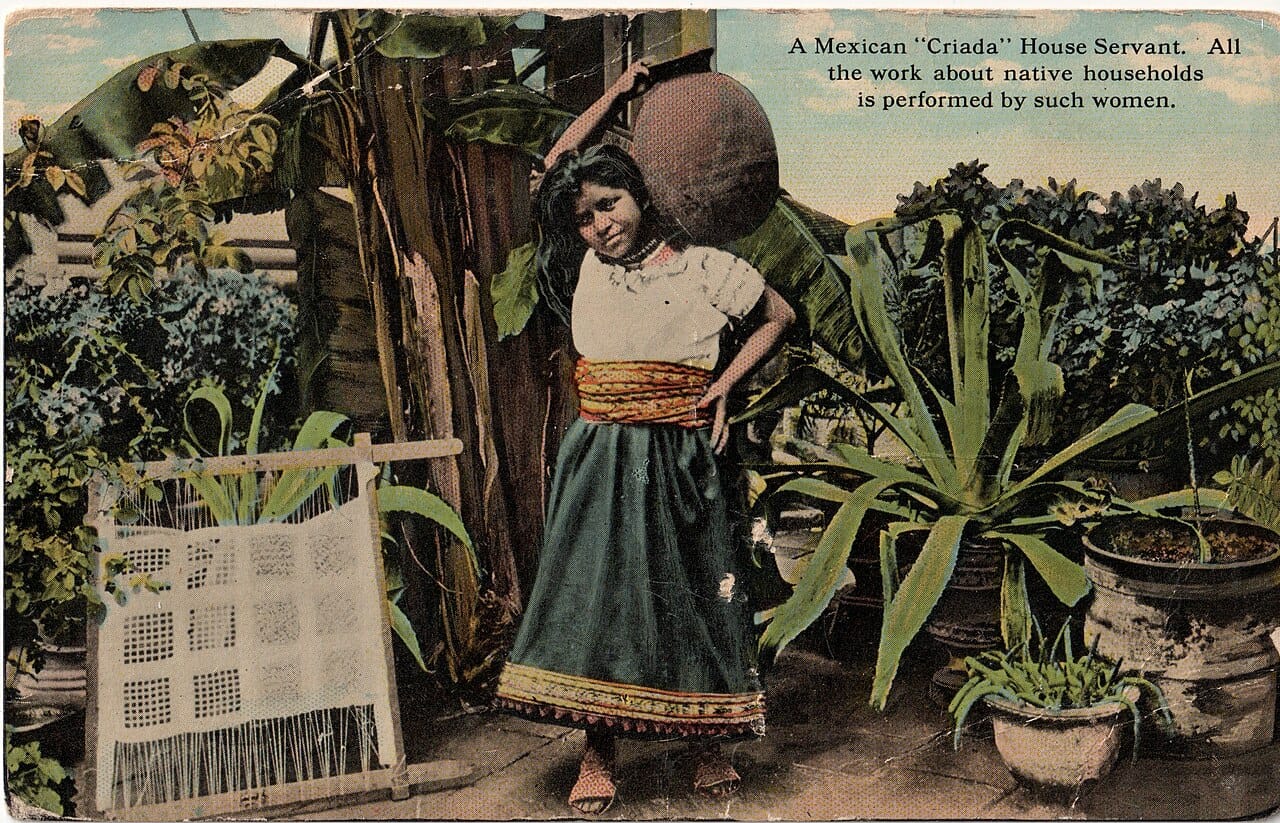
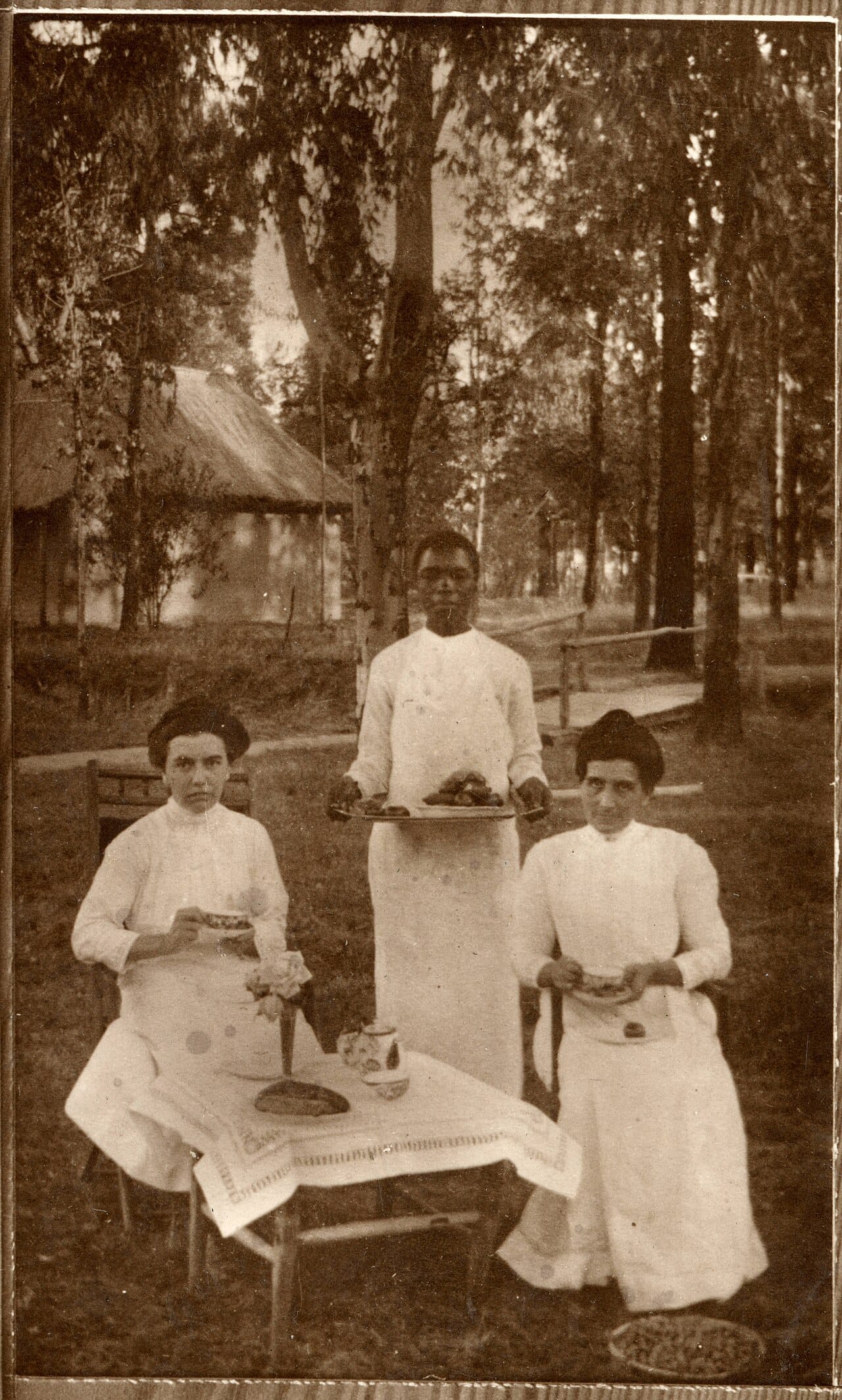
The indoor servants of Bessborough House, photographed together in 1908. Three grades of dress in one frame — dark coats, aprons, caps — and the arrangement of the sitters matches the arrangement of the clothes.Indoor Servants at Bessborough House · 24251976 · 1908-09-28 · National Library of Ireland on The Commons · No restrictionsA parlour maid at Little Gillions, Croxley Green. Cap, apron, dark dress. The parlour maid was the one the family's visitors saw, and hers is the most specified of the women's uniforms.Wikimedia Commons · 36050216 · 2014-10-11 13:58:11 · creator not recorded · CC BY 4.0A maid's dress with cap, 1885, in a museum collection. The same outfit as an object rather than as a person. Plain cloth, hard-wearing, and a cap that exists only to be seen.Historical Museum Frankfurt · 73134621 · 2018-06-26 14:38:59 · Foto by Horst Ziegenfusz The copyright of the foto is with the Historical Museum Frankfurt who decided to release these media files under cc-by-sa license during GLAM on Tour Frankfurt 2018. · CC BY-SA 4.0Service dress illustrated in a household cookery manual, 1902. Printed instructions for how staff should look, in a book bought by the employer. The uniform was specified in the same volume as the menus.Wikimedia Commons · 44009049 · 1902 · Internet Archive Book Images · No restrictionsA house servant photographed in Mexico, around 1915. No braid, no cap, and the postcard still labels her by her function. Where there is no livery, the photograph supplies the label instead.Personal postcard collection · 194595432 · circa 1915date QS:P,+1915-00-00T00:00:00Z/9,P1480,Q5727902 · creator not recorded · Public domainTea served outdoors in Angola, around 1914. The same arrangement exported. Who is dressed for the task and who is dressed for the weather is the whole composition.Wikimedia Commons · 30904856 · circa 1914date QS:P,+1914-00-00T00:00:00Z/9,P1480,Q5727902 · creator not recorded · Public domain
A footman's coat appears in a household's ledgers next to the candles. It was an expense of the house, not a possession of the man.
The One That Was Kept
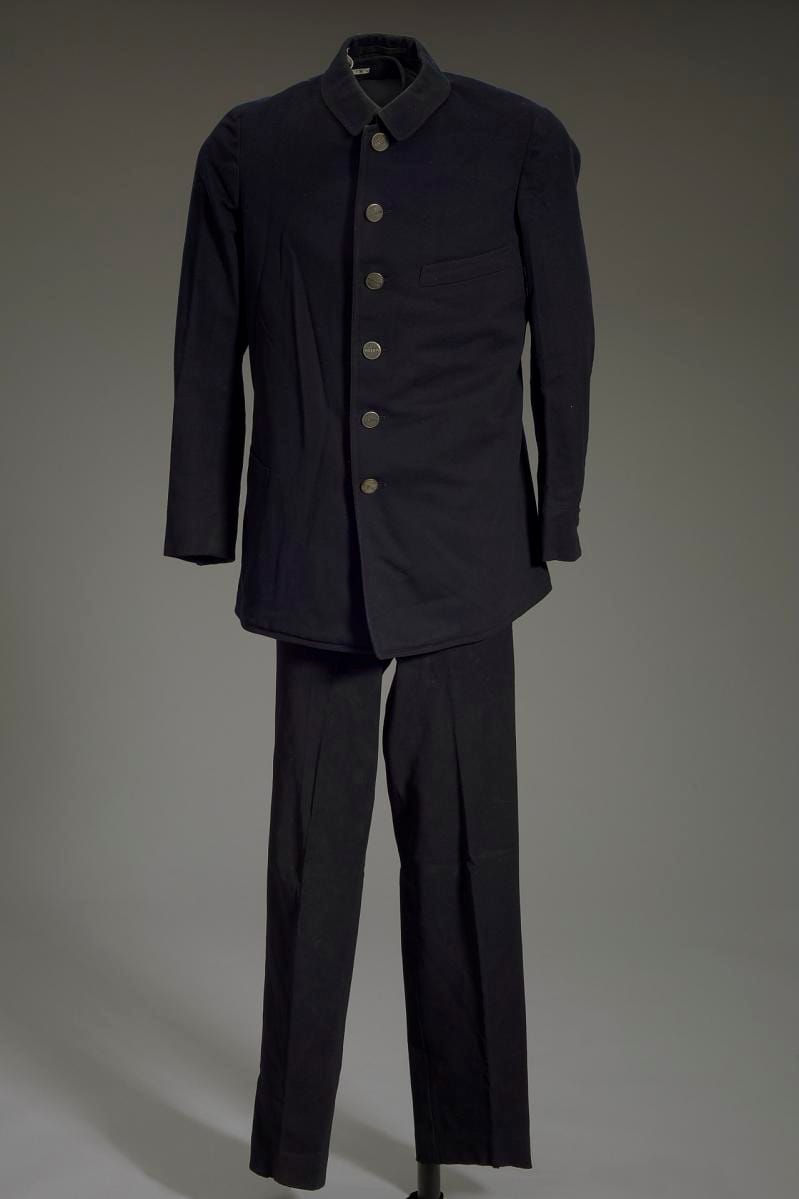
Almost no livery survives, because almost none of it was anybody's to keep. The exception in this set is a coat that outlasted the system it came from — kept by the man who wore it, and accessioned under his name rather than his employer's.
The uniform coat of Pullman porter Robert Thomas, around 1920. Company livery rather than household, and the reason it exists is that this one was kept. The catalogue records the wearer's name, which for a livery garment is close to unique.National Museum of African American History and Culture · NMAAHC-C5AB2AB8BC502_5001 · ca. 1920 · Wanamaker & Brown, American, 1861 - 1986, Robert Jackson Thomas, American, 1889 - 1929, Pullman Palace Car Company, American, 1867 - 1969 · CC0
Hedda Maartens — MA in fashion design, then eleven years in the industry designing for people who had no say in what they wore. Now writes about prescribed dress: how a garment was made to work, and what it was made to make a person into.
Member discussion
Back
Nametape
Free
$0
Every Research post and every Essay, free to read.
All Research posts — one uniform at a time, in archive photographs


.jpg?ref=blog.neutrino.website)


_(14767335855).jpg?ref=blog.neutrino.website)

.jpg?ref=blog.neutrino.website)

Member discussion