Between the wars, military tailoring did what architecture was doing: stripped ornament, raised the waist, simplified the silhouette to something a factory could cut.
Between the wars, military tailoring did what architecture was doing. Ornament came off, the silhouette simplified, the waist rose, and the whole garment was redrawn into something a factory could cut at volume. The convergence with modernism is not a coincidence and it is not an influence either — both were answering the same two pressures, mass production and the cost of labour.
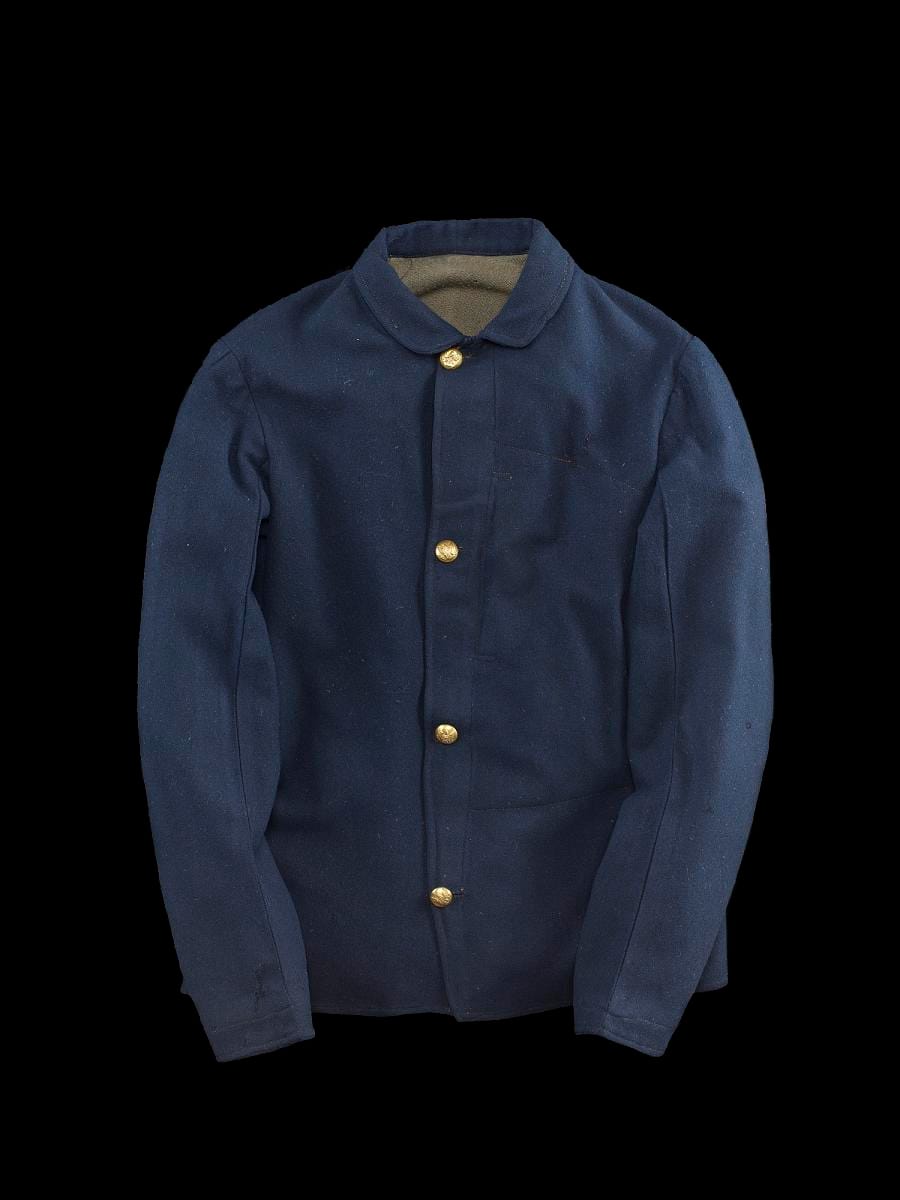
The change is easiest to see by looking at what came immediately before, because the pre-war garment is not a plainer version of the same thing. It is a different manufacturing proposition.
What the ornament was doing
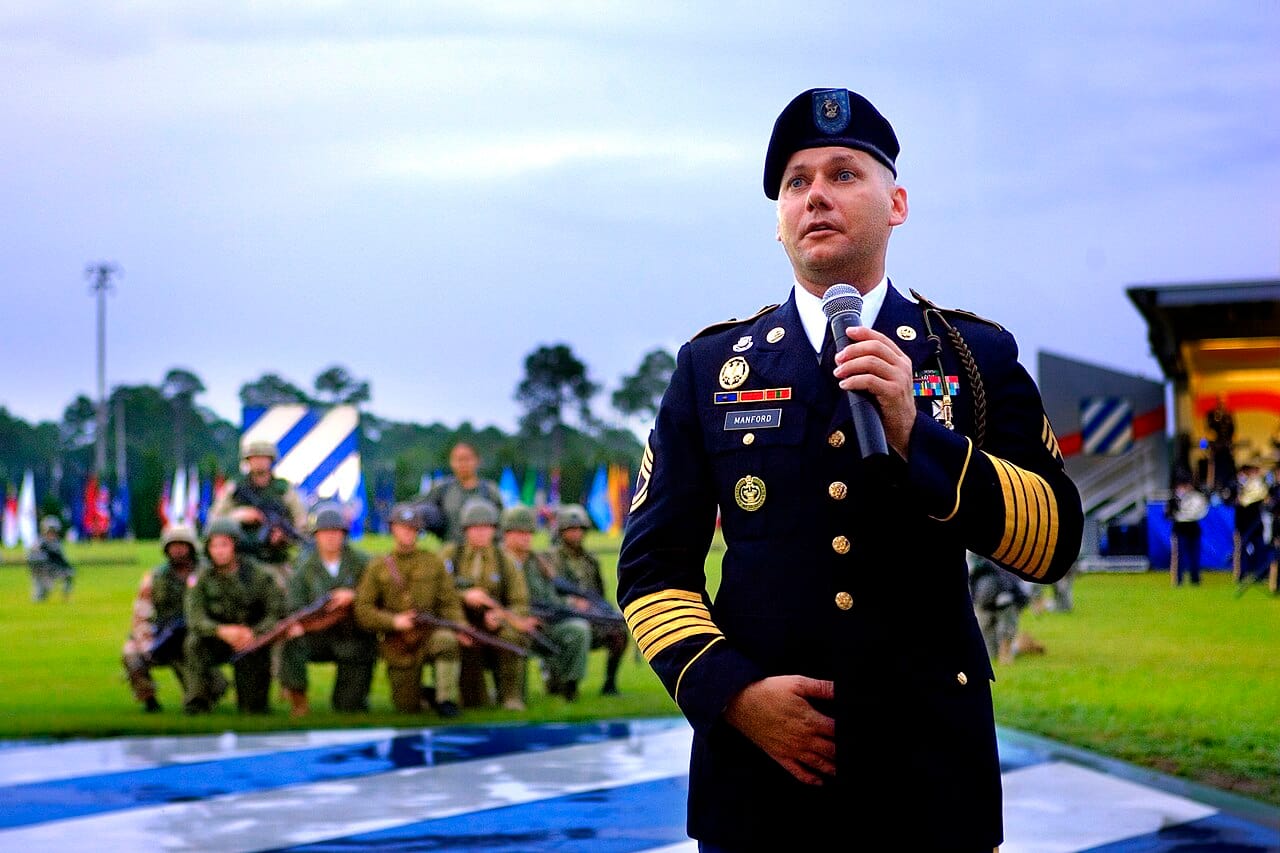
Nineteenth-century service dress carried braid, facings in a contrasting colour, piping along seams, and buttons in patterns that meant something. All of it was applied by hand, all of it took a skilled operator, and all of it was doing a job: it distinguished regiments from one another at a distance, on a field where that distinction had tactical consequences.
Once smokeless powder and accurate rifles made being visible at distance a liability rather than an advantage, the tactical argument inverted. What remained was the cost.
A US Army sack coat, Model 1858: a loose four-button coat in dark wool. Already a simplification of what preceded it, and still built the old way — set-in sleeves, hand-finished buttonholes, a lining that has to be fitted separately.National Museum of American History · NMAH-ET2012-14994 · 1865, 1858-1872 · creator not recorded · CC0A ceremonial military review, full dress with braid, cord and contrasting facings. Where the ornament went rather than where it vanished. Everything stripped from service dress survives on ceremonial dress, because ceremonial dress has no other job.United States Army · 8262360 · 2009-09-24 · Photos by Pfc. Gregory Gieske, 2nd HBCT Public Affairs · Public domain
The tunic
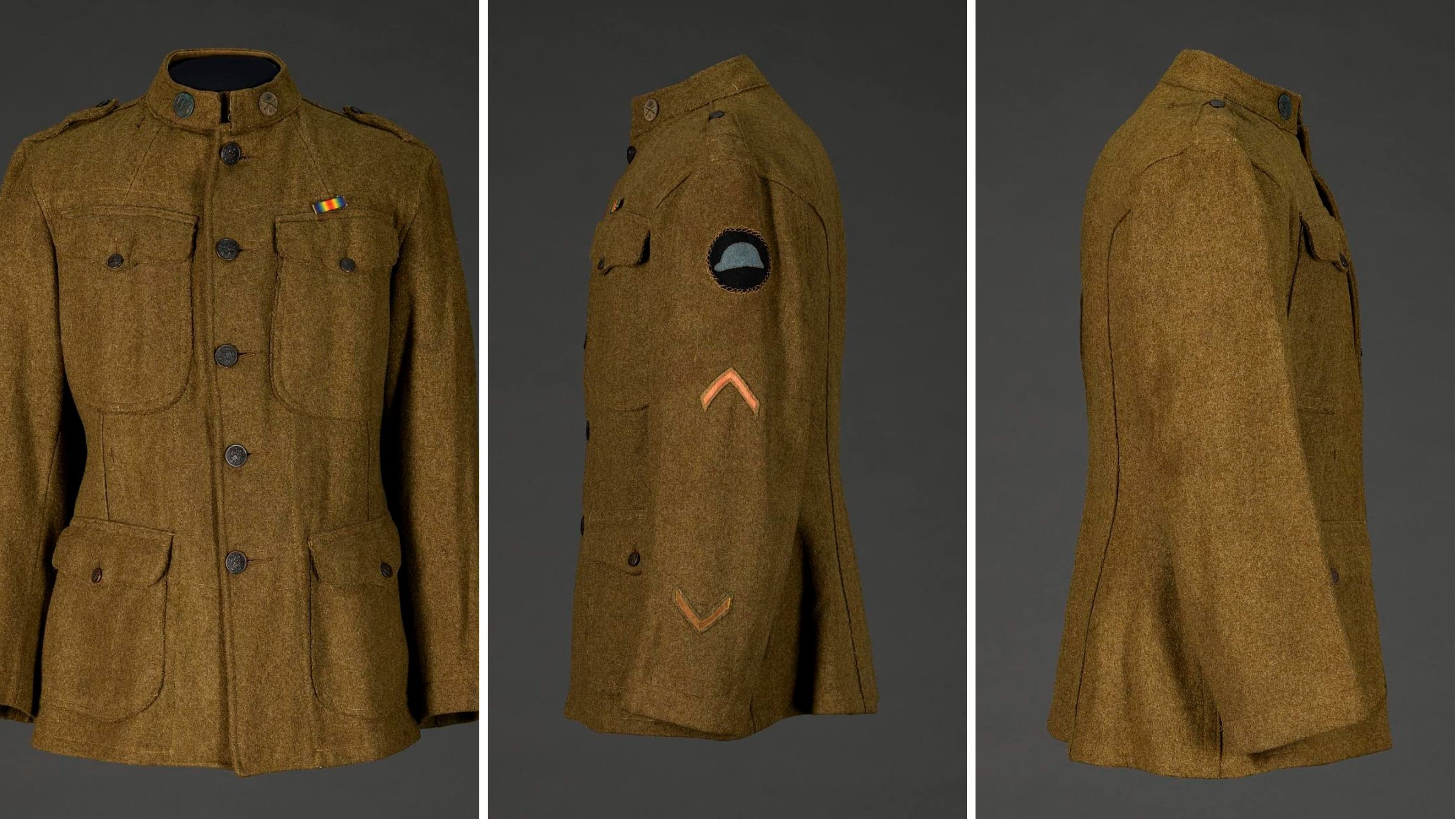
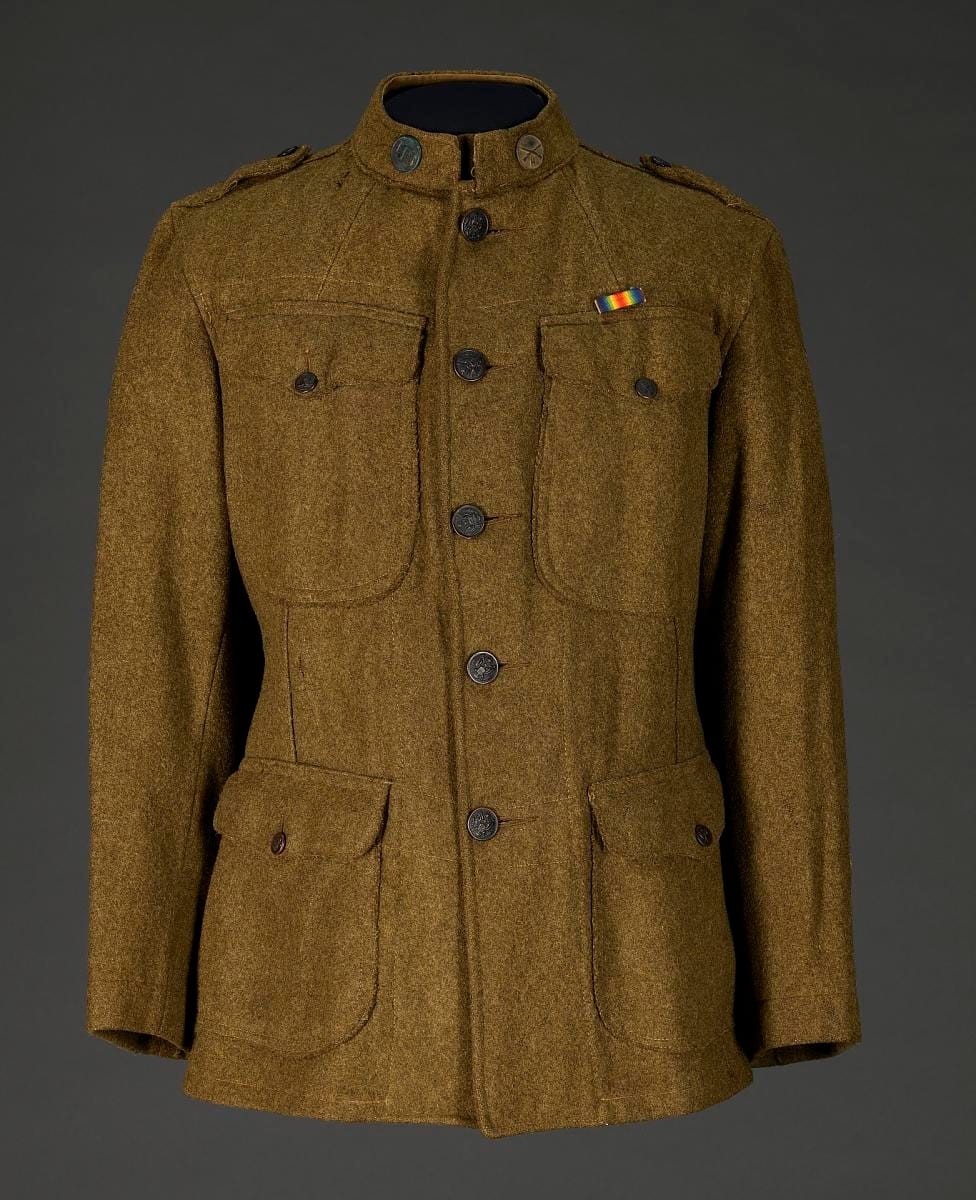
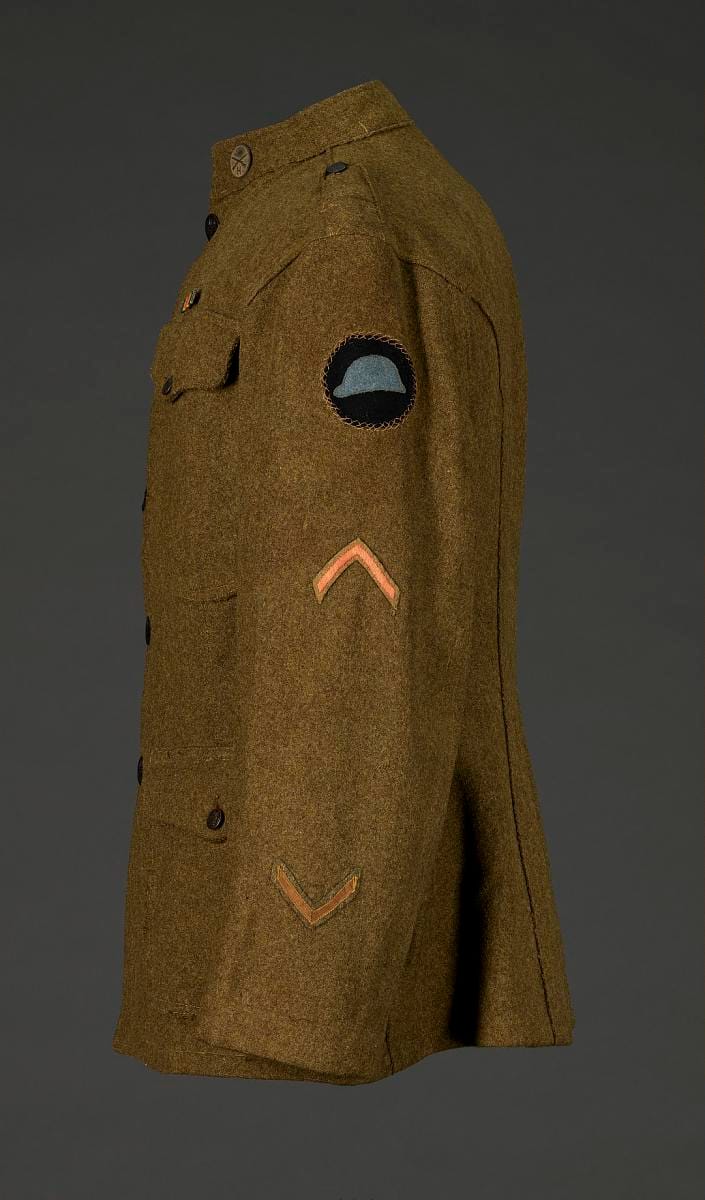
The First World War service tunic is the hinge. Olive drab, four patch pockets, a standing or falling collar, and almost nothing else. No facings, no piping, no contrast. Insignia is applied rather than woven in, so a single garment can serve any branch.
Look at the pockets. Patch pockets are sewn onto the outside of a garment rather than set into it — far quicker, far cheaper, and visibly cruder. They are the single clearest marker of the change, and they are on almost every military garment made since.
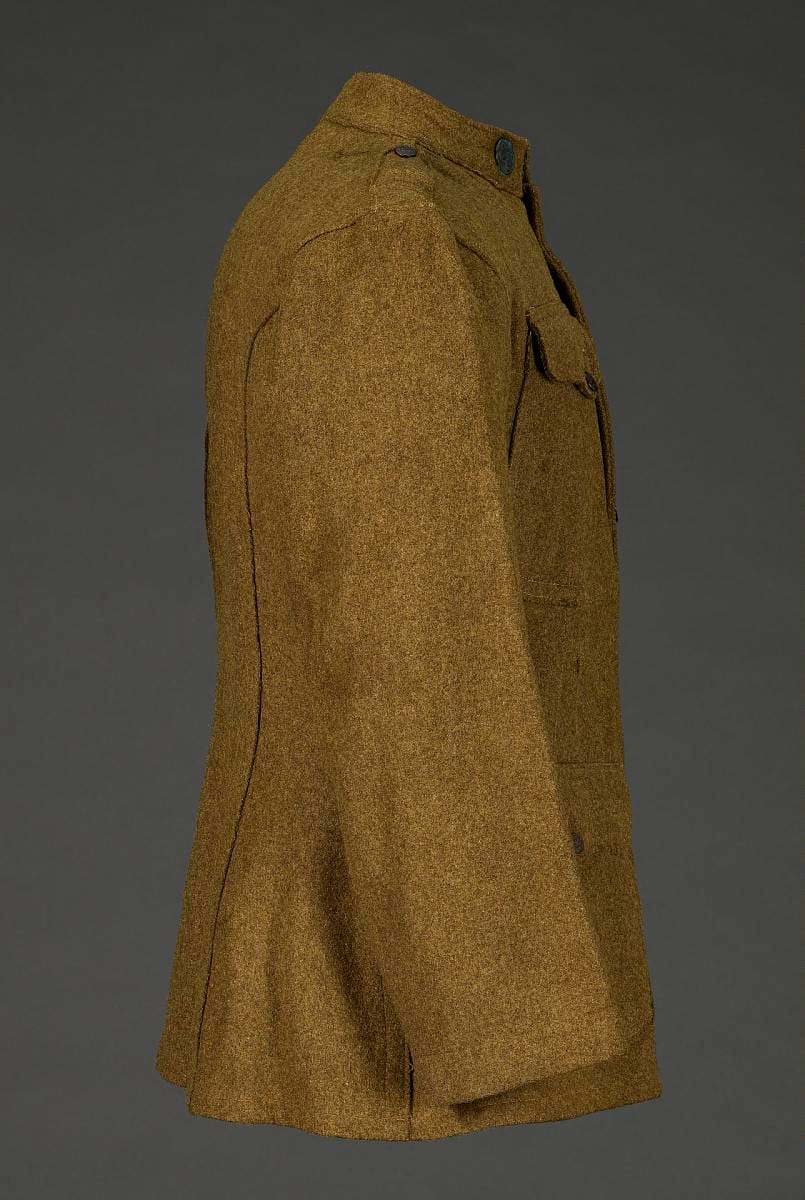
A First World War enlisted man's olive drab tunic, front view. Four patch pockets, a plain collar, and a button row. Every decision here is a decision about how many minutes of skilled labour the garment can absorb.National Museum of African American History and Culture · NMAAHC-2011_155_300_001-000001 · 1914-1918 · United States Army, American, founded 1775 · CC0The same tunic from the back, showing an unbroken panel. No vent, no shaping seam, no waist. The back of a nineteenth-century coat is where the tailoring was, and here there is none of it.National Museum of African American History and Culture · NMAAHC-2011_155_300_002-000001 · 1914-1918 · United States Army, American, founded 1775 · CC0A detail of the same garment, the cloth close enough to read. A coarse wool, fulled rather than finely woven. Cloth like this hides a cheap seam and would have looked like a failure of standards thirty years earlier.National Museum of African American History and Culture · NMAAHC-2011_155_300_004-000001 · 1914-1918 · United States Army, American, founded 1775 · CC0
Modernism removed ornament and argued that the result was more honest. An army removed ornament and did not argue anything, because the ornament had simply stopped paying for itself. The garments look the same either way.
What replaced tailoring
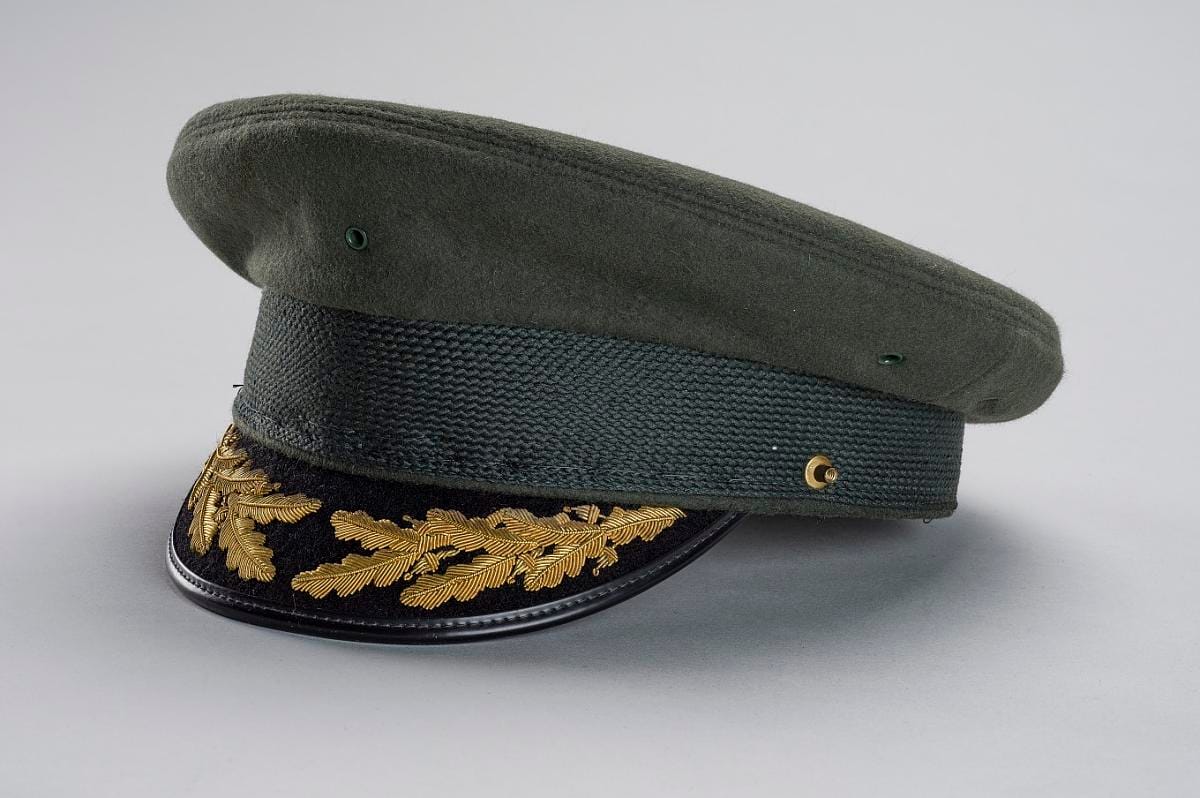
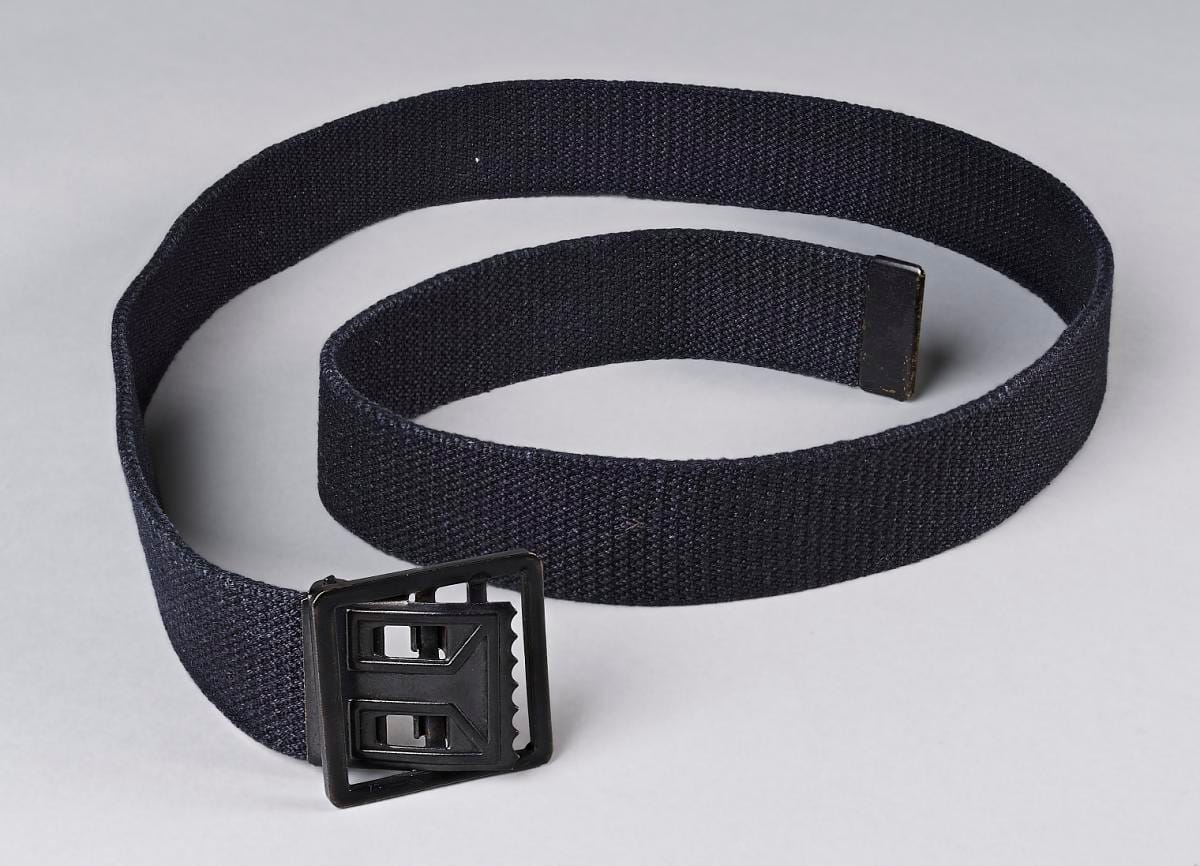
Once the garment stops carrying information, the information has to go somewhere. It goes onto applied components: badges, pins, tabs, a cap device, a belt. Each is made separately, in quantity, and attached to a garment that is identical whoever wears it.
This is a genuinely modernist solution, in the sense that architects would have recognised it — a standard shell plus interchangeable parts. It is also why a modern service uniform can be described completely by a list, and why the list is longer than the garment.
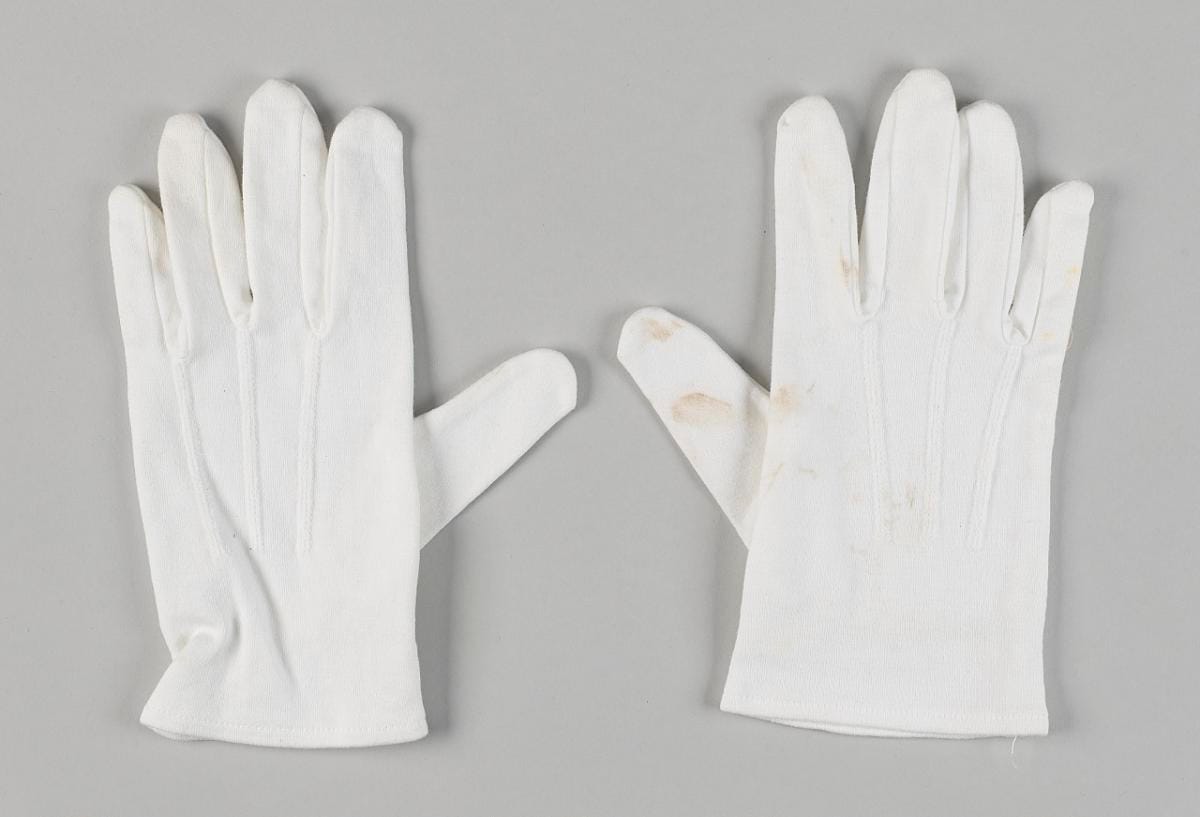
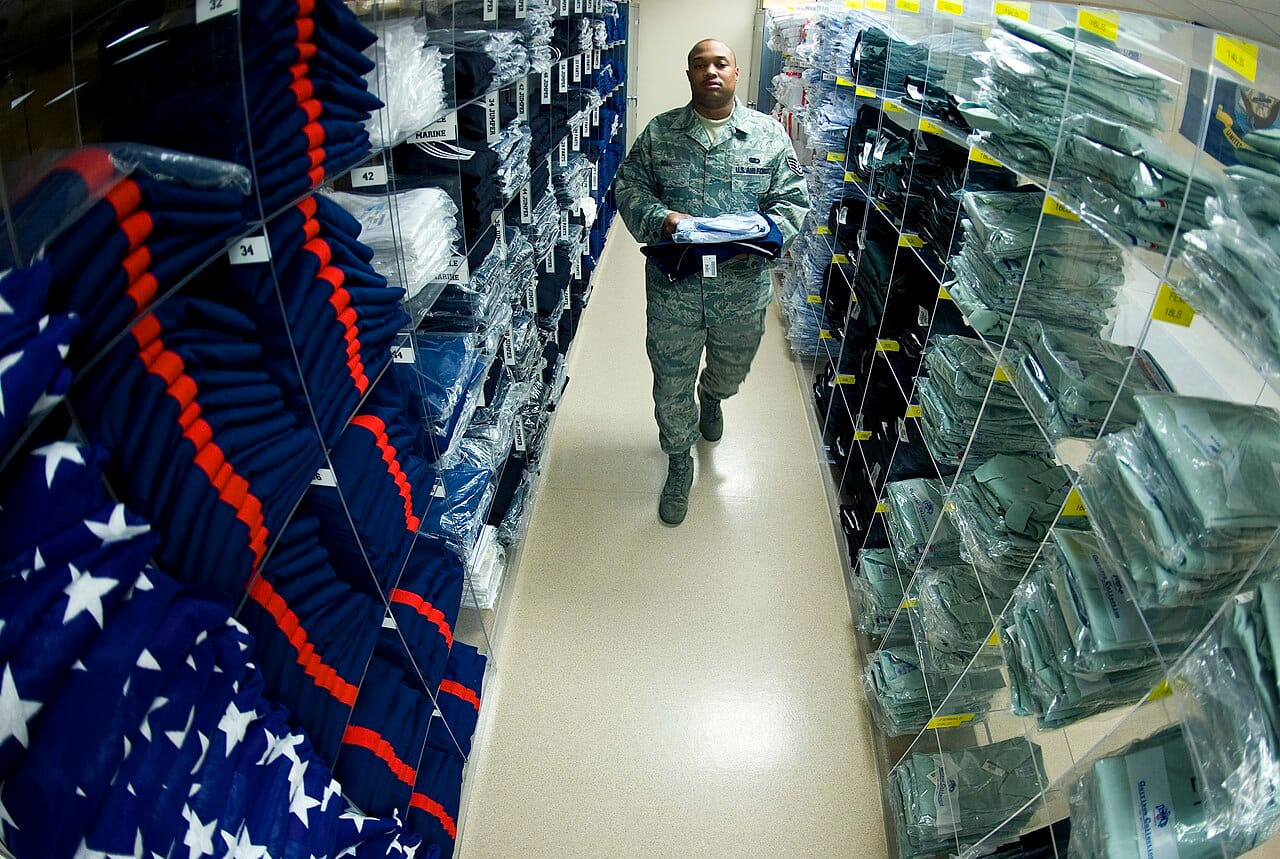
An army green service uniform shirt. The shell. Undistinguished by design, because everything that distinguishes is going to be pinned to it.National Museum of African American History and Culture · NMAAHC-A2022_101_1_38_004 · 1983-1986 · Morry Luxenberg, 1968, General Colin L. Powell, American, 1937 - 2021, United States Armed Forces, American, founded 1775, United States Army, American, founded 1775, General Colin L. Powell, American, 1937 - 2021 · CC0A service dress cap for a field grade officer. The one component that kept its shape through the whole century, because a cap is the part still seen when everything else is behind a desk or a vehicle door.National Museum of African American History and Culture · NMAAHC-A2022_101_1_54_001 · ca. 1958-1993 · Unidentified, General Colin L. Powell, American, 1937 - 2021, United States Armed Forces, American, founded 1775, United States Army, American, founded 1775 · CC0A pair of uniform gloves. Issued, catalogued, and preserved as part of a named person's uniform. The components are collected with the same care as the garment, which is how we know what a complete outfit was.National Museum of African American History and Culture · NMAAHC-A2022_101_1_34_7ab_001 · ca. 1989-1993 · Unidentified, General Colin L. Powell, American, 1937 - 2021, United States Armed Forces, American, founded 1775, United States Army, American, founded 1775, General Colin L. Powell, American, 1937 - 2021 · CC0Rows of military service dress uniforms hanging in storage. The end state of the whole process. Identical shells in graded sizes, waiting for the components that will make each one somebody's.Wikimedia Commons · 9521365 · 2009 · U.S. Air Force photo/Staff Sgt. Bennie J. Davis III · Public domain
Hedda Maartens — MA in fashion design, then eleven years in the industry designing for people who had no say in what they wore. Now writes about prescribed dress: how a garment was made to work, and what it was made to make a person into.
Member discussion
Back
Nametape
Free
$0
Every Research post and every Essay, free to read.
All Research posts — one uniform at a time, in archive photographs


Member discussion