A uniform designed in the North Atlantic and then sent somewhere it could not survive. The tropical whites are what happened when an institution had to admit the climate had won.
White is the worst colour available for working clothing. It shows every mark, it needs more washing than anything else, and washing is what destroys cloth. A navy that dresses thousands of people in white is choosing to spend money on laundry rather than on almost anything else.
Navies did it anyway, for two centuries, in every ocean. The reasons are worth setting out, because they are not the ones usually given.
It began as an absence
White was not chosen so much as left over. Undyed linen and cotton duck are what sailcloth and slops were made from, and for a long stretch of naval history ratings had no issued uniform at all — they wore what the purser sold, which was made from what the ship already carried.
So the white of a sailor's working rig started as the colour of untreated cloth, and only later became a specification. That order matters: by the time anyone wrote it down as a rule, it was already what sailors looked like, and the rule was ratifying a habit rather than solving a problem.
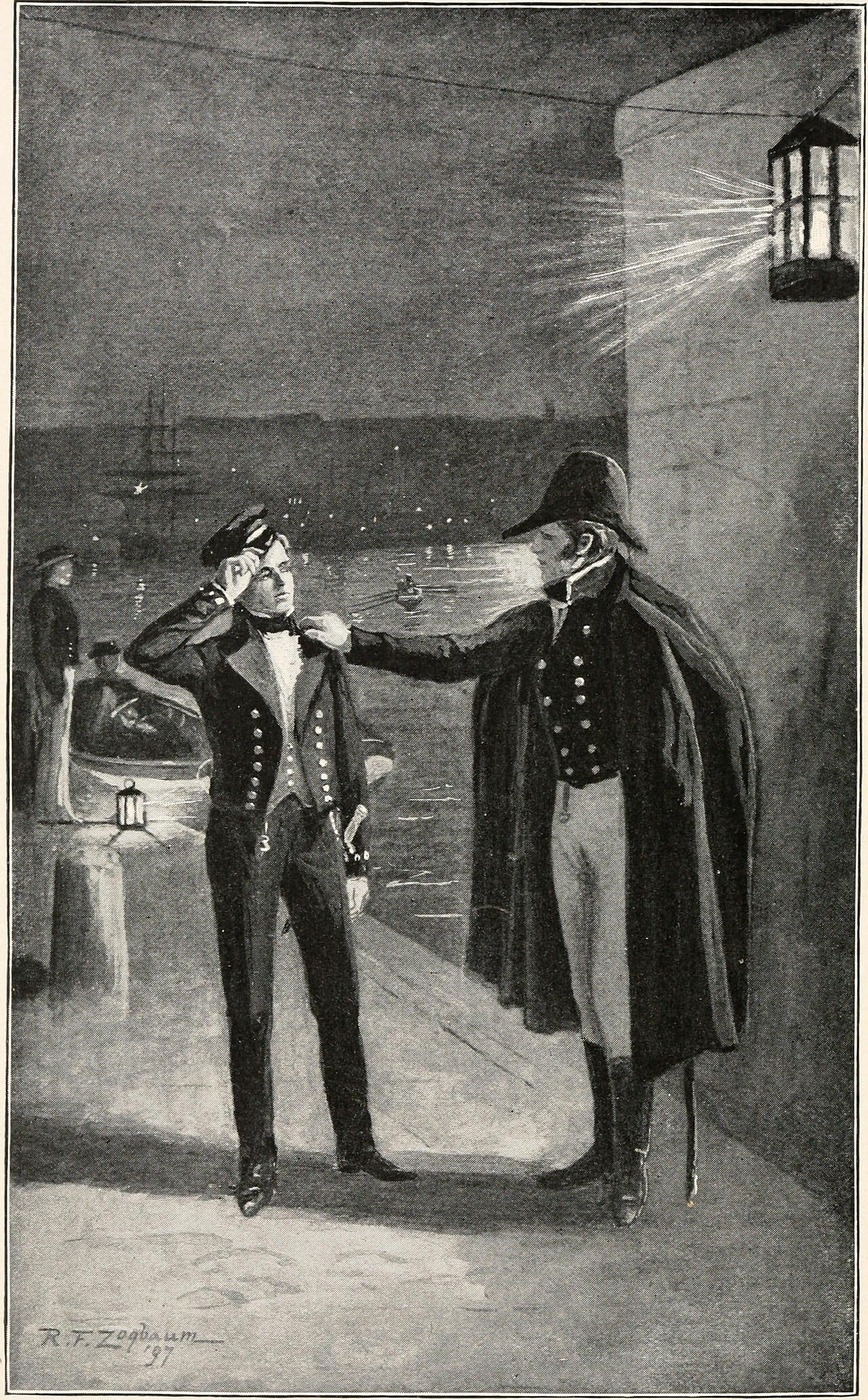
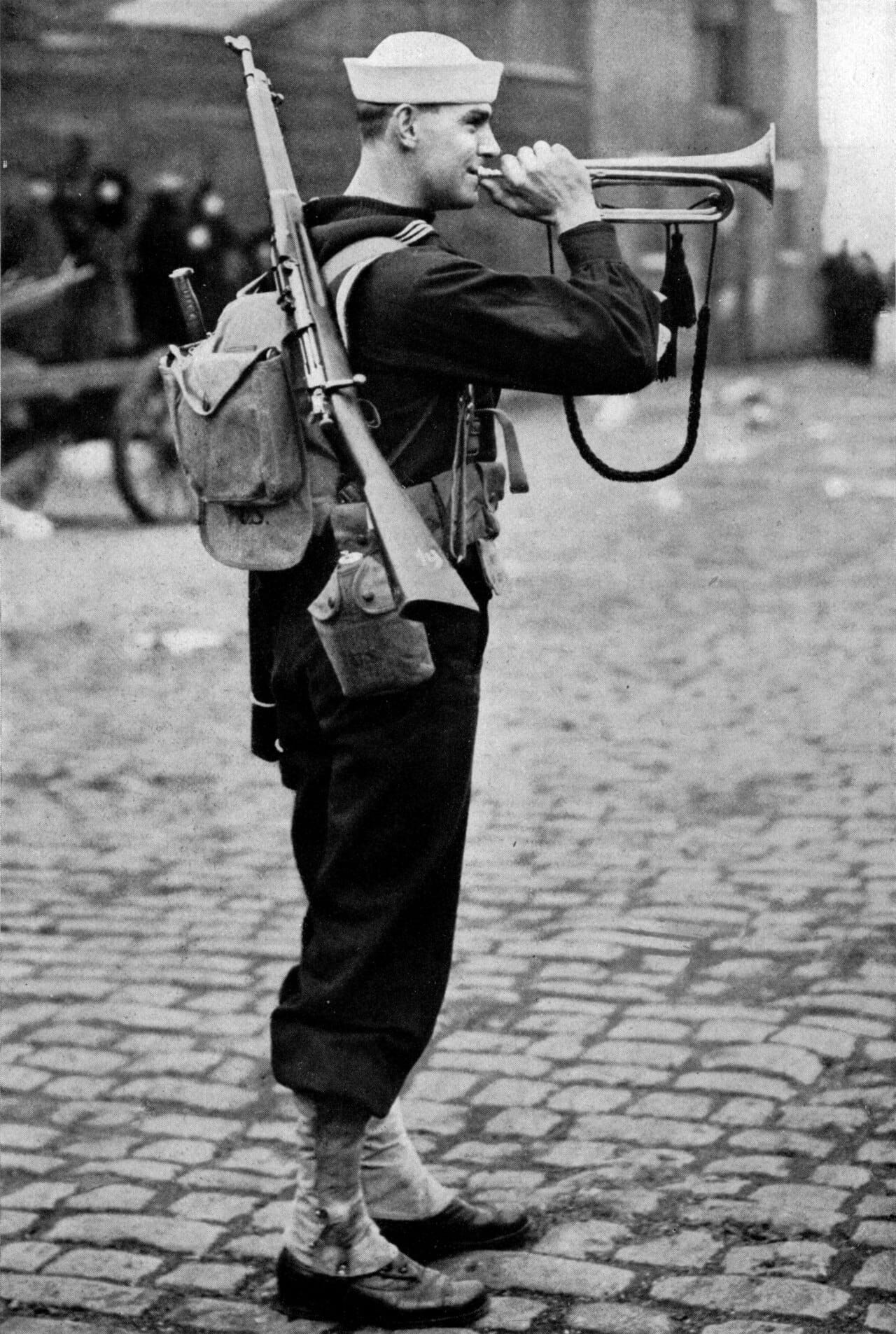
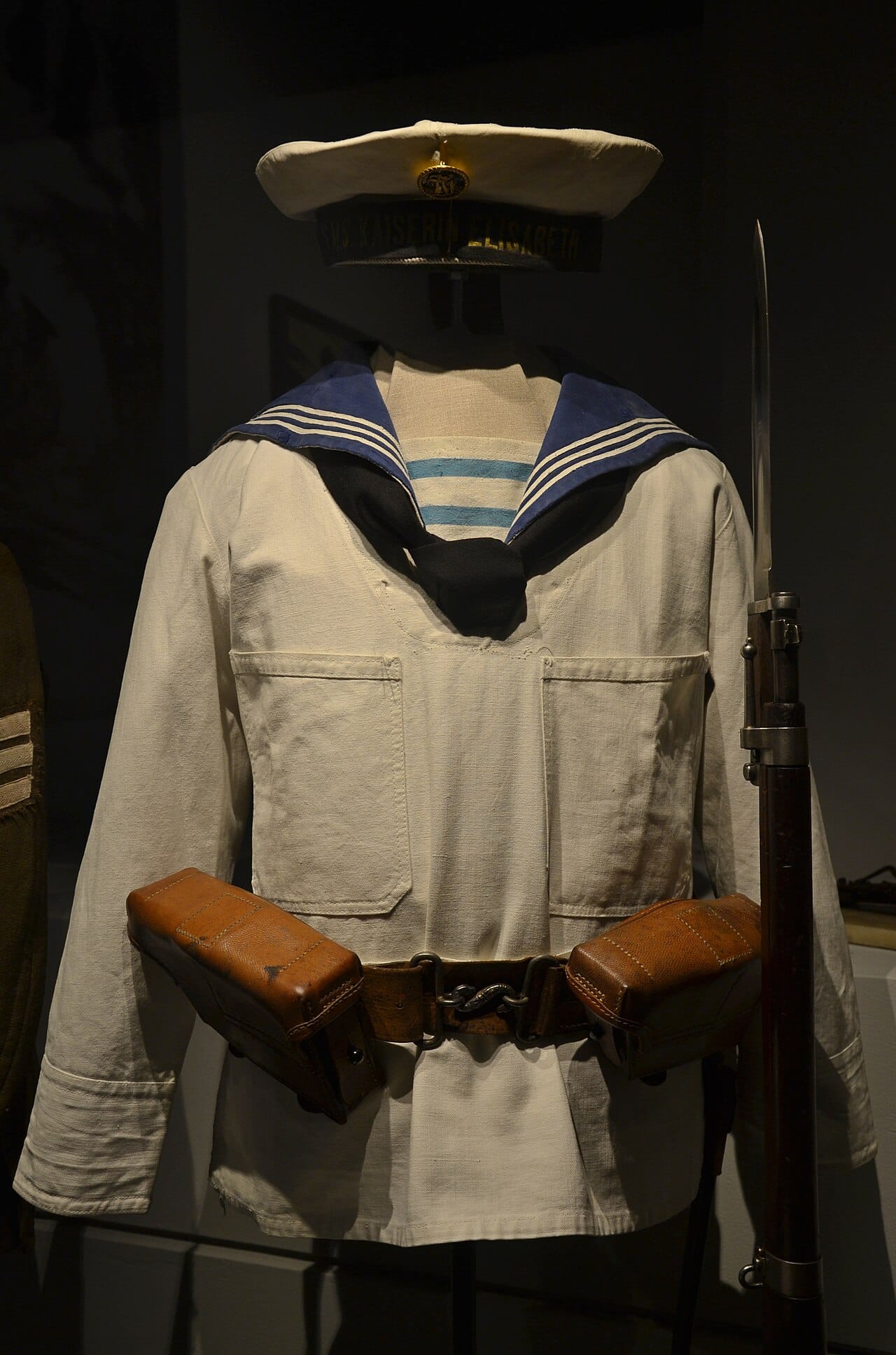
An illustration of American sailors of 1812, in loose light trousers and short jackets. Before uniform in any regulated sense. The clothing is consistent because its materials and its makers were, not because anyone specified it.Wikimedia Commons · 44324845 · 1913 · Barnes, James, 1866-1936; Zogbaum, Rufus Fairchild; Chapman, Carlton T · No restrictionsA naval militia bugler in white working dress. The rig at its plainest: a jumper, trousers, and a collar. Every element here is descended from something that had a function on a sailing ship.Wikimedia Commons · 163029 · 2005-05-22 · American Press Association. · Public domainA sailor's uniform preserved in a military history museum. One of few surviving examples of the working version rather than the dress version. Working whites were worn out and thrown away, so what museums hold skews heavily to the garments nobody sweated in.Wikimedia Commons · 57561567 · 2016-09-22 13:40:39 · Pudelek · CC BY-SA 4.0
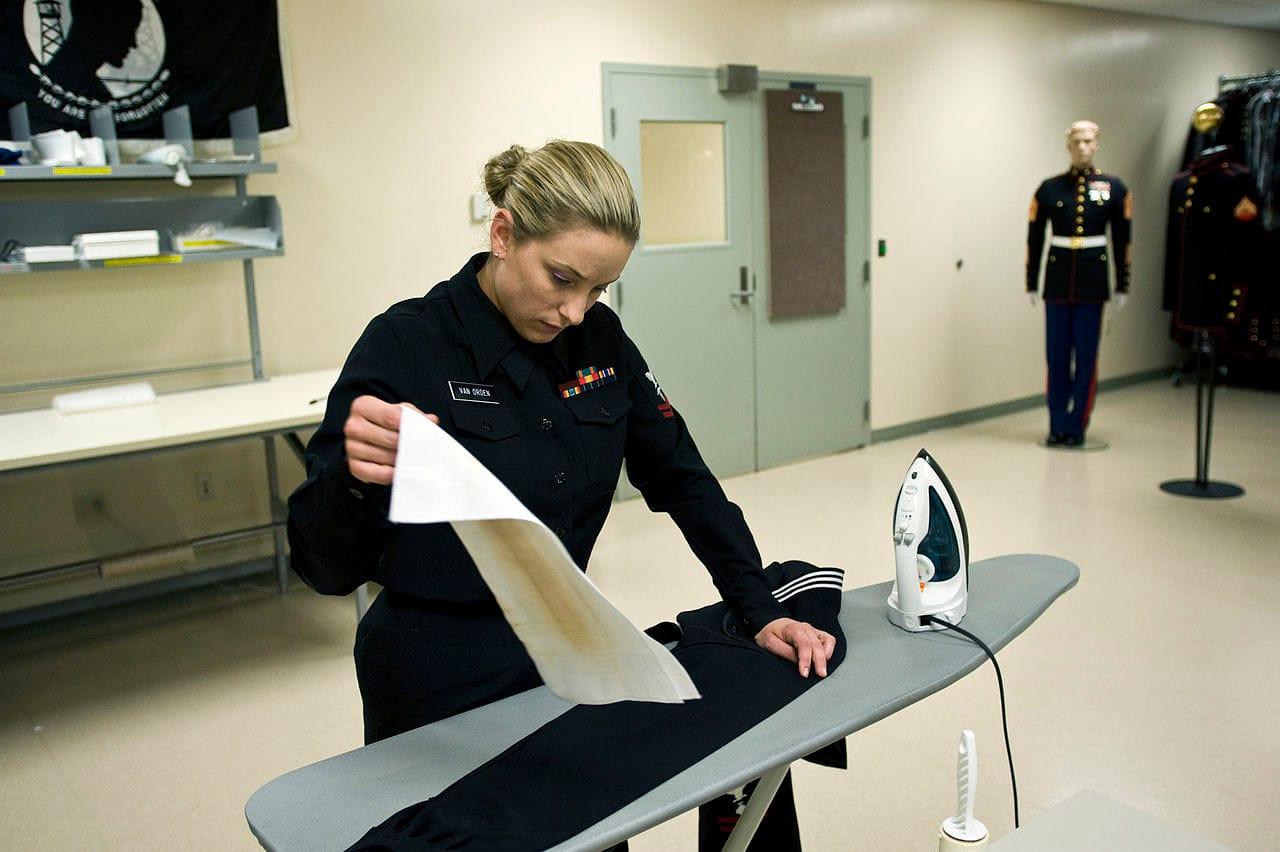
A white uniform is a claim about labour. It says that somebody, somewhere in the system, will do the washing — and on a ship that somebody is the person wearing it.
Where the tropics come in
The climate argument is real but narrower than it is usually stated. White reflects rather than absorbs, and on a steel deck in strong sun that is not a small difference. What white does not do is breathe, wick, or dry quickly, and in humid heat those matter more.
So the tropical rig was never only about colour. It was lighter cloth, looser cut, shorter sleeves and fewer layers — and the colour came along because the cloth it was made from was already undyed. A navy operating in the tropics did not switch to white; it switched to less, and less was white already.
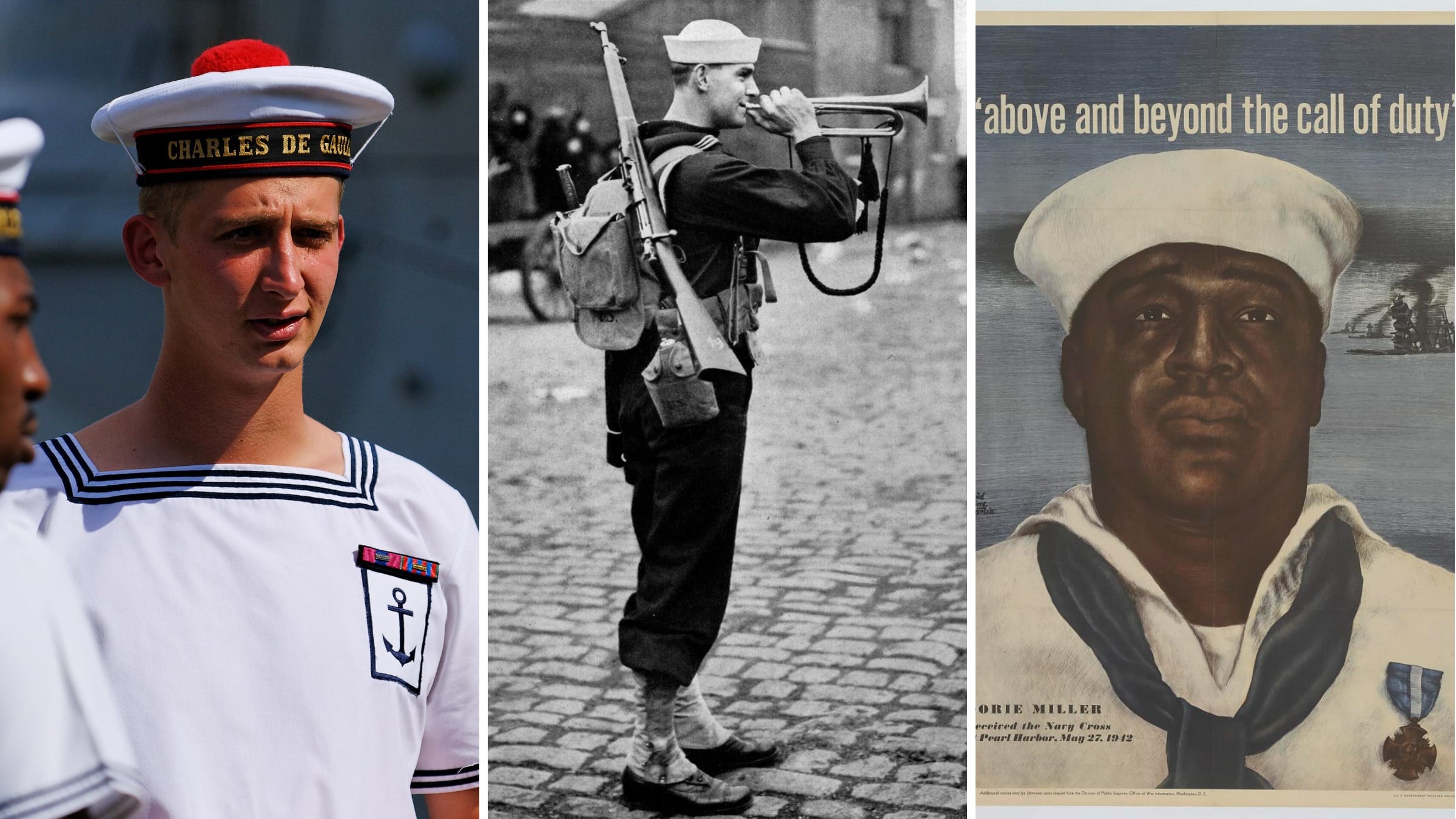
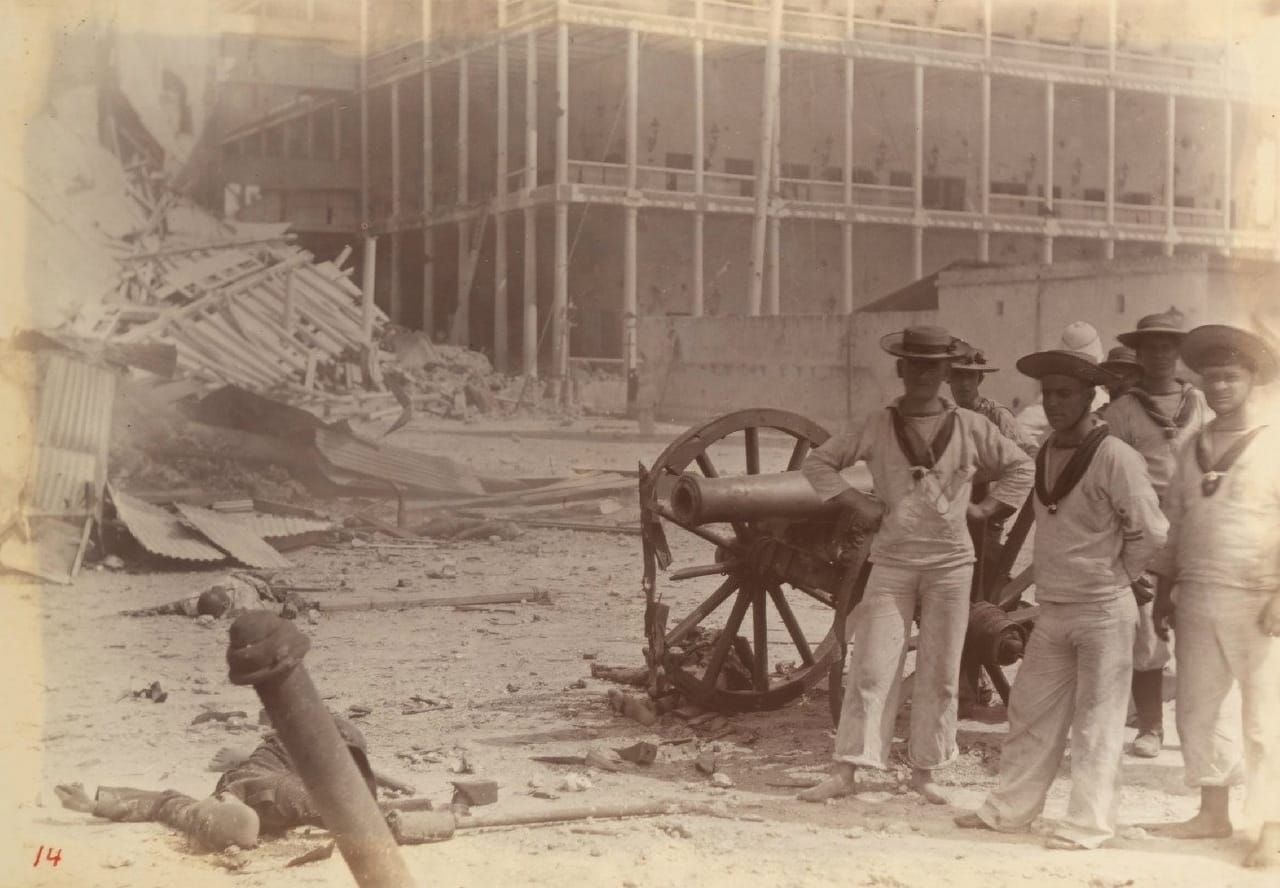
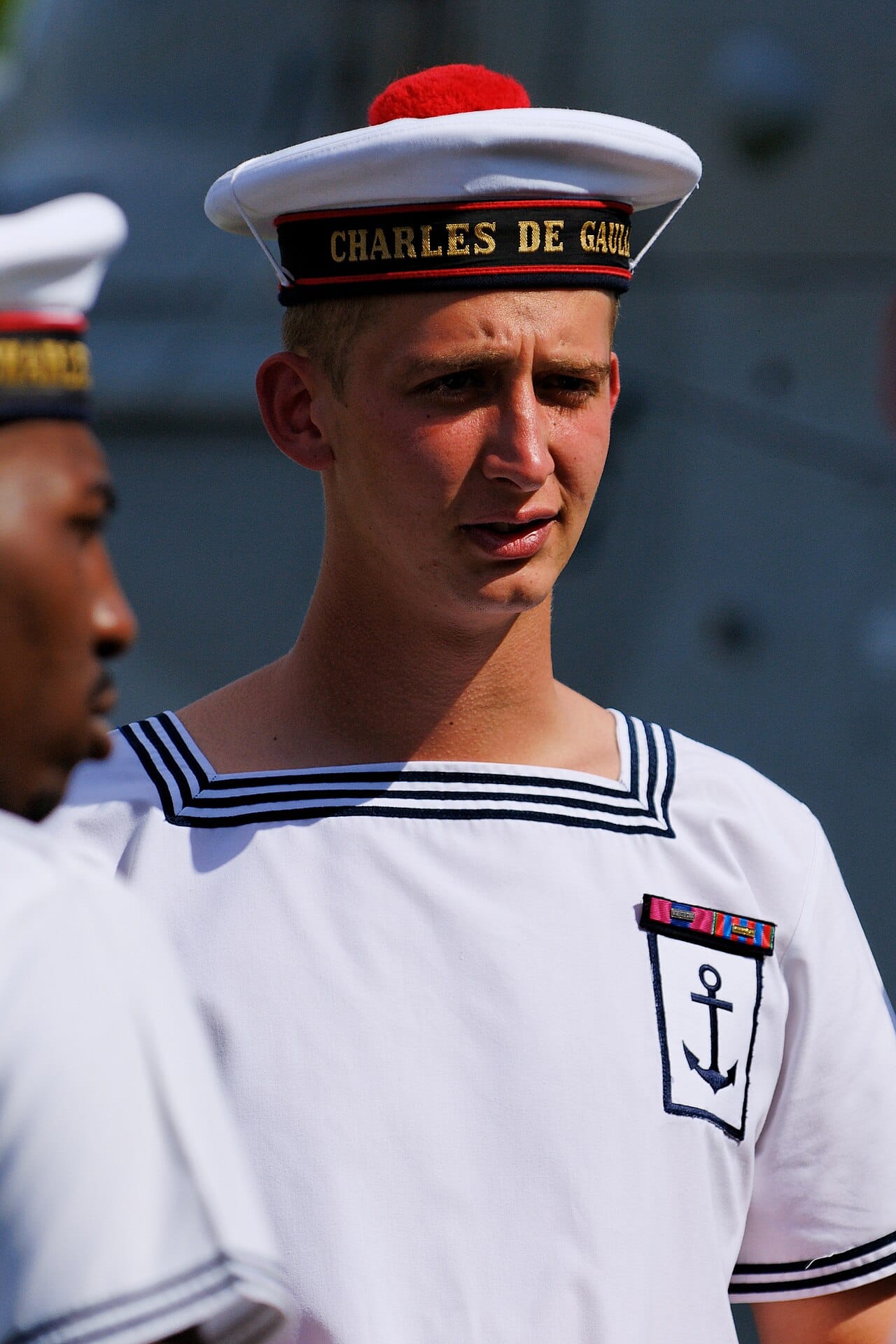
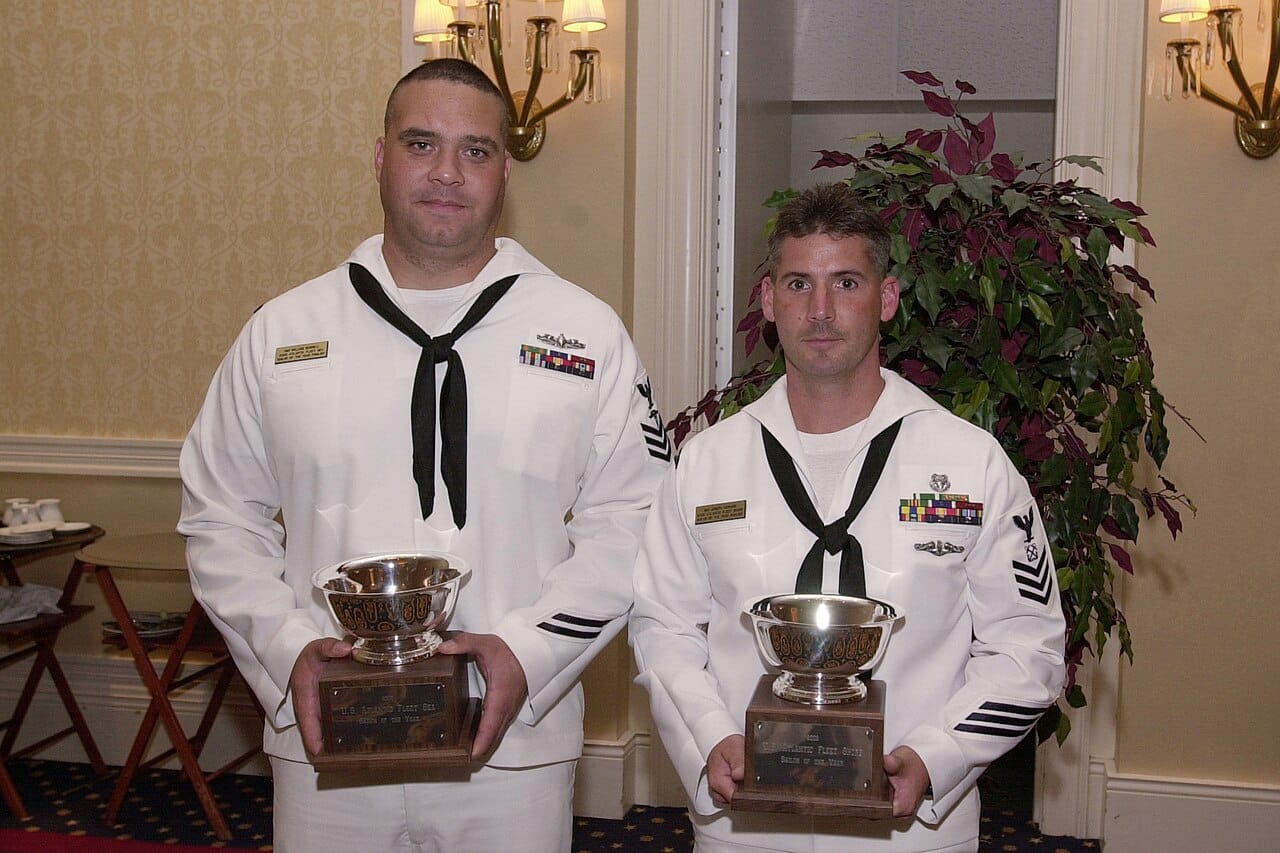
Marines photographed in Zanzibar. Tropical service, and the adaptation is visible in the cut rather than the colour — sleeves, closure, and how much of the garment there is.Wikimedia Commons · 4574594 · 1896-08-27 · Richard Dorsey Mohun (1865-c.1915) · Public domainA French seaman in white dress on a national holiday. The same whites doing ceremonial work in a temperate country. Once the rig exists it stops being about climate and starts being about occasion.Wikimedia Commons · 4446322 · 2008-07-14 · Marie-Lan Nguyen · CC BY 2.5Sailors of an Atlantic fleet assembled in white. The reason a navy keeps paying the laundry bill. Nothing else in this archive produces this effect — a mass of people reading as a single surface.Wikimedia Commons · 8165698 · Taken on 25 April 2002 · U.S. Navy photo by Chief Journalist Patrick Schuetz. · Public domainA sailor ironing a uniform. The cost, photographed. Every white uniform on this page implies this picture, and this is the only one that shows it.Wikimedia Commons · 9521401 · 2009 · U.S. Air Force photo/Staff Sgt. Bennie J. Davis III · Public domain
The rig that escaped
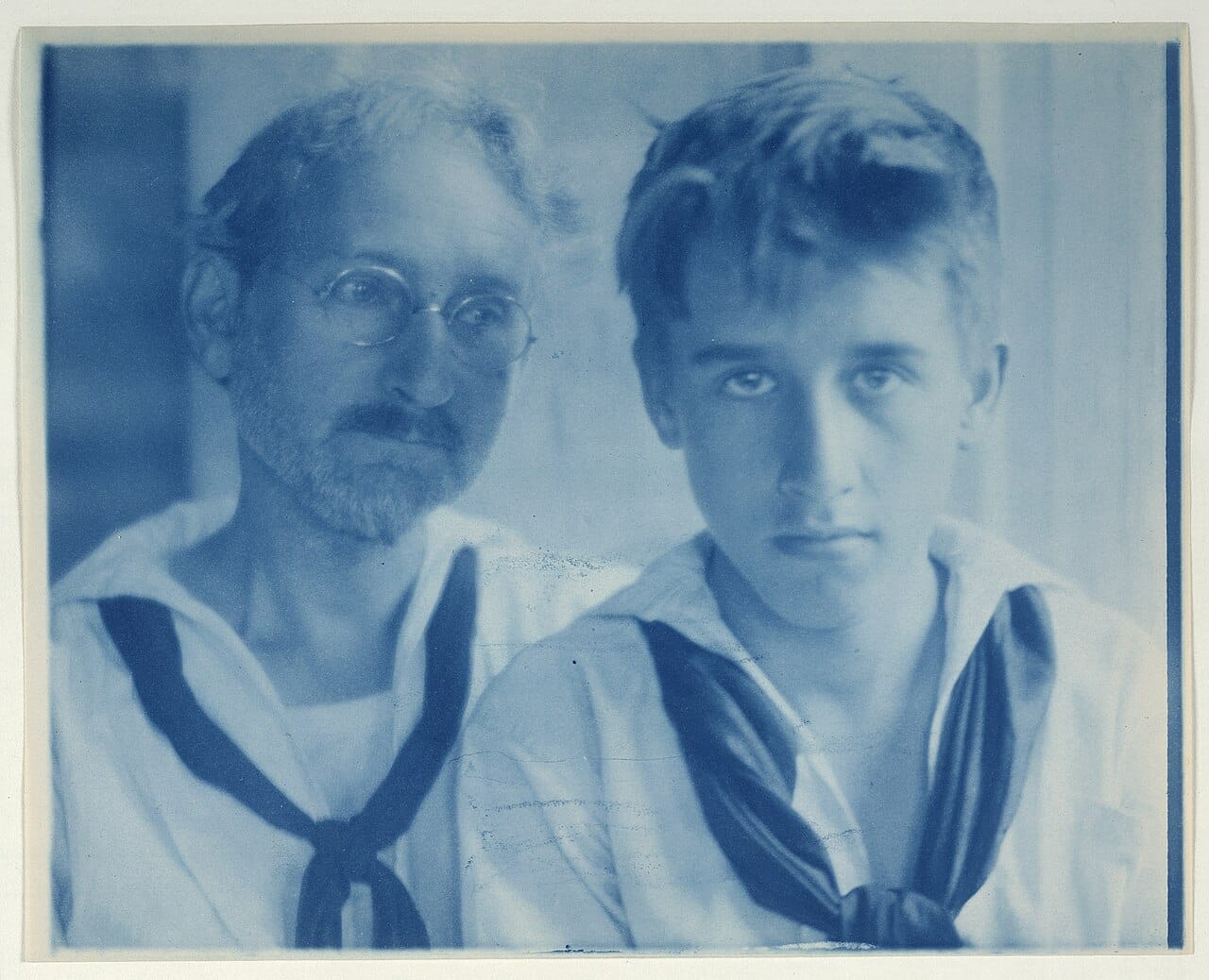
The naval working rig did something no other uniform in this archive managed: it left the institution entirely and became ordinary clothing. From the middle of the nineteenth century, children — and specifically small boys — were dressed in sailor suits by families with no connection to any navy.
It is worth being precise about what transferred. Not the trousers, not the boots, not the cap in most cases. The collar. A large square collar hanging down the back, which on a warship existed to keep tarred pigtail grease off the jumper and could be pulled up against spray, became a decorative feature of children's clothing and stayed there for a century after the pigtails were gone.
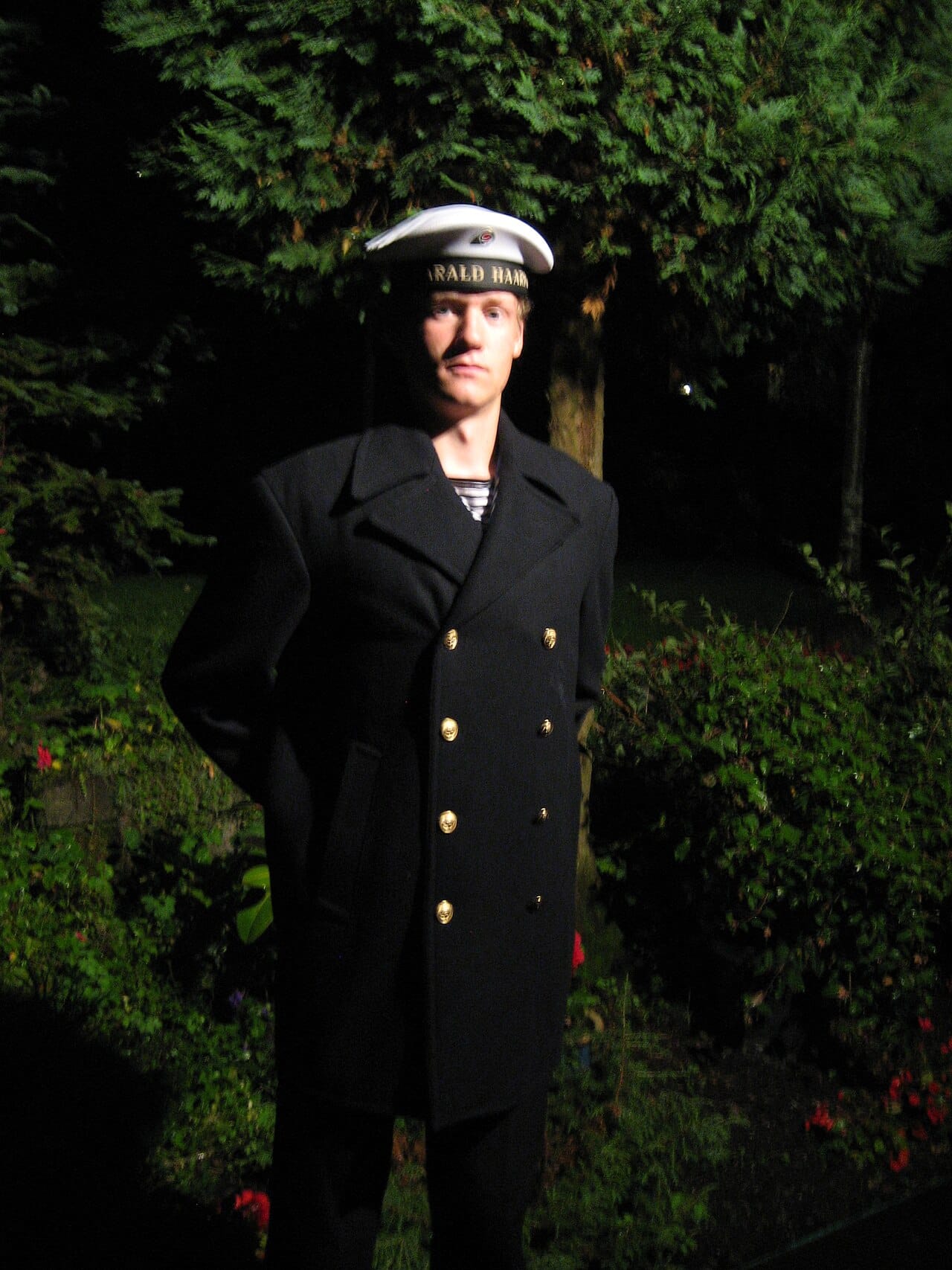
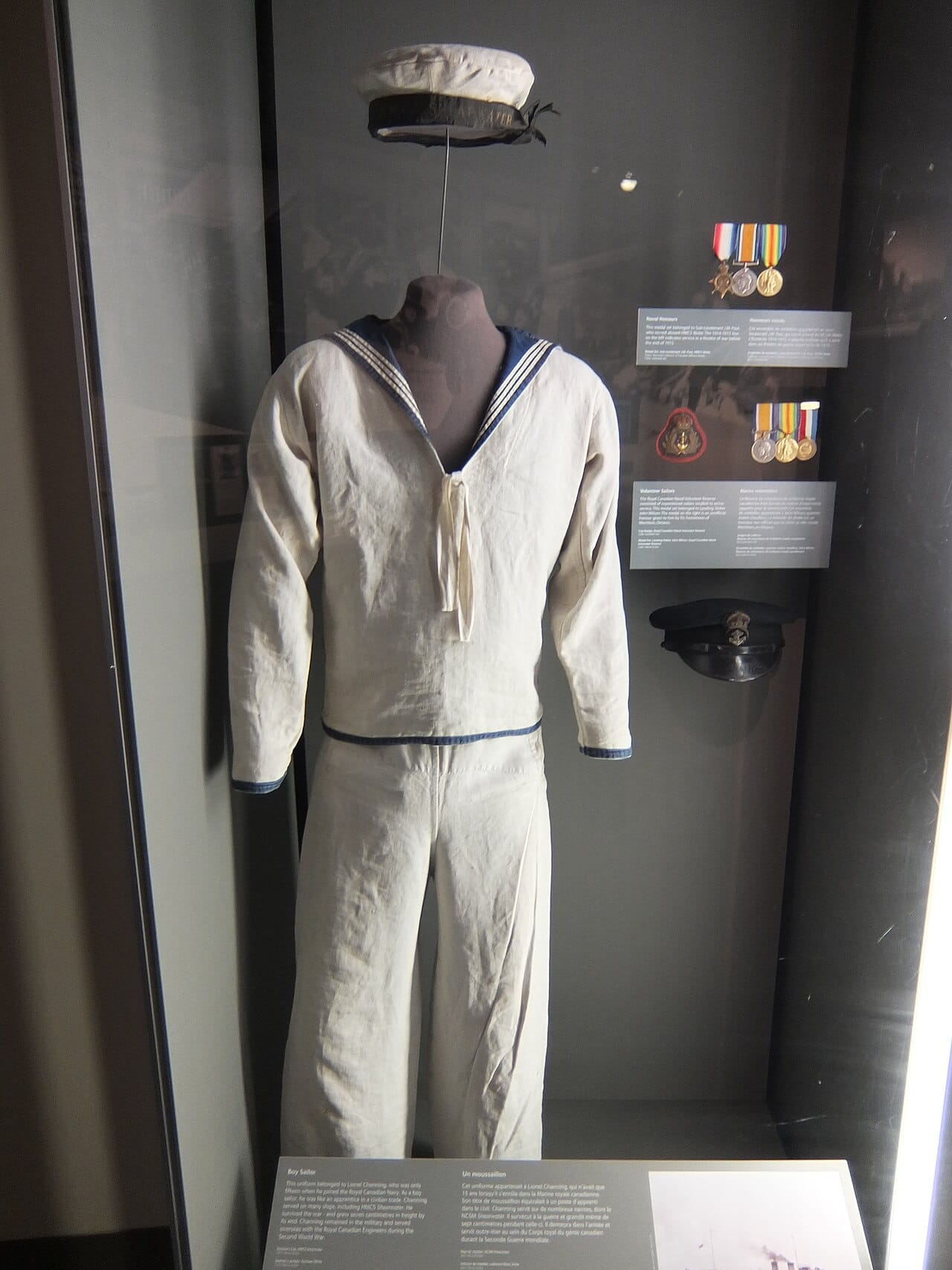
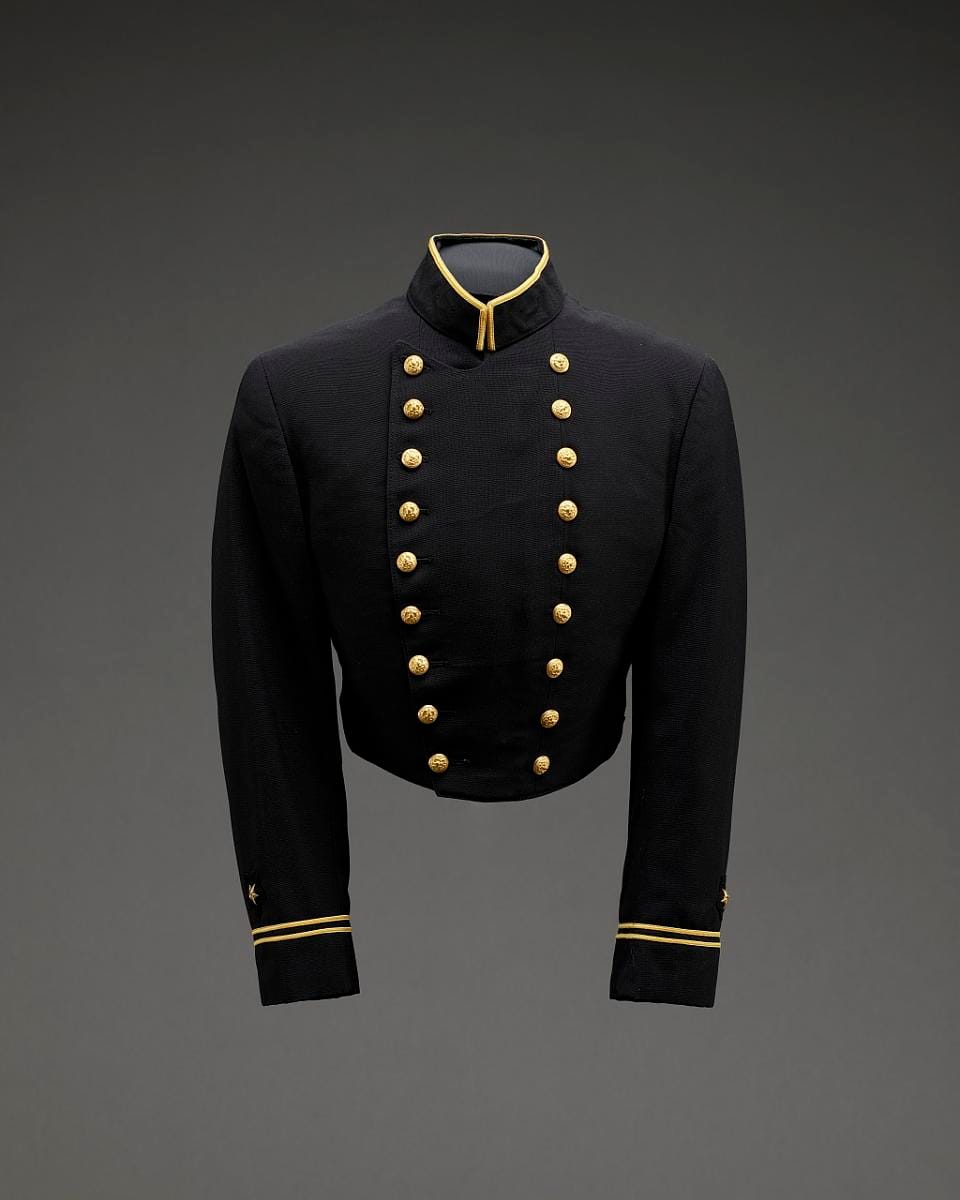
Two boys photographed in sailor suits. Civilian children in a uniform neither will ever be issued. The collar is unmistakable and it is the only part that had to survive for the reference to land.Wikimedia Commons · 66221662 · 1911 · F. Holland Day · Public domainA Norwegian sailor suit made for private wear. Made as clothing rather than adapted from issue. By this point the sailor suit is a garment type in its own right, with its own makers and no naval connection at all.Wikimedia Commons · 11493945 · 2010-11-18 12:00:42 · Jannizz · CC BY-SA 3.0A display captioned "Boy Sailor", showing an early naval rig. The traffic ran both ways. Navies recruited boys young enough that the civilian sailor suit and the issued one were briefly the same garment.Erstwhile navy uniform- the sign says 'Boy Sailor' · 66486603 · 2015-06-01 00:00 · shankar s. from Dubai, united arab emirates · CC BY 2.0A US Naval Academy parade dress jacket. And at the other end of the same tradition, the version that never left. Formal, dark, tailored — everything the working rig is not, on the same people.National Museum of African American History and Culture · NMAAHC-2015_201_1_001 · 1979-1983 · Thorngate Uniforms, Inc., Lieutenant Colonel Jesse E. Wrice Jr., American, United States Navy, American, founded 1775 · CC0
Hedda Maartens — MA in fashion design, then eleven years in the industry designing for people who had no say in what they wore. Now writes about prescribed dress: how a garment was made to work, and what it was made to make a person into.
Member discussion
Back
Nametape
Free
$0
Every Research post and every Essay, free to read.
All Research posts — one uniform at a time, in archive photographs
_(14566368147).jpg?ref=blog.neutrino.website)







.JPG?ref=blog.neutrino.website)
.jpg?ref=blog.neutrino.website)

Member discussion