Almost nothing survives. Working clothes worn to destruction are not collected, and what we have of them is mostly photographs of men standing at the top of a shaft.
Every other post on this site begins with a garment. This one cannot, because the garment is not there. Search the open collections of the world's major museums for the working clothes of coal and hard-rock miners and you will find photographs of men wearing them and almost nothing that was worn.
That is not an accident of what we searched. It is a fact about how collections form, and it is the most useful thing this subject has to teach.
What survives instead
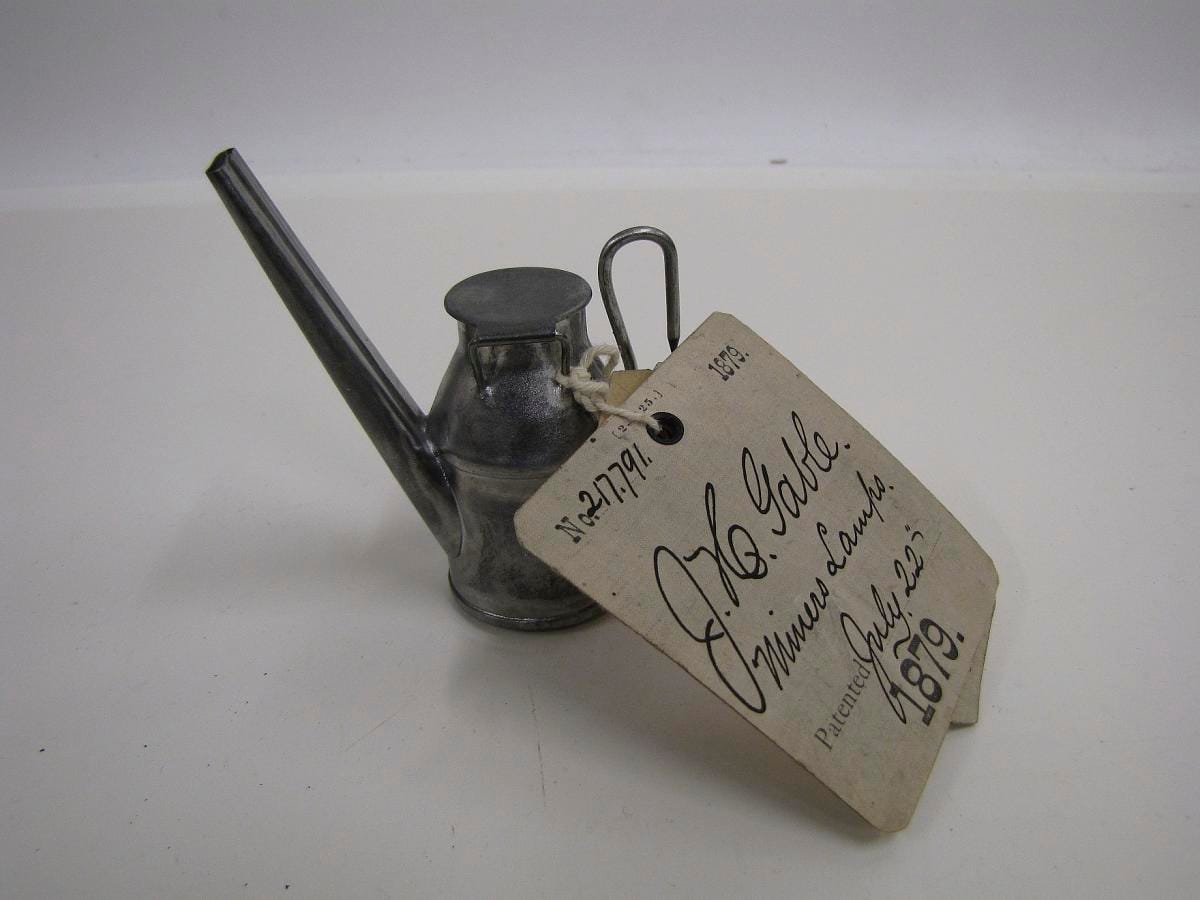
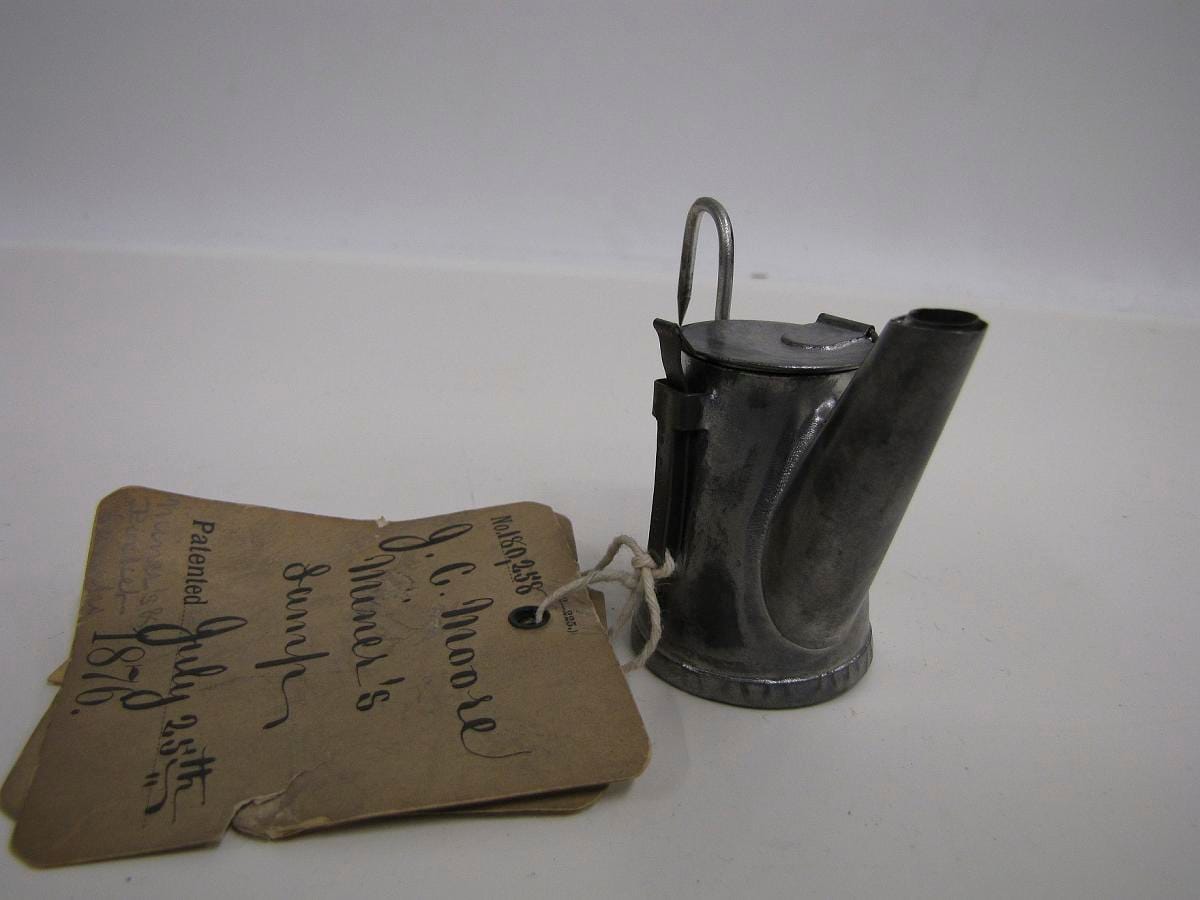
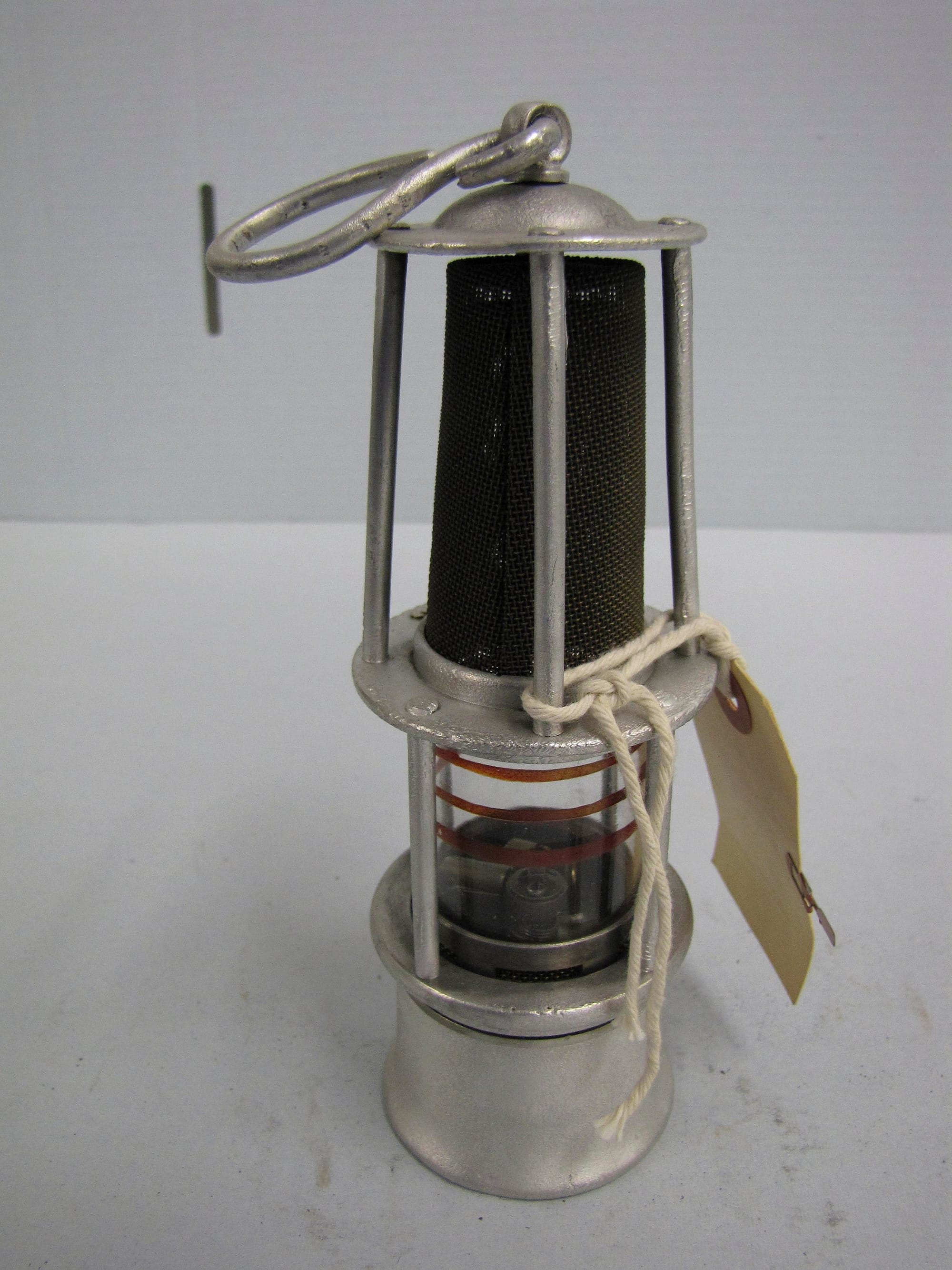
The Smithsonian holds a run of miners' lamps: oil-wick lamps submitted as patent models, in fine condition, catalogued individually. They survive for a specific reason. A patent model was a legal deposit — an object made to be filed rather than used — so it entered an institution on the day it was made and never worked a shift.
The clothing had no such route. It was bought by the worker or issued against wages, worn until it failed, repaired while repair was cheaper than replacement, and then used for something else. There was no moment at which anyone had a reason to keep a set.
An oil-wick miner's lamp submitted as a patent model. Unmarked, unworn, complete. This object was manufactured in order to be filed, which is why it is in a museum and a pair of trousers from the same pit is not.National Museum of American History · NMAH-AHB2009q57291 · date not recorded · Gable, John H. · CC0Another patent model from the same series, differing in the hook and the spout. Ten of these are catalogued. Ten variations on a lamp, against zero garments — the collection is not a record of what miners had, it is a record of what the patent office required.National Museum of American History · NMAH-AHB2009q57300 · 1876-07-25 · Moore, James C. · CC0A miner's safety lamp, of the enclosed type. The one piece of a miner's kit that was regulated, inspected and issued by the company — and therefore the one piece with a paper trail leading into a collection.National Museum of American History · NMAH-AHB2009q57475 · date not recorded · creator not recorded · CC0
A museum's holdings are not a sample of what existed. They are a record of what somebody once had a reason to keep, and nobody has ever had a reason to keep worn-out working clothes.
Reading the clothing from photographs
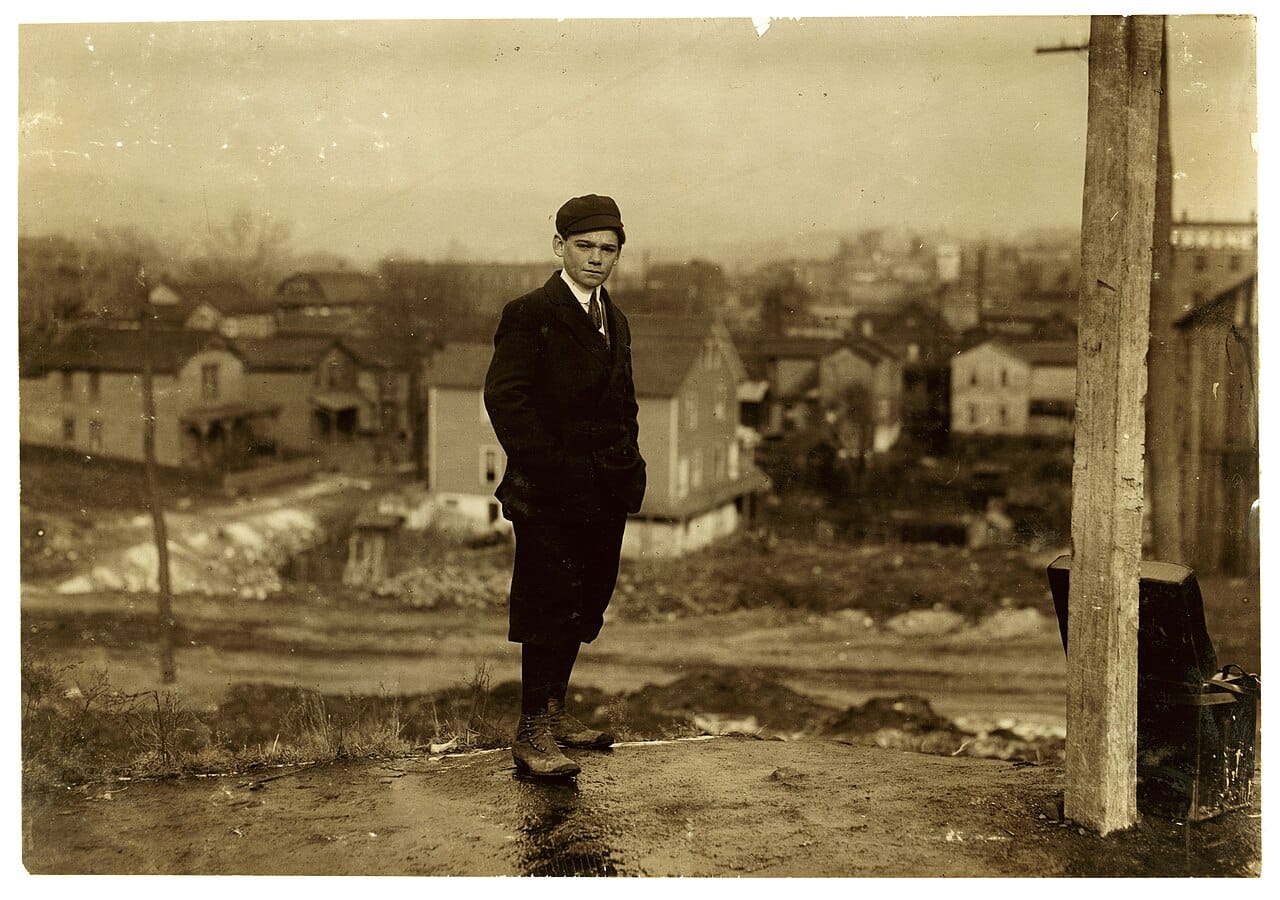
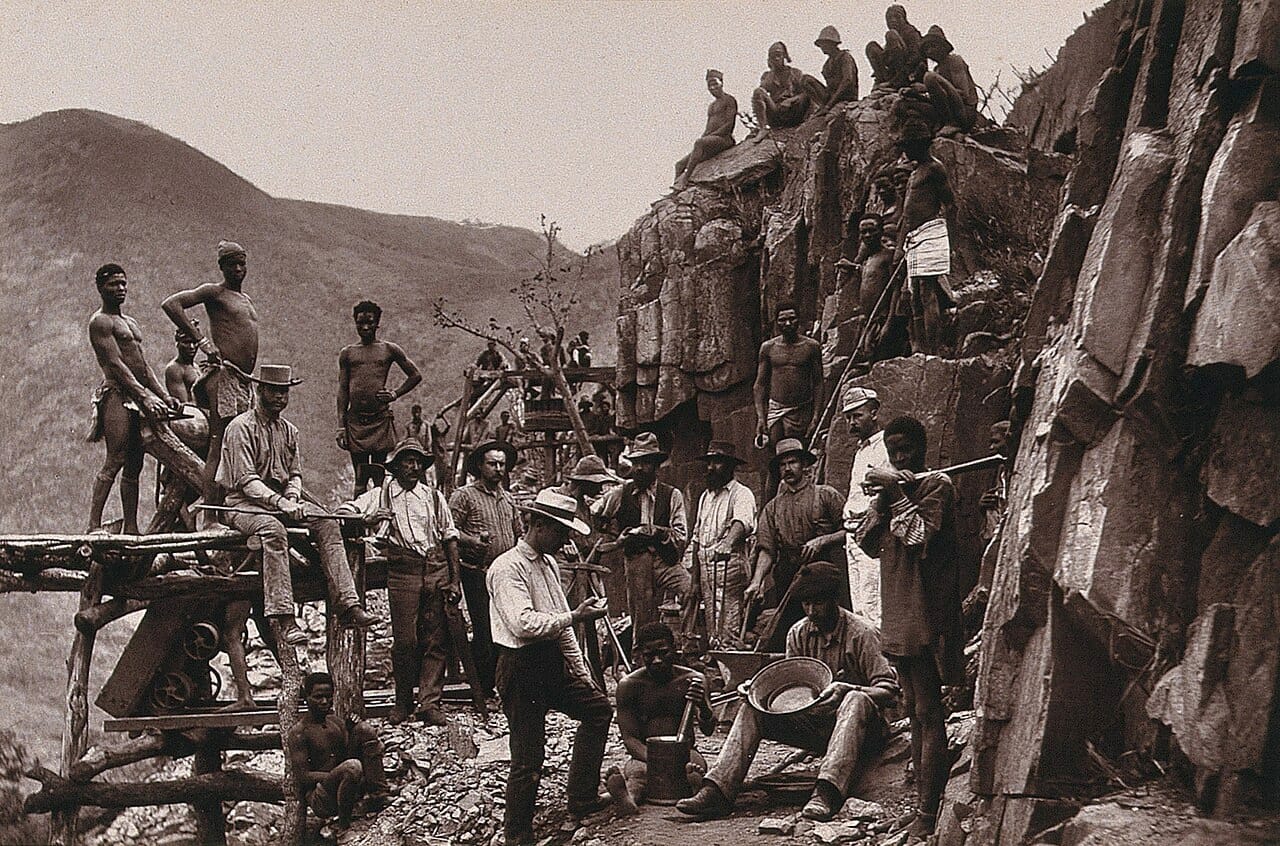
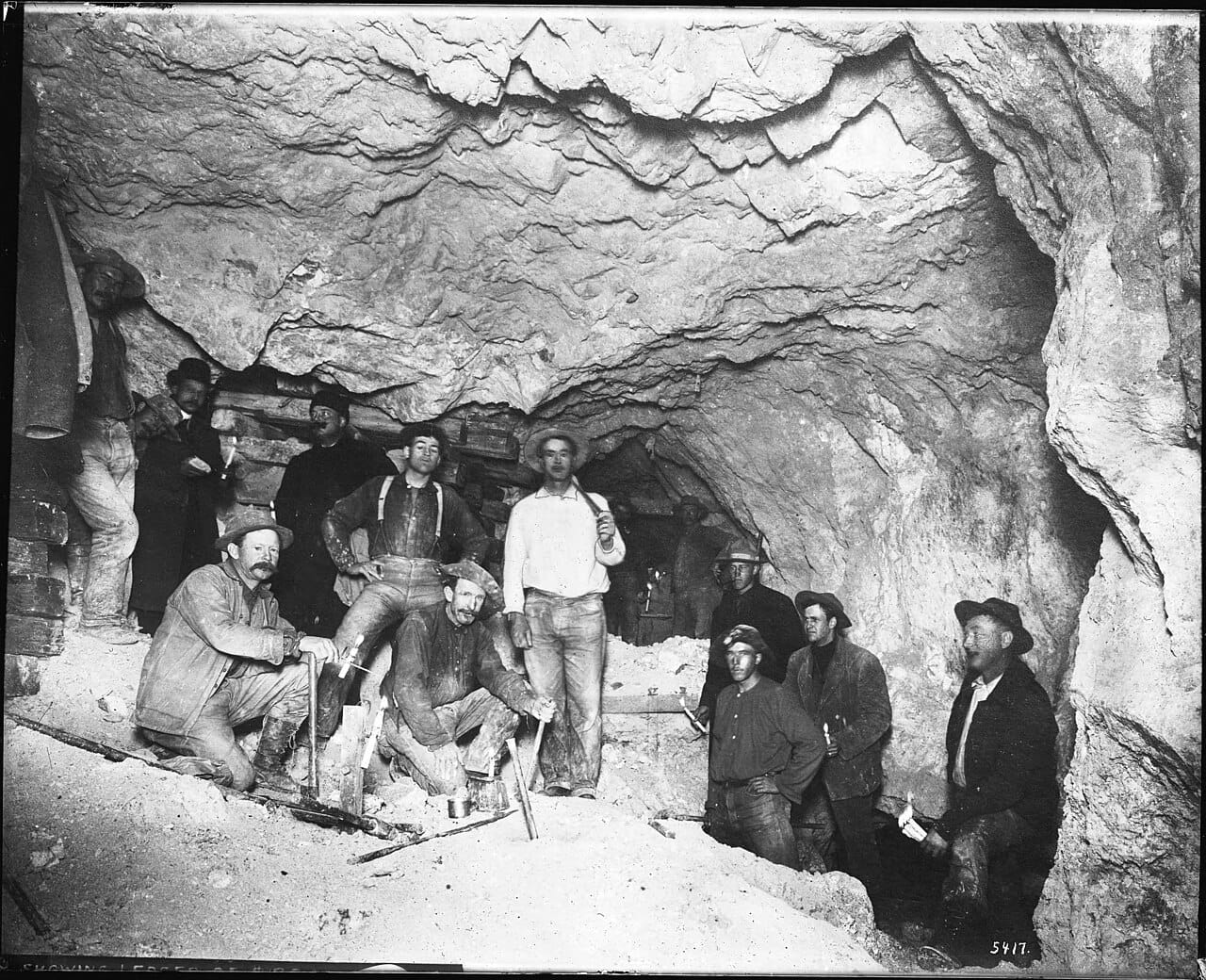
What we have instead is photographs, and they are more informative than they first look. Pit clothing was not issued and not uniform: it was ordinary clothing worn until it was fit for nothing else, which is why the men in these pictures are dressed slightly differently from one another and identically in kind.
The consistent features are functional. Trousers cut full enough to crouch in. Jackets short enough not to catch. Boots heavy, and the only item anyone spent money on. Caps rather than hats, because a brim is useless underground and a cap will hold a lamp.
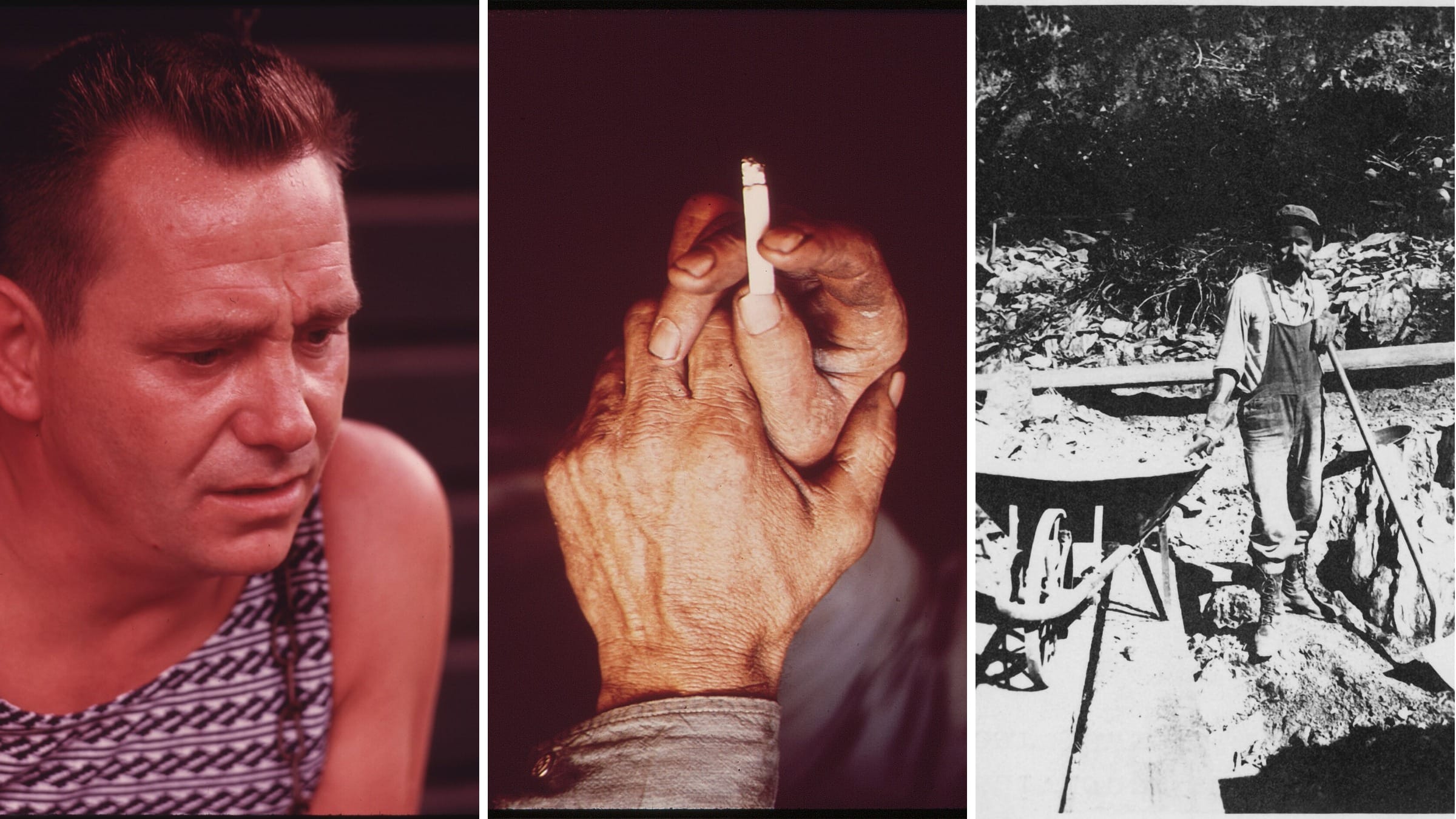
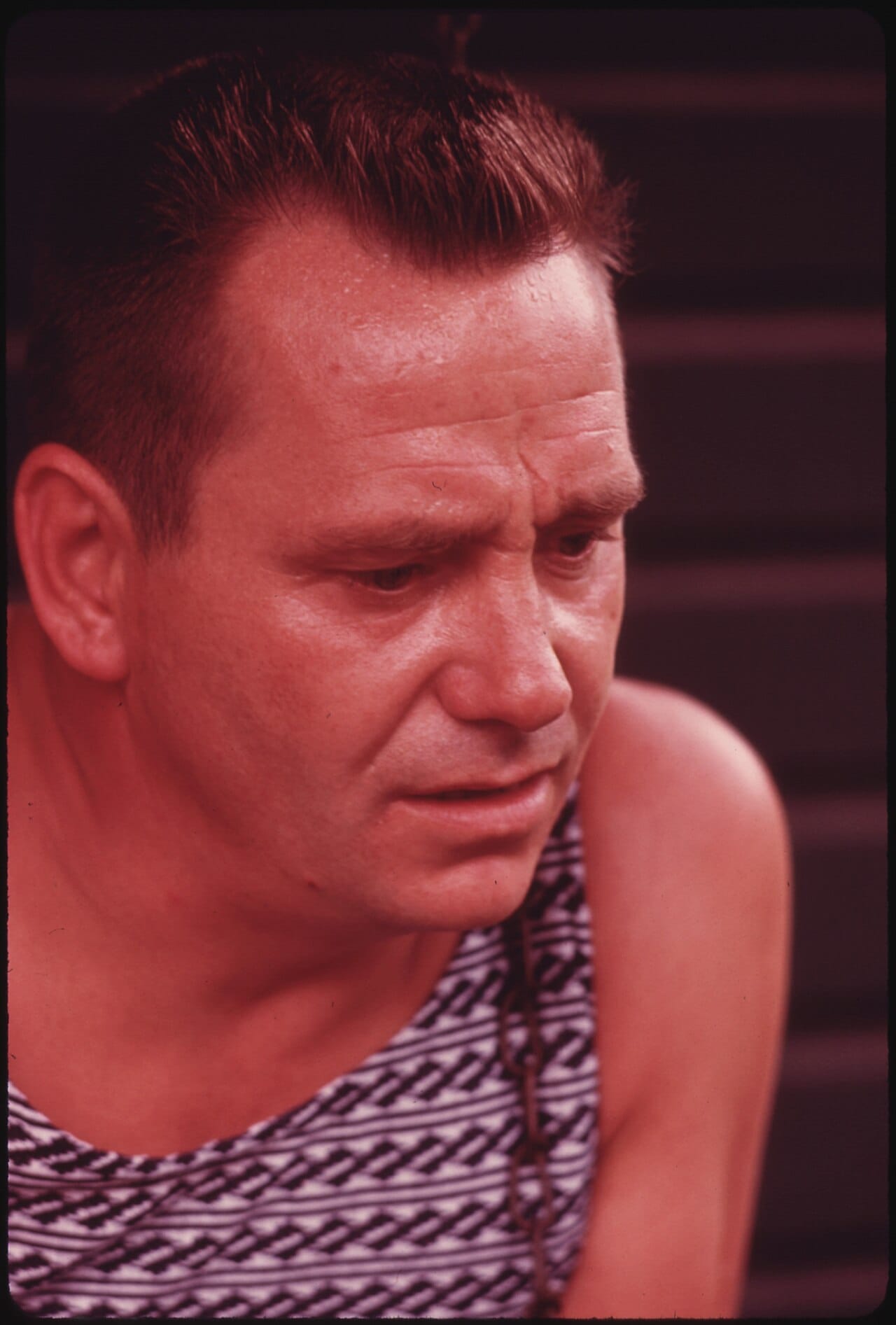
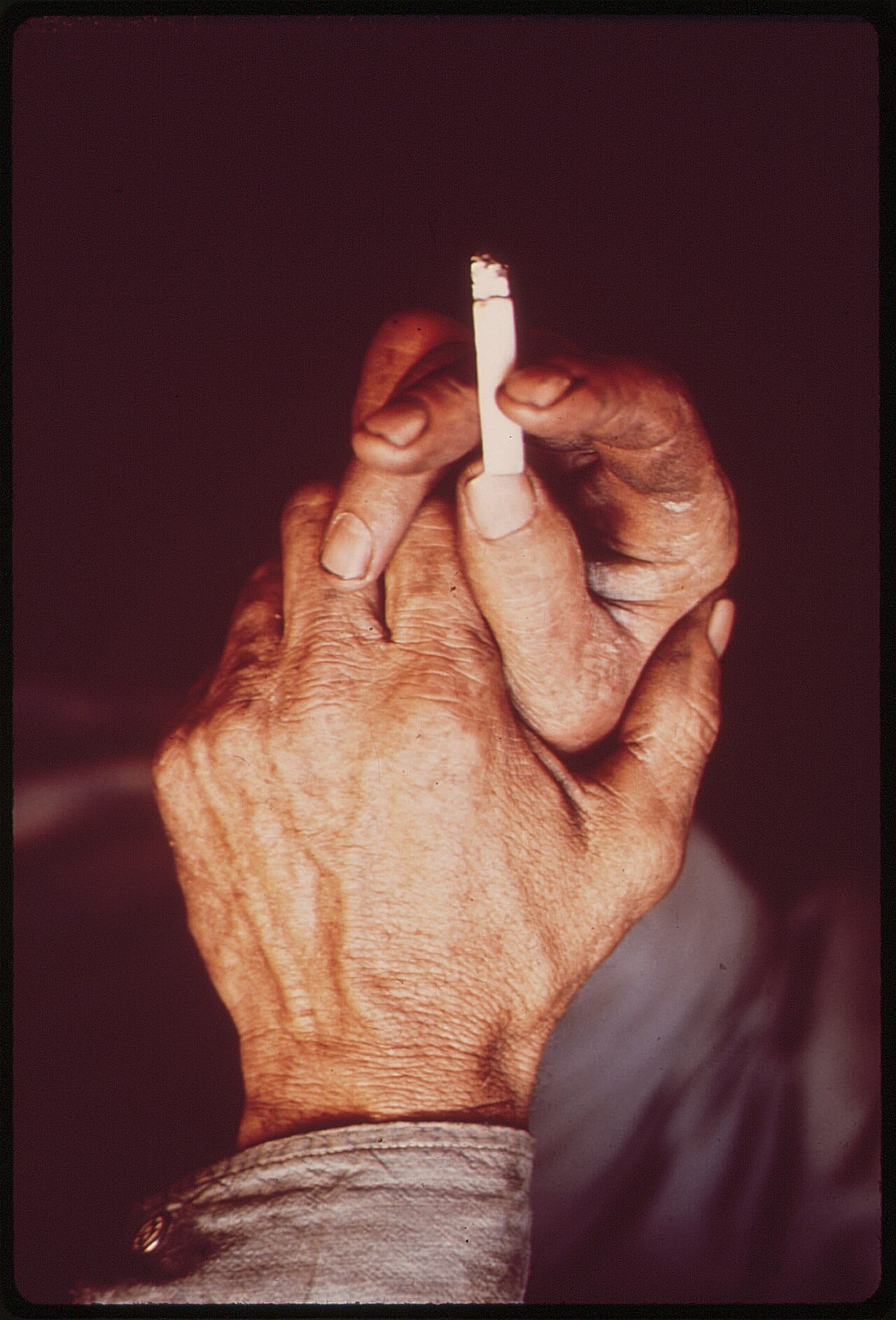
Lewis Hine's photograph of Jim McNulty, fifteen years old, a miner. Hine photographed child labour to change the law, so the clothing is incidental to his purpose and therefore unposed. The jacket is a man's and it does not fit him.Wikimedia Commons · 11159372 · 1911-01 · Lewis Hine · Public domainA close portrait of a miner at the Brookside operation, face and collar filling the frame. Close enough to read the cloth: a heavy cotton drill, soft with washing, the collar turned and worn through at the fold rather than at the edge.U.S. National Archives and Records Administration · 16925650 · June 1974date QS:P571,+1974-06-00T00:00:00Z/10 · Jack Corn · Public domainThe hands of a uranium miner at rest. Not clothing at all, and the most direct evidence here of what the clothing was up against. Whatever a garment is protecting, this is the standard it failed to meet.U.S. National Archives and Records Administration · 16928622 · June 1972date QS:P571,+1972-06-00T00:00:00Z/10 · Bill Gillette · Public domainA group of miners at Gunnedah, photographed together at the surface. The variation between the men is the finding. No two outfits match, and every one of them resolves to the same three or four decisions.Wikimedia Commons · 4358263 · 2008-07-10 · Cgoodwin · CC BY-SA 3.0Miners at the De Kaap gold fields, South Africa. The same functional logic on the other side of the world, and a reminder that the absence in the archive is global rather than a gap in one country's collecting.Wikimedia Commons · 36628209 · 2014-11-05 20:34:03 · creator not recorded · CC BY 4.0An interior view of a mine with men at work. Underground and by artificial light, which is the condition all of this clothing was actually used in and almost none of it was photographed in.Wikimedia Commons · 30891290 · circa 1900date QS:P,+1900-00-00T00:00:00Z/9,P1480,Q5727902/1905 (date created) · C. C. Pierce · Public domain
The gap is the evidence
It would be easy to treat the missing garments as a limitation of this piece. They are its subject. An archive that holds ten patent models of a lamp and no pit clothes is telling you precisely who it was built by and what they considered worth recording.
The same shape recurs everywhere in this publication. Officers' tunics survive and privates' do not. Ceremonial dress survives and working dress does not. What reaches a museum is what was expensive, or ceremonial, or legally required to be deposited — and prescribed dress for hard labour is none of those things.
Hedda Maartens — MA in fashion design, then eleven years in the industry designing for people who had no say in what they wore. Now writes about prescribed dress: how a garment was made to work, and what it was made to make a person into.
Member discussion
Back
Nametape
Free
$0
Every Research post and every Essay, free to read.
All Research posts — one uniform at a time, in archive photographs





.jpg?ref=blog.neutrino.website)

Member discussion