The white coat is the most borrowed garment in this archive — doctors took it from chemists, and everyone else took it from doctors. It is also the only professional uniform here that was never re-cut for women.
The white coat is the most borrowed garment in this archive. Doctors took it from chemists. Dentists took it from doctors. Opticians, pharmacists, food inspectors, hairdressers and — for a while — men selling televisions all took it from somebody.
Every one of those borrowings was making the same claim, and the claim is not about hygiene.
What It Was Actually For
In a laboratory the coat has a real job and it is a narrow one. It is a sacrificial layer: cheap enough to own several, long enough to cover the lap when seated, and white because a chemist needs to see a splash the instant it lands.
That is the whole specification. Everything else the coat has come to mean was added by people watching somebody wear it.
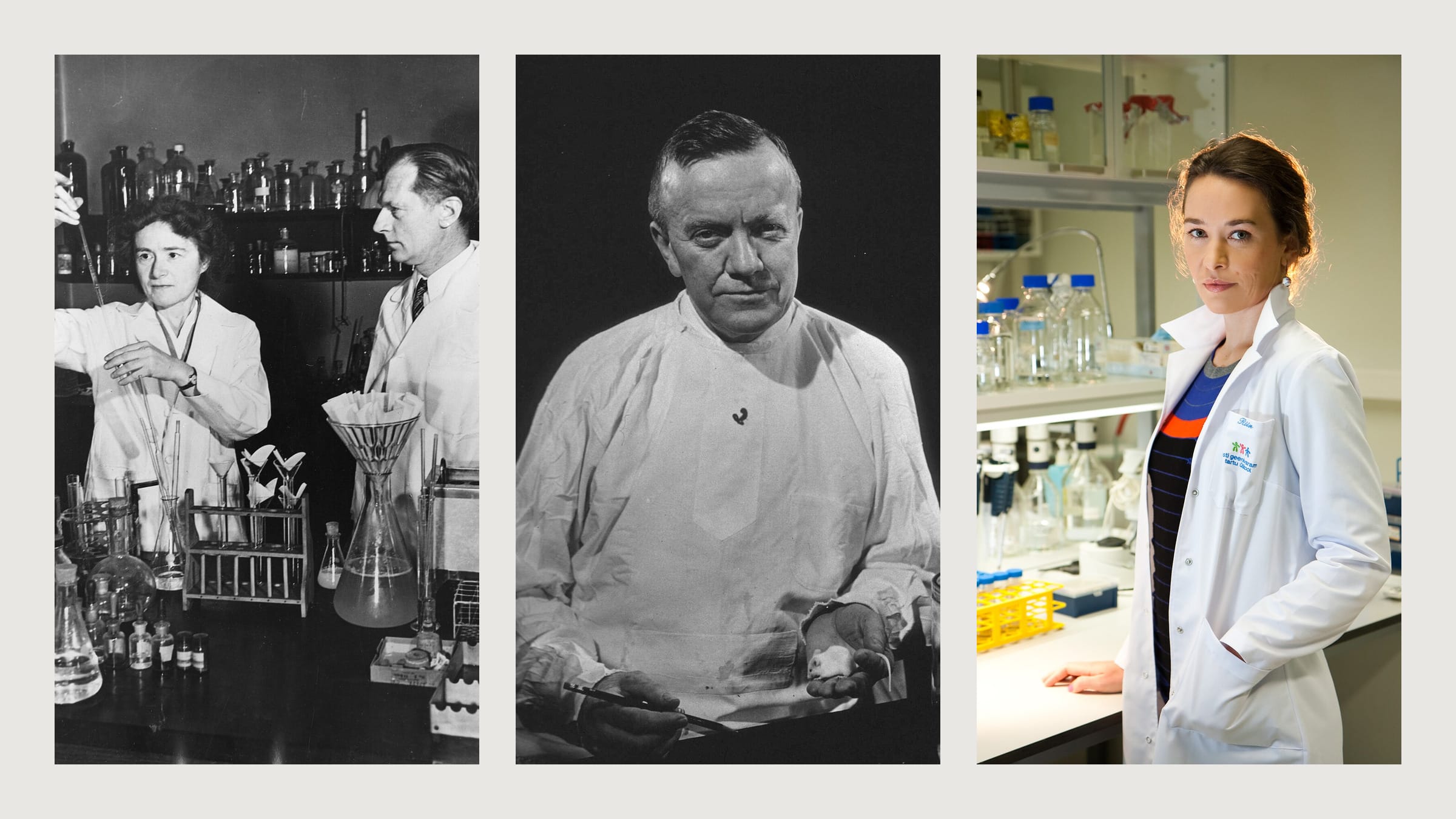
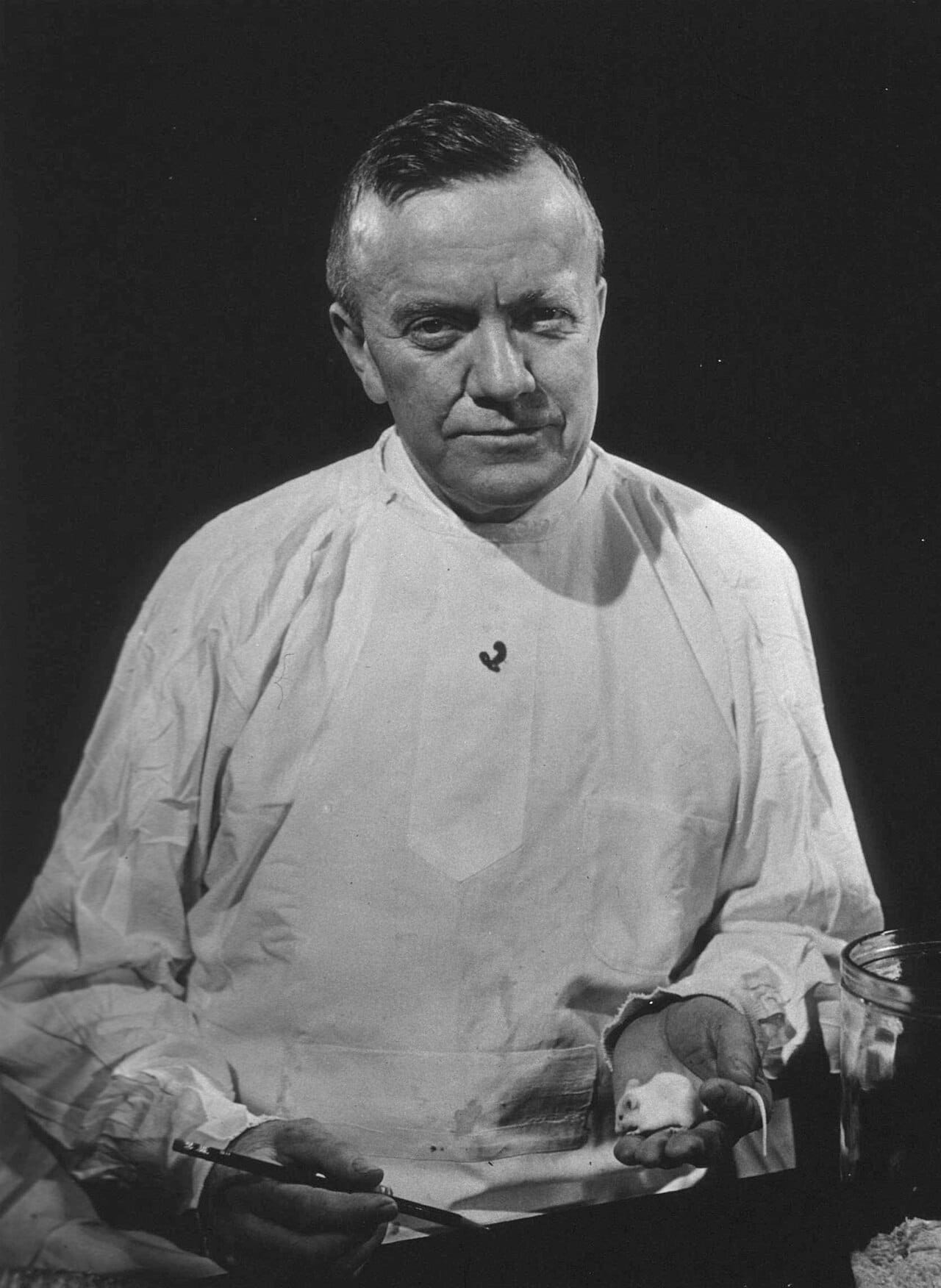
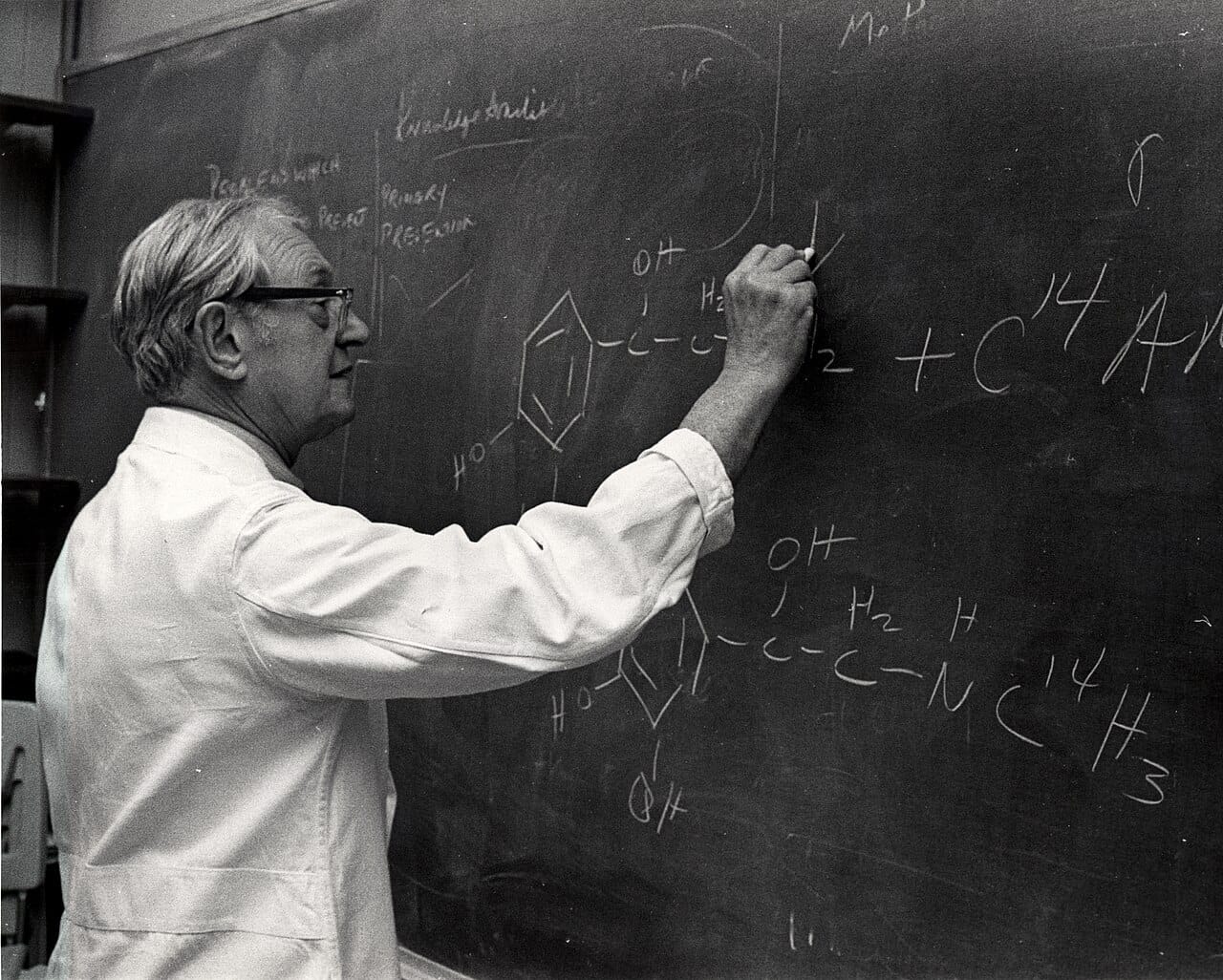
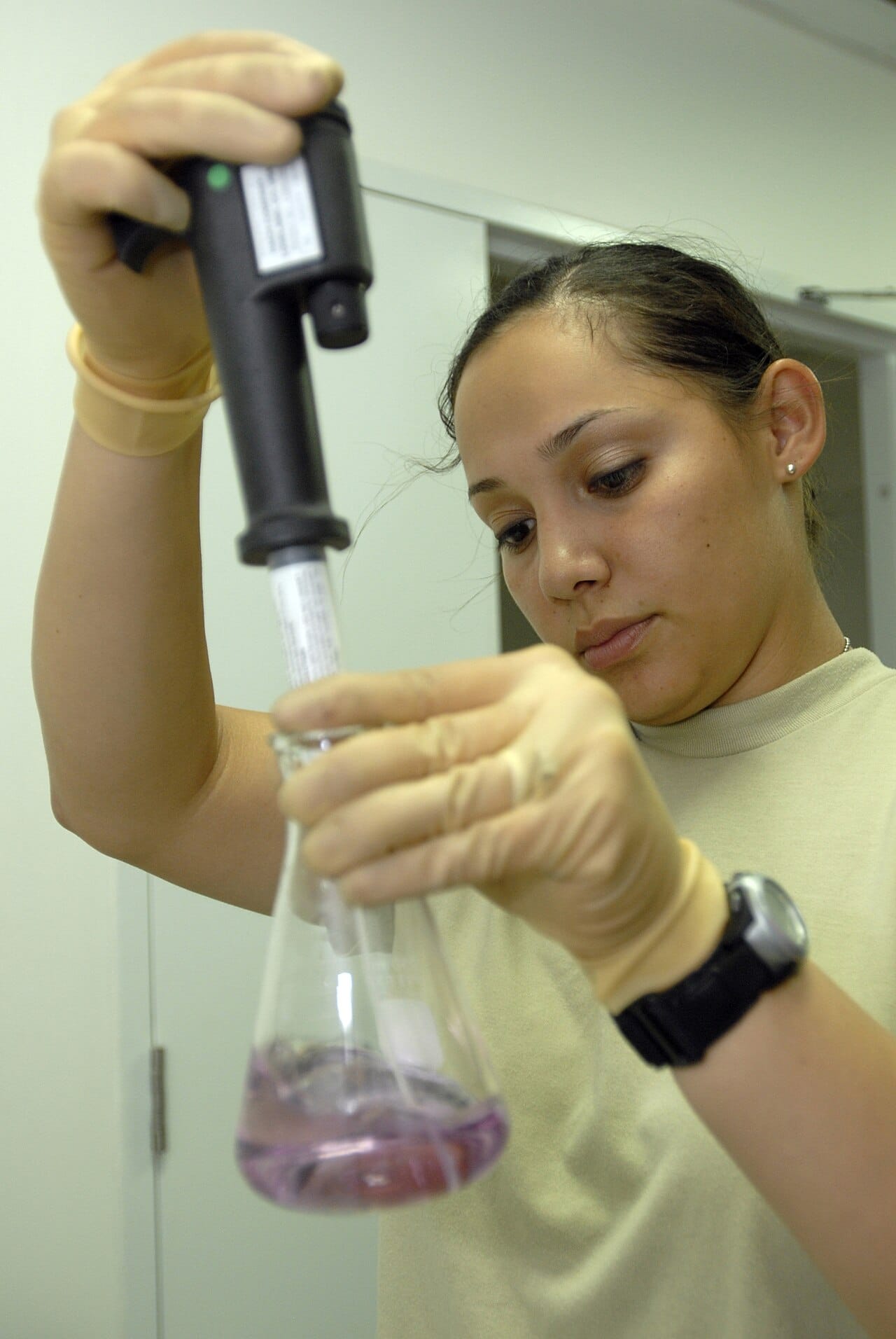
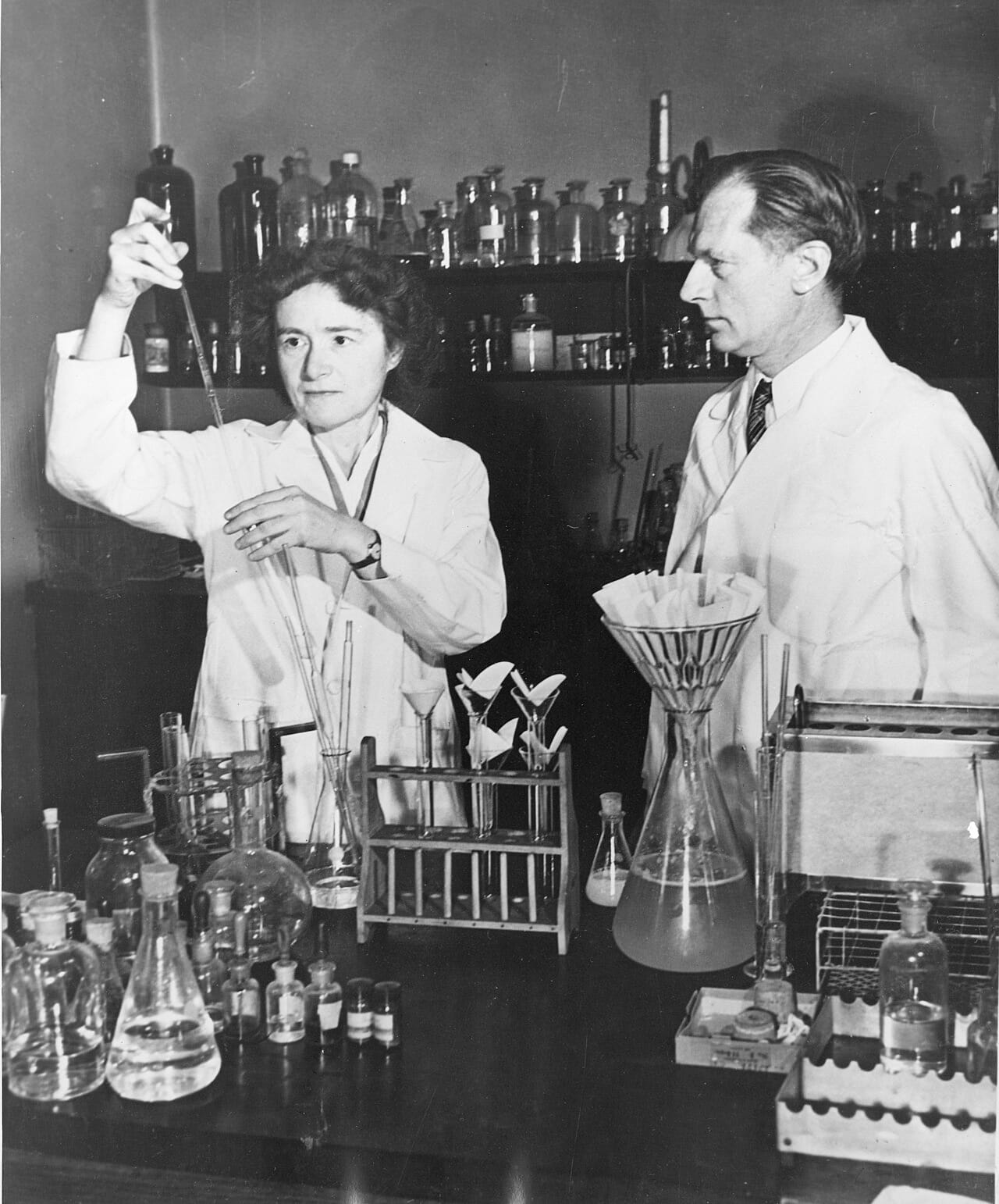
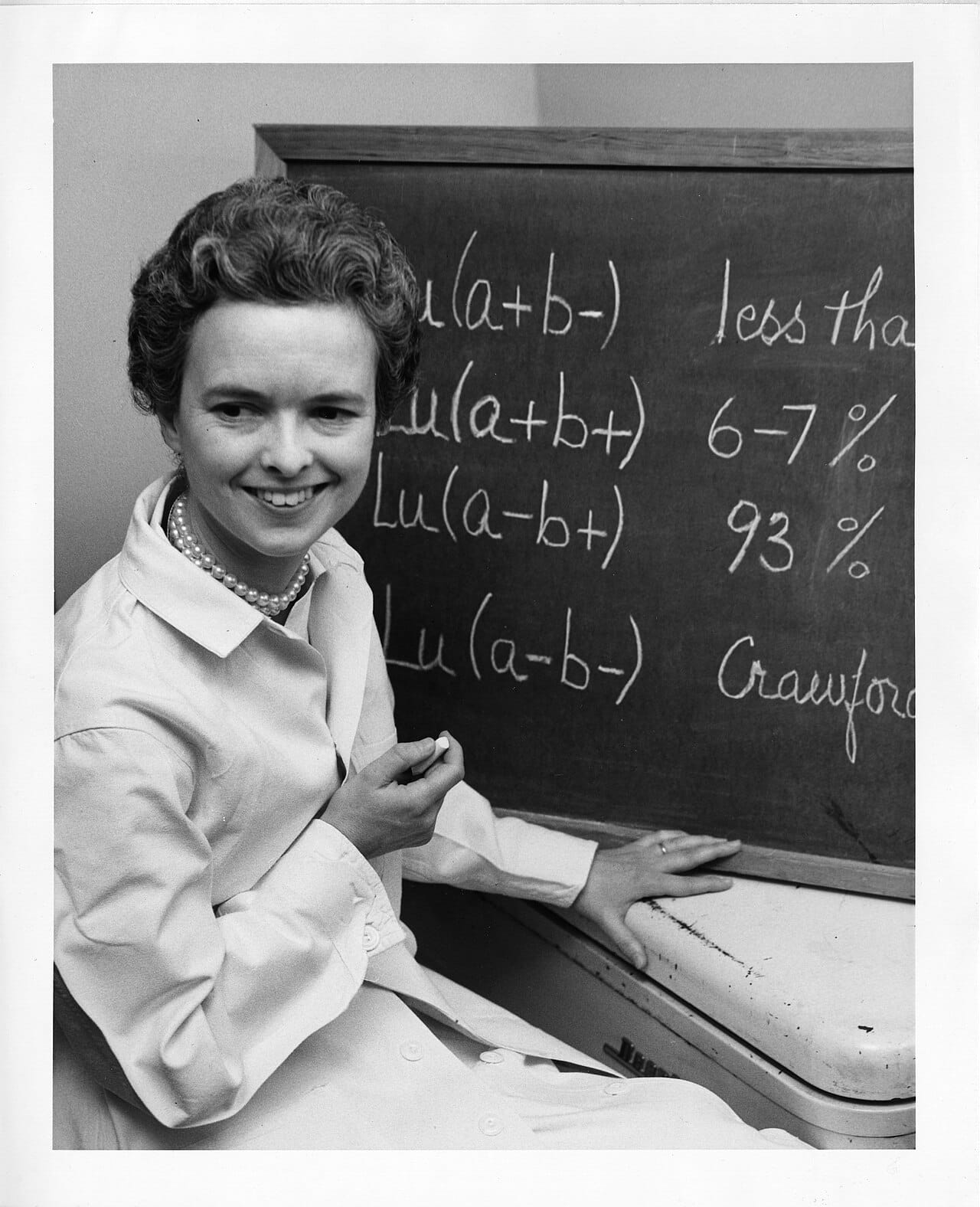
A bacteriologist photographed around 1950, in a white coat buttoned to the side. Side-fastening, high collar, no lapel. Cut so that nothing catches and there is no gap at the front — a working garment, and legible as one.Wikimedia Commons · 2695951 · circa 1950date QS:P,+1950-00-00T00:00:00Z/9,P1480,Q5727902 · creator not recorded · Public domainA biochemist at a blackboard, 1973, coat open over ordinary clothes. Worn unbuttoned and over a shirt and tie. At the blackboard the coat is protecting nothing; it is simply what one wears in the building.Wikimedia Commons · 563554 · 1973-03 · National Institutes of Health · Public domainA chemist examining a lunar sample. The one context where the coat's actual function and its symbolic one point the same way, which is presumably why it was photographed.Wikimedia Commons · 3722376 · 2008-03-16 19:48:30 · creator not recorded · Public domainA technician pipetting, gloved, sleeves pushed back. Modern practice has moved the real protection to the gloves and the glasses. The coat stays anyway.Wikimedia Commons · 20737539 · Taken on 28 July 2008 · Airman 1st Class Jason Epley, U.S. Air Force · Public domain
The Garment Nobody Re-Cut
Almost every uniform in this archive was redesigned when women began wearing it, and usually redesigned downwards — a shorter version, a different colour, a cap. Nursing dress was specified for women from the start and is unrecognisable beside a doctor's.
The laboratory coat is the exception in the record. The women photographed in one are wearing the same garment as the men beside them, in the same cut, from the earliest plates here to the most recent.
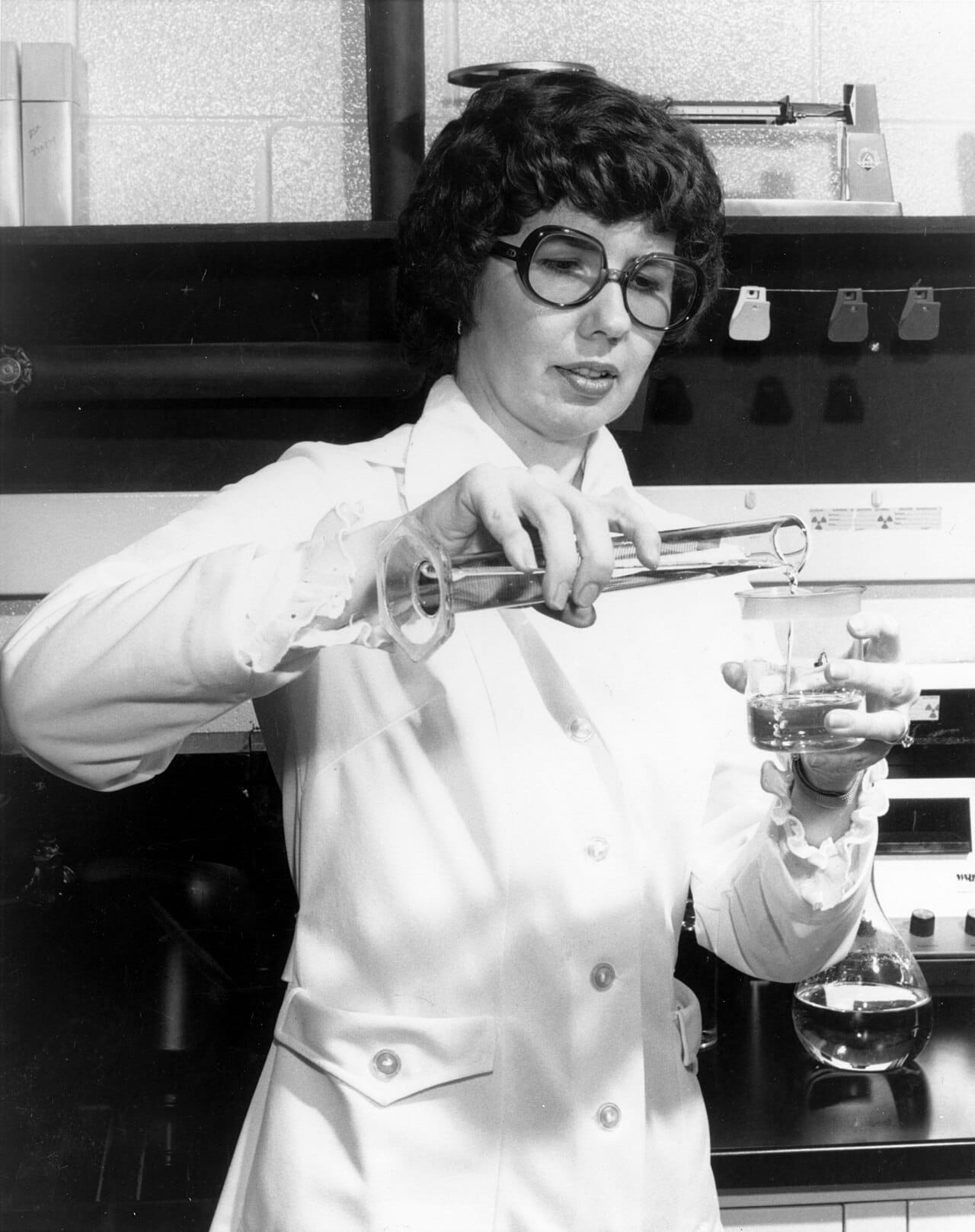
Two chemists at a bench of glassware, mid-century. Same coat, same length, same fastening. Nothing in the clothing distinguishes them and nothing was added to make it do so.Wikimedia Commons · 7406058 · 2009-03-18 15:50 · Smithsonian Institution from United States · No restrictionsA researcher beside a blackboard of equations. The coat is doing the same work as the blackboard — asserting that what happens here is measured.Wikimedia Commons · 22189915 · 2009-02-27 17:23 · Smithsonian Institution from United States · No restrictionsA chemist photographed at a bench in 1978. The sleeve is turned back at the cuff, which is the only alteration anybody makes to this garment and the only one it needs.Wikimedia Commons · 6480420 · 1978 · NASA · Public domainA geneticist in a laboratory, 2012. Sixty years after the plate above and the garment has barely moved: same length, same collar, same patch pockets.Wikimedia Commons · 22487838 · 2012-09-07 · Lauri Kulpsoo · CC BY-SA 3.0
Almost every uniform here was redesigned when women began wearing it, and usually redesigned downwards. The laboratory coat is the exception: the same garment, in the same cut, in every plate.
Why It Kept Being Taken
A borrowed uniform only works if the thing it is borrowed from is unambiguous, and for a century the laboratory has been the least ambiguous claim to knowledge available. Nobody borrows a plumber's overalls to look competent.
So the coat travelled, and it kept travelling long after the laboratory stopped being the only place science was done — which is why a modern research building is full of people in fleeces and lanyards, and the coat comes out for the photograph.
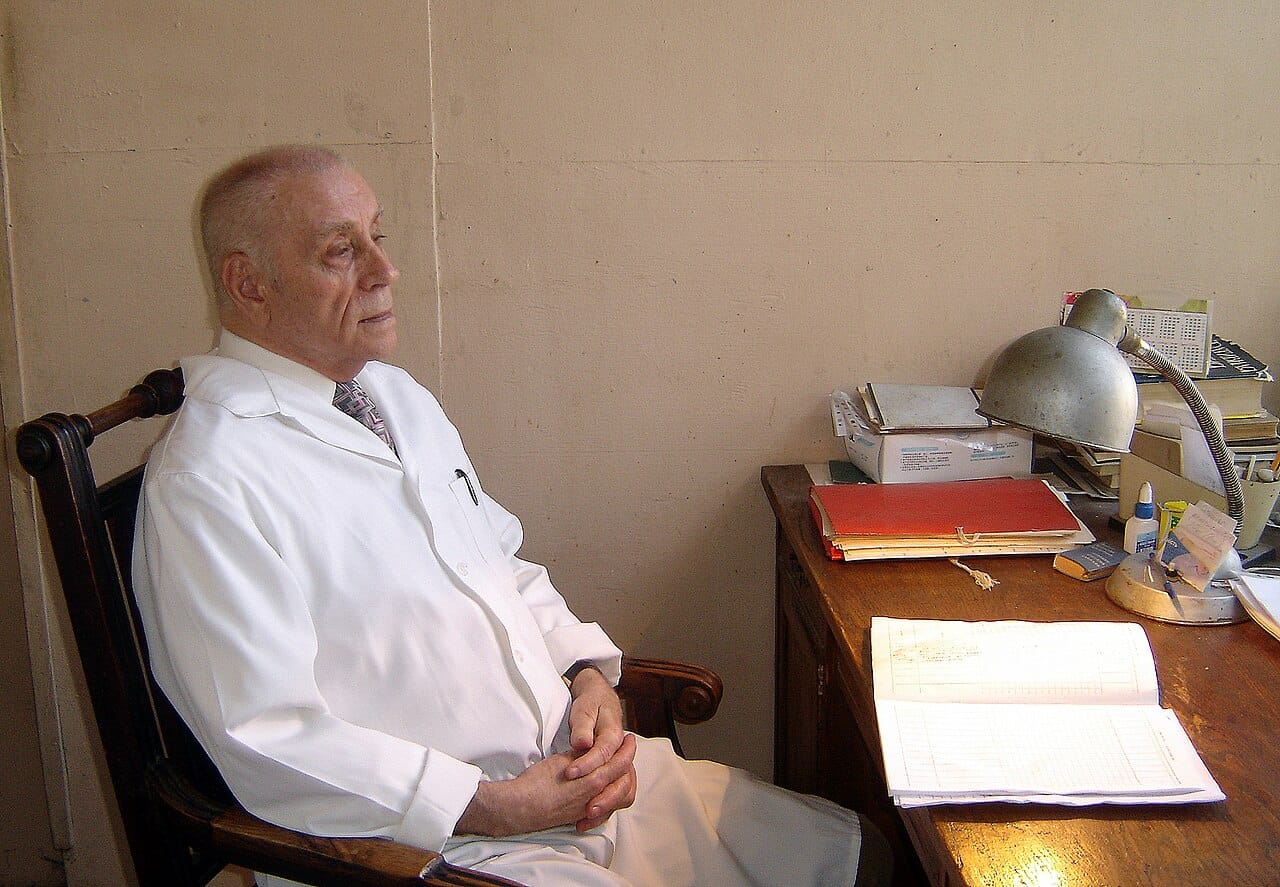
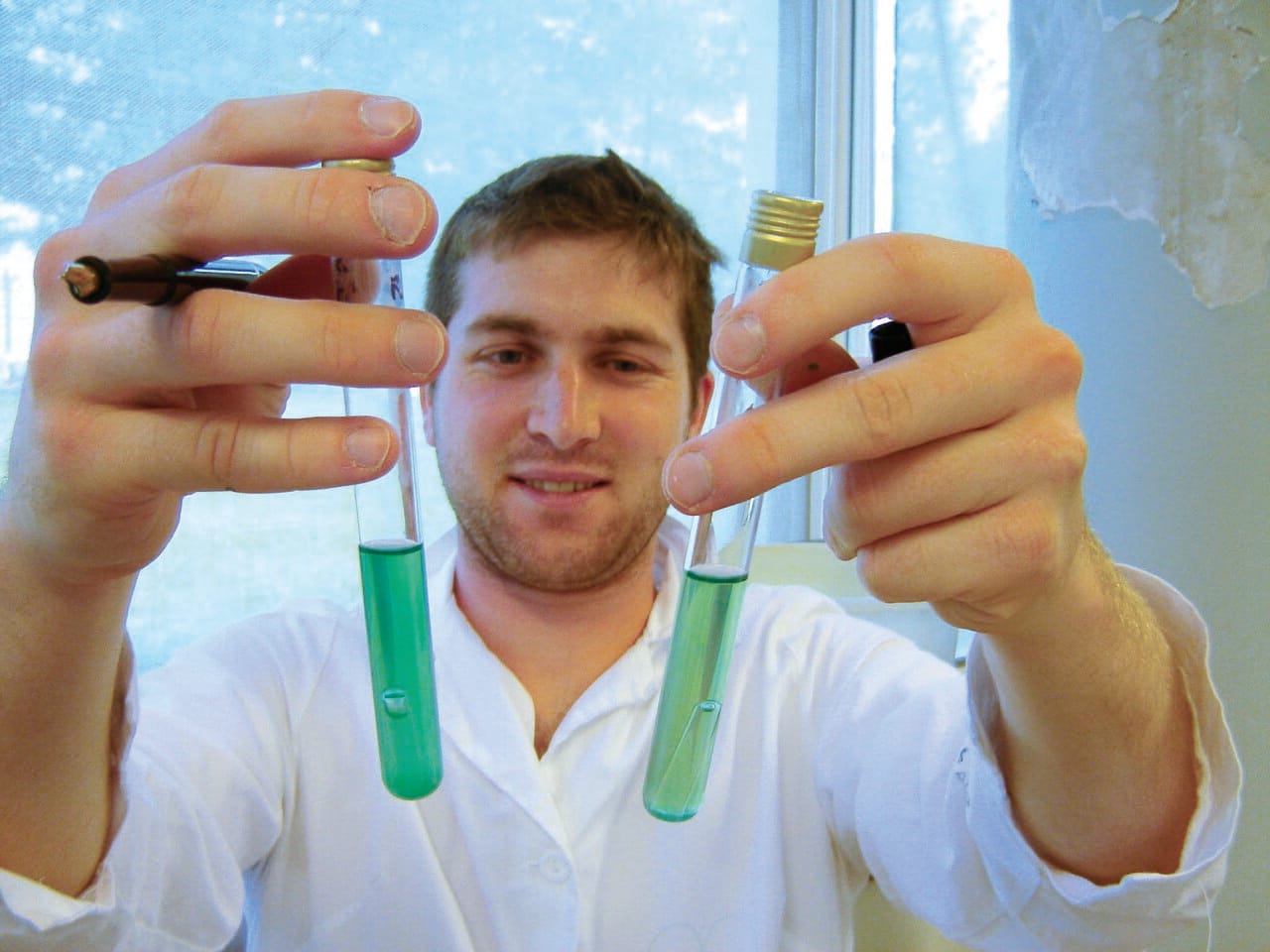
A researcher seated at a desk in a white coat, no equipment in reach. A desk, a lamp and a notebook. The coat is worn where nothing can spill, which is the clearest evidence of what it is for by this point.Wikimedia Commons · 16056918 · 2011-04-18 · VityoG · CC BY-SA 3.0A director photographed in a white coat over a shirt and tie. The coat as portrait dress. An administrator in a laboratory is photographed in one for the same reason a physician is.Wikimedia Commons · 4154369 · 14 March 2003 (according to Exif data) · National Human Genome Research Institute · Public domainA student holding two tubes of coloured liquid to the camera. The coat, the tubes and the colour together are a costume for the idea of science. Nothing in the picture requires any of them.École des métiers de l'environnement. · 9031113 · 27 May 2005 (according to Exif data) · École des métiers de l'environnement. · CC BY-SA 4.0
Hedda Maartens — MA in fashion design, then eleven years in the industry designing for people who had no say in what they wore. Now writes about prescribed dress: how a garment was made to work, and what it was made to make a person into.
Member discussion
Back
Nametape
Free
$0
Every Research post and every Essay, free to read.
All Research posts — one uniform at a time, in archive photographs




_and_Carl_Ferdinand_Cori_(1896-1984).jpg?ref=blog.neutrino.website)
.jpg?ref=blog.neutrino.website)








Member discussion