Medicine spent most of the nineteenth century in black frock coats and changed to white in about a generation. The switch was not about hygiene. It was a claim to be a science.
Doctors wear white, and white is the worst possible colour for the job. It shows blood, iodine, ink and everything else a working day produces. It needs hot washing, and hot washing is what wears cloth out. Any garment chosen for a room where people bleed would sensibly be dark.
For most of the nineteenth century it was. Physicians wore black — frock coats, then morning coats, the same clothing a lawyer or a banker wore, because a physician was a gentleman first and a practitioner second. Then, over roughly a generation, medicine changed colour.
What black was doing
Black was not a medical decision. It was the ordinary formal dress of a professional man, and wearing it said that the person examining you belonged to a class you should trust. Medicine before germ theory had limited technical authority to draw on, so it drew on social authority instead, and the coat was how that was carried into a room.
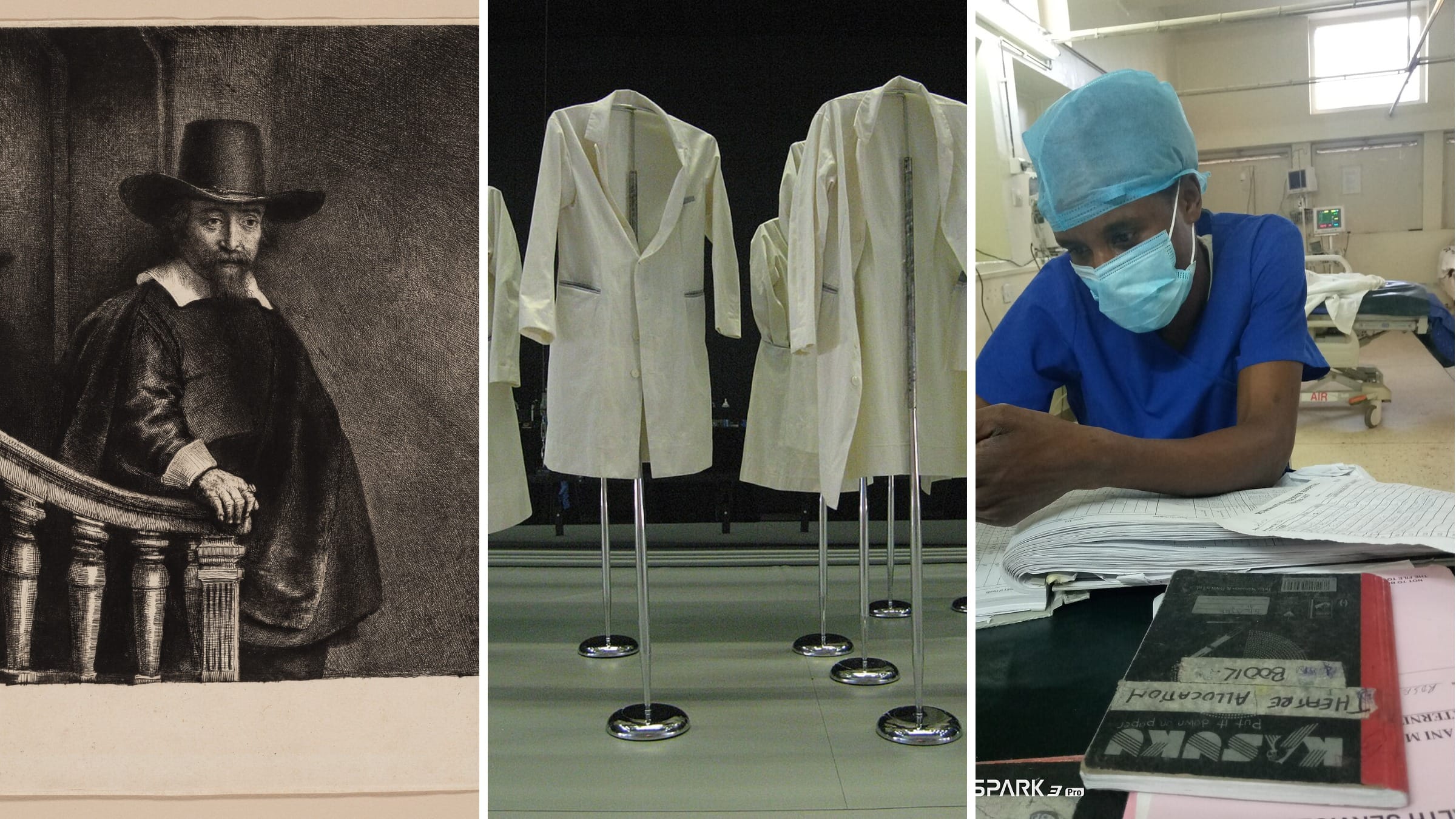
Look at how physicians had themselves painted and the priority is unmistakable. The sitter is a gentleman who happens to practise medicine — the instruments, when they appear at all, are props at the edge of the frame.
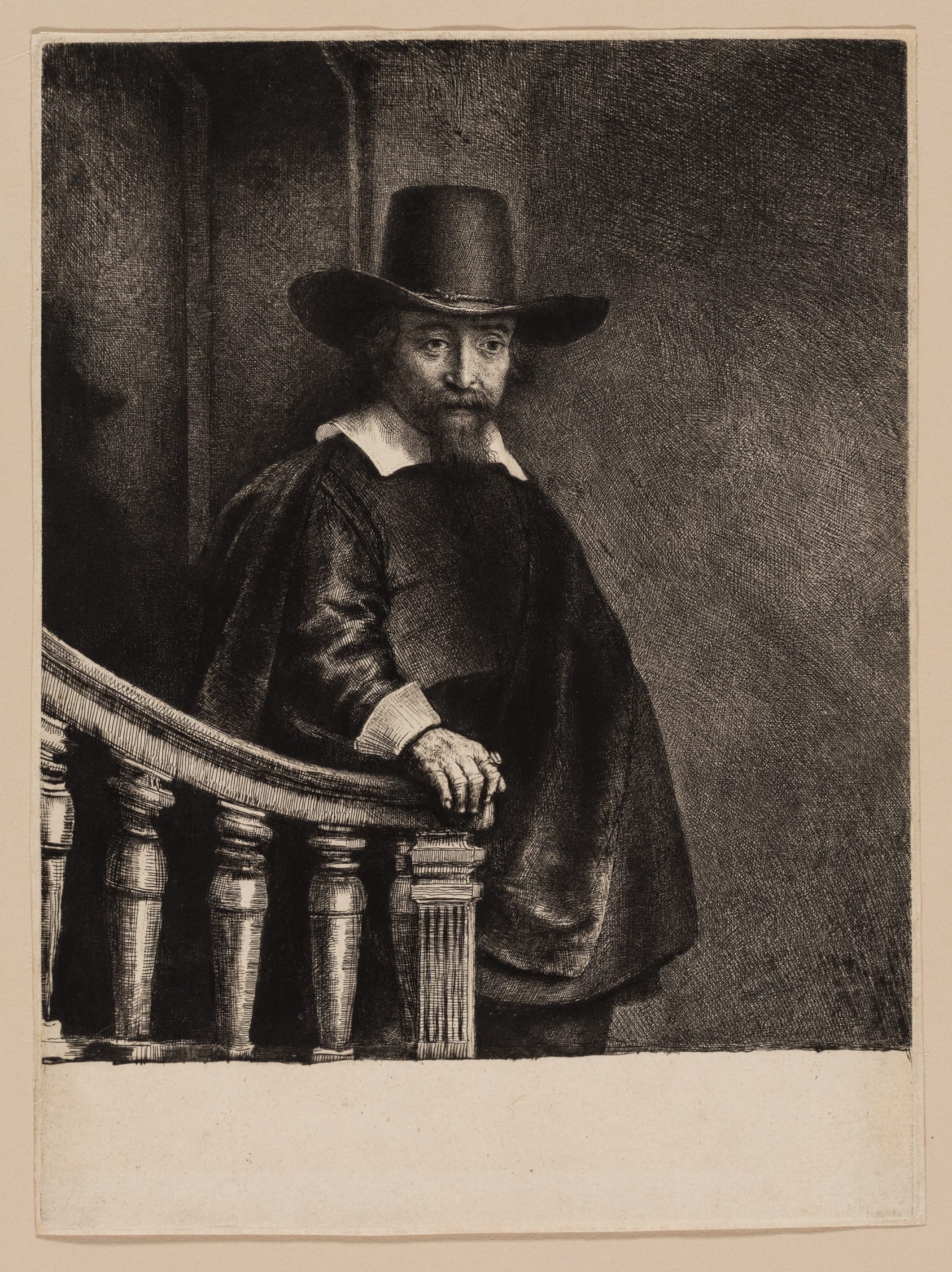
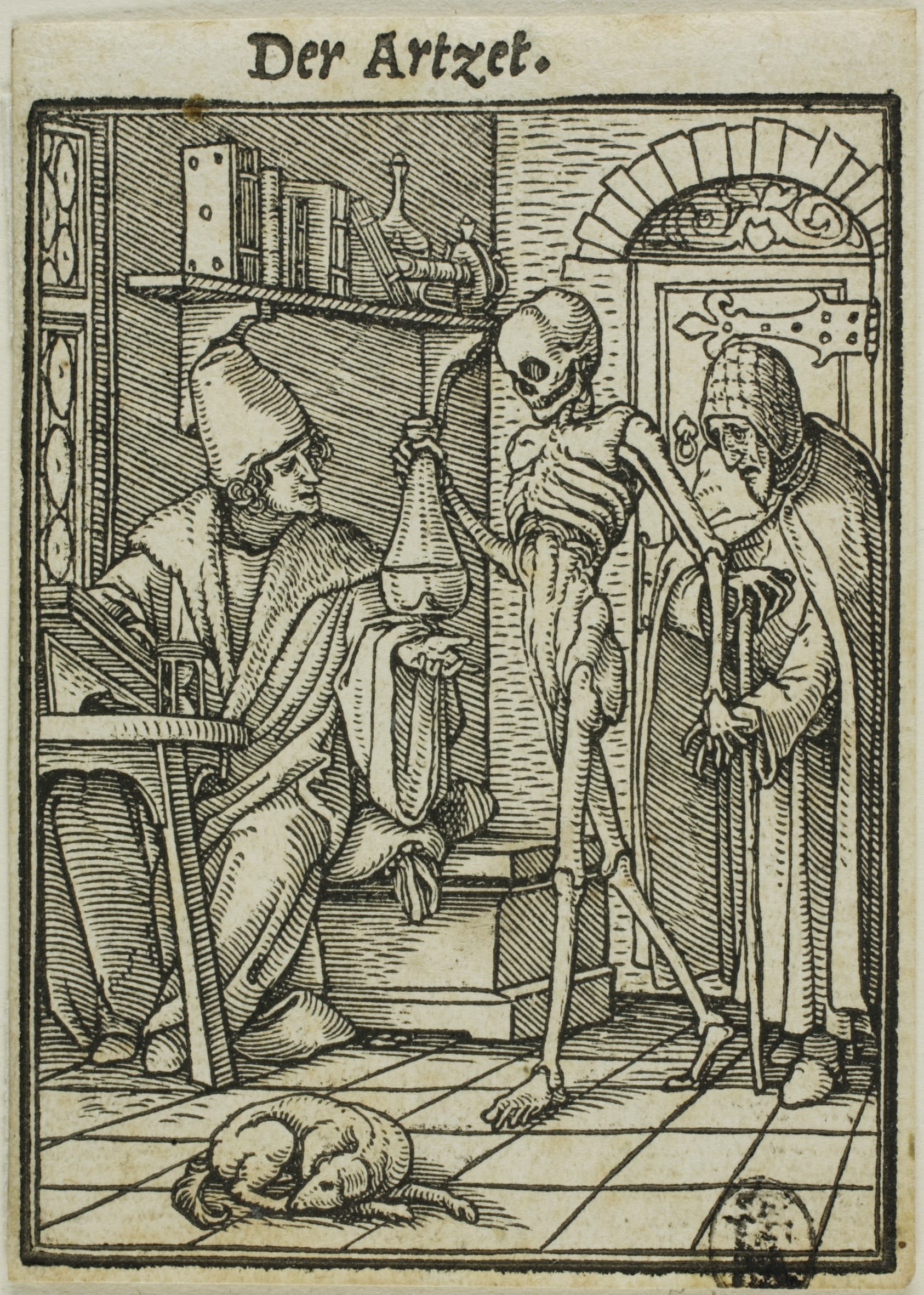
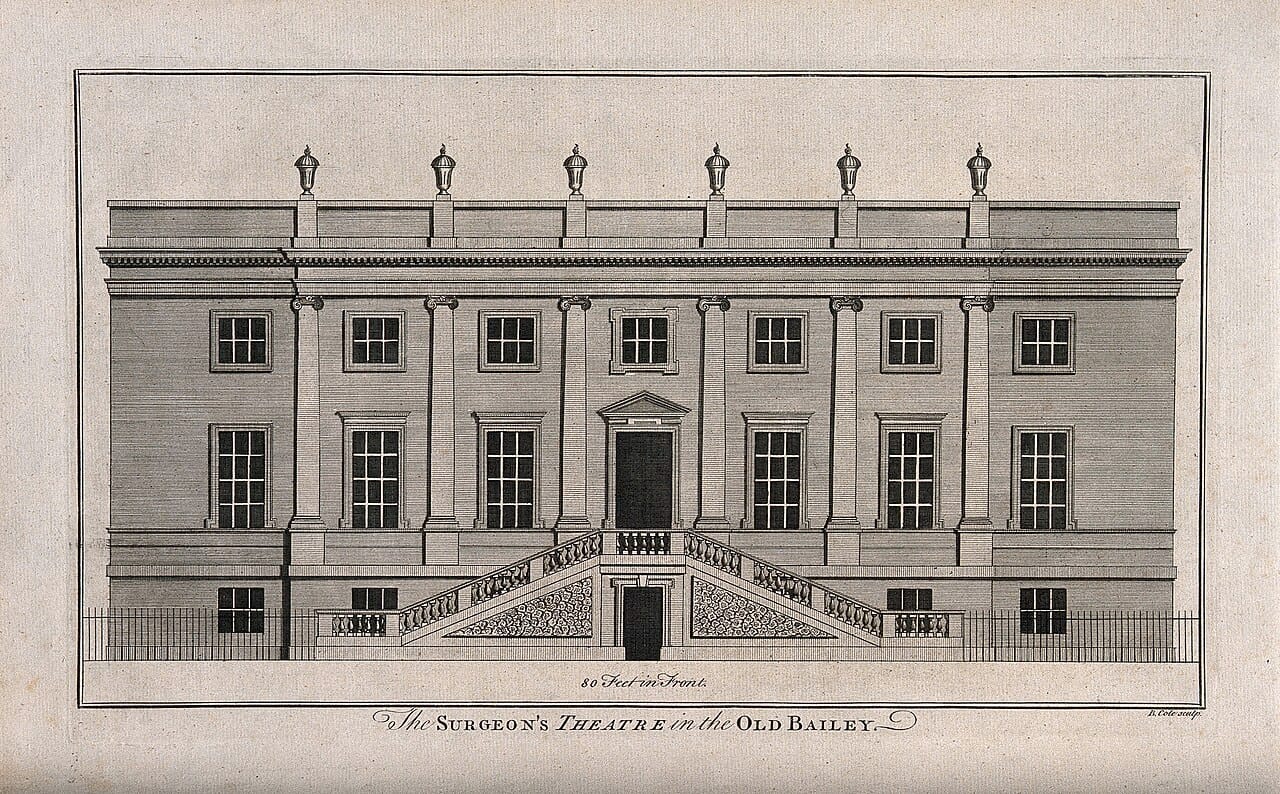
A seventeenth-century etched portrait of a physician, in dark formal dress with a broad collar. Nothing here identifies a doctor. The dress is a professional man's, and the identification comes entirely from the title of the picture.Art Institute of Chicago · 29084 · 1647 · Rembrandt van Rijn Dutch, 1606-1669 · Public DomainA physician depicted at a bedside, in dark clothing. Working, and still dressed for a drawing room. The garment makes no concession to what is about to happen in the room.Art Institute of Chicago · 30498 · n.d. · Hans Holbein, the younger German, 1497-1543 · Public DomainA physician's tray, with instruments arranged on it. Where the technical claim lived before the clothing made one. The equipment was specialised long before the dress was.Art Institute of Chicago · 14643 · c. 1760 · Alcora Pottery Spanish, 1727-1895 · Public DomainThe facade of Surgeons' Hall, Old Bailey, in an engraving. Surgeons organised as a company with a hall, which is a claim about standing rather than about knowledge — the same claim the black coat was making on an individual scale.Wikimedia Commons · 36474450 · 2014-10-29 13:29:33 · creator not recorded · CC BY 4.0
The usual explanation for the white coat is hygiene. The timeline does not support it: medicine went white while it was still arguing about whether germs existed, and the colour arrived from the laboratory rather than from the ward.
Why hygiene is the wrong answer
If white were about cleanliness it would have appeared where cleanliness was being fought for, and it would have appeared as procedure — gowns changed between patients, laundered at temperature, discarded when soiled. That happened, but it happened later and separately, and it produced the surgical gown rather than the doctor's coat.
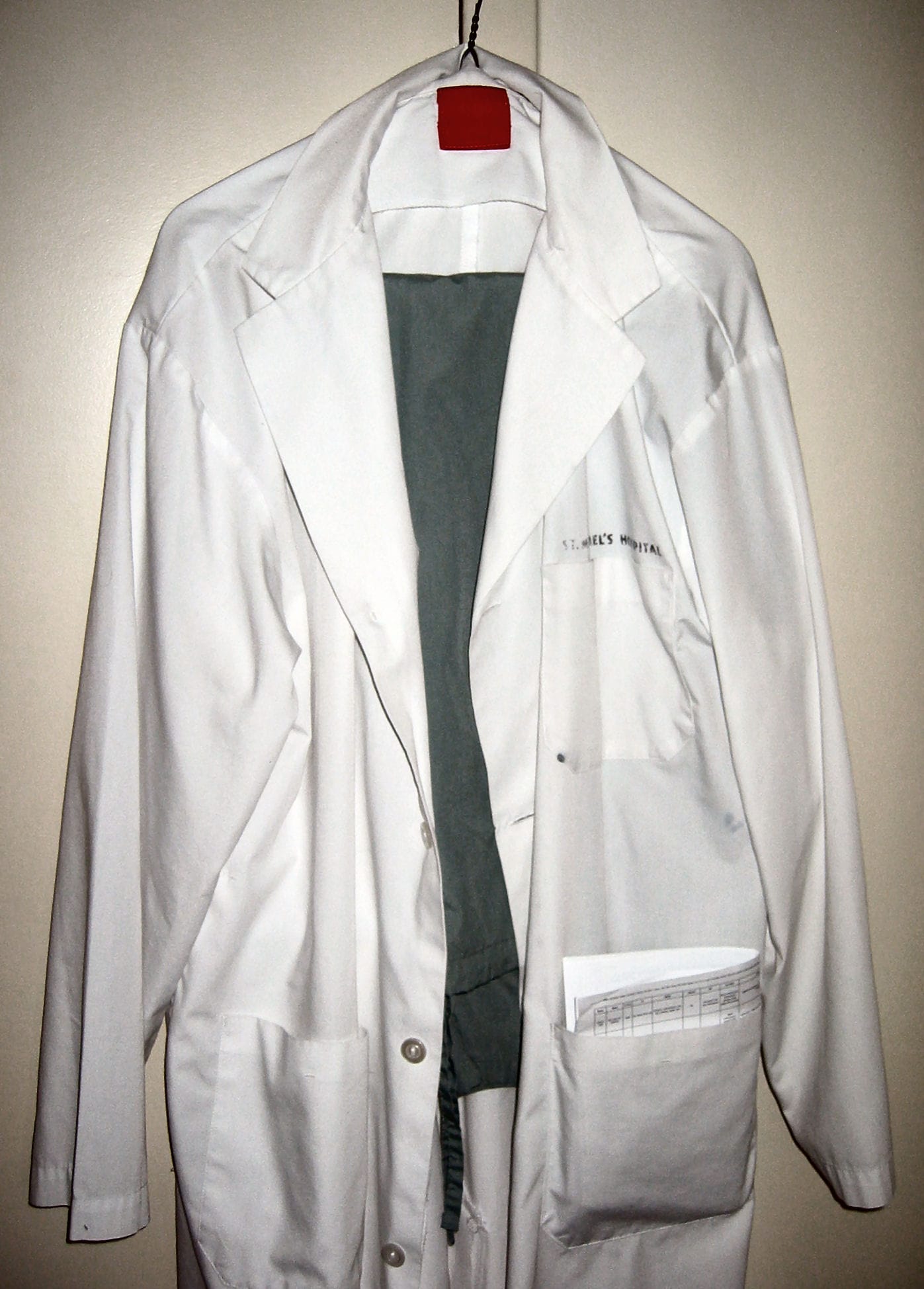
The white coat is not a barrier garment. It is worn all day, over ordinary clothes, into and out of the building, in and out of the canteen. Anyone treating it as a hygiene device would recognise it as a poor one, and hospitals now say so explicitly in their dress policies.
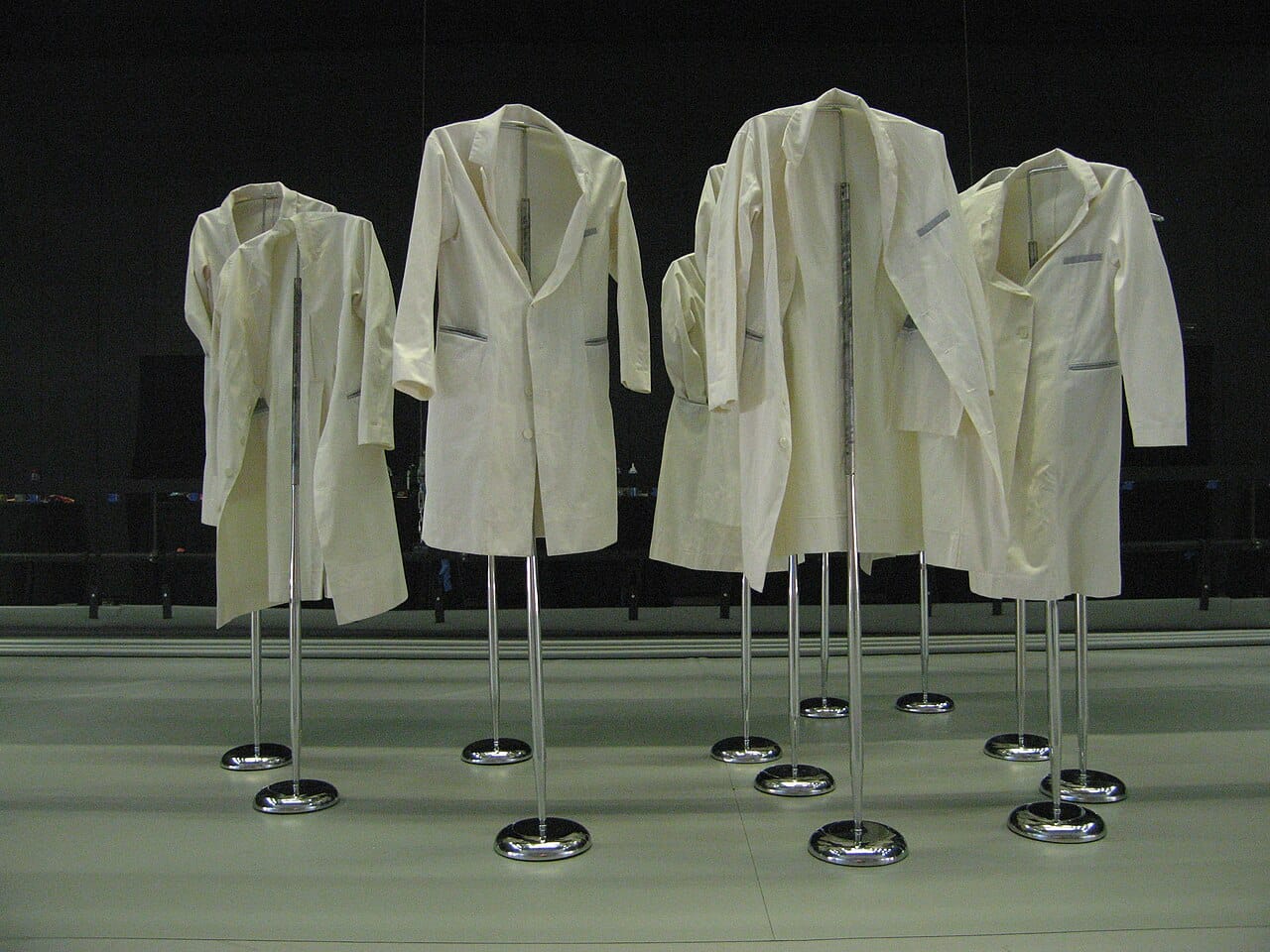
What white actually signalled was the laboratory. Chemists and bacteriologists had worn white coats for decades, for the entirely practical reason that a chemist needs to see a spill instantly. When medicine wanted to claim it had become a science, it borrowed the clothing of the people who were unambiguously doing science.
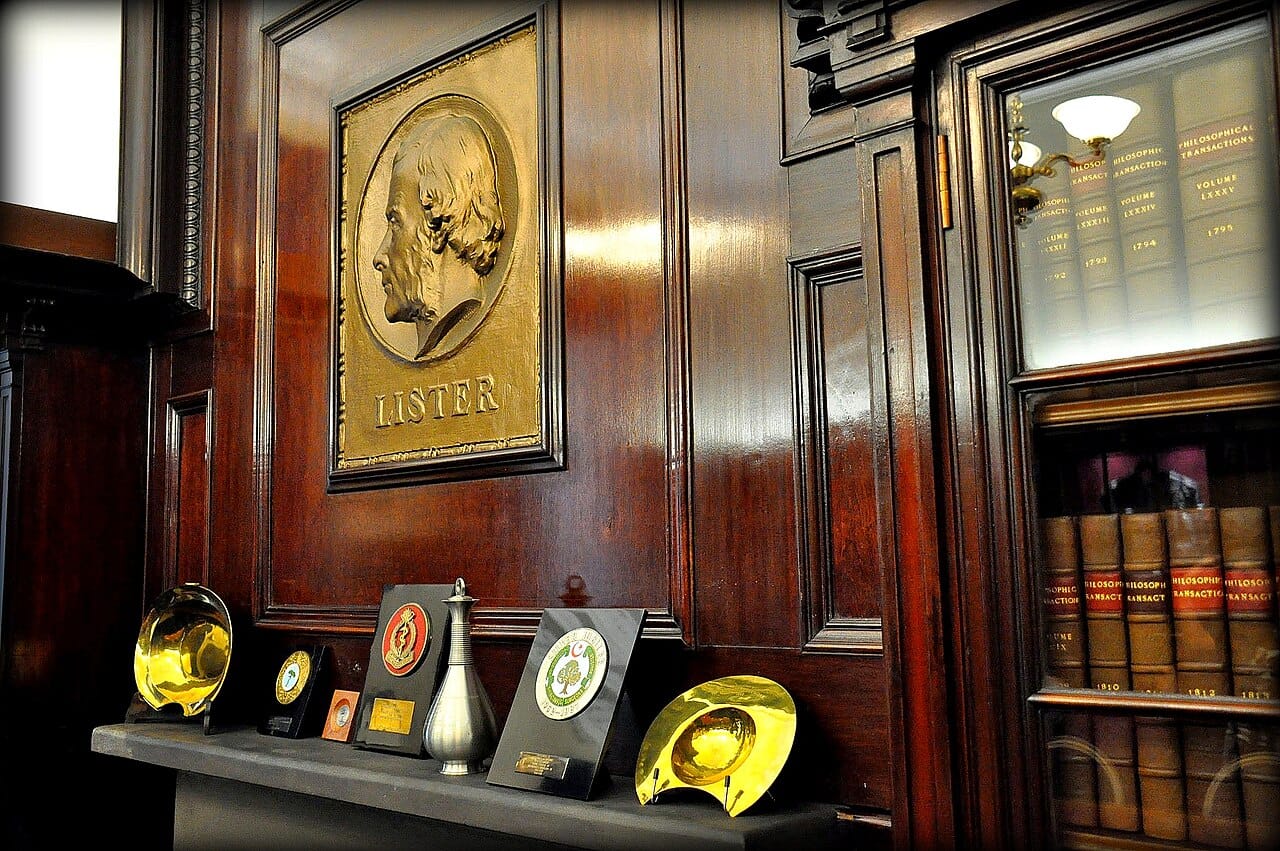
Lab coats on a rail. The garment in its original setting. Single-breasted, long, with patch pockets and no shaping — a work coat, and cheap enough to own several.Lab 15 - Lab Coats · 4477452 · 2007-11-02 22:19 · Pi. from Leiden, Holland · CC BY 2.0A lab coat hanging beside a set of scrubs. Two answers to the same problem side by side, forty years apart. The coat covers ordinary clothes; the scrubs replace them.Transferred from en.wikipedia. · 8711769 · 2006-06-07 · Samir · CC BY-SA 3.0The Lister Room at a Royal College of Physicians and Surgeons. Named for the surgeon who made the antisepsis argument. The institution commemorates the science and, at the same time, is the kind of room the black coat was designed for.Wikimedia Commons · 45713496 · 2013-11-06 15:31:30 · Osama Shukir Muhammed Amin FRCP(Glasg) · CC BY-SA 4.0
And then it went green
The third stage undoes the second. Operating theatres abandoned white in the middle of the twentieth century for a reason that is genuinely optical: staring at red tissue under bright light fatigues the eye's red receptors, and a white field then flares with green afterimages. Green and blue scrubs sit opposite red on the colour wheel and cancel the effect.
This is the only colour decision in the whole sequence made for a technical reason, and it is worth noticing what happened to it. Scrubs stayed in the theatre. The white coat stayed on the ward, on the people whose authority is still partly social — and where hospitals have retired it, the argument has been about infection and about approachability, never about optics.
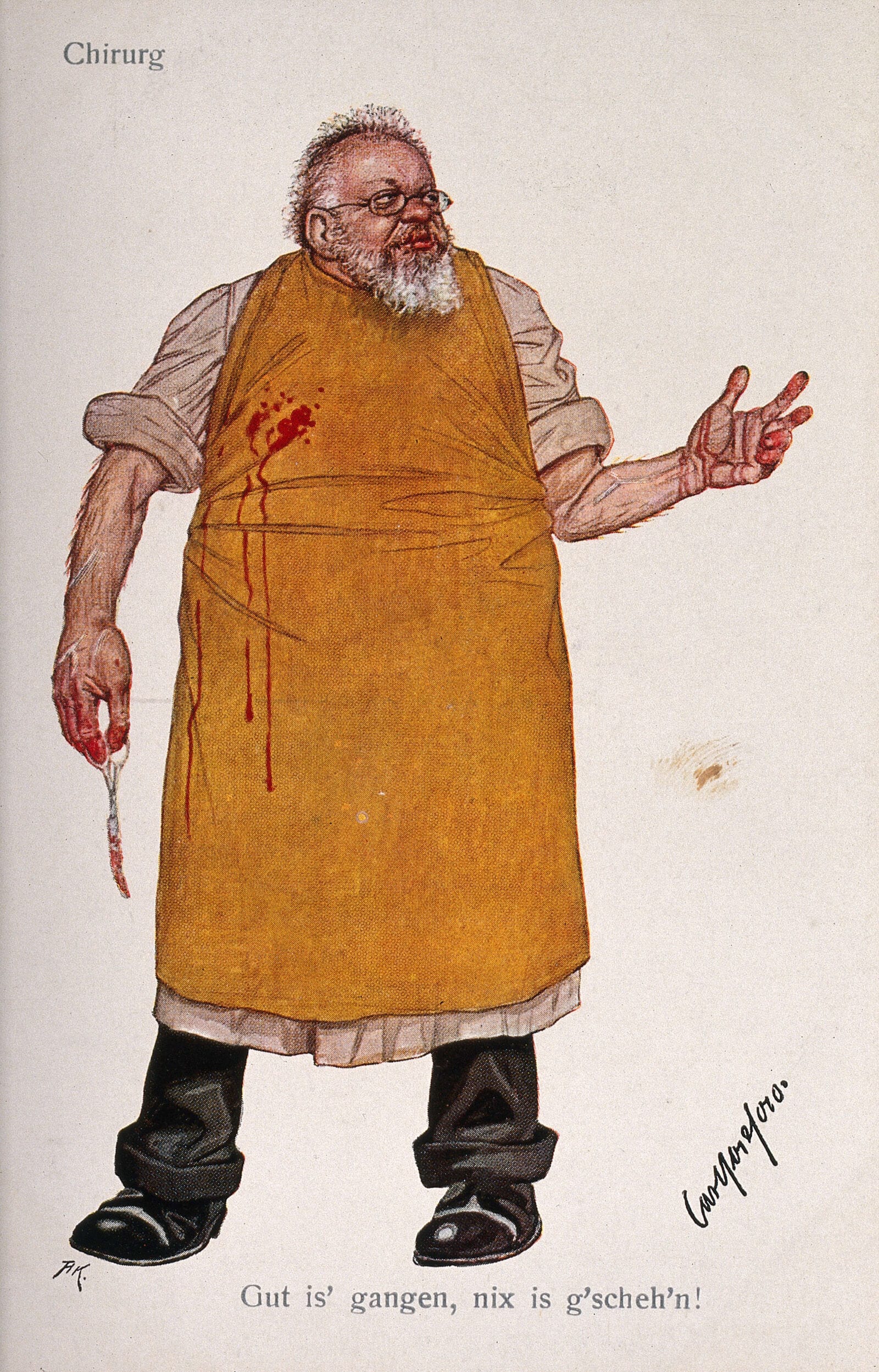
A surgeon in an operating room, in dark blue-green scrubs under theatre lighting. The colour is doing optical work rather than social work — the first time in this sequence that is true.Wikimedia Commons · 190482295 · 2026-04-26 · Richard Balikian MD · CC BY 4.0A surgeon wearing a headlight, scrubs and mask. Everything visible is specified against a requirement. Nothing about this outfit is making a claim about the wearer's class.Wikimedia Commons · 191580599 · 2026-05-04 · Tyler Frew MD · CC BY-SA 4.0A surgeon at work in a hospital in Namibia. The same solution, independently arrived at and globally consistent — which is what a technical decision looks like as against a cultural one.Wikimedia Commons · 63926560 · Taken on 24 September 2017, 15:54:43 · Agerardo · CC BY-SA 4.0A surgeon photographed in a hospital corridor, in a white coat over ordinary clothes. Outside the theatre, the white coat persists — over the person's own clothing, exactly as the black frock coat once sat over it.Wikimedia Commons · 147286968 · 2024-04-11 12:21:02 · Iainmacintyre · CC0A colour print satirising an insensitive surgeon. Worth ending on. The clothing has changed three times and the cartoon's target has not, which suggests the coat was never carrying as much as it appeared to.Wellcome Collection · gmywupfq · date not recorded · Josef, Carl, 1877- · Public Domain Mark
Hedda Maartens — MA in fashion design, then eleven years in the industry designing for people who had no say in what they wore. Now writes about prescribed dress: how a garment was made to work, and what it was made to make a person into.
Member discussion
Back
Nametape
Free
$0
Every Research post and every Essay, free to read.
All Research posts — one uniform at a time, in archive photographs













Member discussion