Laid out complete and numbered: eleven garments, each with a name, a rule governing when it is worn, and in several cases a meaning attached to the act of putting it on.
The habit is the most completely specified dress in this archive. More specified than any army's service dress, more specified than a surgeon's gown: not only what is worn, but in what order it is put on, what each layer is called, when it may be removed, and in several traditions what the wearer is to think while fastening it.
That is worth saying plainly, because a habit reads to most people as a single garment — a robe. It is not. It is a stack of separately named pieces, each with its own rule, and the stack differs by order, by province, by century and by whether the wearer is professed.
The layers have names
Tunic, belt or cincture, scapular, cowl, hood, veil, mantle: the vocabulary is precise and it is not decorative. A scapular is a length of cloth hanging front and back over the tunic, and it began as an apron — the piece you put on to work in. A cincture is a belt, and in several rules the knots in it are counted.
Because the pieces are named separately they can be regulated separately, and they are. A novice wears a different veil from a professed sister; a lay brother's scapular differs from a choir monk's; a garment may be permitted indoors and forbidden outside the enclosure.
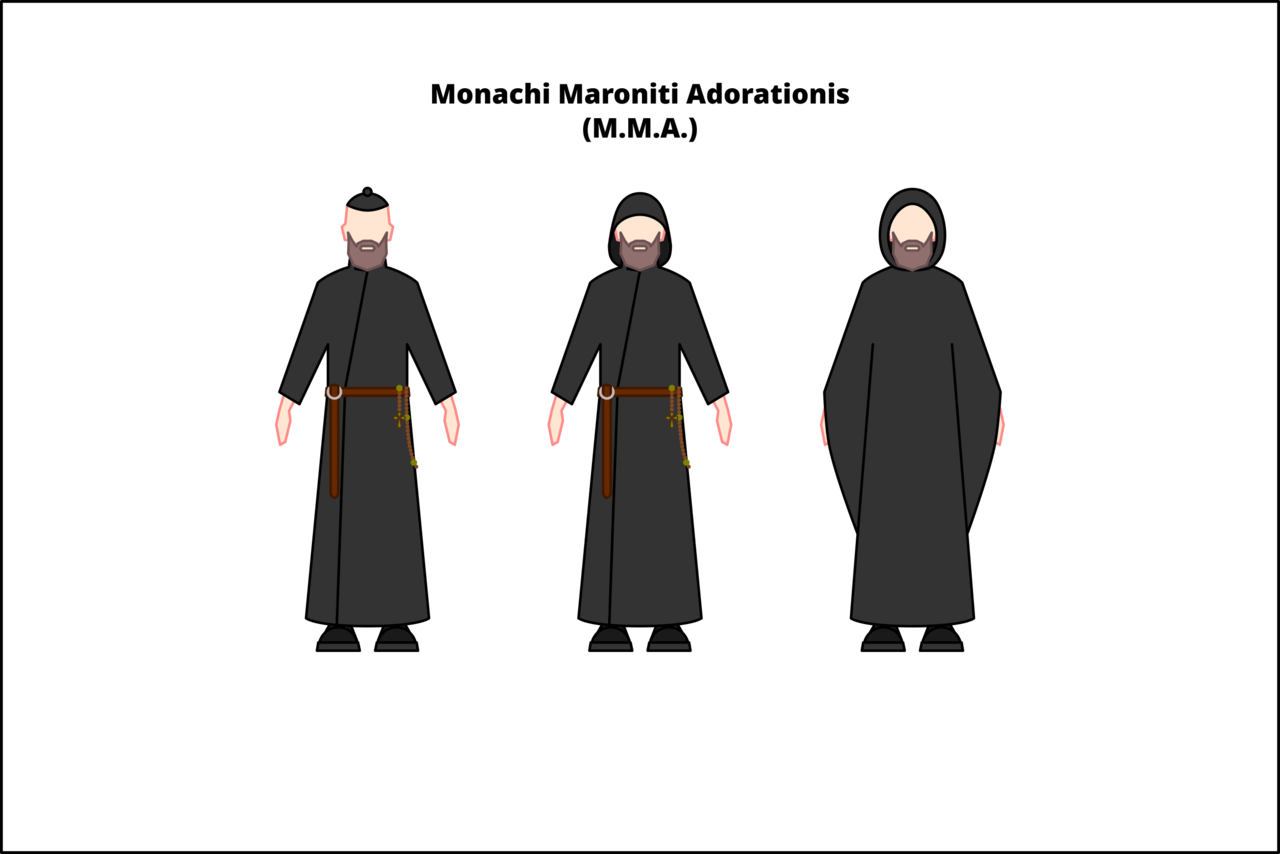
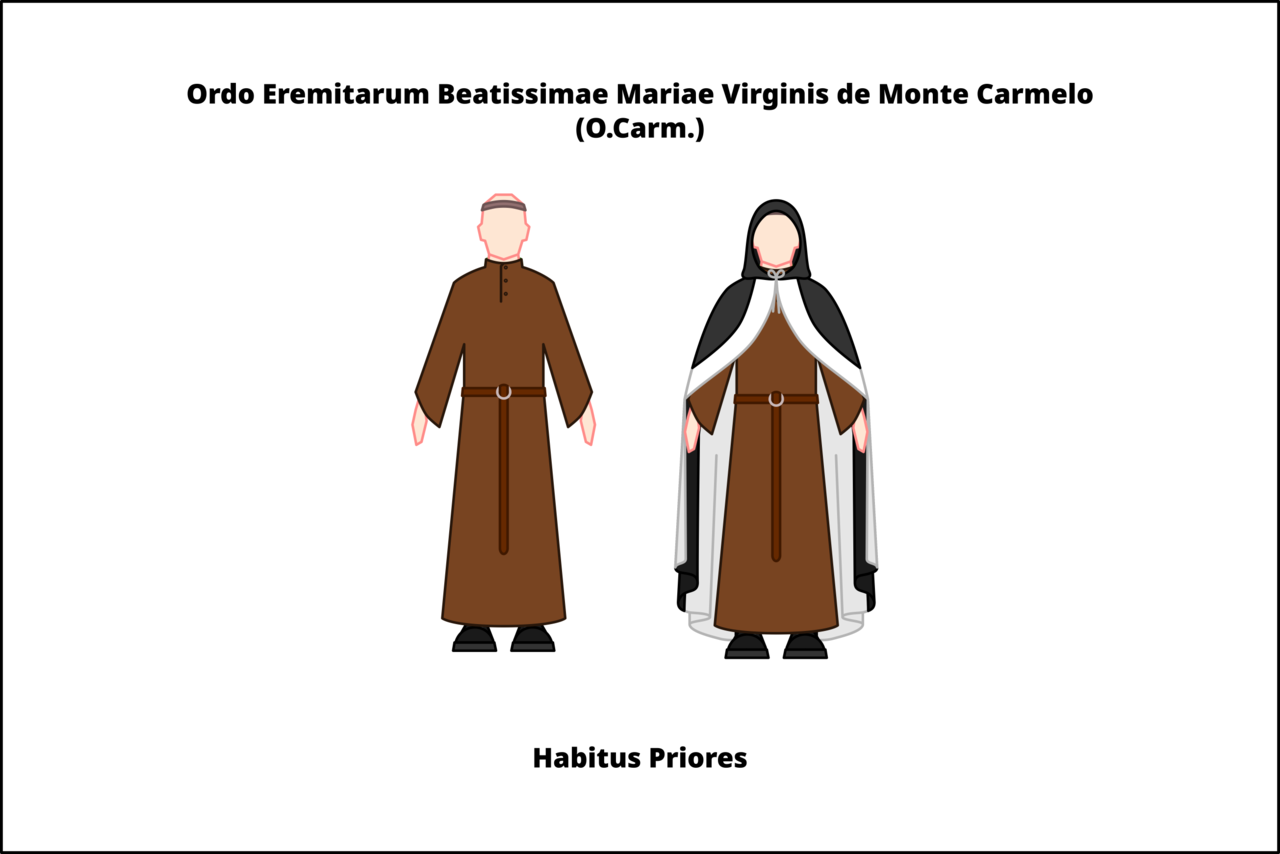
A diagram of the exterior habit of Byzantine and Melkite monks, the layers drawn as flat shapes. Drawn as a specification rather than as a picture. This is the form the information actually takes inside an order: which piece, worn over which, in what proportion.Wikimedia Commons · 93948384 · 2020-09-07 · David Abreu Acosta · CC BY-SA 4.0The interior habit of the same tradition — what is worn beneath and within the enclosure. Two complete outfits for one person, divided by a doorway. The distinction between inside and outside the enclosure is a rule about clothing before it is anything else.Wikimedia Commons · 93948389 · 2020-09-07 · David Abreu Acosta · CC BY-SA 4.0The habit of the Maronite monks of Adoration. One tradition, one order, one variant. Multiply this by every order and province and the scale of the specification becomes clear.Wikimedia Commons · 93948392 · 2020-09-07 · David Abreu Acosta · CC BY-SA 4.0The first habit of the Carmelite hermits, shown as a striped mantle over a tunic. Habits change and the changes are recorded, which is why "first habit" is a meaningful phrase. Almost no other working dress has a documented revision history.Wikimedia Commons · 93948394 · 2020-09-07 · David Abreu Acosta · CC BY-SA 4.0
Every other uniform in this archive was specified by an institution for its own convenience. The habit is the only one specified as an argument about how its wearer should live, with the garment as the argument's daily proof.
Difference is the whole point
A comparative plate of religious dress looks, at first, like a catalogue of near-identical figures in dark cloth. Look for a minute and the differences resolve: the cut of a hood, the width of a sleeve, whether a cord or a leather belt, whether the scapular reaches the hem.
Those small differences carry a great deal. They identify the order, and the order is the point — a habit does not say "religious", it says which rule this person lives under. The visual system is closer to heraldry than to uniform, and like heraldry it is unreadable without instruction and completely unambiguous with it.
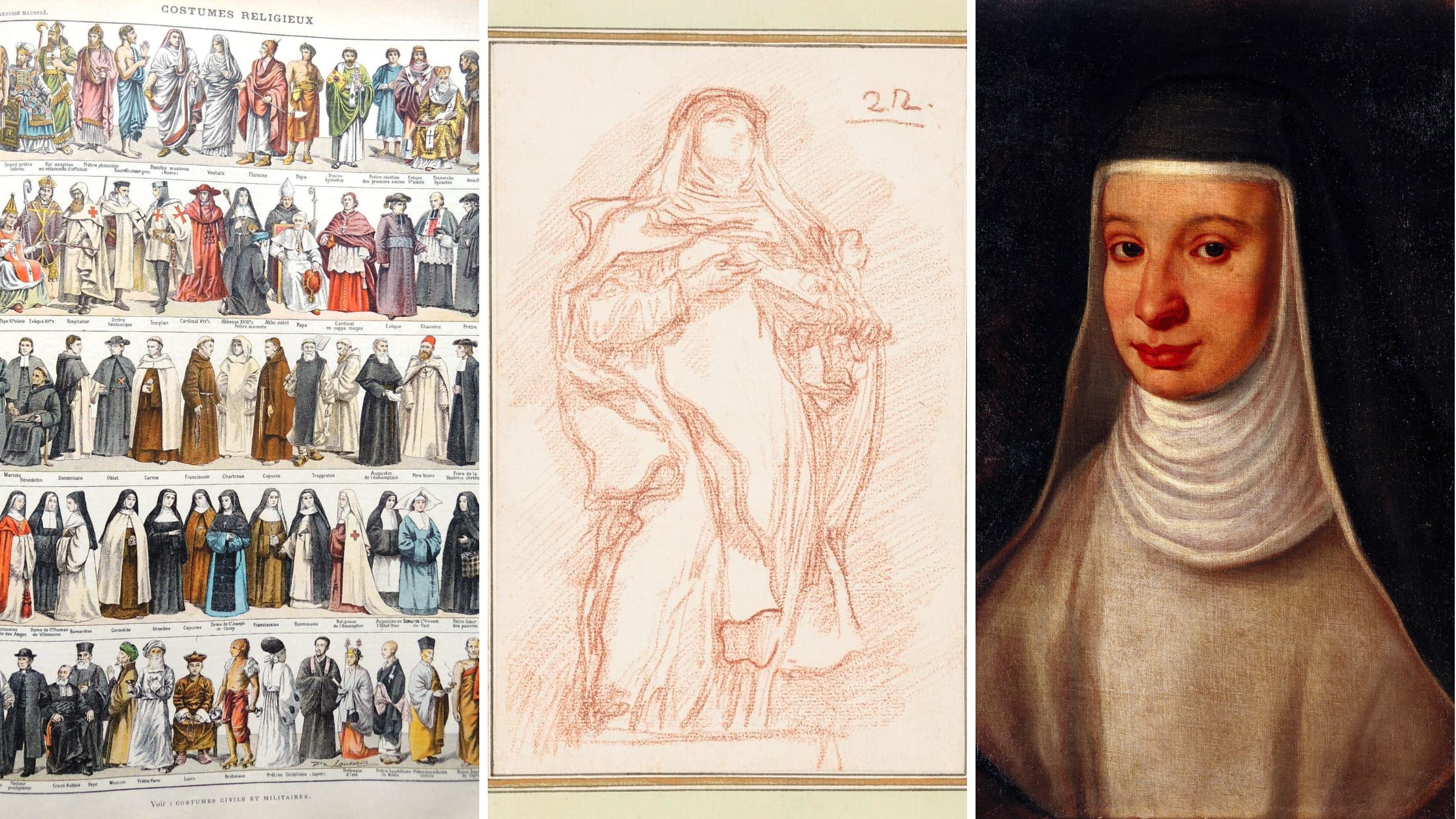
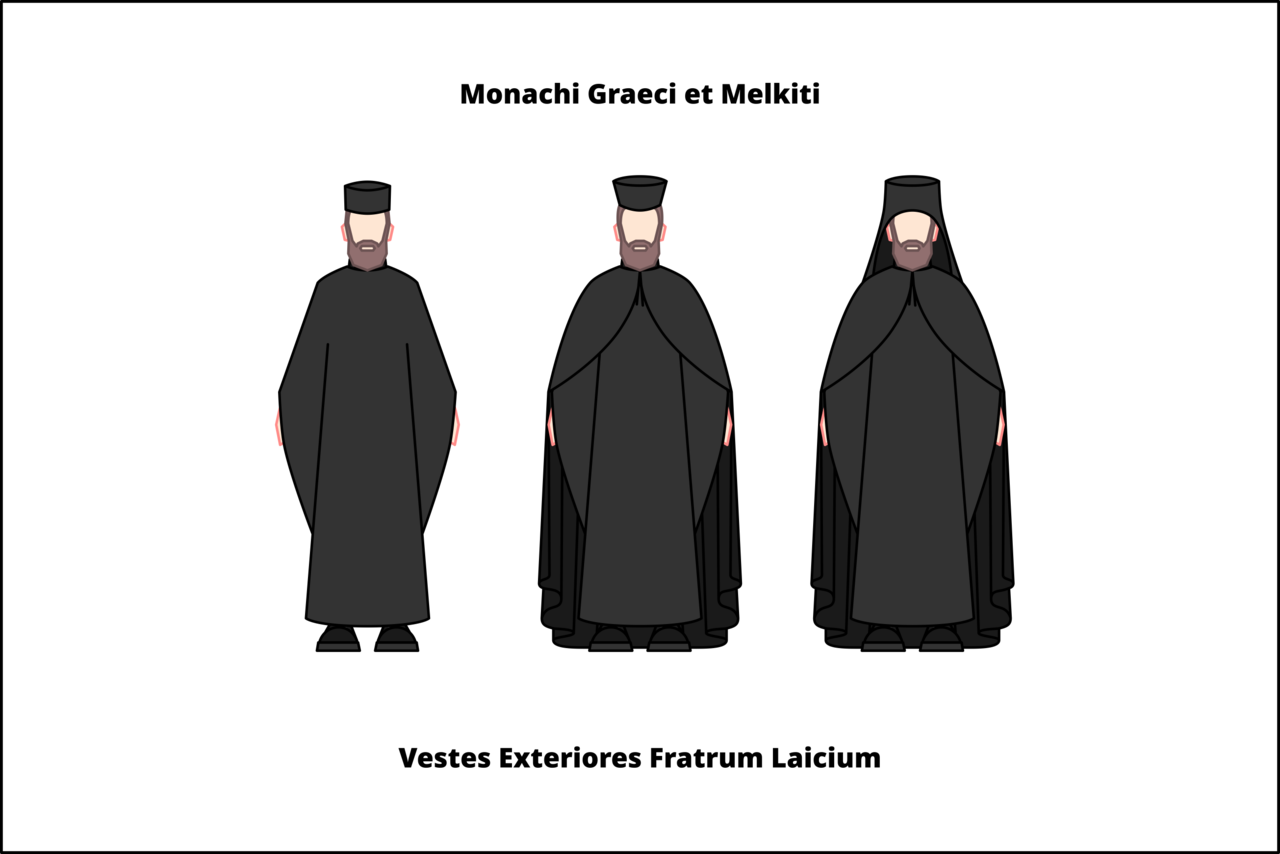
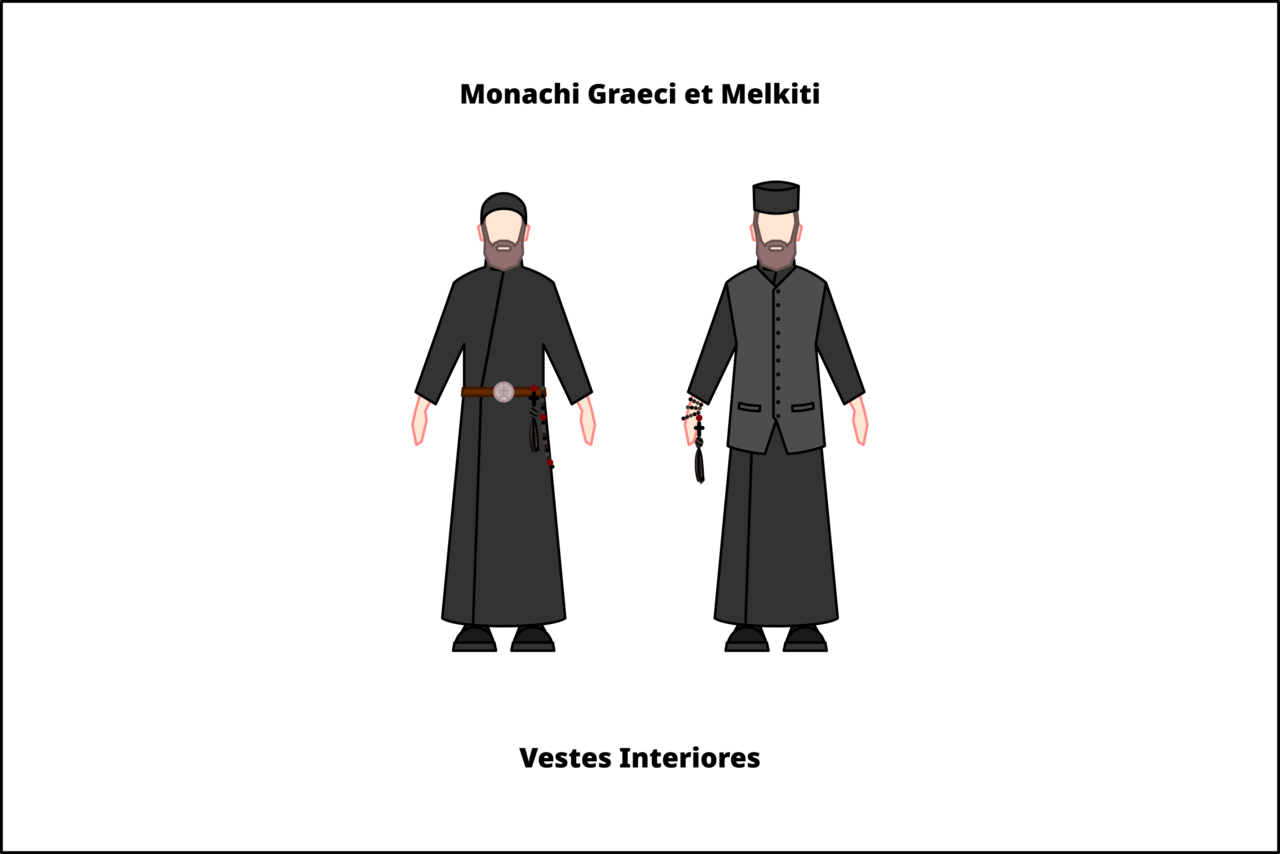
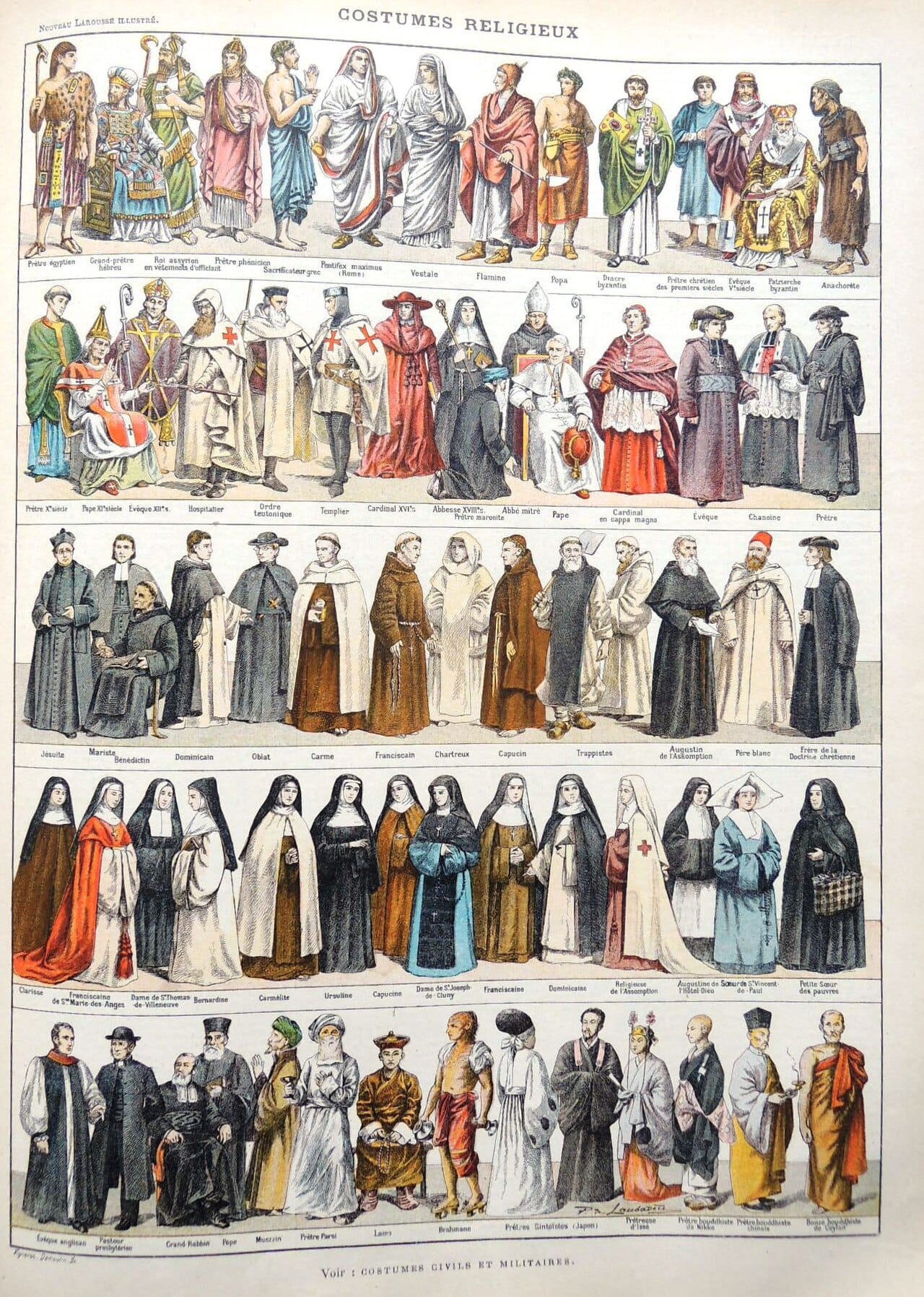
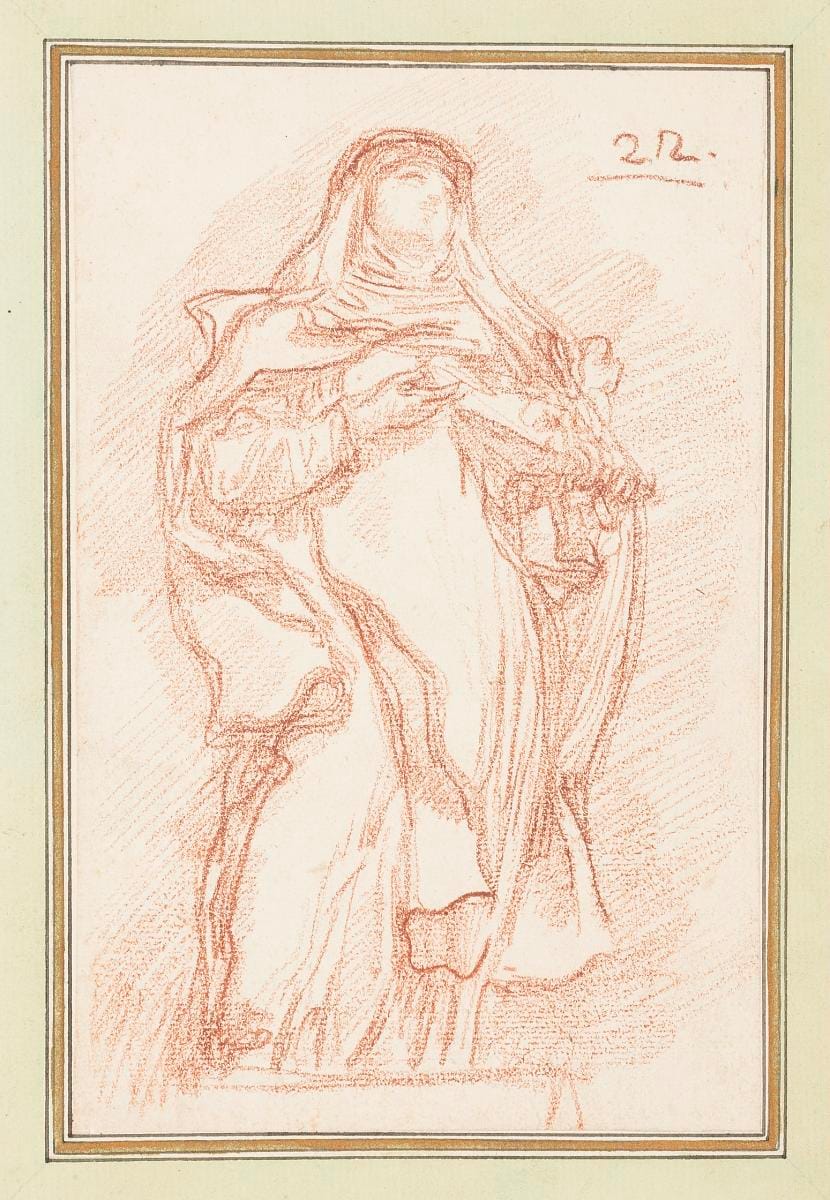
A comparative plate of religious habits from a French encyclopaedia of about 1900, dozens of figures in rows. Published for general readers, which tells you the distinctions were expected to matter to people outside the orders. An encyclopaedia does not print a chart nobody needs.Wikimedia Commons · 68490673 · 2018-03-25 14:17:58 · Paul de Laubadère (1859-1931), Sokoljan2 · CC BY-SA 4.0A drawing of a standing woman in a nun's habit, the veil and wimple carefully rendered. The draughtsman has spent the attention on the head. That is where the identifying differences concentrate, and it is where anyone learning to read habits looks first.Cooper Hewitt, Smithsonian Design Museum · CHSDM-156859_01-000001 · ca. 1759–70 · Jean-Robert Ango, French, active in Rome 1759 –1770, d. 1773 · CC0A painted portrait of a nun, traditionally identified as Suor Maria Celeste. A portrait rather than a specification, and the habit is still rendered exactly. A painter who got the veil wrong would have been making a factual error about who the sitter was.Wellcome Collection · thym7ygw · date not recorded · creator not recorded · Public Domain MarkMonks of a Carthusian house photographed together. Worn rather than drawn. The cloth hangs, the hems are uneven with use, and the effect at a distance is a single silhouette repeated — which is what the specification is for.Flickr: Monks! · 15811853 · 2009-06-22 14:07:38 · will_cyclist · CC BY 2.0
Why it is so stable
Nothing else in this archive lasts like this. Military dress is rebuilt every generation, working clothing follows its materials, and commercial uniforms follow fashion. A habit can go four hundred years with adjustments a tailor would call minor.
The reason is that the garment is not solving a problem that changes. It is not protecting against anything, not signalling rank to strangers, and not selling anything. It marks a person as living under a particular rule, and the rule is the thing that is meant not to change.
Hedda Maartens — MA in fashion design, then eleven years in the industry designing for people who had no say in what they wore. Now writes about prescribed dress: how a garment was made to work, and what it was made to make a person into.
Member discussion
Back
Nametape
Free
$0
Every Research post and every Essay, free to read.
All Research posts — one uniform at a time, in archive photographs




_DSCN2871.jpg?ref=blog.neutrino.website)



Member discussion