Miners worked in almost nothing. Above ground the same trade built one of the most elaborate ceremonial uniforms in Europe — a black tunic, white breeches, a plumed shako, and a leather apron worn back to front.
Miners worked in almost nothing. Heat underground made clothing a liability, and what a man wore at the coal face was whatever he owned that was already ruined — the subject of a separate piece on this site, and a short one, because there is almost nothing to look at.
Above ground the same trade built one of the most elaborate ceremonial uniforms in Europe: a black tunic with rows of buttons, white breeches, a plumed shako, and a leather apron worn back to front.
The Coat
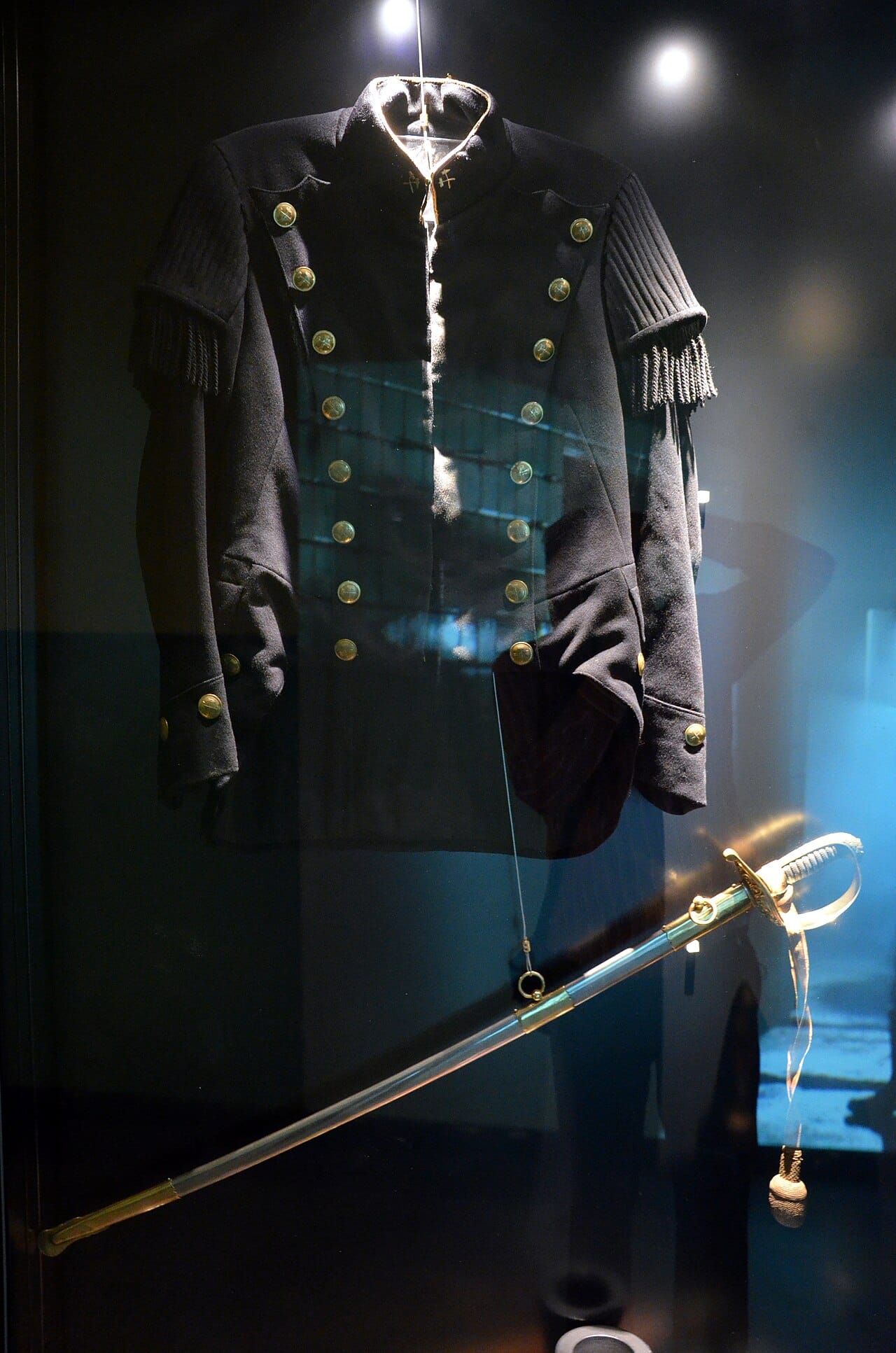
The Bergkittel is a knee-length black coat, close-fitting, fastened high, with a stand collar and buttons in two or three rows down the front. It is not a working garment and was never pretending to be one. It is the dress of a chartered trade — mining in Saxony and Silesia was administered like a guild, with ranks, examinations and a court — and the coat says so.
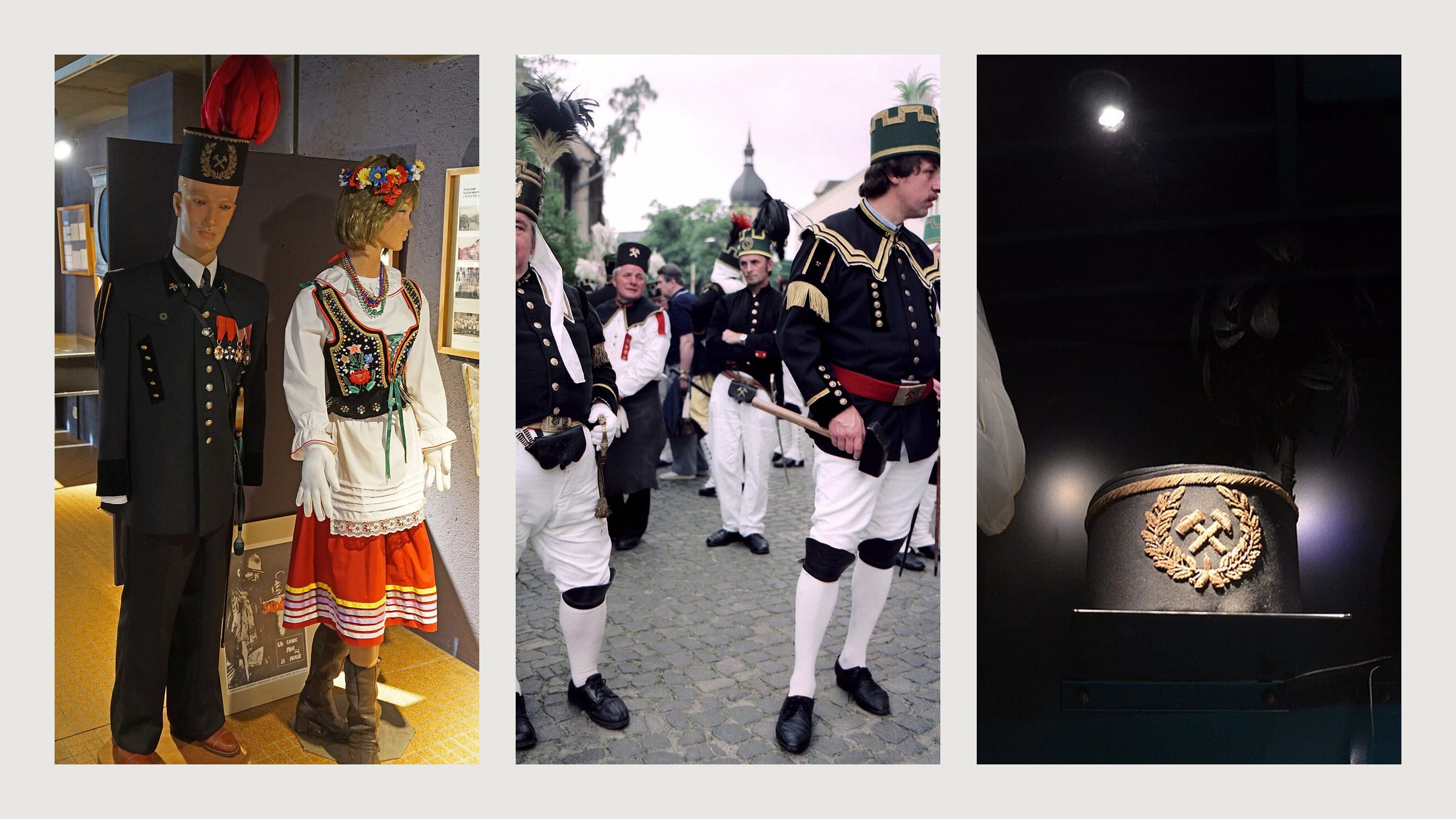
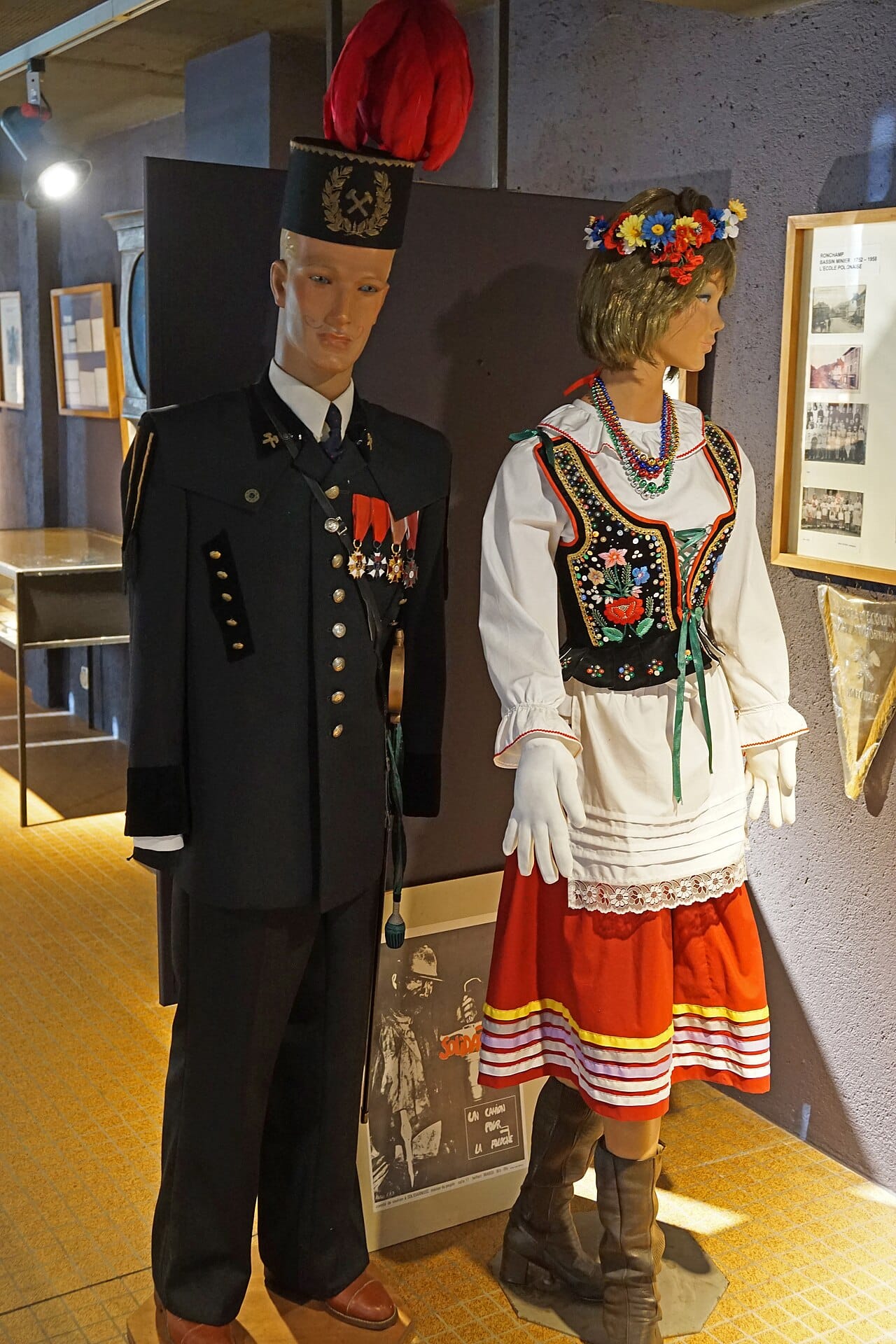
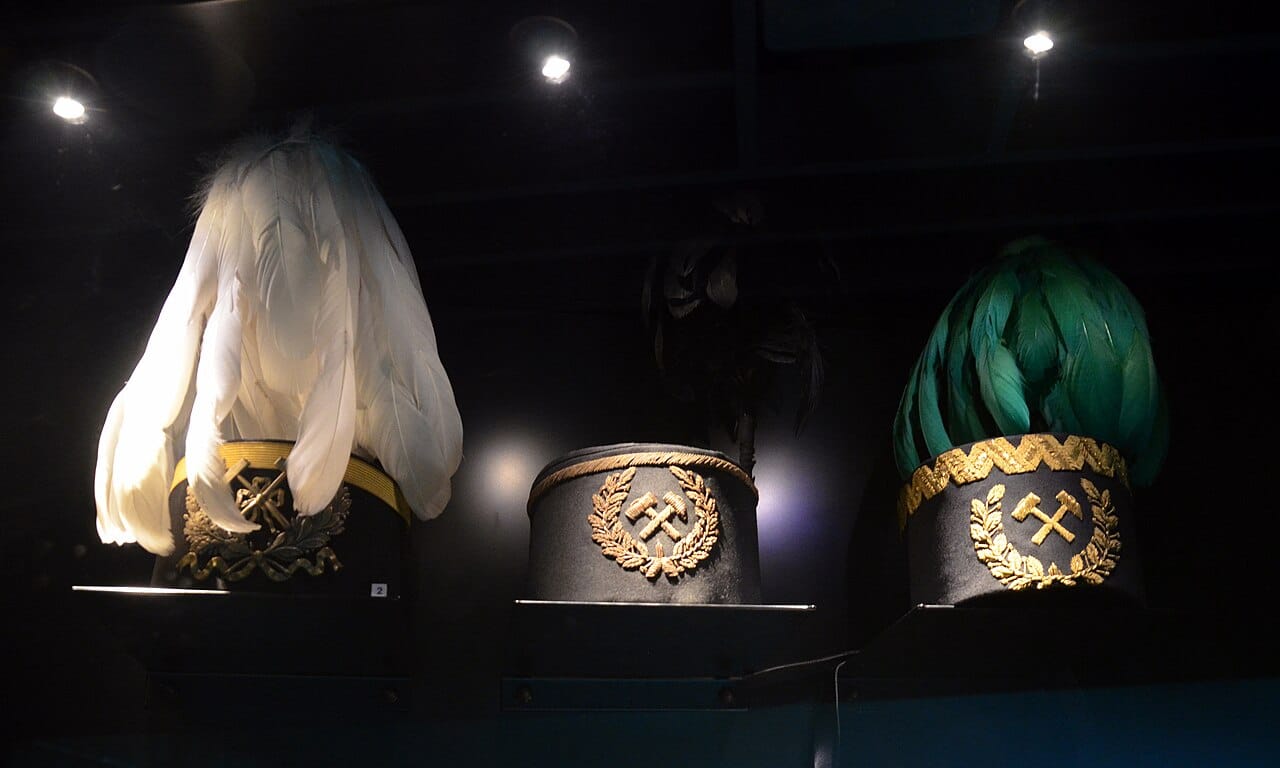
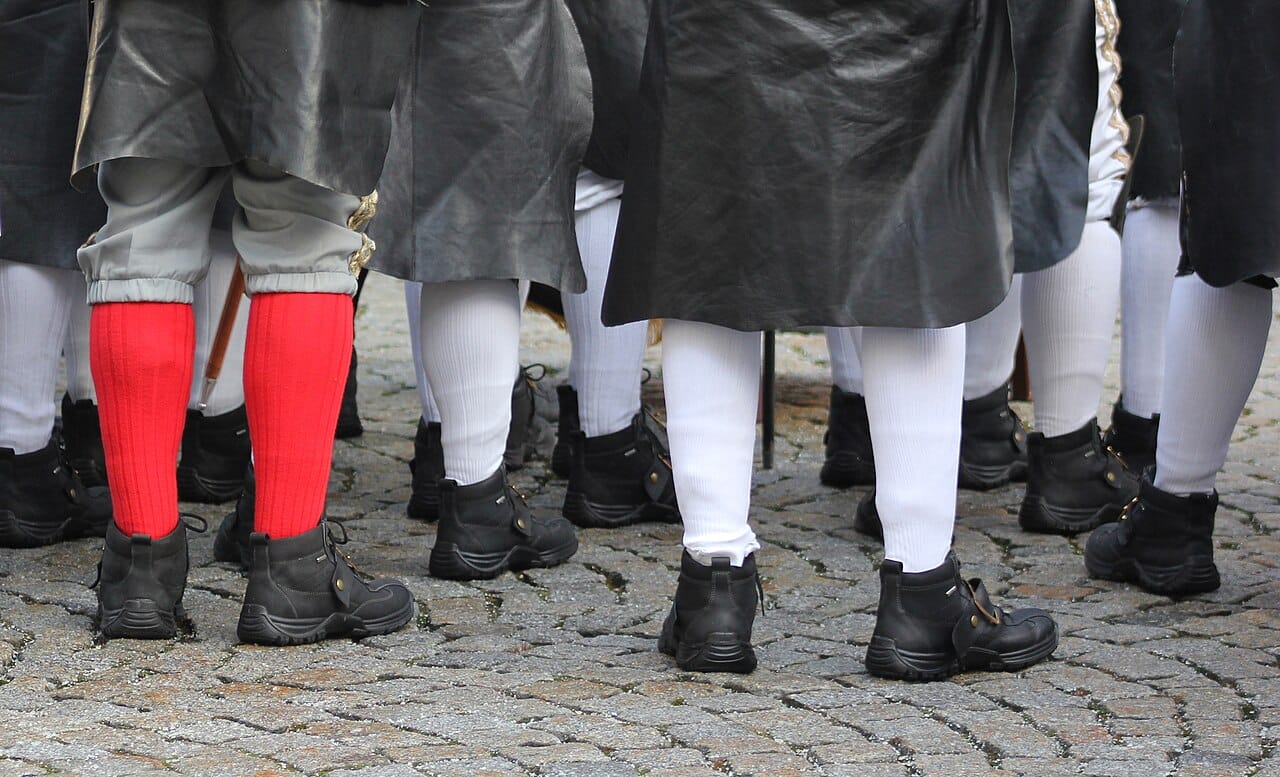
A miner's ceremonial coat on a museum figure, beside a woman's regional costume. Displayed as folk dress, which is how it survives. Nobody accessions pit clothes; a parade coat is kept because it was somebody's good coat.Wikimedia Commons · 50923666 · 2016-05-21 18:02:52 · A.BourgeoisP · CC BY-SA 4.0A tunic in a Silesian museum case. Close enough to read the construction: a stand collar, a double row of buttons, and the shoulder cut narrow so the sleeve sits high and formal.Wikimedia Commons · 44205181 · 2015-07-30 14:28:40 · Silar · CC BY-SA 4.0Shakos in the same case, labelled as Schachthüte. The plume is the rank. Colour and material vary by grade, and the cap is the part of the outfit a bystander reads first.Wikimedia Commons · 44186471 · 2015-07-30 14:28:21 · Silar · CC BY-SA 4.0A row of legs at a parade: white stockings, red stockings, black shoes. The clearest plate in the set. Leg-wear is coded, so a rank the coat does not distinguish is legible from twenty feet away at knee height.Wikimedia Commons · 37951130 · 2014-12-21 14:33:43 · Kora27 · CC BY-SA 4.0
The Apron Worn Backwards
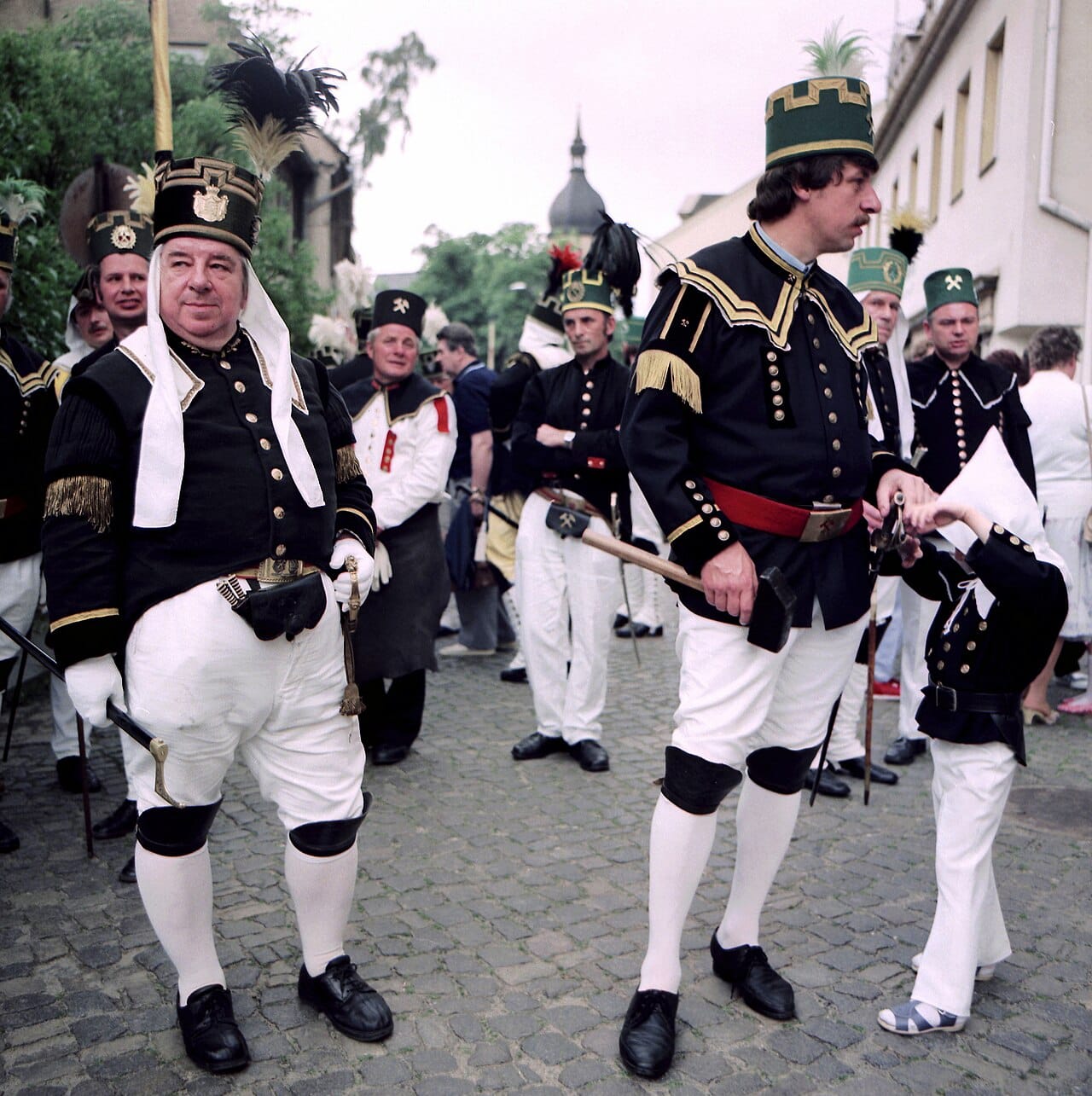
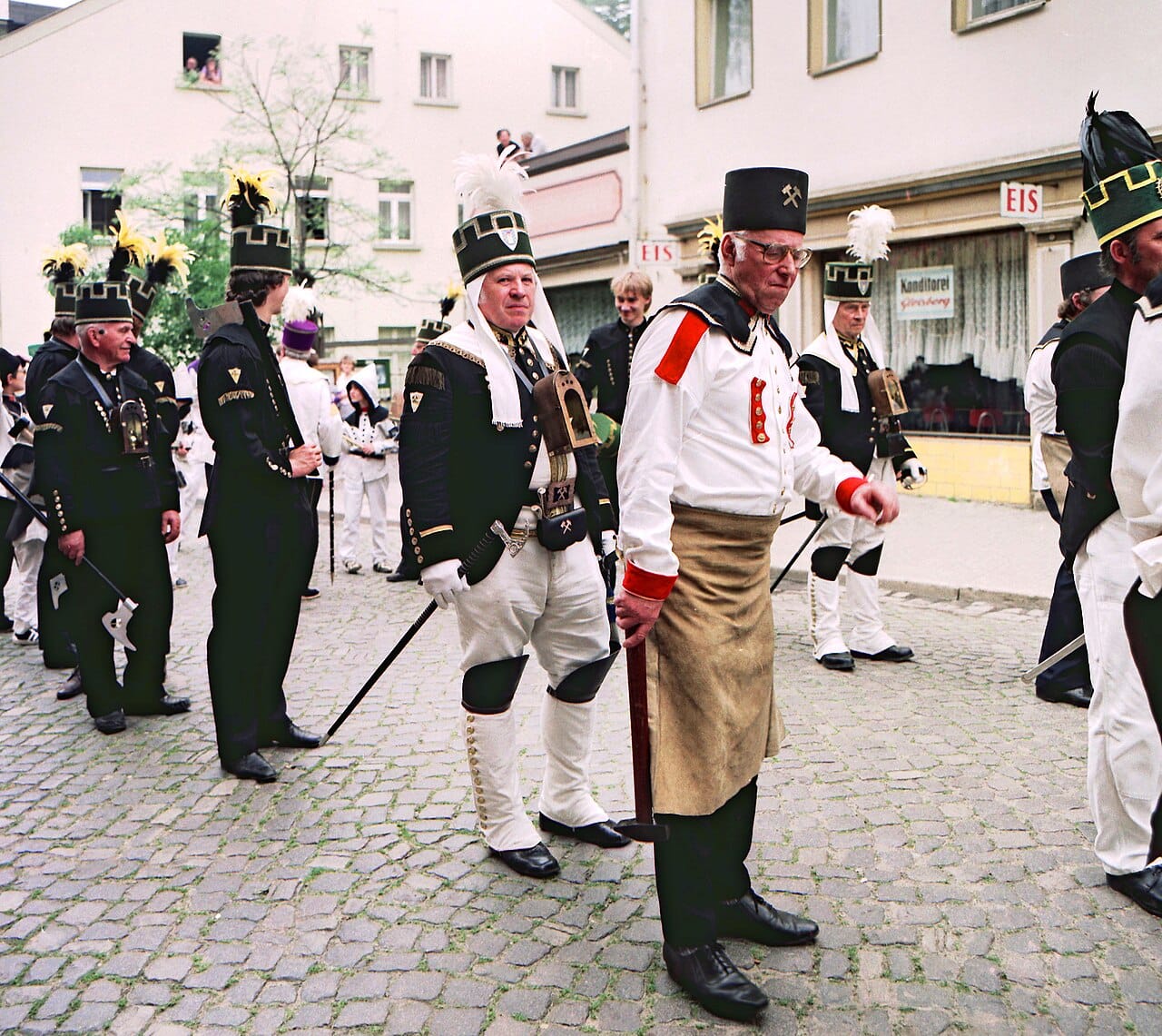
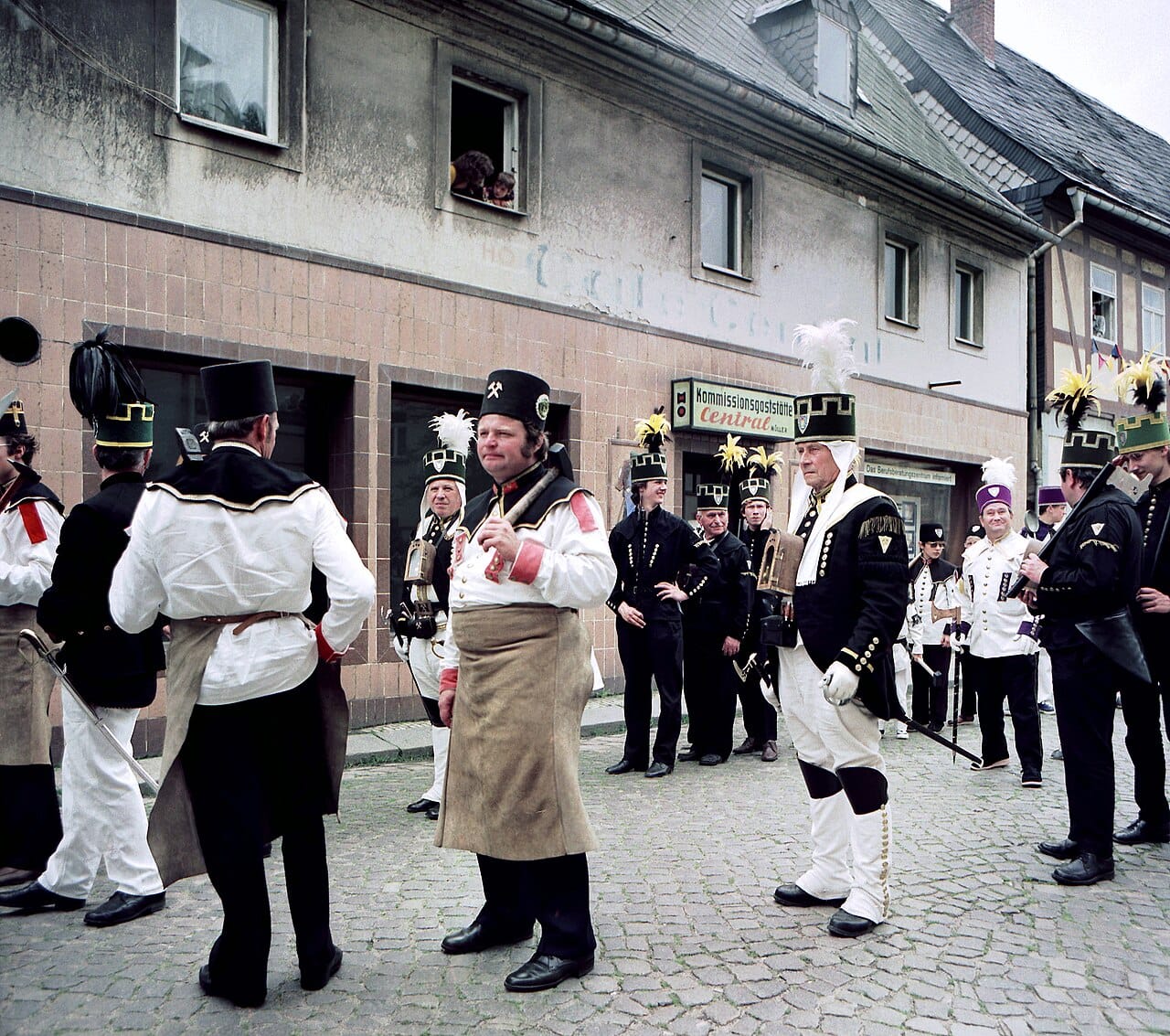
The oddest element is a stiff leather apron worn behind rather than in front. Underground it was genuinely useful: a miner sat on it to slide down a shaft ladder or a chute, and it took the wear that would otherwise have taken his trousers and his skin.
On the parade coat it is worn over white breeches, where it can protect nothing. A working object turned into a badge, which is the same move the masonic apron makes, arrived at independently.
A miner in black tunic and white breeches, the leather apron behind, at a 1987 anniversary parade. The whole assembly on one man. Note the breeches: white, on a person representing an occupation defined by dirt.Wikimedia Commons · 56884418 · 1987-06-28 · Jörg Blobelt · CC BY-SA 4.0A group in the same dress, aprons visible. Worn at a uniform height and angle across the group, which is what makes it read as regalia rather than as equipment.Wikimedia Commons · 56884426 · 1987-06-28 · Jörg Blobelt · CC BY-SA 4.0The same parade from behind. The only angle from which the apron makes sense as an object, and the angle a spectator standing on a kerb actually gets.Wikimedia Commons · 56884427 · 1987-06-28 · Jörg Blobelt · CC BY-SA 4.0
A miner sat on the apron to slide down a shaft. On the parade coat it is worn over white breeches, where it can protect nothing at all.
Still Walking
The mines are largely gone and the parades are not. They are held on the feast of Saint Barbara in December, on town anniversaries, and at church services for the trade, and the coats are worn by people who have never been underground.
That is not unusual — most ceremonial dress outlives its function. What is unusual is which half survived. The clothes these men actually worked in have left almost no trace, and the clothes they wore for one afternoon a year are in museums.
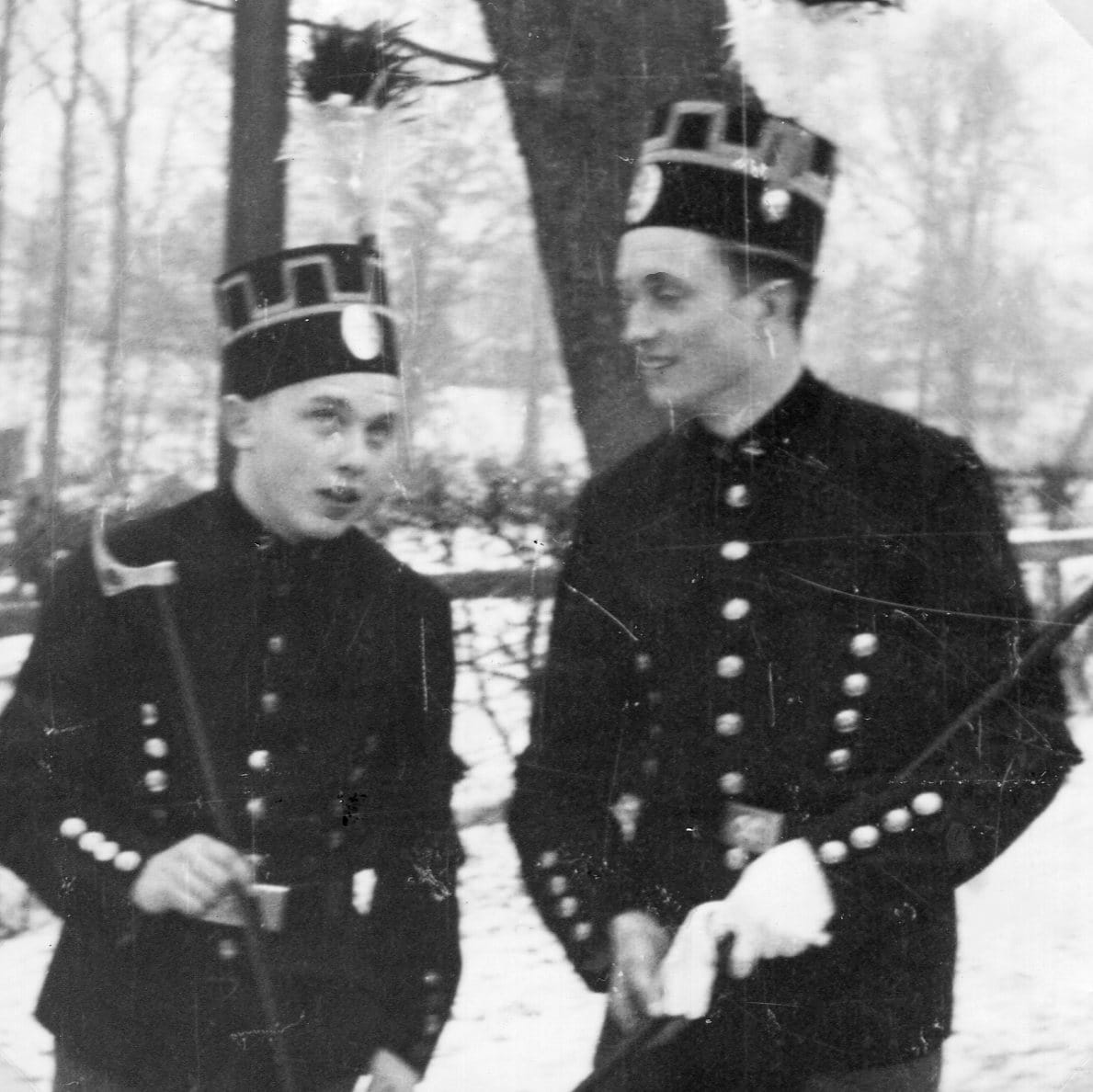
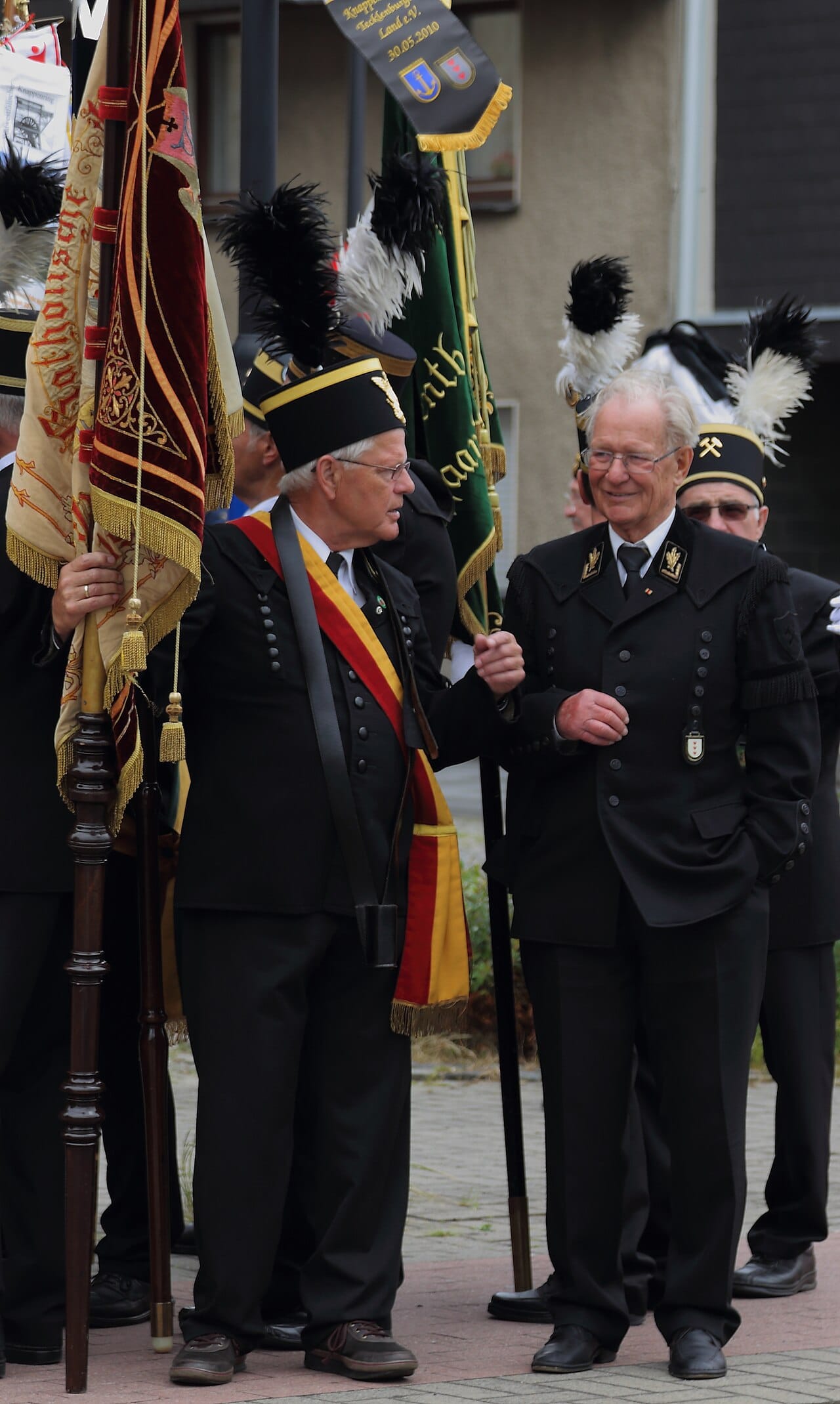
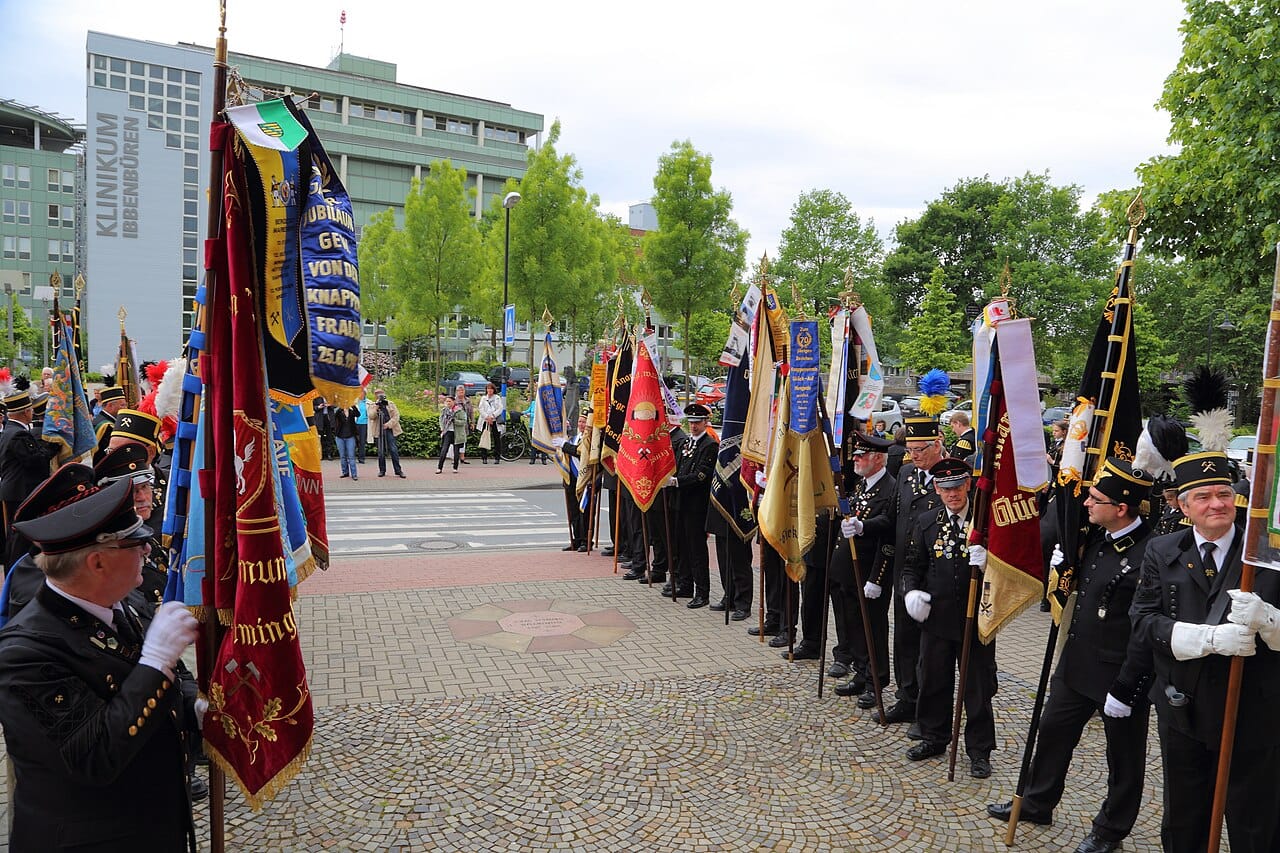
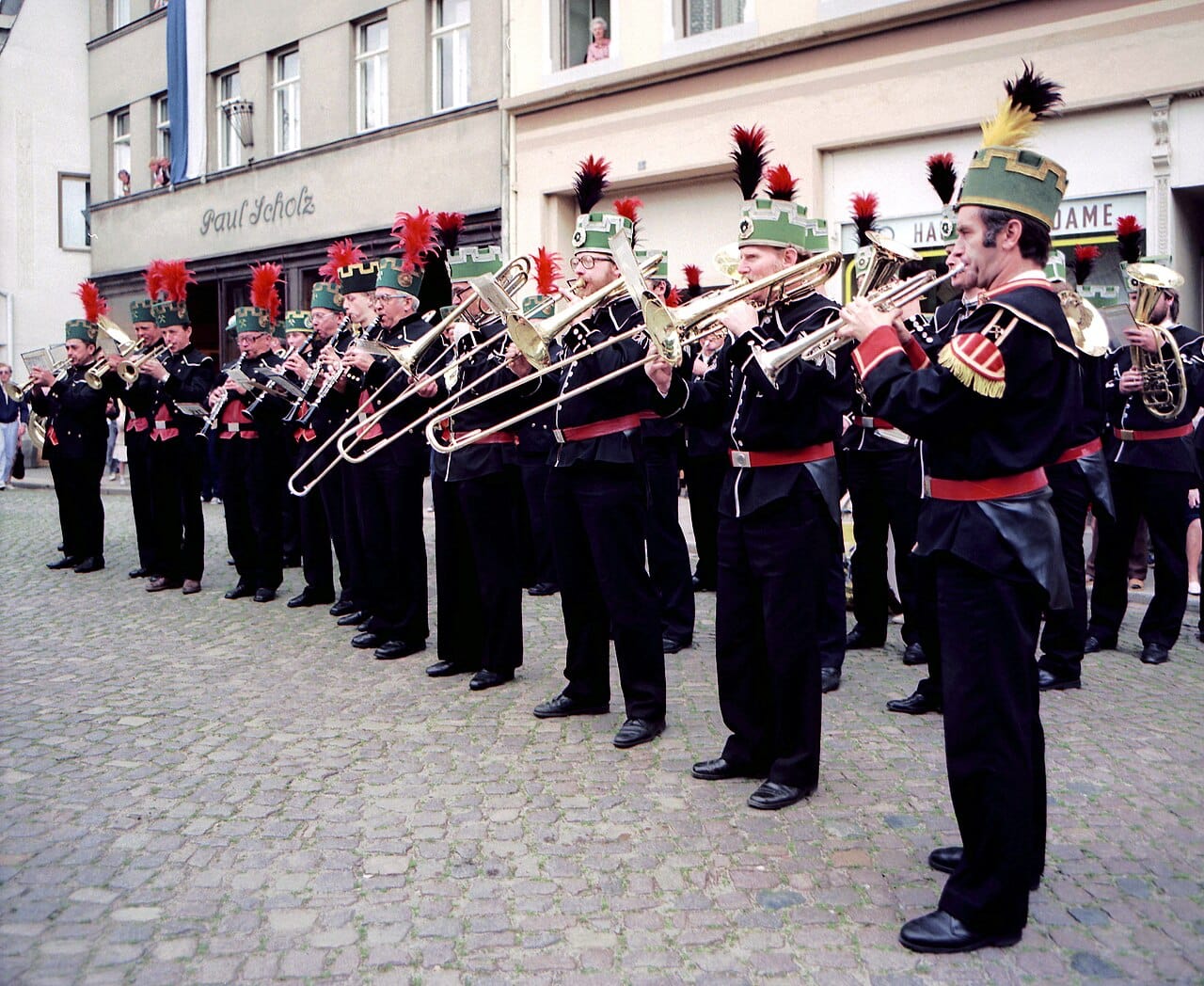
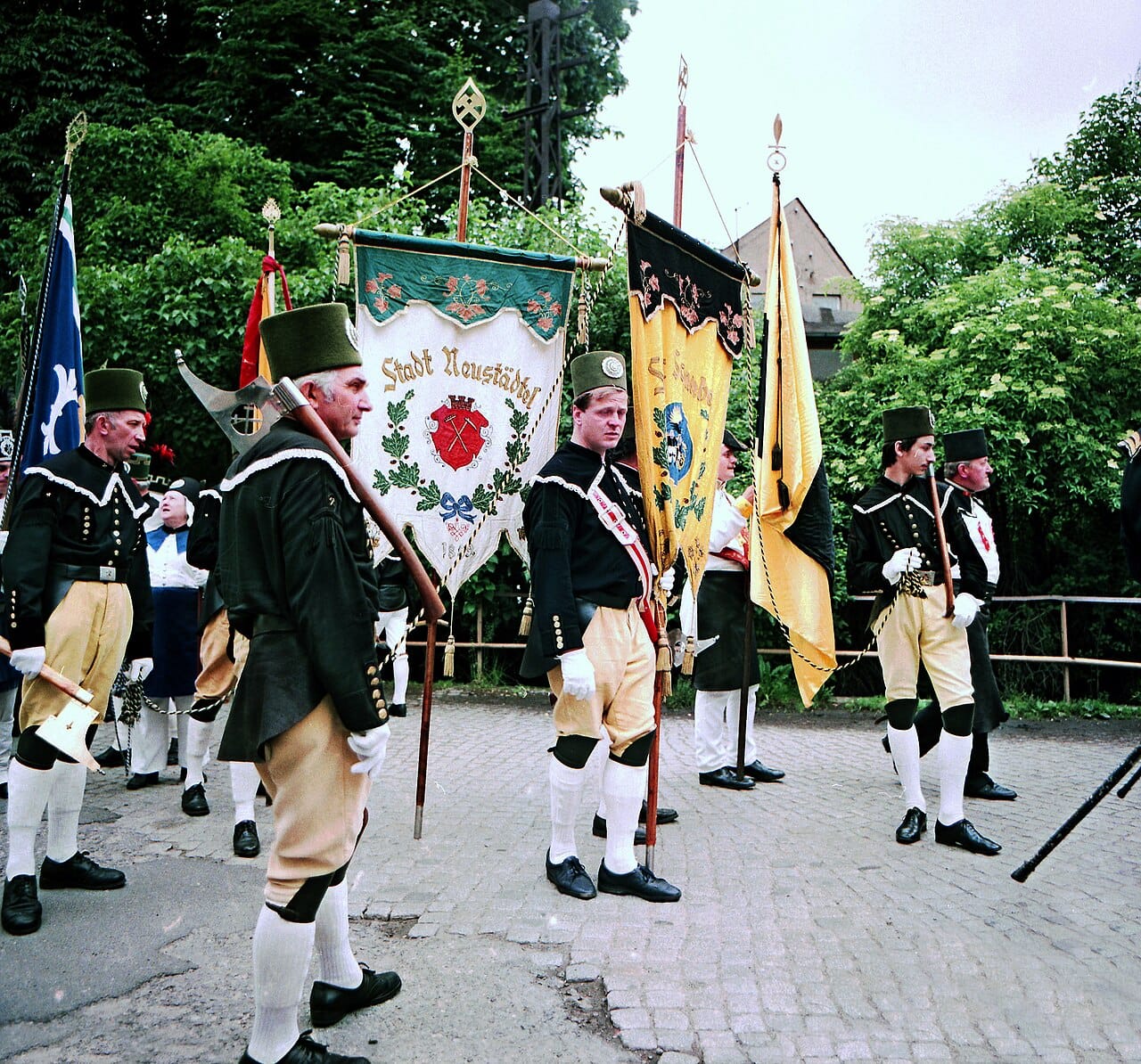
Two miners in ceremonial dress at a Barbarafest, 1950. Five years after the war, in a wrecked economy, the coats came out. The cost of keeping one is the measure of what it was for.Wikimedia Commons · 42500859 · 1950-12-04 · Haubi{Gerhard Haubold · CC BY-SA 4.0Two men in tunic and plumed shako at a mining service, 2015. White gloves, and a collar fastened to the throat in May. Comfort has never been a consideration in this garment.Wikimedia Commons · 41021842 · Taken on 31 May 2015 · J.-H. Janßen · CC BY-SA 3.0A parade with guild banners. The banners are the giveaway. This is a procession of a chartered trade, and the coat is its livery.Wikimedia Commons · 41021820 · Taken on 31 May 2015 · J.-H. Janßen · CC BY-SA 3.0A miners' band in black with red facings. Once a trade has a uniform it acquires a band, and the band gets a variant of the uniform. The same sequence as a regiment.Wikimedia Commons · 56884414 · 1987-06-28 · Jörg Blobelt · CC BY-SA 4.0A group in green and black behind a guild banner. Green rather than black: forestry, marching with the miners. The colour separates two trades that shared a landscape and a court.Wikimedia Commons · 56884420 · 1987-06-28 · Jörg Blobelt · CC BY-SA 4.0
Hedda Maartens — MA in fashion design, then eleven years in the industry designing for people who had no say in what they wore. Now writes about prescribed dress: how a garment was made to work, and what it was made to make a person into.
Member discussion
Back
Nametape
Free
$0
Every Research post and every Essay, free to read.
All Research posts — one uniform at a time, in archive photographs







.jpg?ref=blog.neutrino.website)





Member discussion