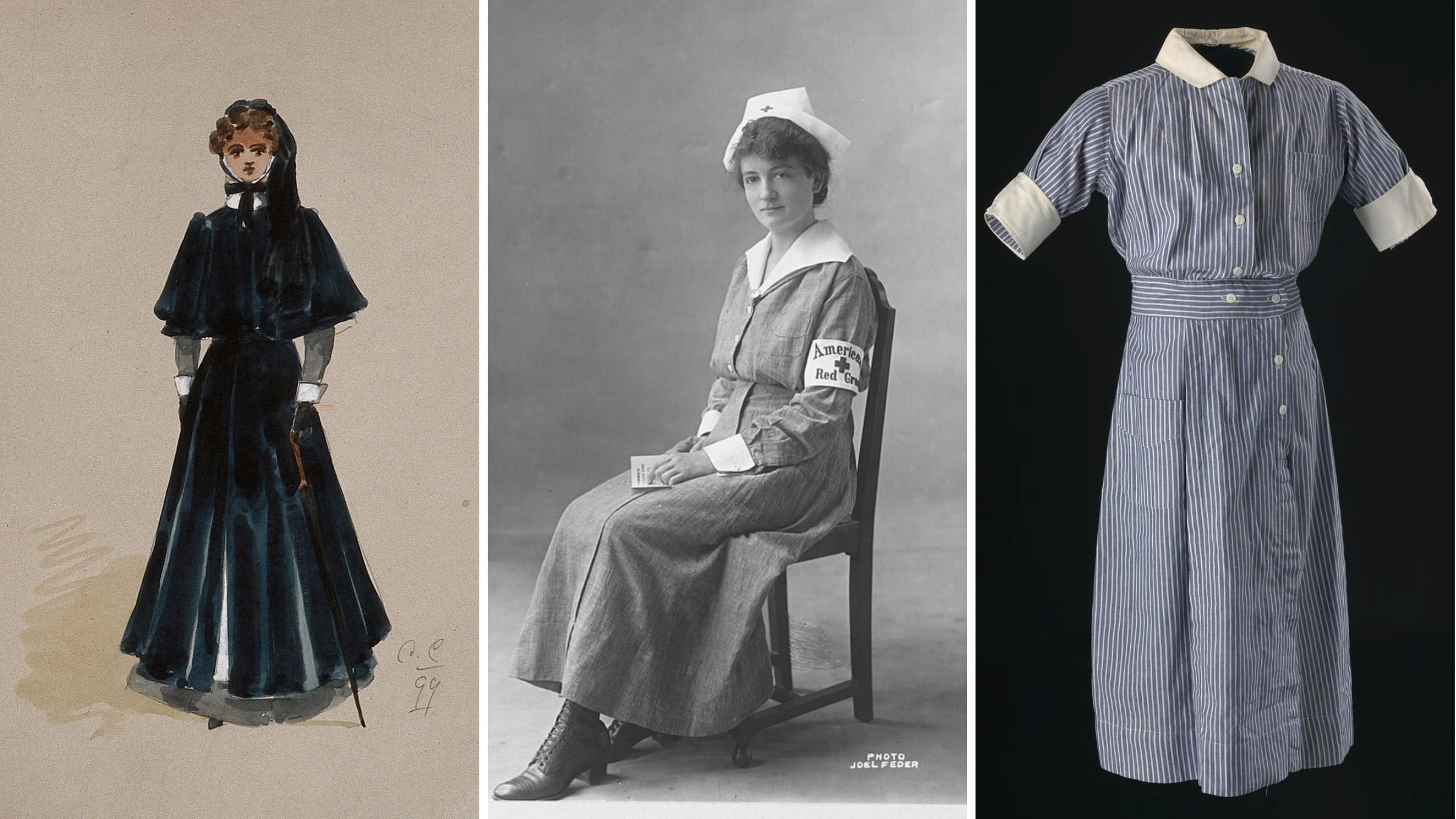
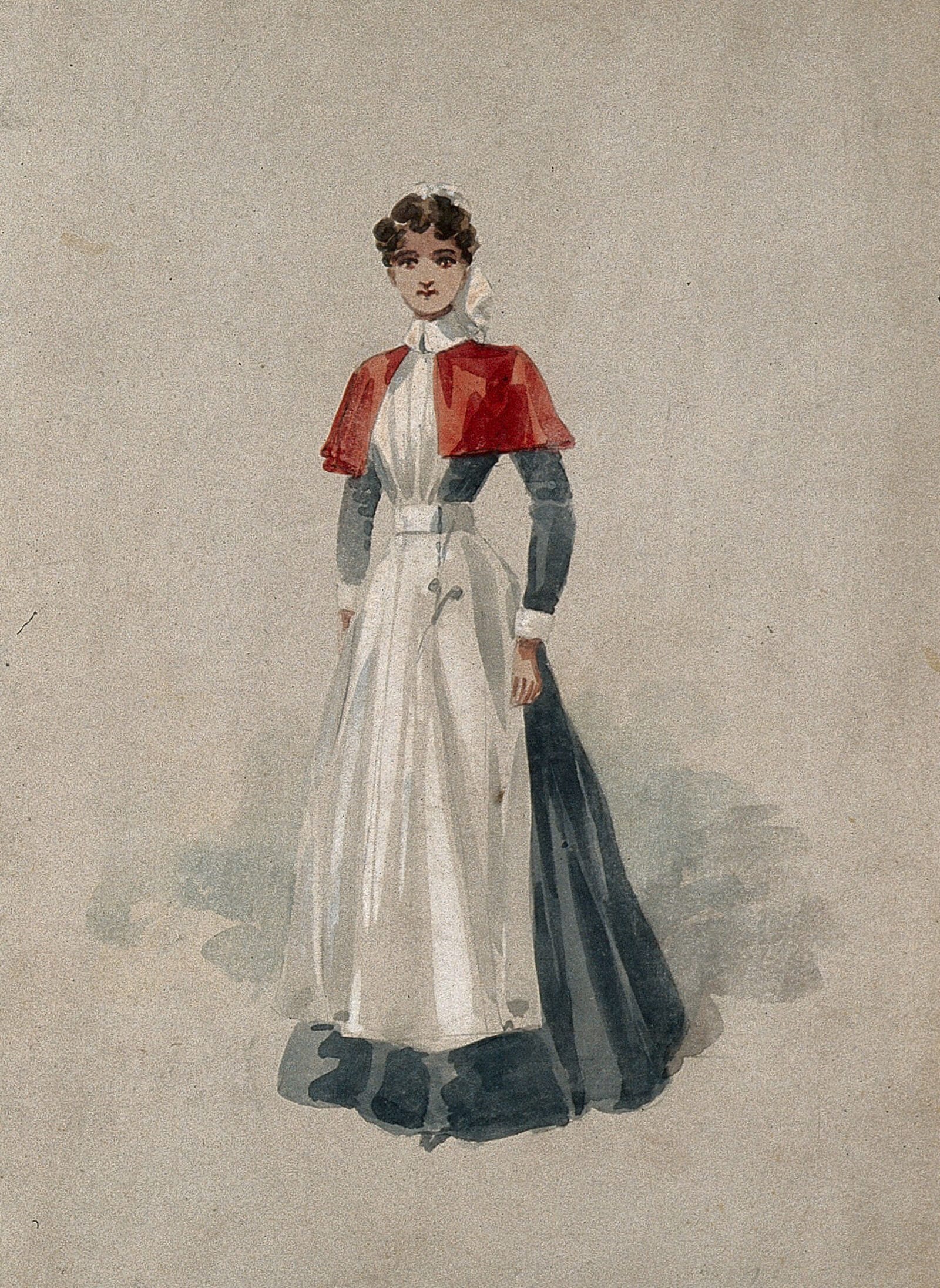
Lined in a colour that identified the school, worn outdoors over a uniform designed for indoors. The cape is the only part of Victorian nursing dress that survived into living memory.
The cape is the only part of Victorian nursing dress most people can still picture. The apron went, the cap went, the stiff collar went; the cape survived into living memory and then into shorthand — put one on a figure in a photograph and the profession is legible without a caption.
It is worth asking why that particular garment lasted, because on the face of it the cape is the least practical thing a nurse was issued. It is outerwear, and the work was indoors. It has no sleeves, no fastening below the throat, and no pockets. It is a semicircle of heavy wool that has to be held closed or thrown back, and doing either occupies a hand.
What it was for
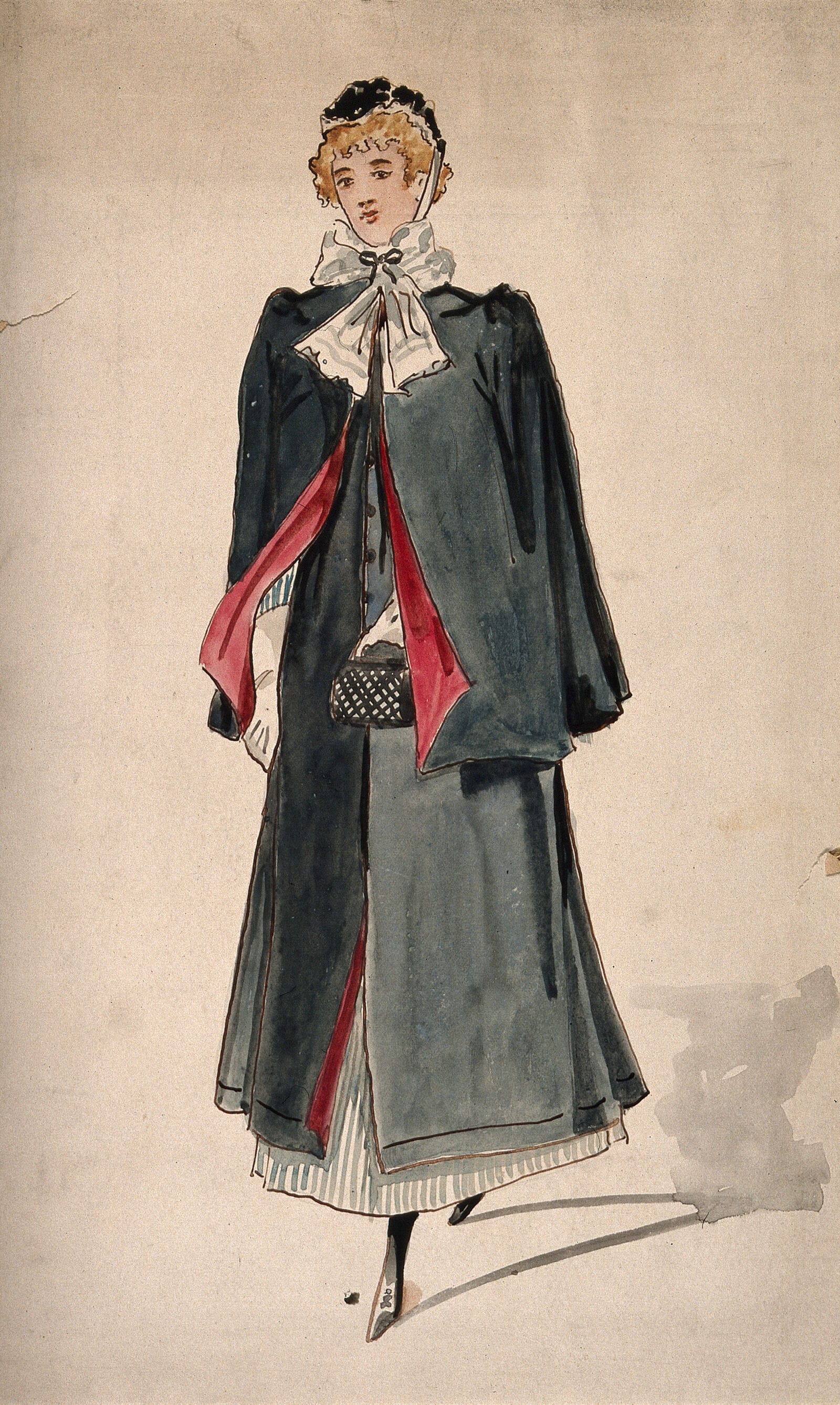
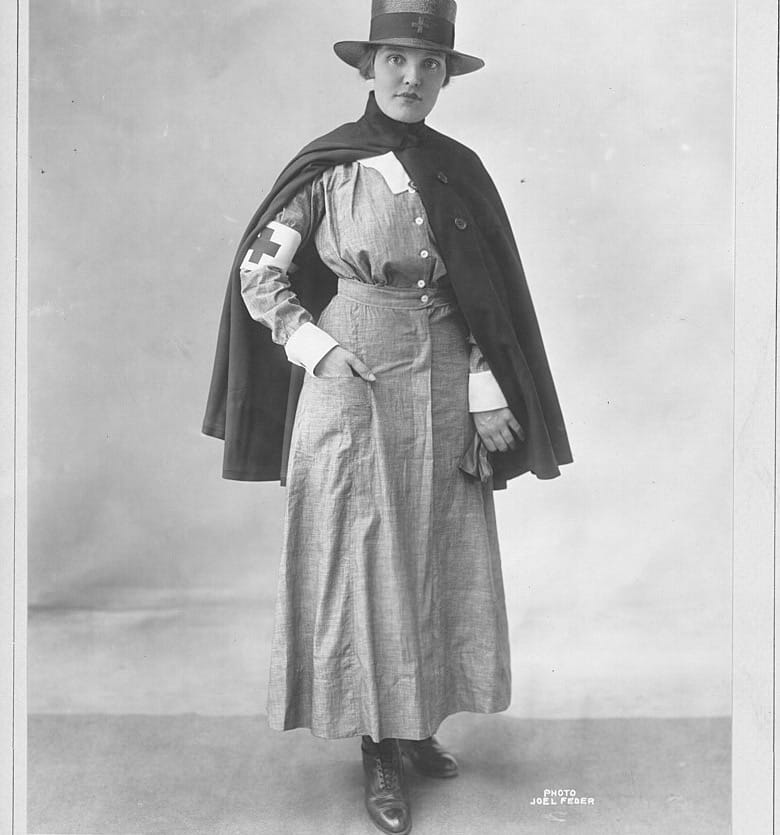
The answer is that the cape was not for the ward. It was for everything around the ward: the walk between buildings on a hospital site, the journey to a patient's house, the hour standing in a doorway waiting to be let in. District nursing in particular was outdoor work punctuated by indoor work, and the cape was the part of the uniform that met the weather.
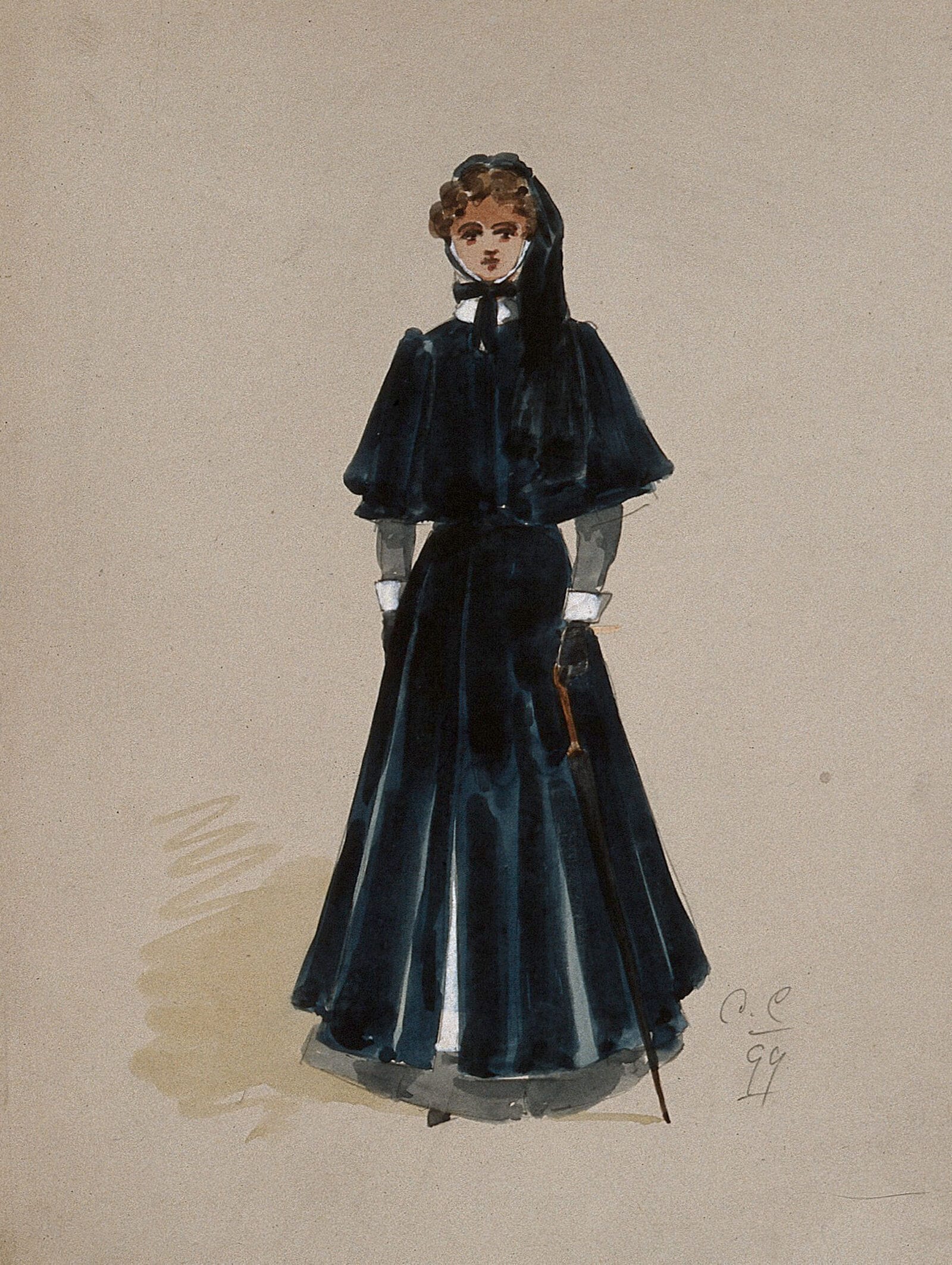
Which makes the lining the interesting decision. Almost every cape was lined in a colour that identified the training school the wearer had come from — scarlet, or a specific blue, or a check. That colour is invisible when the cape hangs closed. It appears only when the wearer moves: reaching, turning, throwing the cape back to free an arm.
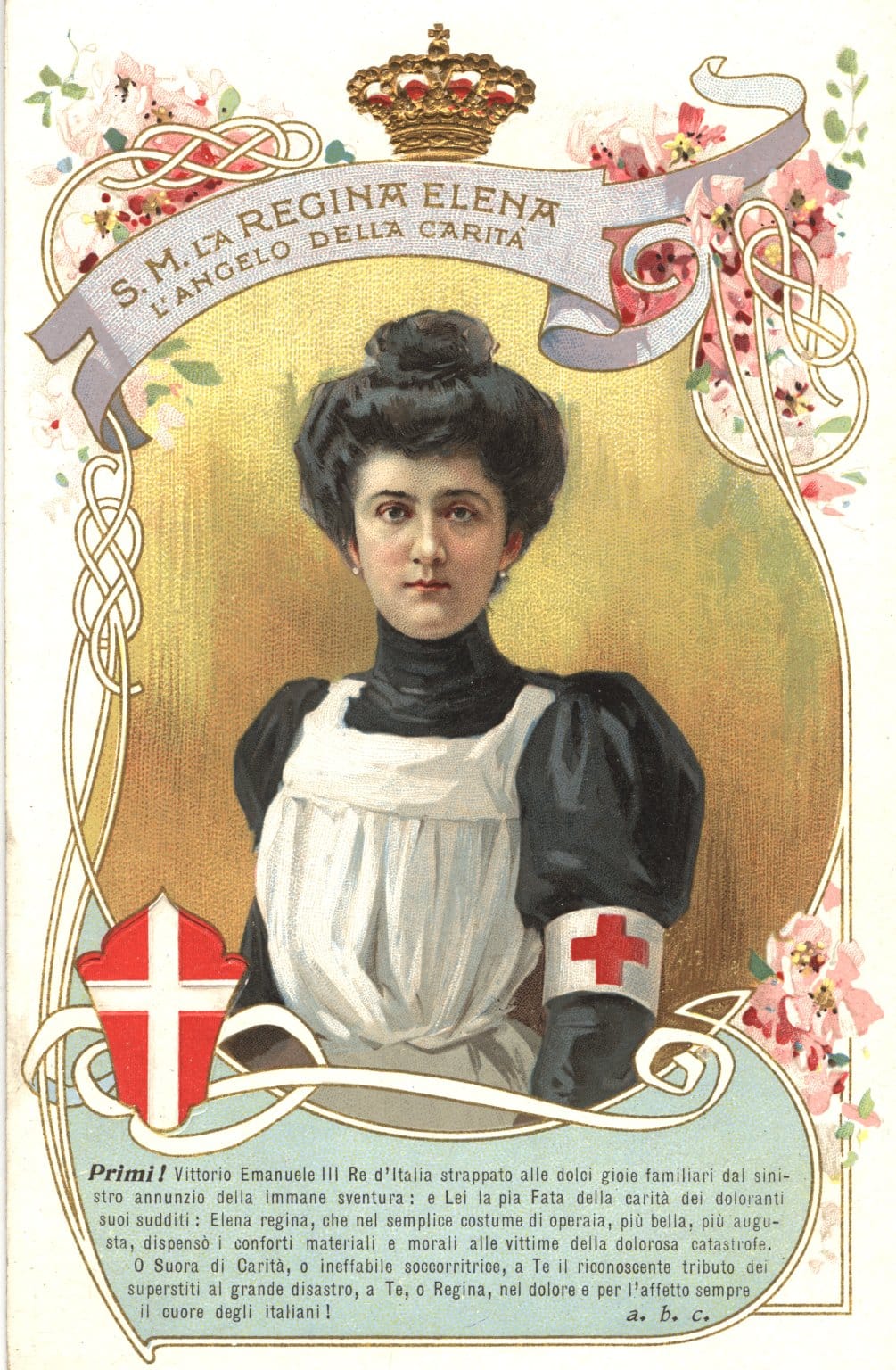
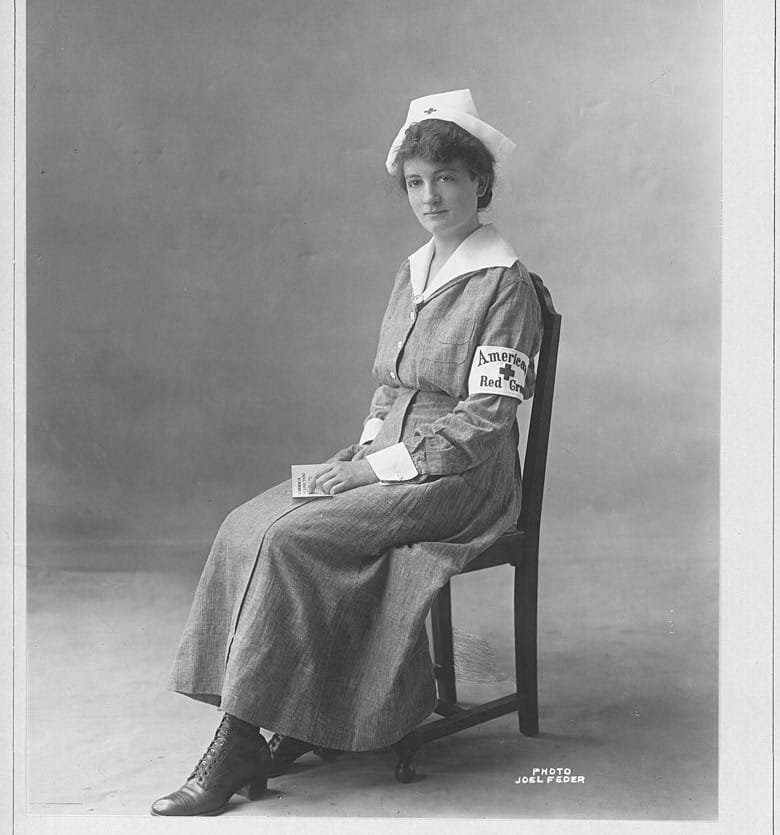
An army hospital nurse in outdoor uniform, painted from the side, the cape falling from the shoulder to below the hip. The whole garment in one image: no sleeves, no waist, no fastening below the throat. Everything a nurse had to do with her hands, she did around this.Wellcome Collection · vm54z3e3 · date not recorded · creator not recorded · Public Domain MarkA district nurse in outdoor uniform, carrying her bag. The bag is the argument. District work meant walking between houses carrying equipment, and the cape is the only part of the uniform designed for that half of the job.Wellcome Collection · xqzfv5x7 · date not recorded · creator not recorded · Public Domain MarkAmerican Red Cross instructional photograph showing what a nurse wore for district work. Issued as guidance rather than as a record, which is why it shows the outdoor dress as a complete system instead of as a portrait.U.S. National Archives and Records Administration · 62836936 · 1917 – 1918 · creator not recorded · Public domain · cropped and rotated from the original sheetQueen Elena of Italy photographed in nurse's uniform between 1914 and 1918. A queen in the same cape as a probationer. The garment was legible enough by 1914 to be worn as a statement, which is the clearest evidence of how completely it had come to stand for the work.Wikimedia Commons · 41005598 · between 1914 and 1918date QS:P,+1914-00-00T00:00:00Z/8,P1319,+1914-00-00T00:00:00Z/9,P1326,+1918-00-00T00:00:00Z/9 · creator not recorded · Public domain
A badge you have to move to display is a strange kind of badge. The lining announced where a nurse had trained, and it announced it only to whoever was standing there when she reached for something.
What it was worn over
The uniform underneath was designed for the opposite conditions, and it shows. Long sleeves that could be rolled and pinned, an apron that could be changed without changing the dress, a collar stiff enough to hold its shape through a shift. Every element assumes warmth, proximity and repeated laundering.
Set the two halves side by side and the cape stops looking impractical. It is not badly designed for the ward; it was never meant to be in the ward. It is the only piece of the outfit that was ever seen by anyone outside the hospital, which is exactly the piece an institution would choose to make identifiable.
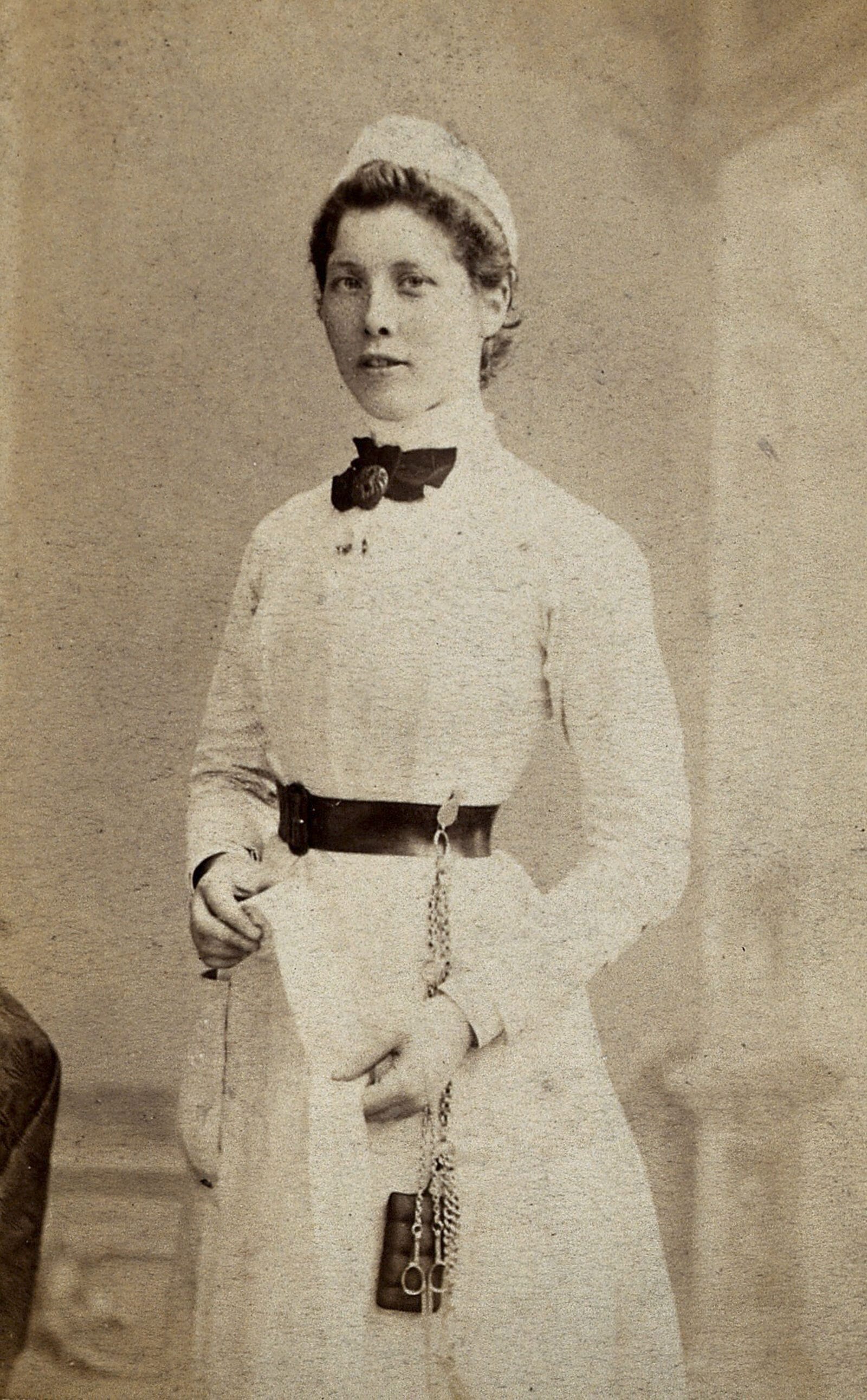
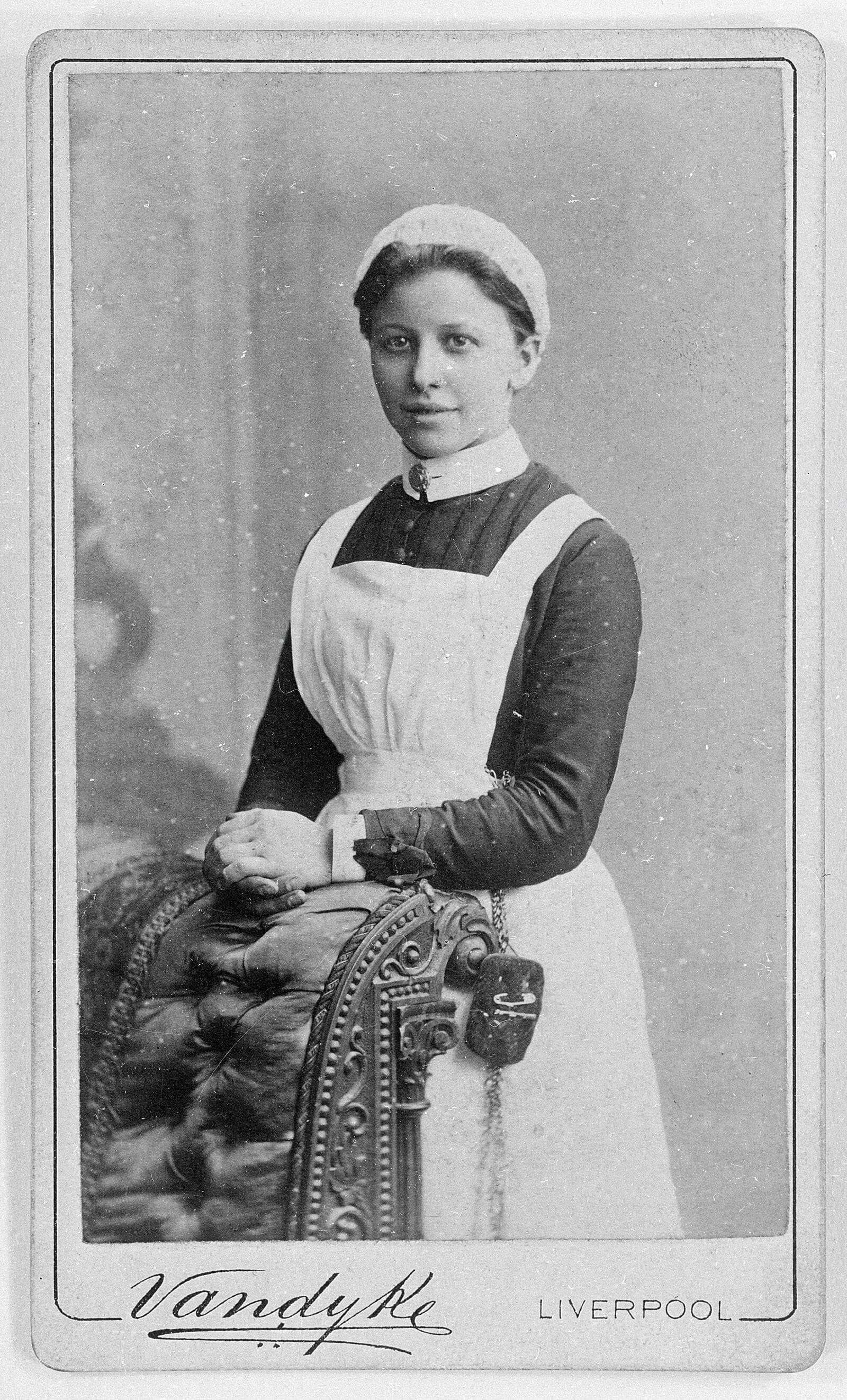
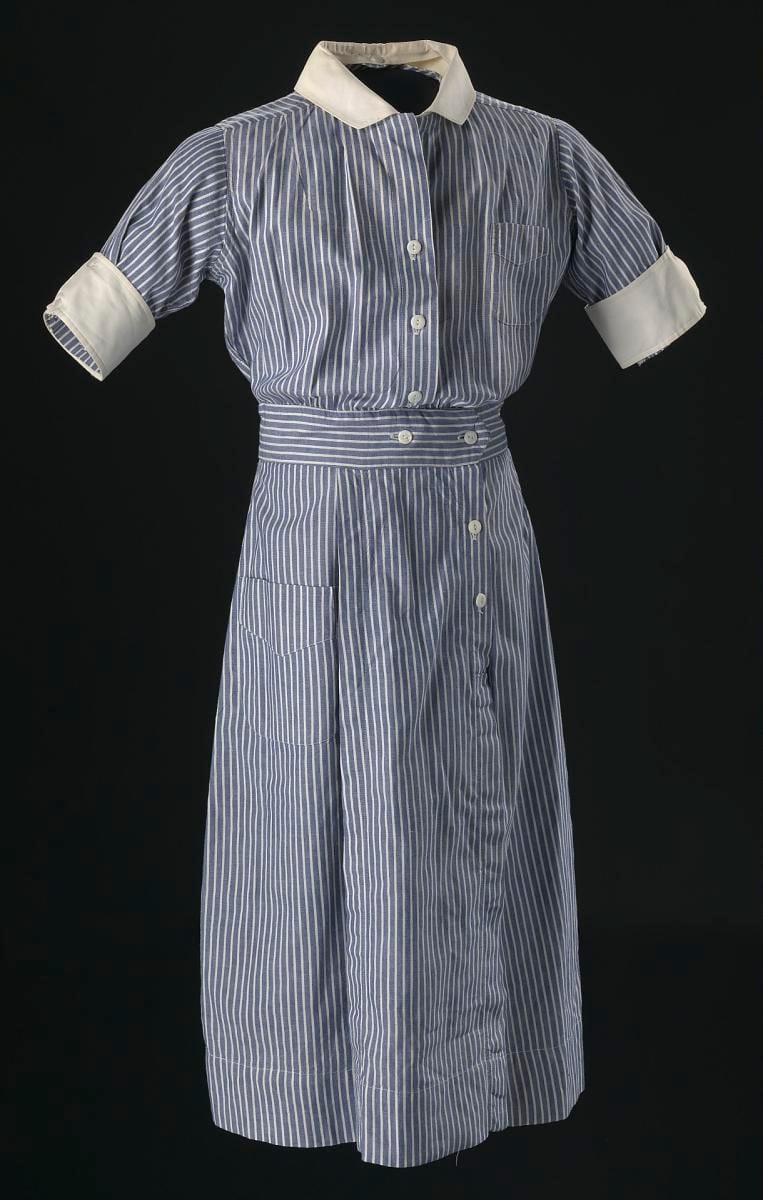
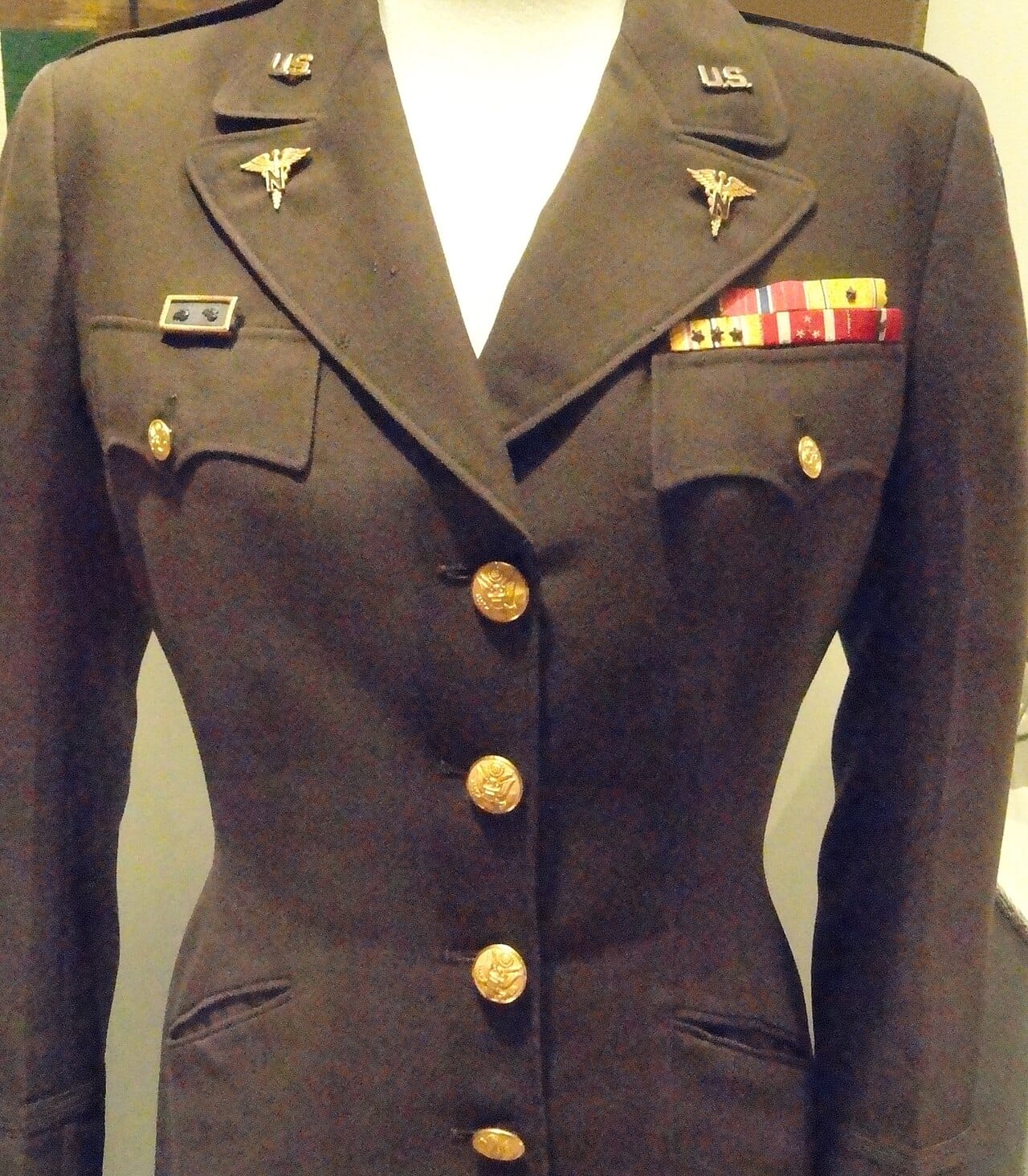
An English hospital nurse in full indoor uniform: apron, sleeves, collar, cap. The other half of the system. Nothing here would survive an hour outdoors in February, and nothing here needs to.Wellcome Collection · j3crvvys · date not recorded · creator not recorded · Public Domain MarkA nurse photographed in a studio, c. 1860–1880, standing for a full-length portrait in uniform. Studio photography flattens the apron and the cap into a silhouette, and that silhouette is what the public actually learned to recognise.Wellcome Collection · ss7ahscw · date not recorded · creator not recorded · Public Domain MarkA nurse posed against ornate studio furniture, in uniform. The furniture is the photographer's, not the hospital's. Uniform portraits were commissioned by the wearers, which tells you the garment was worth being photographed in.Wellcome Collection · j7nkm2ft · date not recorded · creator not recorded · Attribution 4.0 International (CC BY 4.0)American Red Cross instructional photograph of the indoor nurses' uniform. The same series as the district-work plate above, which makes the pair unusually useful: one institution, one moment, both halves of the wardrobe.U.S. National Archives and Records Administration · 62654106 · 1917 – 1918 · creator not recorded · Public domain · cropped and rotated from the original sheetA nurse's uniform dress worn by Pauline Brown Payne, 1944. A surviving garment rather than a picture of one, and it is a dress: by the 1940s the apron had been absorbed into the uniform and the separate pieces were going.National Museum of African American History and Culture · NMAAHC-2013_90_2_1_001 · 1944 · Angelica Corporation, American, founded 1904, Pauline Brown Payne, American · CC0US Army Nurse Corps uniform, c. 1945, displayed complete. Military service is where nursing dress acquired rank marking, and where the training-school lining lost its argument — the institution issuing the garment was no longer the one that had trained her.Wikimedia Commons · 16917168 · 2011-10-05 11:30:15 · Daderot · Public domain
The detail that replaced the lining
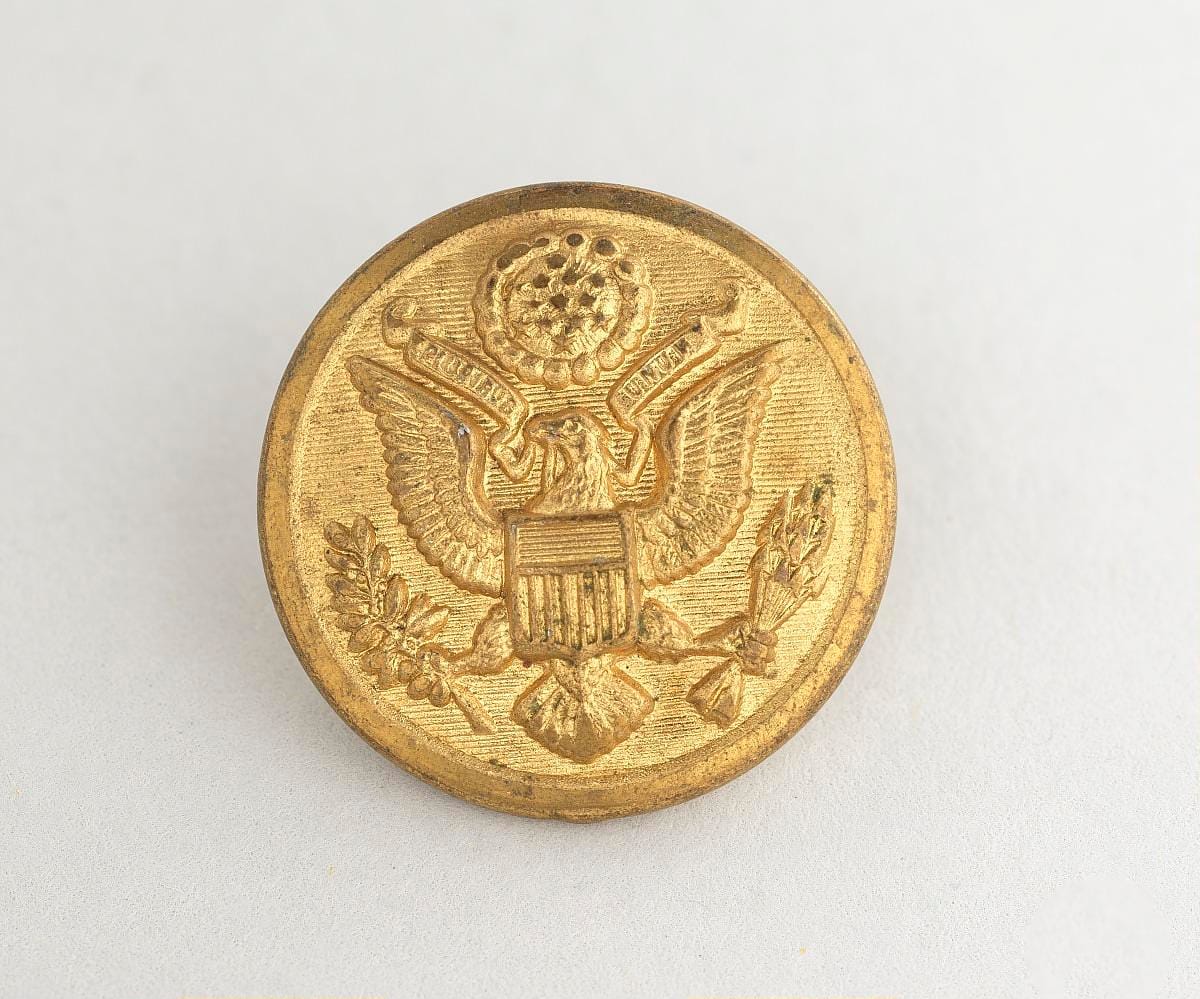
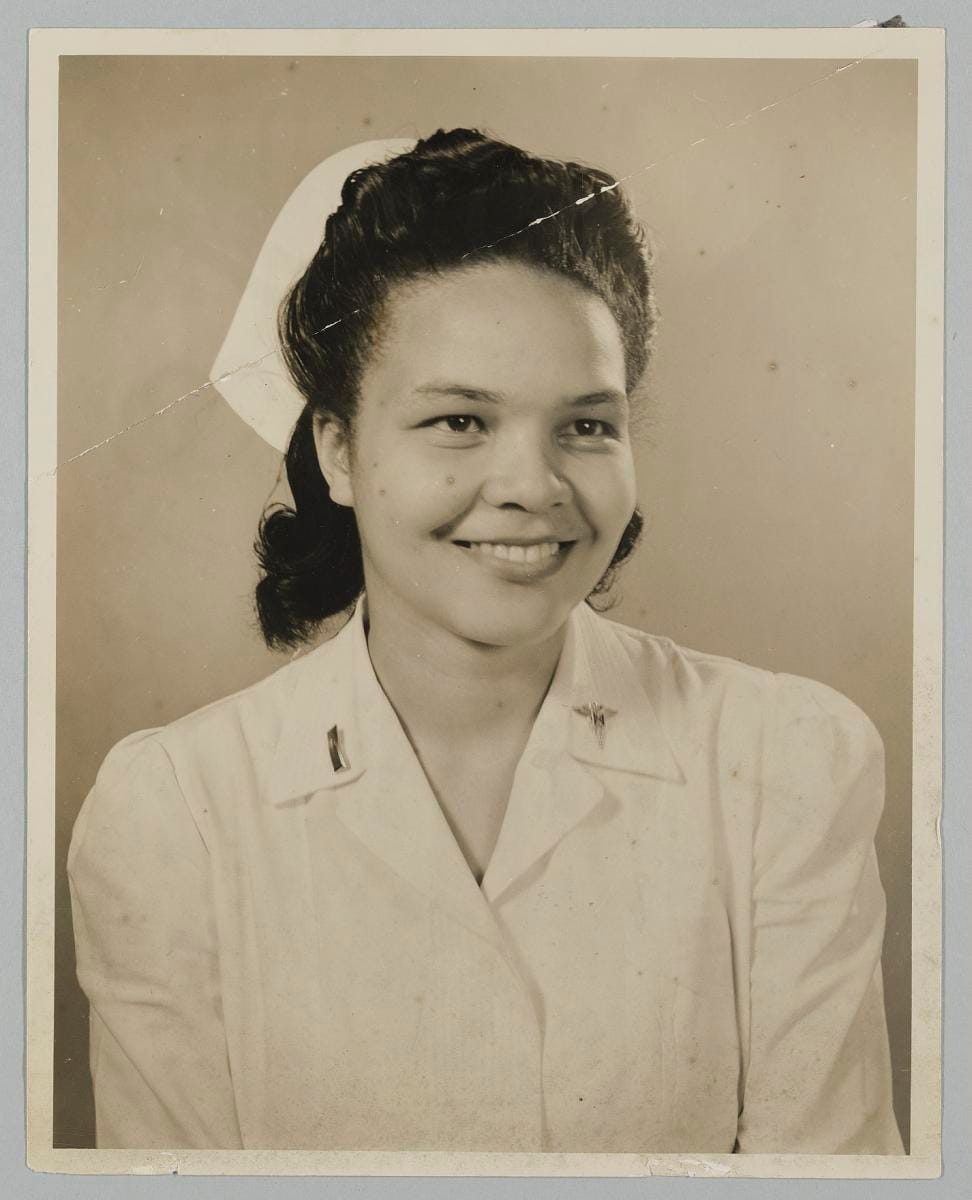
What arrives in place of the coloured lining is metal. Buttons, collar devices, a rank bar: marks that read the same from any angle and in any light, and that do not require the wearer to move to be seen. It is a more efficient system and a much less interesting one, and it is the point at which nursing dress stops being distinct from every other uniform in this archive.
A single button from the Army Nurse Corps uniform of Lt. Louise Lomax, 1943–1953. Legible from any angle, in any light, without the wearer doing anything. That is precisely what the cape lining was not.National Museum of African American History and Culture · NMAAHC-2022_42_4_1_001 · 1943-1953 · Waterbury Button Company, American, founded 1812, United States Army, American, founded 1775, Louise Virginia Lomax, American, 1920 - 2011 · CC0Lt. Louise Lomax photographed in her Army Nurse Corps uniform, 1943–1947. The buttons above, on the person they were issued to. The museum holds both, and holding both is rare enough to be worth saying.National Museum of African American History and Culture · NMAAHC-2022_42_6_001 · 1943-1947 · United States Army Air Corps, American, 1926 - 1947, Louise Virginia Lomax, American, 1920 - 2011 · CC0
Hedda Maartens — MA in fashion design, then eleven years in the industry designing for people who had no say in what they wore. Now writes about prescribed dress: how a garment was made to work, and what it was made to make a person into.
Member discussion
Back
Nametape
Free
$0
Every Research post and every Essay, free to read.
All Research posts — one uniform at a time, in archive photographs
_-_NARA_-_20806958.jpg?ref=blog.neutrino.website)

_-_NARA_-_20806960.jpg?ref=blog.neutrino.website)


Member discussion