Heavy wool, high collar, company buttons. Built for standing on an open platform in February by companies that were, briefly, the largest employers on earth.
The railwayman's coat is heavy in a way that looks like excess and is not. Thick melton, a collar that closes to the throat, a length that reaches below the knee, and a weight that makes it awkward to work in. Every one of those is an answer to the same brief.
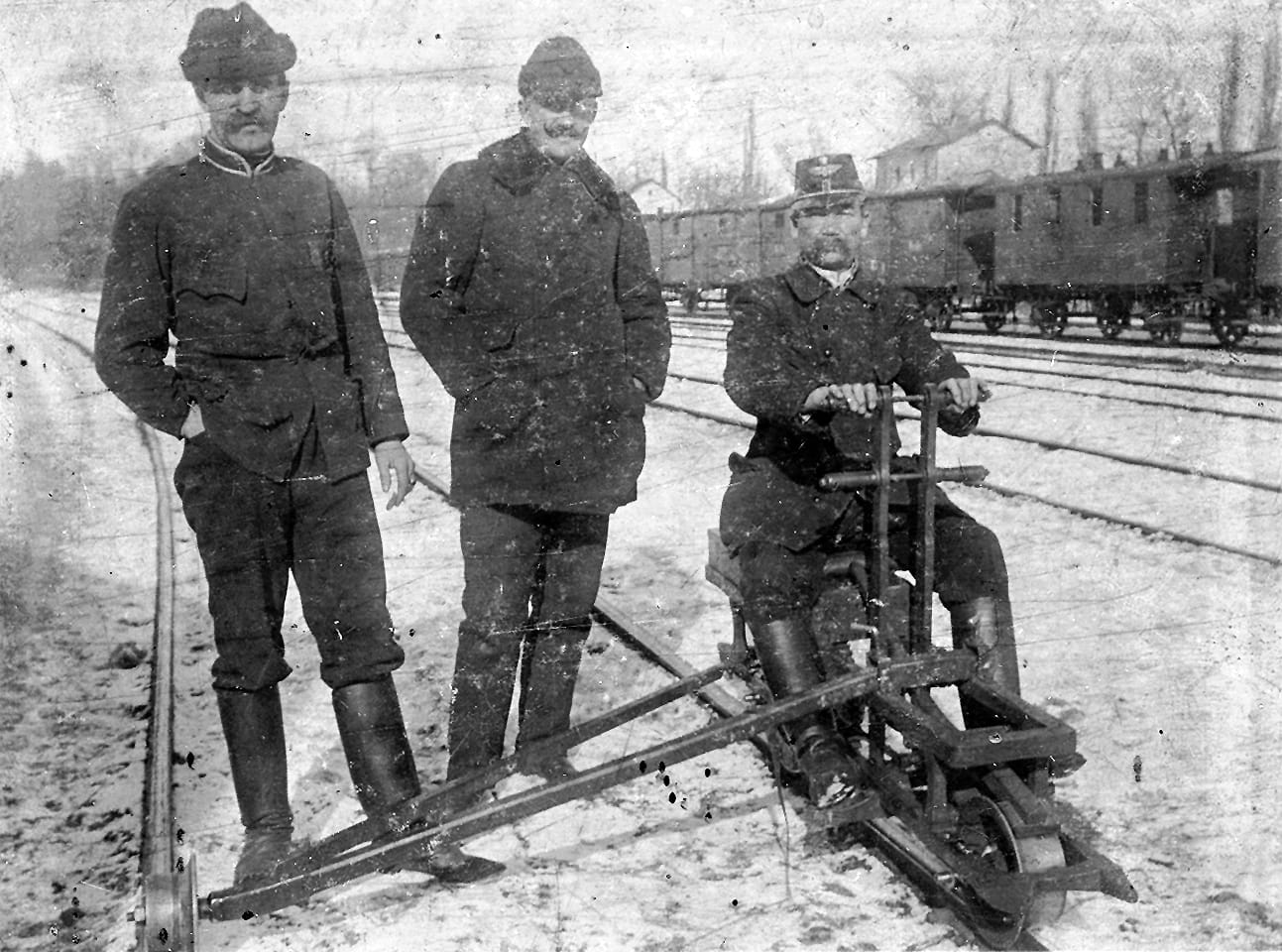
The brief is this: stand outdoors, on a platform or beside a track, for a whole shift, in winter, without moving enough to generate heat. There is no version of that job that a light garment survives.
A thermal problem, stated as a garment
Nothing else in this archive is solving so narrow a problem. A soldier marches; a nurse walks a ward; a miner works. A signalman, a station master, a guard on a platform stands still, and standing still in cold air is the condition that clothing is worst at.
So the coat is doing all the work that movement would otherwise do. The weight is insulation. The length closes the gap at the knee where cold air is drawn upward. The collar exists because a scarf can be forgotten and a collar cannot.
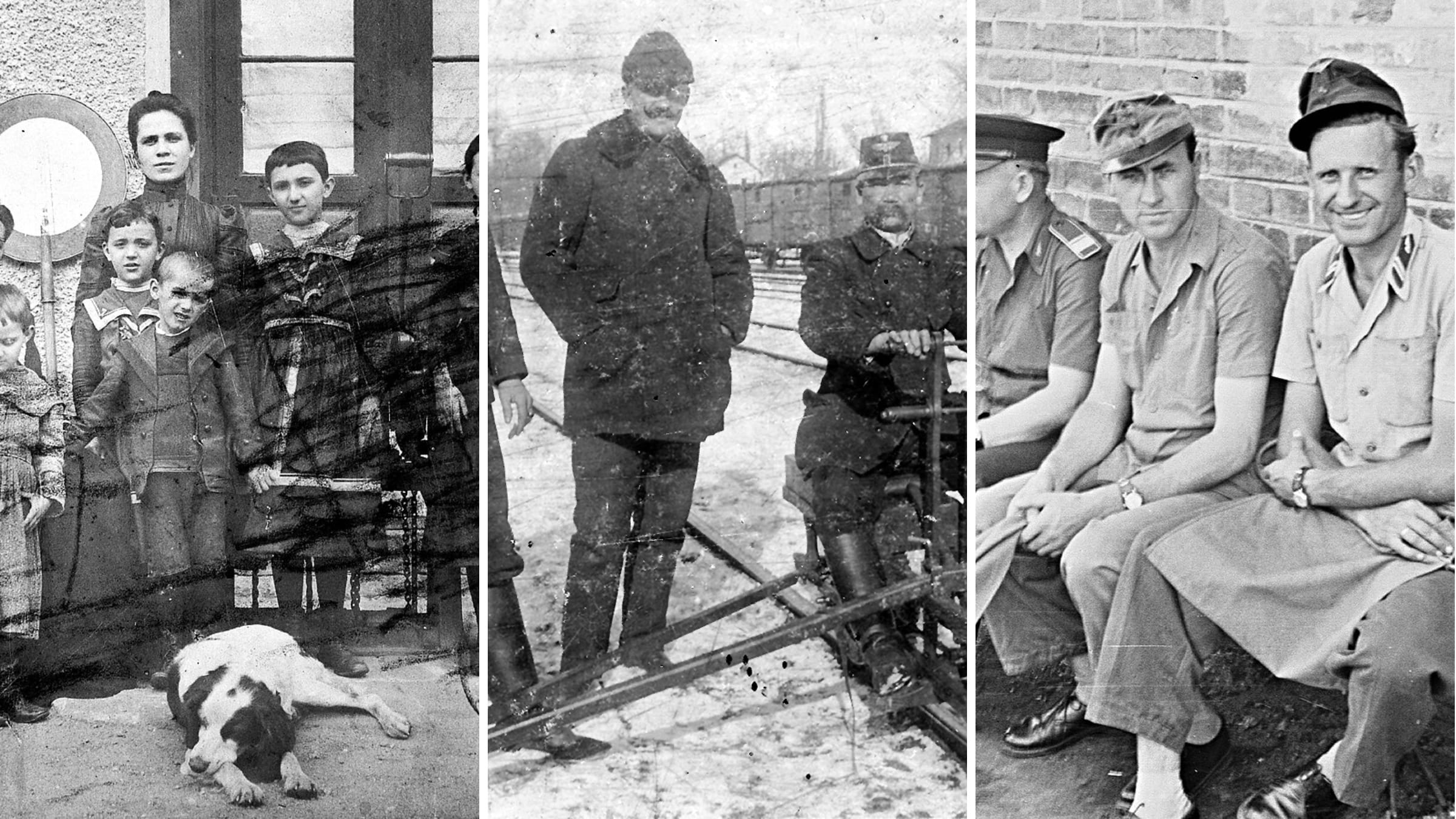
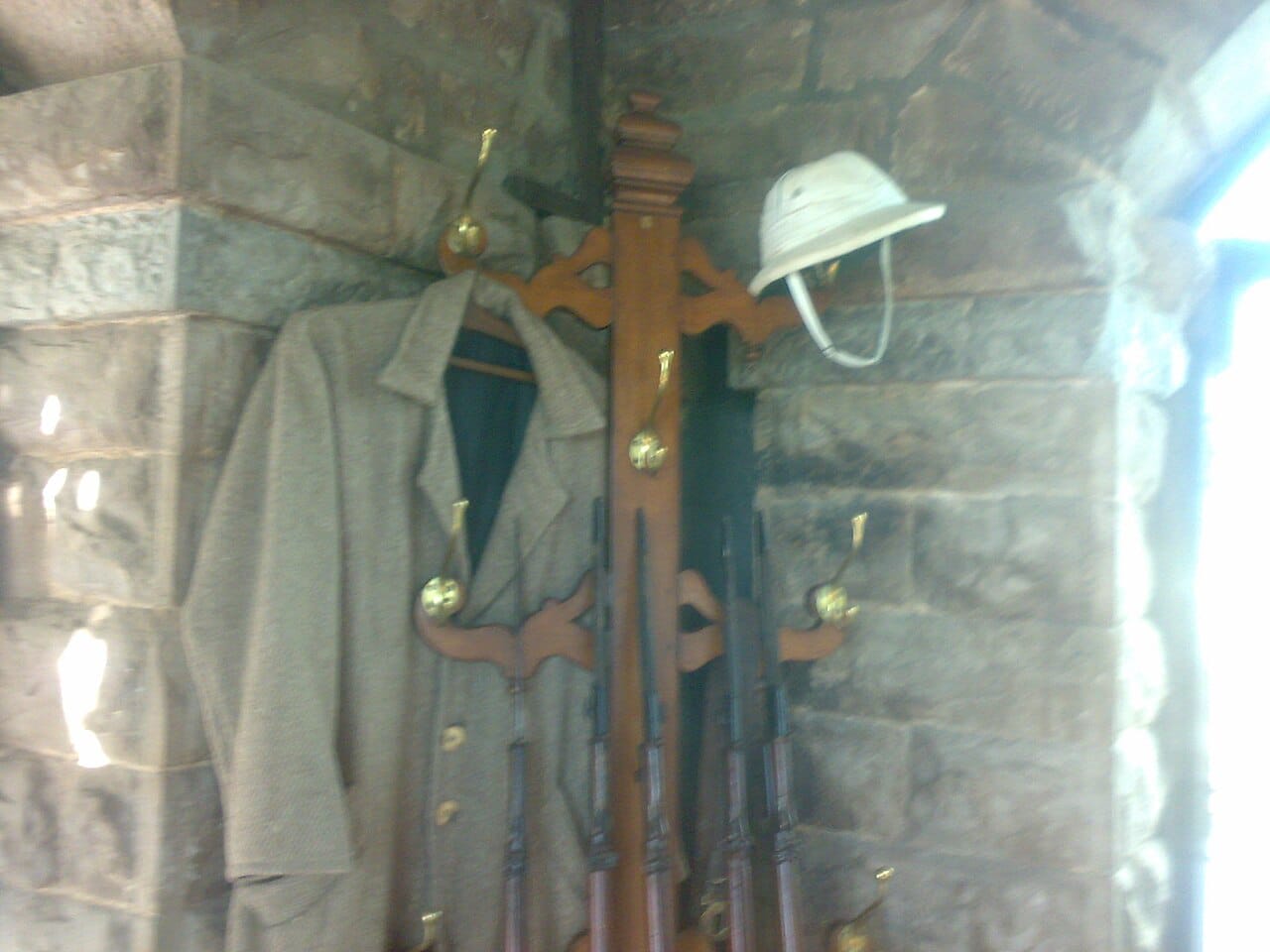
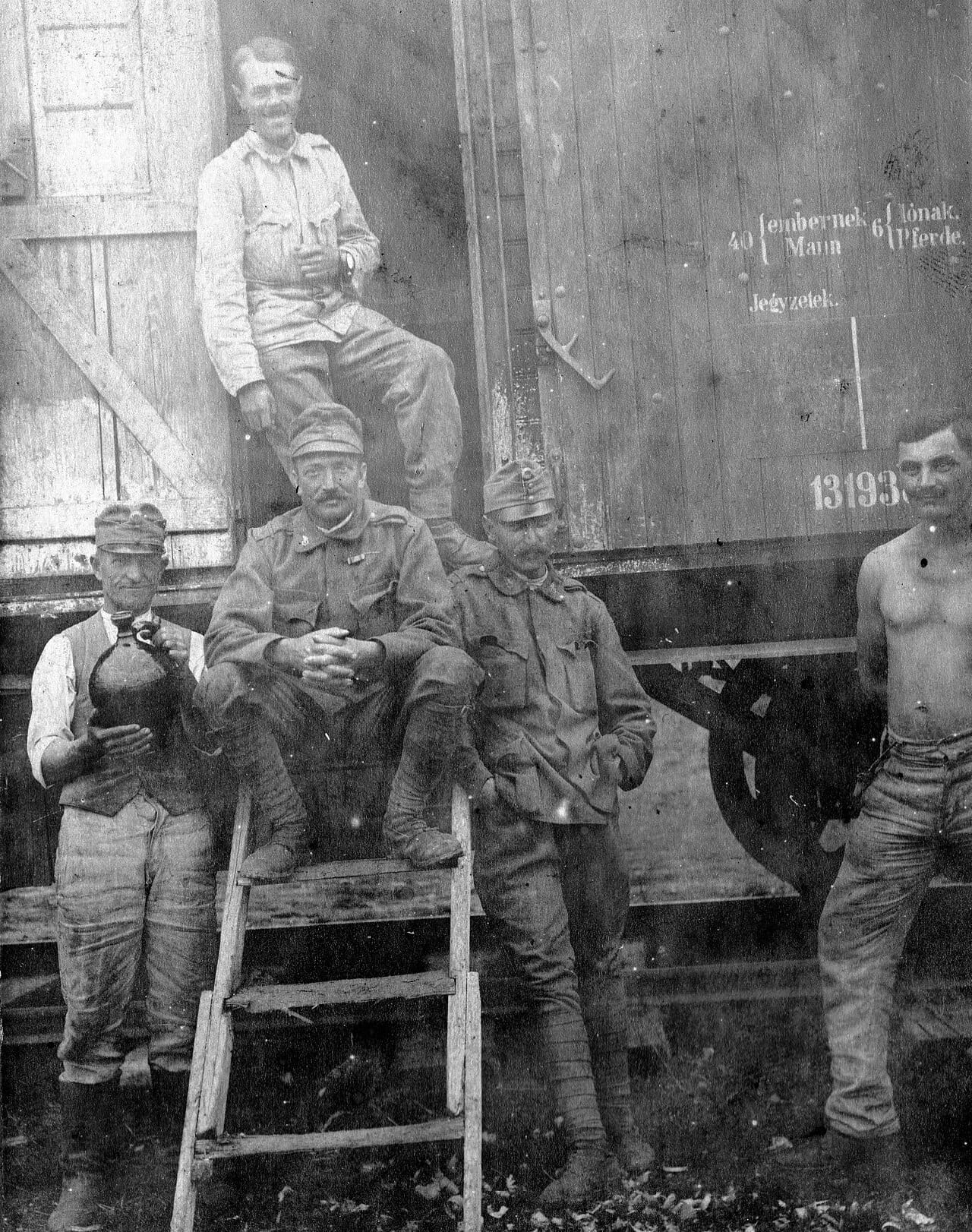
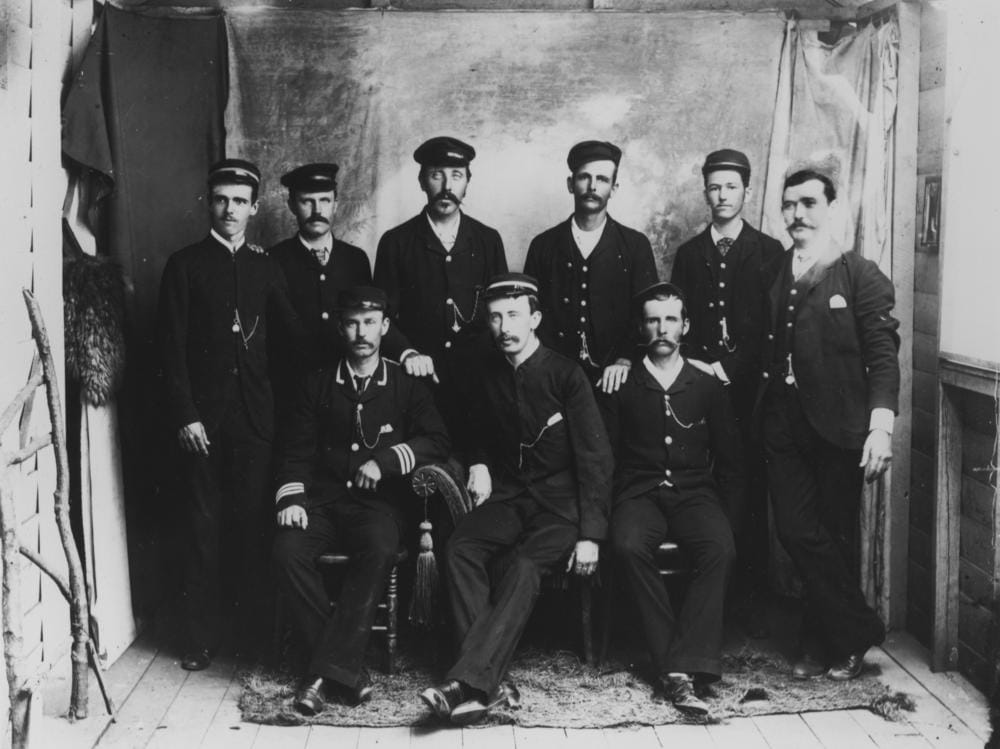
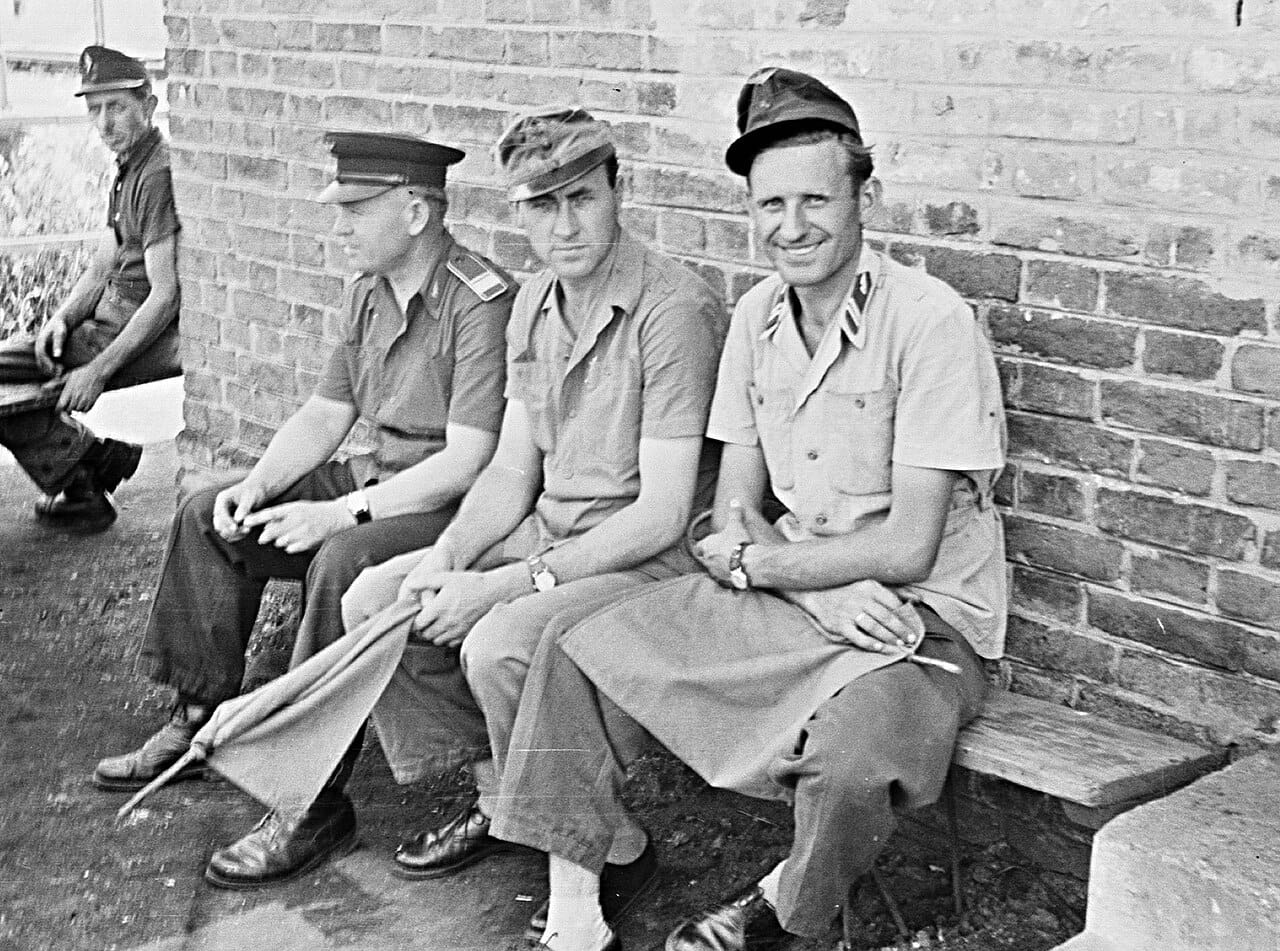
Railway staff at a station in winter, snow on the rails. The condition the garment was specified for, photographed. Note that nobody is moving — this is what the job looks like, and it is why the coat is what it is.Wikimedia Commons · 49656558 · 1916 · FOTO:Fortepan — ID 22690: Adományozó/Donor: Tóth Ágnes. · Public domainAn 1870s station master's uniform, preserved in a railway museum. One of very few surviving garments. Its collar and its length are unchanged from the argument above, sixty years before the photographs.Wikimedia Commons · 53252094 · Taken on 3 April 2011 · Sohail Aziz · CC BY 3.0A railway employee photographed during the First World War. Wartime, and the uniform is unaltered. Railway dress is one of the few kinds in this archive that a war does not visibly change, because the job does not change.Wikimedia Commons · 49143577 · 1916 · FOTO:Fortepan — ID 2906: Adományozó/Donor: Fortepan. · Public domainStaff of the Cairns railway station, Queensland, 1890s. The same coat in the tropics, which is the sharpest evidence that it was not only about cold. It is also a company's uniform, and a company does not issue two.Item is held by John Oxley Library, State Library of Queensland. · 12661554 · 1890 · creator not recorded · Public domain
Railway companies were briefly among the largest employers on earth, and they dressed their staff the way they built their stations: expensively, in the local idiom, and to be recognised from the far end of a platform.
The company on the garment
The other half of the specification is identification. A railway is a network of strangers — a passenger arriving in a town they have never visited must be able to find someone official within seconds, and that person must be distinguishable from every other man in a dark coat.
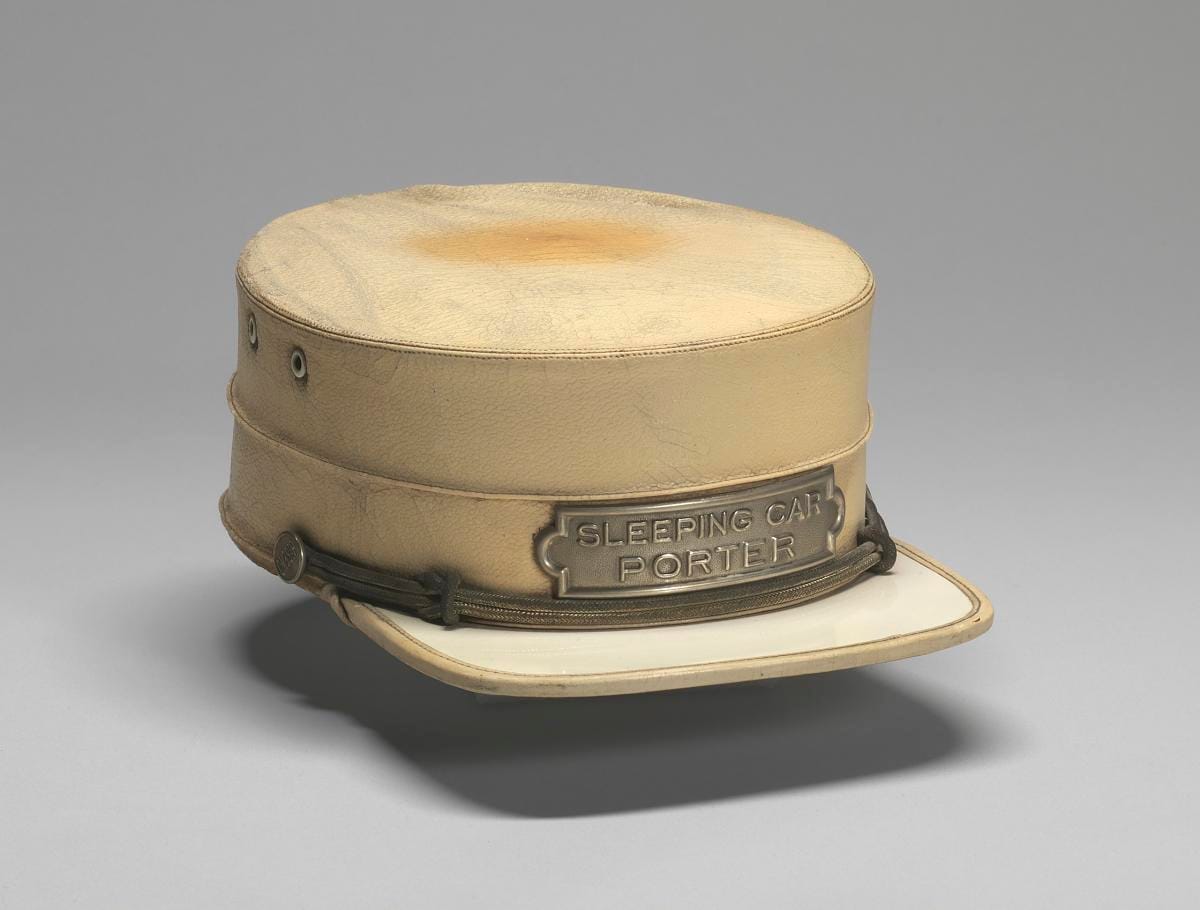
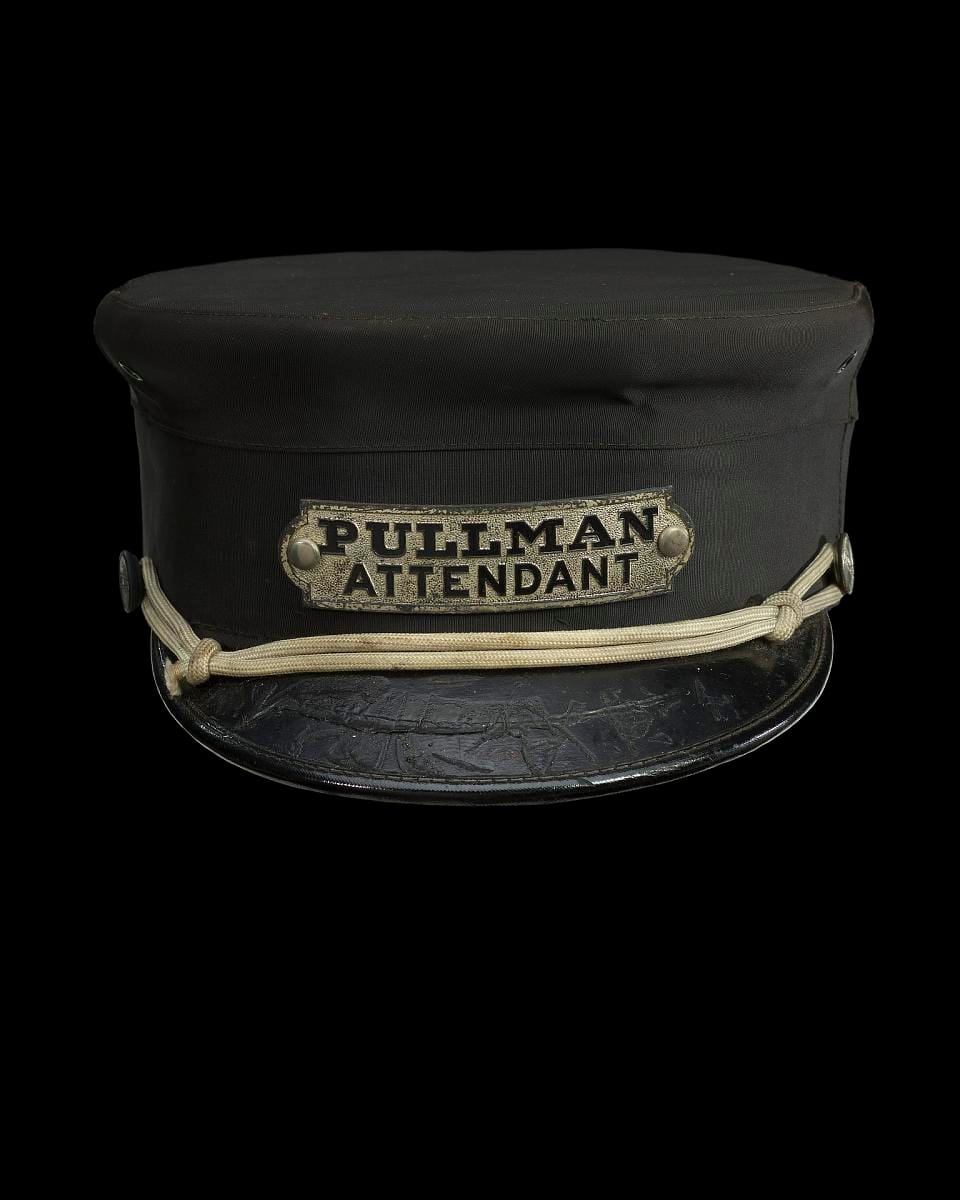
Hence buttons carrying a company device, a cap with a badge, and grade markings that are legible without being read. The cap does most of it: it is at head height, it is the part visible above a crowd, and it is small enough to be made to a high standard cheaply.
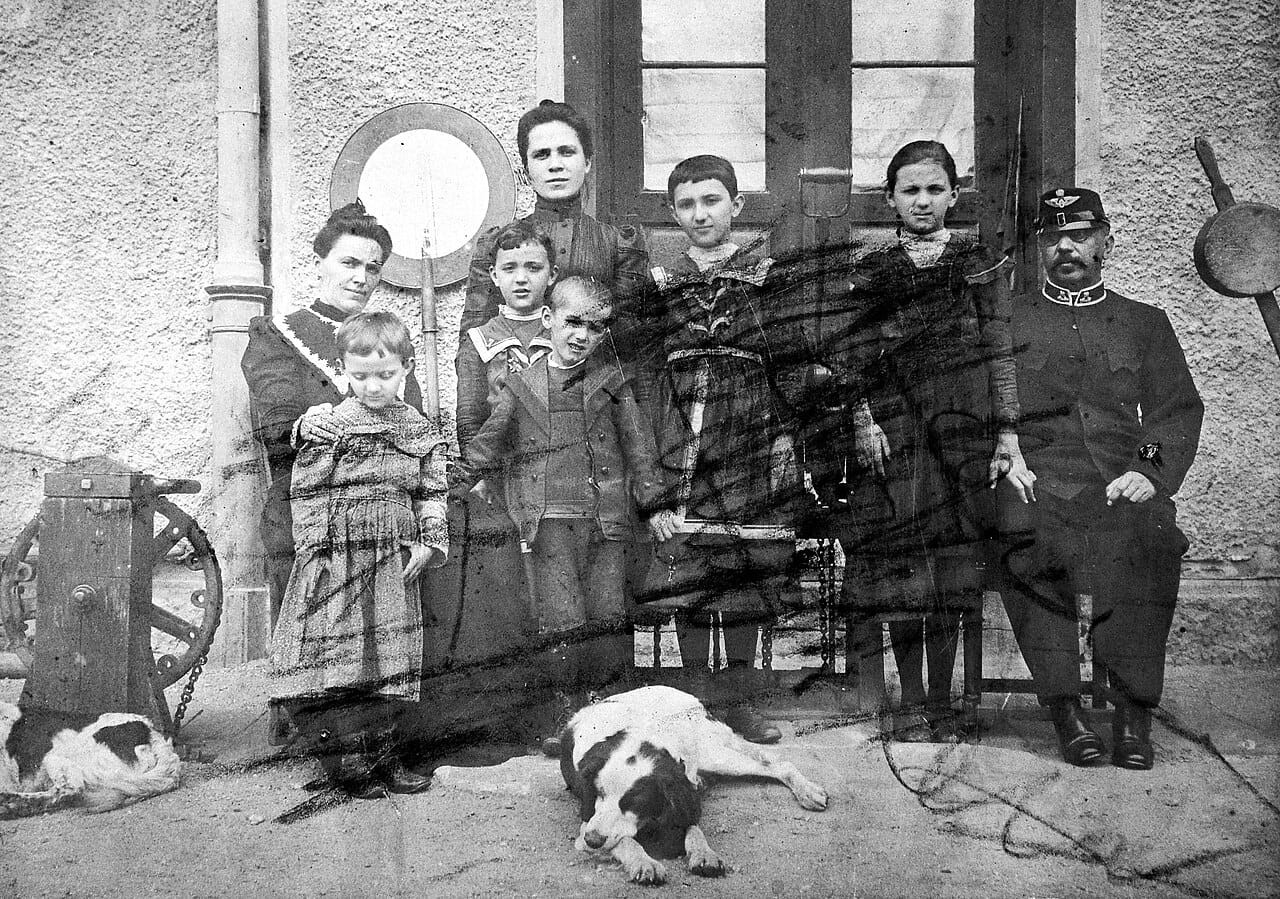
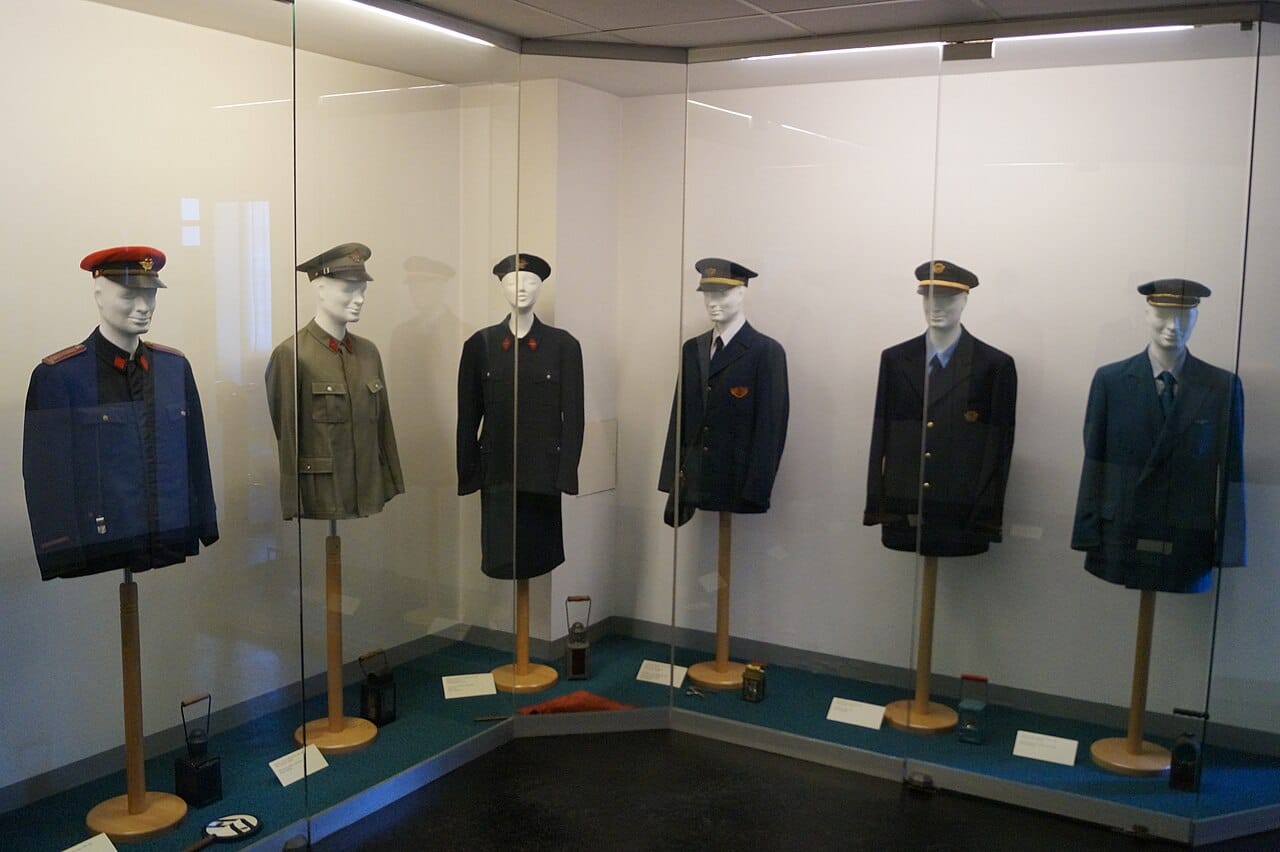
A cap issued to a sleeping car porter. Everything the uniform needed to say is on this one object, which is why it survived when the coat it belonged to did not.National Museum of African American History and Culture · NMAAHC-2008_15_1_001 · 1920s - 1970s · Chicago, Milwaukee, and St. Paul Railroad, American, 1847 - 1980, Brotherhood of Sleeping Car Porters, American, 1925 - 1978 · CC0A uniform cap for a Pullman attendant, dark and plain. A different company, the same object doing the same job. Pullman service was a career for Black American men in an era with few others, and this cap is collected as a record of that rather than of the garment.National Museum of African American History and Culture · NMAAHC-2019_20_3_001 · ca. 1940s · J. Apfelbaum and Company, American, ca. 1905 - 1949, Pullman Palace Car Company, American, 1867 - 1969 · CC0A railway employee photographed with his family, in uniform. Wearing it for a family photograph, off duty. The uniform is not only the company's claim on him; it is a thing he is willing to be seen as.Wikimedia Commons · 49277959 · 1922 · FOTO:Fortepan — ID 8230: Adományozó/Donor: Unknown. · Public domainRailway staff posed formally in uniform. Grades are visible in the caps and the cuffs, and the arrangement of the group follows them. The photograph is organised by the same information the clothing carries.Wikimedia Commons · 49525545 · 1962 · FOTO:Fortepan — ID 17596: Adományozó/Donor: Erky-Nagy Tibor. · CC BY-SA 3.0Uniforms displayed at the Slovenian railway museum. Kept because the railway kept them. Company museums are why railway dress survives at all when comparable working clothing does not.Wikimedia Commons · 58315002 · 2017-04-23 12:17:17 · NearEMPTiness · CC BY-SA 4.0
Why so much of it survives
Compare this with the pit clothes, which have vanished almost entirely. Railway uniforms survive in quantity for one reason: railways collected their own history. Company museums, staff associations and preservation societies kept garments as institutional memory long before any national museum thought them worth a shelf.
It is a useful corrective to the idea that survival tracks importance. What survives tracks who had an archive, and the railways had archives because they had head offices.
Hedda Maartens — MA in fashion design, then eleven years in the industry designing for people who had no say in what they wore. Now writes about prescribed dress: how a garment was made to work, and what it was made to make a person into.
Member discussion
Back
Nametape
Free
$0
Every Research post and every Essay, free to read.
All Research posts — one uniform at a time, in archive photographs








Member discussion